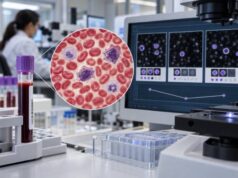
A tumor-naive ctDNA test looks for cancer-related DNA signals in blood without first sequencing that patient’s tumor to build a custom assay. Also called tumor-agnostic or tissue-free testing, this approach can use a fixed mutation panel, DNA methylation patterns, fragment characteristics, copy-number changes, or several signals together. Its practical advantage is speed and accessibility: testing can begin when tumor tissue is unavailable, inadequate, or not needed for the assay design. In molecular residual disease (MRD) monitoring, a positive result after curative-intent treatment usually signals a higher risk of recurrence, while a negative result is generally favorable but does not prove that no microscopic cancer remains. Performance varies widely by platform, cancer type, disease burden, and sampling schedule. Tumor-naive does not mean the patient has no known tumor or no confirmed cancer diagnosis; it means the blood test does not require the individual tumor’s genomic profile to decide what molecular features to search for.
- What “tumor-naive” means: The assay is not custom-built from the patient’s tumor tissue before blood testing.
- What it can measure: Fixed genomic variants, methylation, fragment patterns, copy-number changes, or combined molecular signals.
- Positive MRD result: A cancer-associated plasma signal is detected and recurrence risk is usually higher.
- Negative MRD result: No qualifying signal is detected, but low-shedding or very small residual disease can still be missed.
- Main advantage: Faster tissue-free testing when tumor material is unavailable or a personalized assay would delay monitoring.
Table of Contents
- What tumor-naive ctDNA testing means
- How tumor-naive assays detect cancer signals
- How tumor-naive testing is used for MRD and monitoring
- What positive, negative, and changing results mean
- Advantages when tumor tissue is unavailable
- Sensitivity, false positives, and other limitations
- Tumor-naive versus tumor-informed ctDNA testing
What tumor-naive ctDNA testing means
Tumor-naive testing starts with the blood sample rather than with a personalized mutation list from tumor tissue. The assay uses a predesigned method that can be applied to many patients.
The terminology varies. Tumor-naive, tumor-agnostic, tissue-free, and plasma-only are often used to describe overlapping concepts. They generally mean that the assay does not need the patient’s individual tumor sequence before it can analyze blood.
This distinction is about test design, not diagnosis. A person can have a biopsy-proven colon, lung, breast, ovarian, or other cancer and still receive a tumor-naive test. “Naive” does not mean the laboratory is unaware that cancer exists; it means the test is not informed by that tumor’s personalized molecular fingerprint.
Tumor-naive assays can serve more than one purpose. A broad liquid biopsy may look for treatment-relevant mutations in advanced cancer. A dedicated tumor-naive MRD assay may instead look for a very low-level cancer signal after surgery. The design and required sensitivity differ.
For MRD, the goal is similar to a ctDNA minimal residual disease test: identify molecular evidence that cancer remains after curative-intent treatment, often before standard imaging can detect a lesion.
The key difference is how the test decides what counts as tumor-derived. A tumor-informed assay says, “We know these mutations were in your tumor, so we will track them.” A tumor-naive assay says, “We will use validated cancer-associated features in the plasma itself to determine whether a residual signal is present.”
How tumor-naive assays detect cancer signals
There is no single tumor-naive technology. Current assays use several strategies, sometimes in combination.
Fixed genomic mutation panels
A fixed panel sequences selected genes or genomic regions that are commonly altered in cancer. The assay can detect mutations, small insertions or deletions, copy-number changes, and other features without knowing the original tumor sequence.
The advantage is direct detection of familiar cancer mutations. The challenge is that MRD may release only a few tumor molecules, and the relevant mutation may fall outside the panel or be difficult to distinguish from a non-tumor source.
DNA methylation
Methylation is a chemical mark on DNA that helps regulate gene activity. Cancer cells often develop abnormal methylation patterns. Tissue-free assays can search plasma for these patterns even when a specific tumor mutation is not known.
Methylation can provide many informative sites across the genome, which is useful when the number of mutation-bearing molecules is very low. Some tumor-naive MRD platforms combine methylation with genomic variants for the first postoperative call, then use methylation longitudinally.
Fragmentomics
Cell-free DNA fragments are not random. Their lengths, end points, and genomic distribution reflect how DNA was packaged and released from cells. Cancer can alter those patterns. Fragmentomics can therefore add a signal that is independent of a specific mutation.
Multimodal approaches
Newer tumor-naive assays increasingly combine mutations, methylation, copy-number changes, fragment length, or other epigenomic features. Machine-learning models can integrate multiple weak clues into a single MRD classification.
This is important because no one feature is perfect. A mutation-only fixed panel may have limited sensitivity at very low tumor fractions, while a multimodal method can collect evidence from many different molecular characteristics.
Whatever the method, the laboratory still faces the same physical limitation: a blood tube contains only a finite number of cell-free DNA molecules. If no tumor-derived molecule or detectable cancer-associated pattern is present in the sample, the assay cannot create a true signal.
This is why a tissue-free test still needs rigorous cancer-specific validation. A model trained to recognize colorectal cancer methylation patterns, for example, cannot simply be assumed to have the same sensitivity in lung or breast cancer. The relative contribution of mutations, methylation, fragment length, and copy-number changes can also shift with tumor biology and treatment. Good validation therefore reports performance at the intended clinical time point, such as four weeks after surgery or during serial surveillance, rather than presenting one pooled accuracy figure for every use.
Pre-analytical handling matters too. Delayed processing, inappropriate collection tubes, hemolysis, or release of DNA from normal white blood cells can dilute the tumor-derived signal and reduce the fraction of informative cell-free DNA.
How tumor-naive testing is used for MRD and monitoring
Tumor-naive testing is attractive when speed or lack of tumor tissue would otherwise prevent MRD assessment.
Postoperative MRD
After surgery, a tumor-naive assay can classify plasma as MRD-positive or MRD-negative without waiting for custom assay development.
A 2025 subset analysis from CIRCULATE-Japan evaluated a tumor-naive assay in 80 people with resected stage II or III colorectal cancer. At the four-week postoperative landmark, the assay combined methylation and genomic variant data. Among evaluable participants, landmark sensitivity for later recurrence was 61.1% and specificity was 87.9%. Longitudinal monitoring used methylation data and provided additional recurrence information over time.
Those numbers should not be treated as a universal performance standard. They belong to one assay, one cancer population, and one study design.
Recurrence surveillance
Serial testing can detect a molecular signal that appears after an earlier negative result. As with tumor-informed MRD, a new positive result can precede imaging in some patients.
A tumor-naive approach can be especially useful when archived tissue is missing, exhausted, or inadequate. It may also allow blood collection to start sooner after treatment because there is no personalized panel-development phase.
Treatment-response monitoring
Some tissue-free assays quantify tumor-related methylation or other signals during systemic therapy. Falling signal can correlate with response, while persistent or rising signal can raise concern for resistant disease.
This use should be separated from dedicated post-treatment MRD. Advanced cancer has much higher ctDNA levels on average, so a method that performs well for response monitoring may not have the same sensitivity when only microscopic disease remains.
Research and clinical trials
Tumor-naive MRD is an active research area in colorectal, lung, ovarian, breast, head and neck, and other cancers. Recent studies are testing whether multimodal tissue-free assays can approach the sensitivity of personalized methods while keeping the logistical advantage of no tumor-tissue requirement.
What positive, negative, and changing results mean
The correct interpretation depends on the assay’s validated output. Many MRD tests provide a binary detected/not-detected result rather than a traditional “normal range.”
| Pattern | Likely meaning | Important limitation |
|---|---|---|
| Positive after definitive treatment | A validated cancer-associated molecular signal is present; recurrence risk is generally higher. | The result does not show where residual disease is located. |
| Negative after treatment | No qualifying signal is detected; this generally indicates lower recurrence risk. | Very small or low-shedding disease can still be missed. |
| Negative then positive | An emerging molecular signal may indicate recurrence or progression. | Imaging may still be negative, and confirmation may be needed. |
| Positive then negative on treatment | Molecular clearance can be consistent with response. | It does not guarantee durable remission. |
A positive result needs a plan
A positive MRD result is clinically meaningful only if the oncology team knows what it can reasonably change. Depending on the cancer and evidence, that may be repeat blood testing, earlier imaging, a different surveillance schedule, treatment in a validated setting, or enrollment in an MRD-directed trial.
Earlier molecular detection can create a period in which the blood test is positive but scans are negative. That is not automatically a false-positive result. It may represent disease below imaging resolution. At the same time, tumor-naive assays have additional sources of false positives, so the result must be interpreted according to the platform’s specificity and clinical context.
A negative result is not proof of cure
A tumor-naive test can miss recurrence because:
- the residual tumor releases too little ctDNA;
- the cancer signal is not well represented by the fixed genomic features;
- plasma contains too few informative fragments;
- treatment or timing reduces shedding;
- disease is confined to a low-shedding anatomical site.
Repeated negatives can be more reassuring than one negative, but routine surveillance should not be abandoned unless evidence supports that change.
Advantages when tumor tissue is unavailable
The clearest advantage of tumor-naive testing is logistical independence from tumor tissue.
Faster start
A fixed assay does not need weeks of tumor sequencing, personalized variant selection, and custom panel preparation. That can matter when postoperative treatment decisions have a narrow timeframe.
Works when tissue is inadequate
Small needle biopsies may contain too little material after diagnostic tests are completed. Bone specimens can be damaged by decalcification. Old blocks may be unavailable, and tissue from a surgery performed elsewhere may be difficult to retrieve.
A tissue-free assay avoids these barriers.
Can capture current biology
Because tumor-naive tests analyze plasma directly, genomic versions may discover alterations that were not known from the original tumor. This can be useful if the cancer has evolved.
That advantage is more important for broad genomic monitoring than for a simple binary MRD call, but it highlights a general difference from personalized tracking of a fixed historical mutation set.
Standardized manufacturing
A fixed assay can use the same laboratory workflow for every patient rather than creating a new reagent set for each individual. In principle, that can simplify scaling, quality control, and turnaround.
Multimodal biology
Tumor-naive assays are not limited to mutation detection. Methylation and fragment patterns provide a way to detect cancer-derived biology even when no individual mutation is abundant enough to see.
This is one reason the performance gap between tumor-naive and tumor-informed testing may narrow as multimodal platforms improve.
Sensitivity, false positives, and other limitations
The main challenge is identifying a highly specific cancer signal without the personalized certainty of knowing which mutations came from the tumor.
Lower sensitivity in some MRD settings
A 2026 systematic review and diagnostic accuracy meta-analysis in resected colorectal cancer found that, with serial sampling, tumor-informed assays had higher sensitivity than tumor-agnostic assays in the studies included. This supports the current strength of personalized tracking when disease burden is extremely low.
However, not every tumor-naive assay is a simple fixed mutation panel. Methylation and multimodal technologies may perform differently, and results in colorectal cancer cannot automatically be generalized to lung, ovarian, breast, or other tumors.
Clonal hematopoiesis can create non-tumor variants
Normal blood-forming cells can acquire mutations with age. Their DNA enters plasma and can resemble tumor ctDNA. This problem is especially important for mutation-based tumor-naive assays because there is no personalized tumor sequence confirming that the variant truly came from the cancer.
Methods to reduce this problem include paired white-blood-cell sequencing, bioinformatic filtering, methylation context, multi-feature classification, and excluding variants commonly associated with clonal hematopoiesis.
Germline variants must be separated
An inherited variant can also appear in cell-free DNA. A well-designed assay must distinguish germline DNA from tumor-derived alterations, particularly if genomic findings might affect treatment or hereditary risk assessment.
Cancer shedding is variable
No tissue-free assay escapes the biological problem of low shedding. Small tumors, some histologies, brain-only disease, and effective therapy can reduce plasma tumor signal.
Positive does not equal localizable disease
MRD blood testing can indicate residual or recurrent cancer without showing where it is. Imaging and sometimes biopsy remain necessary to localize disease and decide whether local treatment is possible.
Clinical utility remains cancer-specific
Strong prognostic association does not prove that changing treatment based on a positive result improves survival. ASCO’s 2026 guideline recommends non-genotyping ctDNA uses when a specific evidence-based action can be taken or when ctDNA can resolve an important ambiguity in standard assessment.
Tumor-naive versus tumor-informed ctDNA testing
Neither approach is universally superior. They solve different practical problems.
| Feature | Tumor-naive | Tumor-informed |
|---|---|---|
| Needs tumor tissue for assay design | No | Yes |
| Start time | Usually faster | Longer initial setup |
| Targets | Fixed genomic or epigenomic features, sometimes multimodal | Patient-specific tumor mutations |
| Low-level MRD performance | Varies by assay and cancer | Often strong because the search is personalized |
| New-clone discovery | Possible with broader fixed genomic designs | MRD call usually relies on the predefined personalized set |
| Main practical strength | No tissue requirement | Highly specific tracking of known tumor DNA |
A tumor-informed ctDNA test is attractive when high-quality tumor tissue is available and the goal is ultra-sensitive personalized recurrence monitoring. Tests such as Signatera and RaDaR are examples of that strategy.
Tumor-naive testing becomes especially attractive when tissue is unavailable, when rapid initiation is important, or when a validated multimodal assay performs well in the cancer of interest.
The best choice should be made at the assay-and-indication level, not from the label alone. Ask what clinical study validates the exact platform for the exact cancer, whether testing is intended for a single postoperative landmark or serial surveillance, how false positives from blood-cell mutations are controlled, and what action will follow a positive result.
Those questions are more useful than simply asking whether “tumor-informed” or “tumor-naive” sounds more advanced. Both categories are evolving quickly, and the most clinically useful assay is the one with strong performance and a clear evidence-based role in the patient’s specific care pathway.
References
- Circulating Tumor DNA Testing in Solid Tumors and Lymphoma: ASCO Guideline 2026 (Guideline)
- Clinical performance of tumor-informed versus tumor-agnostic ctDNA assays for colorectal cancer recurrence: A systematic review and diagnostic accuracy meta-analysis 2026 (Systematic Review)
- A Tumor-Naïve ctDNA Assay Detects Minimal Residual Disease in Resected Stage II or III Colorectal Cancer and Predicts Recurrence: Subset Analysis from the GALAXY Study in CIRCULATE-Japan 2025
- Tumor-naïve multimodal profiling of circulating tumor DNA to detect minimal residual disease in solid tumors. 2025
- Minimal residual disease in colorectal cancer. Tumor-informed versus tumor-agnostic approaches: unraveling the optimal strategy 2025 (Review)
- Tumor-agnostic plasma assay for circulating tumor DNA detects minimal residual disease and predicts outcome in locally advanced squamous cell carcinoma of the head and neck 2023
Disclaimer
This article is for general educational purposes and is not a substitute for individualized oncology care. Tumor-naive ctDNA performance and interpretation vary by assay, cancer type, disease burden, treatment, and test timing. A positive or negative MRD result should be reviewed with the treating oncology team before any change in treatment or surveillance.