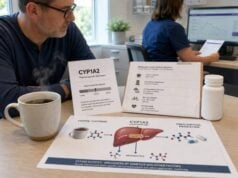
A warfarin pharmacogenetic test analyzes inherited variants that help explain why one person may need 1 mg of warfarin a day while another needs several times that amount to reach the same anticoagulant effect. The core genes are CYP2C9, which affects clearance of the more potent S-warfarin; VKORC1, which affects sensitivity at warfarin’s target; and CYP4F2, which influences vitamin K handling. Some panels also test CYP2C rs12777823 and additional CYP2C9 alleles that are especially important for people with African ancestry. Results can improve an initial dose estimate when they are available before or during the first days of therapy and entered into a validated dosing algorithm with age, body size, medicines, ancestry, and target international normalized ratio (INR). They do not replace INR testing, provide a permanent dose, or account for changing diet, illness, adherence, and drug interactions. The safest use is a coordinated plan that connects the genotype to early monitoring and clinician-directed adjustment.
- CYP2C9 reduced-function alleles usually lower dose needs and slow the time to a full INR response.
- VKORC1 -1639A generally increases warfarin sensitivity, while G/G is associated with a higher average requirement.
- CYP4F2*3 may modestly raise dose requirements, but its effect is smaller and less consistent than CYP2C9 or VKORC1.
- A validated multivariable algorithm is preferred to a gene-by-gene lookup because clinical factors can shift the estimate substantially.
- INR monitoring remains essential from the first dose onward and determines actual dose changes.
Table of Contents
- Why Warfarin Dosing Varies and When Testing Helps
- How CYP2C9, VKORC1, CYP4F2, and CYP2C Affect Response
- Test Process, Panel Coverage, and Report Terminology
- How Combined Results Become a Dose Estimate
- Using Genetics During the First Weeks of Treatment
- Ancestry, Evidence, and Important Limitations
- What to Do With Results and When to Seek Help
Why Warfarin Dosing Varies and When Testing Helps
Warfarin prevents and treats blood clots by reducing the activity of vitamin K–dependent clotting proteins. It works well for many conditions, but the margin between too little and too much anticoagulation is narrow. A low dose may fail to protect against stroke, pulmonary embolism, or another clot. An excessive dose may cause gastrointestinal bleeding, intracranial bleeding, or other serious harm.
Dose requirements vary widely even among people treated for the same condition and aiming for the same INR range. Genetics explains part of the difference, while the rest comes from factors such as:
- age, height, weight, and overall health;
- liver function, heart failure, fever, thyroid status, and acute illness;
- vitamin K intake and changes in nutrition;
- alcohol use and smoking;
- amiodarone, antibiotics, antifungals, enzyme inducers, and many other medicines;
- adherence, missed doses, and misunderstanding of a variable weekly schedule;
- treatment indication and target INR.
Pharmacogenetic testing is most useful before the first dose or during the earliest phase of treatment. At that point, clinicians have little direct information about the patient’s response, so a genotype-informed estimate can reduce guesswork. Once a person has a stable dose supported by repeated therapeutic INRs, the observed response usually becomes more informative than a new genetic result.
A test may be especially helpful when warfarin is expected to continue for months or years, when rapid results are available, and when a clinic has a validated dosing process. It can also clarify an unexpectedly low dose requirement or a delayed INR response. Testing should not postpone urgent anticoagulation, and a delayed result should not automatically disrupt a dose that is already working.
The decision to prescribe warfarin is separate from the decision to genotype. Direct oral anticoagulants may be options for some indications, while warfarin remains necessary or preferred in others, including many mechanical heart valve situations. Kidney function, pregnancy, interactions, cost, adherence, and specialist recommendations all affect drug selection.
A multigene test differs from a single VKORC1 genetic test because it evaluates both target sensitivity and drug clearance. That combined view is what supports pharmacogenetic dose calculation.
How CYP2C9, VKORC1, CYP4F2, and CYP2C Affect Response
Warfarin is supplied as a mixture of R- and S-warfarin. S-warfarin is more potent, and CYP2C9 is its main metabolizing enzyme. VKORC1 makes the protein that warfarin inhibits. CYP4F2 removes vitamin K from the vitamin K cycle. A marker near the CYP2C gene cluster can add information in some people of African ancestry.
| Gene or marker | Biological role | Common finding | Usual dose direction |
|---|---|---|---|
| CYP2C9 | Clears active S-warfarin | Reduced- or no-function star alleles | Lower dose and slower stabilization |
| VKORC1 | Makes warfarin’s vitamin K cycle target | c.-1639G>A, rs9923231 | A allele usually lowers dose |
| CYP4F2 | Oxidizes vitamin K | *3, rs2108622 | May modestly raise dose |
| CYP2C cluster | Marker associated with dose in a specific ancestry context | rs12777823 | A allele may lower dose in some people of African ancestry |
CYP2C9 results use star-allele names. *1 usually represents normal function, while *2 and *3 reduce function. In laboratory and clinical studies, *2 has a moderate effect and *3 a larger effect on S-warfarin metabolism. A person inherits one allele from each parent, creating a diplotype such as *1/*1, *1/*3, or *2/*3. The laboratory may translate the diplotype into a normal, intermediate, or poor metabolizer phenotype.
Panels should not assume that *2 and *3 are the only meaningful alleles. CYP2C9*5, *6, *8, and *11 are more frequent in people with African ancestry and can reduce enzyme activity. A report that tests only *2 and *3 may label a person 1/1 even though an untested decreased-function allele is present. That false reassurance can lead an algorithm to estimate too high a dose.
VKORC1 c.-1639G>A affects gene expression. G/G generally predicts lower sensitivity and a higher average requirement, G/A an intermediate requirement, and A/A greater sensitivity and a lower average requirement. These categories overlap because CYP2C9 and clinical factors can move the dose in either direction.
CYP4F2*3 changes vitamin K oxidation. Carriers often require a slightly higher dose, with guideline reviews estimating an effect in the approximate range of 8% to 11% in some populations. The association is not equally strong in every study or ancestry group, so CYP4F2 usually fine-tunes rather than dominates the estimate.
The CYP2C cluster marker rs12777823 can be associated with a lower requirement in some people of African ancestry. It should not be applied indiscriminately to every population. Its value depends on the algorithm and the ancestry context in which the association was validated.
Test Process, Panel Coverage, and Report Terminology
Clinical laboratories usually test DNA from blood or a cheek swab; some accept saliva. No fasting is needed, and warfarin use does not change inherited DNA. A valid genotype ordinarily needs to be measured only once, although the interpretation may be updated as guidelines and allele definitions evolve.
Targeted polymerase chain reaction assays are common because they can identify selected variants quickly. Some systems return results within hours, while send-out tests may take several days. Speed matters when the purpose is to guide initiation. A technically excellent result that arrives after stable dosing may have little immediate impact.
Before relying on a report, verify the panel’s actual coverage. A useful report should list:
- the CYP2C9 alleles or variants tested;
- whether CYP2C9*5, *6, *8, and *11 were included when relevant;
- VKORC1 c.-1639G>A or the equivalent marker tested;
- CYP4F2*3 coverage;
- rs12777823 coverage and the population context for interpretation;
- the predicted phenotype and dosing recommendation method;
- assay limitations, including variants that can be missed.
“No variant detected” does not mean the person has no pharmacogenetic risk. It means none of the targeted variants were found. Targeted panels do not inspect every base in every gene and may miss rare sequence changes, structural variants, or alleles not included in the assay. Some tests infer star alleles from a limited set of positions and make assumptions about which variants occur together on the same chromosome.
CYP2C9 reports may show a diplotype and phenotype. VKORC1 may appear as G/G, G/A, or A/A, sometimes using a different strand orientation. CYP4F2 may be reported as 1/1, 1/3, or 3/3, or as nucleotide letters. The laboratory’s interpretation should be followed rather than comparing raw letters across unrelated reports.
A combined report may include an expected dose range. Check whether that range came from FDA labeling, a published algorithm, a laboratory-developed model, or an unexplained proprietary calculation. The result is more trustworthy when the model is named, its inputs are visible, and ancestry-relevant variants are represented.
Testing for medical decisions should come from an appropriately accredited clinical laboratory. Raw consumer genotype data may contain some markers, but they can have strand errors, incomplete coverage, or false calls. Confirmatory clinical testing is appropriate before changing anticoagulation.
A broad pharmacogenetic panel may already include these genes, but panel size does not guarantee adequate warfarin coverage. The exact alleles matter more than the number of genes on the marketing page.
How Combined Results Become a Dose Estimate
A pharmacogenetic result should enter a validated algorithm with clinical data. Common models include the International Warfarin Pharmacogenetics Consortium and Gage approaches, along with population-specific models. Inputs may include age, height, weight, ancestry, smoking, amiodarone, enzyme-inducing medicines, indication, target INR, CYP2C9, VKORC1, and sometimes CYP4F2 or rs12777823.
The output is usually an estimated daily or weekly maintenance dose. It is not a loading instruction, a guarantee, or permission for self-adjustment. Clinicians round the estimate to available tablet strengths, consider the clinical urgency, and plan INR checks.
The current FDA-labeled ranges below illustrate how CYP2C9 and VKORC1 can interact. They are expected maintenance ranges and do not include all clinical factors, CYP4F2, ancestry-specific alleles, or real-time INR data.
| VKORC1 | *1/*1 | *1/*2 | *1/*3 | *2/*2 | *2/*3 | *3/*3 |
|---|---|---|---|---|---|---|
| G/G | 5–7 | 5–7 | 3–4 | 3–4 | 3–4 | 0.5–2 |
| G/A | 5–7 | 3–4 | 3–4 | 3–4 | 0.5–2 | 0.5–2 |
| A/A | 3–4 | 3–4 | 0.5–2 | 0.5–2 | 0.5–2 | 0.5–2 |
The table shows why a single-gene interpretation is incomplete. VKORC1 A/A with CYP2C91/1 points toward a different range than A/A with 1/3. It also shows why a result outside these selected alleles requires a fuller algorithm rather than forcing it into a table cell.
Reduced CYP2C9 function affects more than the final dose. People with 1/3, 2/2, 2/3, or 3/3 may take more than two to four weeks to show the maximum INR effect of a given regimen. Early increases can therefore accumulate and later produce an excessive INR. A cautious plan considers both predicted maintenance dose and the speed at which the effect develops.
CYP4F2*3 may shift the estimate upward modestly, while rs12777823 may shift it downward in the appropriate ancestry context. Clinical variables can outweigh these smaller effects. Advanced age, low body size, poor nutrition, liver disease, or amiodarone may lower the requirement. Enzyme-inducing medicines may raise it.
Many algorithms were developed for a target INR of 2 to 3. Accuracy may be less certain for another target unless the model explicitly includes it. Pediatric dosing also requires age-appropriate algorithms; adult tables should not be applied directly to children.
Using Genetics During the First Weeks of Treatment
The genotype creates a better starting estimate, but INR measurements direct the treatment course. Warfarin’s effect is delayed because existing clotting factors must decline, and the delay is longer in some CYP2C9 genotypes. A dose that appears ineffective today may have a stronger effect several days later.
The initial plan should specify:
- the dose or schedule selected by the clinician;
- the target INR for the treatment indication;
- the date of the first INR and subsequent early checks;
- who will review each result and contact the patient;
- how to handle a missed dose, new medicine, illness, or diet change;
- whether temporary parenteral anticoagulation is required for the indication.
Bridging is not determined by genotype. It depends on why warfarin is being used, how quickly protection is needed, and the patient’s clotting and bleeding risks.
Clinicians adjust warfarin from the observed INR trend, not from genotype alone. Frequent large changes can cause oscillation because the full effect of the prior schedule may not be visible. A reduced-function CYP2C9 result is a reminder to allow enough time for response unless the clinical situation demands otherwise.
Once the INR is stable, monitoring intervals may lengthen. They should tighten again after hospitalization, acute illness, major changes in food intake, a new interacting medicine, missed doses, or an unexpected INR. Genetics cannot detect any of these changes.
Vitamin K–rich foods do not need to be banned. Consistency is safer than avoidance. A person who regularly eats leafy greens can often continue doing so, but abrupt changes may alter INR. Vomiting, diarrhea, poor intake, and weight loss can also increase instability.
Warfarin interacts with many prescription, over-the-counter, and herbal products. Amiodarone, certain antibiotics and antifungals, enzyme inducers, antiplatelet drugs, and nonsteroidal anti-inflammatory medicines are common examples requiring review. Some increase INR; others increase bleeding without a large INR change. Patients should contact the anticoagulation team before starting or stopping products rather than trying to predict an interaction from genotype.
A stable dose is evidence about the whole person. If a delayed genetic estimate differs from a well-documented therapeutic schedule, clinicians should investigate the discrepancy but should not automatically replace successful INR-guided dosing.
Ancestry, Evidence, and Important Limitations
The quality of warfarin pharmacogenetics depends on who was studied and what the assay tested. CYP2C9*2 and *3 are important in many people of European ancestry, but a panel limited to those alleles can perform poorly in people of African ancestry. CYP2C9*5, *6, *8, and *11 and rs12777823 may be more informative in that setting.
This limitation affected early clinical evidence. In one major trial, the genotyping panel omitted important African-ancestry variants, which likely contributed to overdosing in some Black participants. Other trials using broader or better-matched approaches showed improvements in dose prediction or composite clinical outcomes. Mixed study results therefore do not mean that every test is equally ineffective or effective. Turnaround time, allele coverage, algorithm choice, ancestry, clinical service quality, and outcome definition all influence performance.
Population-specific algorithms can outperform imported models in some groups. A model derived mainly from European-ancestry adults may misestimate dose in a Chinese, African, Middle Eastern, Indigenous, admixed, or pediatric population. Self-identified race is an imperfect proxy for genetic ancestry, yet ignoring ancestry-linked allele coverage can also create harm. The best approach uses broad, explicit variant testing and a model validated in a relevant population rather than stereotypes.
Other limitations include:
- rare CYP2C9 or VKORC1 variants not covered by the panel;
- uncertain or inconsistent CYP4F2 effects across populations;
- genotyping or reporting error;
- proprietary recommendations that do not reveal their algorithm;
- cost, insurance limits, and delayed turnaround;
- limited value after a stable dose is established;
- inability to account for adherence, diet, illness, liver function, or future interactions.
Rare VKORC1 coding variants can cause warfarin resistance and unusually high dose requirements, but routine sensitivity panels often do not target them. Before specialized sequencing, clinicians should rule out more common causes such as missed doses, vitamin K exposure, enzyme-inducing medicines, malabsorption, and premature dose assessment.
The genotype is lifelong, but guidance can change. Keep the original report with the specific variants and method. A portal label such as “normal metabolizer” may be insufficient if a future clinician needs to know which alleles were actually tested.
What to Do With Results and When to Seek Help
A useful report should lead to a clear action plan rather than a generic “use caution” message. Review these points with the prescriber, pharmacist, anticoagulation clinic, or genetics professional:
- Was the sample tested in a clinical laboratory?
- Which CYP2C9 alleles were included, and is coverage appropriate for ancestry?
- What are the CYP2C9 diplotype and predicted phenotype?
- What are the VKORC1 and CYP4F2 genotypes?
- Was rs12777823 tested, and is it relevant to the model being used?
- Which dosing algorithm produced the estimate?
- What clinical variables were entered?
- What is the target INR and first monitoring date?
- Who should be contacted before medication, supplement, or diet changes?
Do not start, stop, double, or reduce warfarin based on the report alone. For a missed dose, follow the clinic’s instructions instead of taking extra tablets automatically. A written weekly schedule can reduce errors when different doses are used on different days.
Seek urgent medical care for vomiting blood, black or bloody stools, coughing blood, uncontrolled bleeding, severe headache, sudden confusion or weakness, fainting, or a significant fall or head injury. Sudden shortness of breath, chest pain, one-sided weakness, speech difficulty, or a swollen painful leg may signal a clot and also require urgent assessment. A normal INR in the past or a reassuring genotype does not rule out an emergency now.
Pregnancy and pregnancy planning require specialist management because warfarin can harm a developing fetus in many circumstances. Genetic testing does not make the drug safe during pregnancy or replace individualized maternal-fetal and cardiology advice.
The result is best stored in the medical record with the full laboratory document. It may remain useful if warfarin is restarted years later, but the clinician should apply current guidance and reassess all clinical factors. Repeat genotyping is usually unnecessary unless the original test was incomplete, unverified, or technically inconclusive.
A strong result interpretation connects four pieces: complete ancestry-aware genotype coverage, a validated algorithm, current clinical information, and disciplined INR follow-up. Leaving out any one of them reduces the value of the test. Used together, they can make the difficult first phase of warfarin therapy more informed without pretending that genetics can replace direct measurement of anticoagulation.
References
- Clinical Pharmacogenetics Implementation Consortium (CPIC) Guideline for Pharmacogenetics-Guided Warfarin Dosing: 2017 Update 2017 (Guideline)
- The FDA (2025) Drug Label for Warfarin. Ranges of Expected Maintenance Warfarin Doses based on CYP2C9 and VKORC1 Genotype. 2025 (Official Drug Label Summary)
- Comparative performance of pharmacogenetics-based warfarin dosing algorithms in Chinese population: use of a pharmacokinetic/pharmacodynamic model to explore dosing regimen through clinical trial simulation 2024 (Clinical Study)
- Application of rapid genotyping of Warfarin individualized pharmacogenetic variants in Warfarin therapy 2024 (Clinical Study)
- The impact of CYP2C9, VKORC1, and CYP4F2 polymorphisms on warfarin dose requirement in Saudi patients 2025 (Clinical Study)
- Warfarin Sensitivity (CYP2C9, CYP2C cluster, CYP4F2, VKORC1) Genotyping 2025 (Clinical Laboratory Guidance)
Disclaimer
This article is for general education and does not replace individualized prescribing, anticoagulation management, genetic counseling, or emergency care. Do not change warfarin or skip INR testing based on a pharmacogenetic result without the clinician managing anticoagulation. Seek urgent care for serious bleeding, head injury while anticoagulated, or symptoms of a possible blood clot.