A 24-hour urine kidney stone risk test shows why stones may be forming by measuring the substances that make crystals more or less likely to develop. Instead of looking at one urine sample, the test collects everything you pass over a full day, which gives a more reliable picture of urine volume, calcium, oxalate, citrate, uric acid, sodium, pH, creatinine, and other factors. It is especially useful after recurrent stones, multiple or bilateral stones, certain high-risk stone types, or a stone at a young age. Results are interpreted as a pattern rather than as isolated numbers. For example, high urine calcium matters more when urine volume is low or citrate is also low. The goal is not simply to label a result “high” or “low,” but to identify modifiable causes and choose prevention steps that fit the individual stone type and urine chemistry.
- The test measures a full day of stone-forming and stone-protective urine chemistry, usually including volume, calcium, oxalate, citrate, uric acid, sodium, pH, and creatinine.
- Low urine volume is one of the most important correctable risks; many prevention plans aim for more than 2.5 L of urine per day, although individual targets may differ.
- High calcium, high oxalate, high uric acid, low citrate, and unfavorable urine pH can raise stone risk, but their meaning depends on the stone type and the rest of the profile.
- Collection accuracy matters: missing urine, collecting too long, or changing diet and fluid intake unusually can distort the results.
- A repeat 24-hour urine is often used after diet or medication changes to confirm that the targeted risk factors actually improved.
Table of Contents
- What the 24-Hour Urine Stone Test Measures
- Who Needs a 24-Hour Urine Stone Evaluation
- How to Collect the Sample Correctly
- How to Read Calcium, Oxalate, Citrate, Uric Acid, and Volume
- How Result Patterns Point to Different Stone Risks
- What Happens After the Results
- Limitations, Repeat Testing, and When to Get More Help
What the 24-Hour Urine Stone Test Measures
A 24-hour urine stone risk test measures how much of several important substances your kidneys place into urine over an entire day. It also measures how dilute or concentrated the urine is. Those two ideas—amount of a substance and concentration in the final urine volume—are central to stone risk.
A typical stone profile includes urine volume, calcium, oxalate, citrate, uric acid, sodium, potassium, creatinine, magnesium, phosphate, and pH. Some laboratories also report calculated supersaturation for calcium oxalate, calcium phosphate, and uric acid. Supersaturation estimates how strongly the urine favors crystal formation. A urine supersaturation test can therefore add context that a single concentration cannot provide.
The exact panel varies by laboratory and clinical question. The most commonly discussed markers include:
| Marker | Why it matters for stones |
|---|---|
| Urine volume | Low volume concentrates stone-forming salts and raises supersaturation. |
| Calcium | High excretion, called hypercalciuria, can increase calcium oxalate and calcium phosphate stone risk. |
| Oxalate | Higher oxalate can strongly increase calcium oxalate supersaturation. |
| Citrate | Citrate binds calcium and inhibits crystal growth; low citrate removes an important natural protection. |
| Uric acid | High excretion can contribute to uric acid stones and, in some people, calcium oxalate stones. |
| Urine pH | Persistently acidic urine favors uric acid stones; more alkaline urine can favor some calcium phosphate stones. |
| Sodium | High sodium intake can increase urinary calcium and may make calcium-stone prevention harder. |
| Creatinine | Helps clinicians judge whether the 24-hour collection was reasonably complete. |
This test is different from a routine urinalysis. A urinalysis is useful for blood, infection clues, crystals, protein, specific gravity, and spot pH, but it does not quantify an entire day’s mineral excretion. Likewise, one spot urine sample can change substantially with a recent meal, exercise, or fluid intake.
Who Needs a 24-Hour Urine Stone Evaluation
A detailed 24-hour urine evaluation is most useful when the chance of recurrence is high or when identifying a metabolic cause could change treatment. It can also be reasonable for a motivated first-time stone former who wants individualized prevention rather than general advice alone.
Common reasons to order the test include recurrent kidney stones, stones in both kidneys, multiple stones, kidney stones beginning in childhood or adolescence, a solitary kidney, nephrocalcinosis, unusual stone composition, strong family history, bowel disease or bariatric surgery, osteoporosis with stones, or medical conditions that affect calcium, uric acid, acid-base balance, or mineral handling.
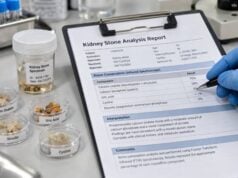
Stone composition can change how the urine results are interpreted. When a passed or surgically removed stone is available, a kidney stone analysis is highly useful. Calcium oxalate, calcium phosphate, uric acid, struvite, and cystine stones do not have the same metabolic drivers.
Blood tests commonly accompany urine testing. They may include creatinine, electrolytes, bicarbonate, calcium, albumin, phosphate, and uric acid. If serum calcium is high or high-normal in an appropriate clinical setting, clinicians may check parathyroid hormone because primary hyperparathyroidism is a treatable cause of calcium stones. A blood calcium test for kidney stones therefore complements, rather than replaces, urine calcium measurement.
Testing is usually performed when the person is medically stable, has returned to their normal diet and fluid habits, and is not in the middle of an acute infection or major temporary change in eating and drinking. Testing too close to an acute stone episode can capture behavior that is not typical—for example, unusually high water intake after an emergency visit.
How to Collect the Sample Correctly
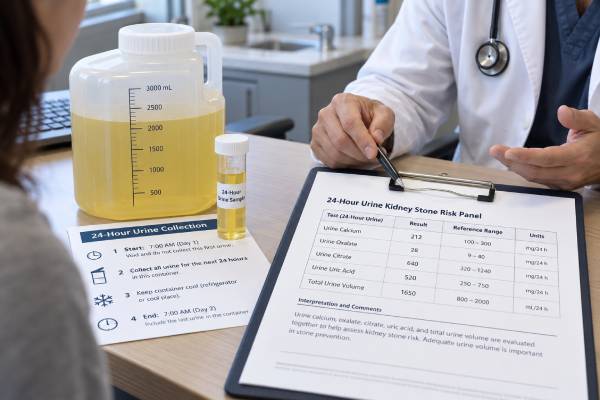
A 24-hour urine result is only as reliable as the collection. The key rule is to collect all urine produced during the timed period while keeping the start and end times accurate.
A common collection method is:
- On the chosen morning, urinate into the toilet and record that time as the start. Do not put that first urine in the container.
- Collect every urine sample after that for the rest of the day and overnight.
- At the same time the next morning, urinate one final time and add that sample to the container.
- Store the container as instructed by the laboratory, which may require refrigeration or use of a supplied preservative.
- Return the collection according to the laboratory’s timing instructions.
Follow the kit instructions over any generic advice, because collection bottles and preservatives differ. If the laboratory provides two separate 24-hour collections, complete each on the assigned day rather than combining them.
For an initial metabolic evaluation, the goal is usually to capture usual life. Do not deliberately drink extreme amounts of water, avoid all calcium, eat an unusually “healthy” diet for one day, or stop prescribed medicines unless the clinician specifically tells you to do so. An artificial day can produce a profile that looks good but does not explain everyday stone formation.
Missed urine is one of the most important errors. If a substantial void is missed, contact the laboratory or clinical team; starting over may be more useful than submitting a misleading collection. Overcollection also matters. A “24-hour” sample collected for 27 or 30 hours can falsely increase measured daily excretion.
Creatinine excretion is often used as a reasonableness check. An unexpectedly low value may suggest an incomplete collection, although muscle mass, age, body size, diet, and kidney function also affect creatinine. For more detail on collection problems, the 24-hour urine collection errors guide explains how missed and extra samples can change interpretation.
How to Read Calcium, Oxalate, Citrate, Uric Acid, and Volume
There is no single universal “normal stone panel.” Laboratories use different methods and reference ranges, and stone prevention targets may be more useful than population reference intervals. Clinicians also interpret each result in combination with stone type, diet, medications, kidney function, and the other urine values.
Urine volume
Higher urine volume dilutes calcium, oxalate, uric acid, and other solutes. Current stone-prevention guidance commonly aims for a urine output above about 2.5 L per day in many adult stone formers. Cystinuria often requires an even higher target. A low result does not necessarily mean the kidneys are failing; it usually means total fluid intake was too low for the person’s losses through sweat, breathing, and stool.
Because volume is so actionable, a urine volume test for kidney stones can be one of the most practical parts of the profile.
Urine calcium
High urine calcium is called hypercalciuria. It can occur even when blood calcium is normal. Contributing factors can include high sodium intake, inherited tendency, certain endocrine disorders, excess calcium or vitamin D in some circumstances, and other medical conditions.
Many laboratories flag values around or above 250 mg/day in women or 300 mg/day in men, but thresholds vary and risk is continuous rather than beginning at one exact cutoff. Some guidelines use mmol/day and different treatment thresholds. The important question is whether urinary calcium is high enough, in context, to raise supersaturation and whether it improves with sodium reduction, diet changes, or prescribed treatment.
Urine oxalate
Oxalate binds calcium to form calcium oxalate, the most common mineral in kidney stones. Higher oxalate can result from high oxalate intake, low calcium intake with meals, fat malabsorption, inflammatory bowel disease, bariatric procedures, excessive vitamin C, or rare primary hyperoxaluria.
A value should be interpreted against the laboratory range, often roughly in the 20–40 mg/day range for adults, though methods differ. Markedly elevated results deserve careful evaluation rather than simple diet restriction. The urine oxalate test is especially important when calcium oxalate stones recur despite apparently good fluid intake.
Urine citrate
Citrate is protective because it binds free calcium and can inhibit crystal formation and growth. Low urinary citrate, or hypocitraturia, may occur with metabolic acidosis, chronic diarrhea, high dietary acid load, low fruit and vegetable intake, low potassium intake, or certain medicines and kidney disorders.
Laboratory cutoffs vary, but values below roughly 320 mg/day are often described as low in adults. Sex-specific and concentration-based interpretations also exist. Clinicians may focus on whether citrate is adequate for the calcium load rather than treating one threshold as absolute. Potassium citrate is commonly used when clinically appropriate, but it should be prescribed with attention to kidney function, potassium level, urine pH, and stone type.
Urine uric acid and pH
Urinary uric acid reflects purine handling and can rise with high purine intake, high cell turnover, some metabolic conditions, or gout-related physiology. Common hyperuricosuria thresholds are around 800 mg/day in men and 750 mg/day in women, but laboratory cutoffs differ.
For uric acid stones, urine pH is often more important than the total amount of uric acid. Persistently acidic urine keeps more uric acid in its poorly soluble form, making crystallization easier. In contrast, calcium phosphate risk can rise as urine becomes more alkaline. This is why a stone-prevention plan should not try to push urine pH upward without considering stone composition.
How Result Patterns Point to Different Stone Risks
The real value of the test comes from patterns. A single abnormal number rarely explains the whole problem.
For calcium oxalate stones, a common risk pattern is low volume plus one or more of high calcium, high oxalate, or low citrate. Someone with moderately elevated urine calcium but 3 L of urine and good citrate may have a very different supersaturation from someone with the same calcium excretion in 1.2 L of urine. A dedicated calcium oxalate stone risk test focuses on this interaction.
For calcium phosphate stones, clinicians pay closer attention to high urinary calcium and higher urine pH. Persistently alkaline urine can also prompt evaluation for conditions such as distal renal tubular acidosis when the clinical context fits.
For uric acid stones, the characteristic pattern is often low urine pH, sometimes combined with low volume and high uric acid excretion. Insulin resistance, metabolic syndrome, type 2 diabetes, obesity, gout, and high purine intake can be relevant. Treatment often emphasizes urine alkalinization and adequate urine volume, with urate-lowering therapy reserved for appropriate situations rather than prescribed solely because the blood uric acid is high.
Cystine stones are different. Cystinuria is a genetic disorder that causes excessive cystine excretion, and prevention targets typically include very high urine volume and urine alkalinization. A standard calcium-stone panel may not fully assess this disorder; specific cystine measurement and, in some settings, cystine capacity are used.
Results can also reveal diet patterns. High urine sodium often suggests high salt intake. High urea nitrogen can reflect high protein intake. These markers are not moral judgments about diet; they help connect daily habits with a measurable urinary effect.
What Happens After the Results
The next step is to match the treatment to the abnormal pattern rather than giving every stone former the same plan. General prevention commonly includes enough fluid to produce the target urine volume, normal dietary calcium intake, moderation of sodium, and avoidance of excessive animal protein. Calcium restriction is usually not the default for calcium oxalate stone formers because normal calcium with meals helps bind oxalate in the gut.
Targeted measures may include:
- lowering sodium when urine sodium and calcium are high;
- pairing normal dietary calcium with oxalate-containing meals when urine oxalate is elevated;
- increasing fruits and vegetables or using prescribed alkali when citrate is low;
- reducing excessive purine intake when uric acid excretion is high;
- using thiazide or thiazide-like medication in selected people with hypercalciuria;
- using potassium citrate or another alkali when indicated by citrate, pH, and stone type;
- investigating bowel disease, endocrine disorders, genetic disease, or medication effects when the pattern is unusual or severe.
A prevention plan should be practical enough to sustain. For example, “drink more water” is less useful than converting the target into a routine: fluid with each meal, between meals, in the evening, and extra fluid during heat or exercise. The urine result then provides an objective way to see whether the routine worked.
Medication decisions require medical supervision. Alkali can raise potassium, thiazide-type drugs can affect electrolytes and glucose, and allopurinol is not appropriate for every person with a stone. Treatment should also account for pregnancy, kidney disease, blood pressure, other medicines, and the exact stone composition.
Limitations, Repeat Testing, and When to Get More Help
A 24-hour urine test is a snapshot of one or two days, not a permanent metabolic identity. Diet, weather, work schedule, exercise, gastrointestinal illness, and medications can all change the results. For that reason, many guidelines favor two collections for a detailed initial evaluation, especially when the first result will drive long-term treatment.
Follow-up testing is useful because prevention should be measured, not assumed. After a diet or medication change, a repeat collection is often obtained within a few months. Current European guidance suggests a first follow-up 24-hour urine around 8–12 weeks after starting pharmacologic prevention, with later testing individualized; once the urine risk profile is stable, annual testing is often reasonable for high-risk patients.
A normal-looking panel does not eliminate stone risk. Some stone formers have no major abnormality on a single collection, and stone recurrence can still reflect anatomy, intermittent dietary exposures, genetic factors, infection, or variation that the collection missed. Conversely, one mild abnormality should not automatically lead to medication without considering the full clinical picture.
Seek prompt medical care for a suspected stone with fever or chills, inability to keep fluids down, uncontrolled pain, reduced or absent urine output, pregnancy, a single functioning kidney, or signs of severe illness. These situations can require urgent imaging, drainage, antibiotics, or other treatment and should not wait for outpatient metabolic testing.
The 24-hour urine profile is most useful when paired with the stone history, imaging, blood tests, and stone composition. Used that way, it turns kidney stone prevention from generic advice into a testable plan with specific targets that can be checked over time.
References
- Metabolic Evaluation and Recurrence Prevention – EAU Guidelines on Urolithiasis – Uroweb 2026 (Guideline)
- Metabolic Evaluation and Recurrence Prevention for Urinary Stone Patients: An EAU Guidelines Update 2024 (Review)
- Urological Guidelines for Kidney Stones: Overview and Comprehensive Update 2024 (Review)
- Kidney Stone Pathophysiology, Evaluation and Management: Core Curriculum 2023 2023 (Review)
- UPDATE – Canadian Urological Association guideline: Evaluation and medical management of kidney stones 2022 (Guideline)
Disclaimer
This article is for general education and does not replace individualized medical care. Kidney stone targets and treatment depend on stone type, kidney function, medications, pregnancy status, and the laboratory method used. Discuss abnormal 24-hour urine results with a qualified clinician before changing prescription medicines, supplements, or electrolyte intake.