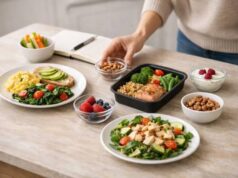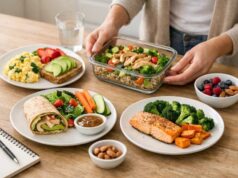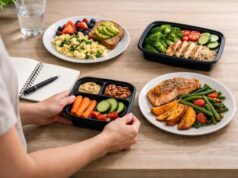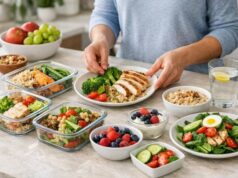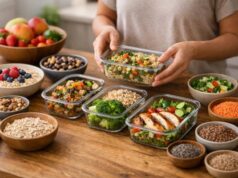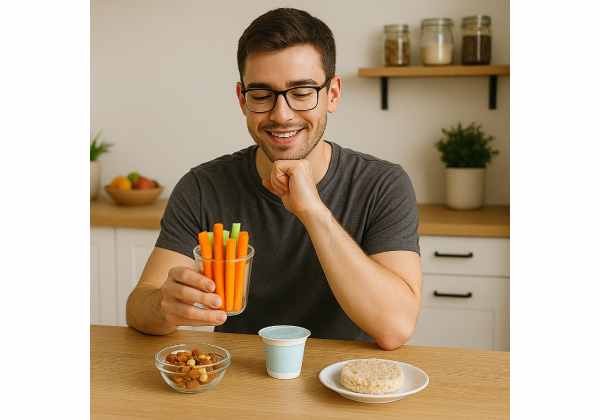
A good snack can make weight loss easier. A bad one can quietly undo a day of decent choices. The difference is usually not whether the snack is “healthy” in a broad sense. It is whether it fits your calorie budget, actually reduces hunger, and helps you make the next meal easier to manage. That matters because many people do not get in trouble from lunch or dinner alone. They drift off plan through grazing, convenience foods, and snacks that are small in size but surprisingly dense in calories.
Smart snacks for weight loss are usually simple: enough protein, fiber, or food volume to be useful, but not so many calories that they turn into a second meal. This guide explains when snacks help, what makes a snack filling, and how to choose 100–250 calorie options that work in real life. You will also find practical examples for different hunger levels, cravings, and schedules.
Table of Contents
- When snacks help weight loss
- What makes a snack smart
- 100 to 150 calorie snack ideas
- 150 to 200 calorie snack ideas
- 200 to 250 calorie snack ideas
- How to pick the right snack
When snacks help weight loss
Snacks are not automatically helpful or harmful for weight loss. They are useful when they solve a real problem. They tend to work well when there is a long gap between meals, when you need enough energy to avoid overeating later, or when your routine makes three perfectly timed meals unrealistic. They tend to work poorly when they become a reflex, a delay tactic, or a way to keep eating without ever feeling like you sat down for a meal.
A smart snack usually helps in one of these situations:
- you ate breakfast early and lunch is still hours away
- your lunch was lighter than planned and dinner is late
- you work out between meals and need something practical
- you tend to arrive at dinner extremely hungry and overeat
- you want a planned answer to an afternoon or evening craving
Those are all normal situations. A 150 to 250 calorie snack can make the rest of the day easier if it keeps hunger from escalating. In that sense, a snack is not a failure of discipline. It is a tool for appetite control.
Where people often run into trouble is with unplanned snacking. That usually looks like:
- handfuls of nuts taken several times from the bag
- crackers or cereal eaten while standing in the kitchen
- “healthy” granola bars that do not satisfy
- coffee drinks that feel small but add up fast
- a snack before dinner that turns into several snacks before dinner
That pattern is less about hunger and more about friction in the food environment. Boredom, stress, convenience, and routine often drive those choices more than a real need for food. If that sounds familiar, it helps to think about snacks as part of the same system as your meals. A guide to meal timing for appetite control can help you see whether your snacking is solving a schedule problem or creating one, and a practical look at late-night snacking can be especially helpful if evenings are where the day tends to drift.
The most useful mindset is simple: do not ask whether you “should” snack. Ask whether this snack improves the next few hours. If it helps you stay steady, it is probably doing its job. If it wakes up more appetite than it solves, it is probably the wrong snack or the wrong moment.
What makes a snack smart
A smart snack for weight loss does more than fit a calorie range. It should also make sense for your appetite, schedule, and the rest of the day. The best snack is rarely the one with the fewest calories. It is the one that gives you enough return for the calories you spend.
In practice, the best snacks usually do at least one of these things well:
- provide meaningful protein
- provide useful fiber
- offer a good amount of food volume
- feel satisfying enough to prevent random grazing
- fit easily into your day without becoming a trigger food
Protein is one of the most reliable ways to make a snack more effective. Greek yogurt, cottage cheese, eggs, turkey, tuna packets, edamame, and protein shakes usually hold people better than snacks built only around refined carbs. Fiber also matters because it slows eating and improves fullness. Fruit, popcorn, roasted chickpeas, vegetables, chia-based snacks, and higher-fiber cereal or crackers can all help, especially when paired with protein.
Food volume matters too. This is why an apple, a bowl of berries, air-popped popcorn, or crunchy vegetables often outperform tiny snack foods that disappear in two bites. A snack that looks and feels substantial tends to work better than one that is technically portion-controlled but not especially satisfying. If you want a fuller picture of this principle, a guide to high-volume, low-calorie foods explains why size and fullness often matter as much as the calorie number itself.
The other key trait is predictability. Smart snacks usually come in a form you can portion easily. That matters more than people expect. It is much easier to stay near 180 calories with a measured yogurt bowl, a piece of fruit and string cheese, or a pre-portioned cottage cheese cup than with peanut butter, trail mix, cereal, or chips eaten from the package.
A useful rule is to match the snack to the problem:
- for physical hunger, choose protein and fiber
- for a sweet craving, choose fruit plus protein
- for crunch, use popcorn or vegetables with a dip
- for convenience, use a snack you can grab without thinking
- for pre-workout energy, lean more toward carbs and easy digestion
This is where a little planning helps a lot. If you already know your usual problem moments, you can keep a few default options ready instead of negotiating with yourself every time. That kind of setup works much better than relying on motivation alone. It also lines up well with tracking without counting calories, because having a few repeat snacks makes appetite control easier even when you are not measuring every gram.
100 to 150 calorie snack ideas
The 100 to 150 calorie range works best when you need to take the edge off hunger, bridge a shorter gap between meals, or deal with a craving without turning the snack into a full eating event. These snacks are usually too small to replace a meal, but they can be very useful when chosen well.
Good options in this range include:
- A medium apple
Usually around 95 calories, with decent volume and sweetness. This is simple, portable, and more filling than many processed snack bars in the same range. - A bowl of berries
One and a half to two cups of strawberries, raspberries, or blackberries can fit comfortably in this range and gives you a lot of food for the calories. - Air-popped popcorn
Around three to four cups can land near 100 to 130 calories depending on preparation. This is one of the best choices if you want something crunchy and snack-like. - Nonfat Greek yogurt
A single serving can fit near 90 to 120 calories and adds useful protein. Add cinnamon or a few berries if you want it to feel more like a real snack. - Cottage cheese with cucumber or tomatoes
A modest portion can stay around 120 to 150 calories and works well when you want something savory rather than sweet. - One boiled egg and a piece of fruit
This often lands around 130 to 150 calories and is much more effective than fruit alone for many people. - Baby carrots with salsa
This is a surprisingly practical option when you mainly want crunch and something to chew. - Edamame in a small portion
Shelled edamame can give you protein and fiber in a compact serving.
What works well here is combining volume, convenience, and a clear purpose. A 110 calorie snack is rarely impressive if it disappears instantly and leaves you prowling the kitchen 20 minutes later. It becomes impressive when it does its job and lets you move on.
This range is especially useful for people who already eat fairly satisfying meals and only need a small bridge between them. It can also work well if you are trying to keep snacks tight while preserving room for dinner. If you struggle with sweet cravings in the afternoon or evening, a few ideas from a protein and fiber craving toolkit can help you choose options that settle appetite rather than amplify it.
The biggest mistake in this calorie range is picking snacks that are too processed, too tiny, or too easy to inhale. If you choose the 100 to 150 calorie range, make the snack earn it.
150 to 200 calorie snack ideas
The 150 to 200 calorie range is where many of the best weight loss snacks live. It is large enough to give you meaningful protein or more lasting fullness, but still compact enough to fit into most calorie budgets without becoming a second lunch. For many people, this range is the sweet spot when the goal is to stay steady until the next meal.
Strong options include:
- Greek yogurt with berries
A serving of Greek yogurt plus half a cup of berries usually lands in this range and gives you a good balance of protein, sweetness, and volume. - Apple with a measured tablespoon of peanut butter
This works well when you want both crunch and a bit more staying power. The word measured matters here, because nut butter can climb fast if you free-pour. - Cottage cheese with pineapple or melon
This is an easy high-protein option that feels more substantial than many packaged snacks. - Two boiled eggs and cherry tomatoes
A solid savory snack with protein and some extra volume. - String cheese and a pear
Simple, portable, and often more satisfying than a typical “healthy” snack bar. - Roasted chickpeas and fruit
This gives you fiber, a bit of protein, and more crunch than softer snacks. - Turkey slices rolled with cucumber or bell pepper strips
This works well when you want something savory, crisp, and protein-forward. - A small protein shake and a clementine or berries
Useful when convenience matters, especially before or after a workout. - Light popcorn plus jerky in a modest portion
This combination is practical when you want snack-food texture but also need protein.
This calorie range works best when there is a real reason for the snack. For example, it can be very helpful around 4 p.m. if dinner is not until 7:30 and you know you tend to overeat once you get home. In that context, the snack is not extra food. It is appetite management.
This is also a good range for people who want snacks that reflect their broader macro goals. You do not need to turn every snack into a math problem, but it helps when your choices fit the rest of the day. That is especially true if you are trying to increase protein or spread intake more evenly. If you want a broader framework, a guide to weight loss macro ratios helps explain where snacks fit, and a more detailed look at daily protein intake can show why a protein-based snack often works better than a purely carb-based one.
In real life, the smartest snacks in this range are often the least glamorous. Yogurt, fruit, eggs, cheese, and simple protein foods keep showing up because they work.
200 to 250 calorie snack ideas
A 200 to 250 calorie snack should usually solve a bigger problem. It makes sense when you have a long gap before the next meal, when your previous meal was light, when you need a practical pre-workout or post-workout option, or when a smaller snack simply does not hold you. In this range, the snack should feel clearly structured and worth the calories.
Good options include:
- Greek yogurt bowl with fruit and a small sprinkle of high-fiber cereal
This can feel like a mini meal while still staying under control. - Cottage cheese with fruit and a few chopped nuts
A balanced option that adds protein, sweetness, and a little texture. - Tuna packet with whole-grain crackers and sliced cucumber
This is one of the better savory choices when you want substance rather than something dessert-like. - Turkey roll-ups with fruit and a few crackers
Useful for a workday snack that actually carries you to dinner. - Edamame with an orange
High in fiber, reasonably filling, and easy to portion. - A protein shake with a banana
This is especially practical around exercise or on days when a meal is delayed. - Hummus with carrots, cucumbers, and a measured portion of pita
This works when you want something snacky but not flimsy. - Oatmeal made small, with berries or sliced banana
More useful than many people expect, especially in colder weather or when you need a more comforting option. - High-protein cereal with milk in a modest bowl
This can work well when cereal tends to be a trigger food and you need a portion that is structured from the start.
At this size, the snack should have clear stopping power. If it does not, it may be better treated as a meal component than as a snack. That matters because many people unintentionally create a pattern of breakfast, snack, lunch, snack, snack, dinner, dessert, then wonder why the calorie deficit disappears.
This range also suits people whose meals are spaced far apart due to work, commuting, parenting, or training. It can be especially useful if you are trying to avoid arriving at dinner so hungry that you inhale the first convenient food you see. When that is the pattern, a larger planned snack often works better than trying to “save calories” and then overeating later. In that sense, it is similar to a strategy for resetting the food environment: small structural changes reduce the need for constant restraint.
The caution in this calorie range is that it becomes easier to turn a snack into a meal without noticing. The best 200 to 250 calorie snacks are intentional, portioned, and boring enough that they do not trigger a second round.
How to pick the right snack
The right snack is not just the one with the right calorie number. It is the one that fits why you are eating, what the next few hours look like, and what your appetite is actually asking for. A snack that works beautifully at 3 p.m. may be a poor choice at 9:30 p.m., and a snack that works before a workout may be wrong for stress eating after dinner.
A simple way to choose is to match the snack to the situation.
If you are physically hungry and dinner is far away, choose:
- protein plus fiber
- enough calories to matter
- something you can portion clearly
If you want something sweet, choose:
- fruit plus protein
- yogurt-based snacks
- a snack with volume, not just sugar
If you want something crunchy or snack-like, choose:
- popcorn
- vegetables with a dip
- roasted chickpeas
- crackers paired with a protein source
If you are close to a workout, choose:
- easy-to-digest carbs
- moderate protein if needed
- lower fat and lower fiber if your stomach is sensitive
If evenings are your problem zone, choose:
- a snack that is planned before the craving hits
- something satisfying enough to end the eating episode
- a portion that does not invite endless picking
It also helps to ask one practical question: would this snack still feel like a good idea if I plated it and sat down with it? If the answer is no, there is a good chance it is not a hunger solution. It may be convenience, emotion, habit, or delay.
There are also a few patterns worth avoiding. Snacks become less smart when:
- they are liquid calories that do not satisfy
- they are marketed as healthy but low in protein and fiber
- they come from bags or boxes you keep returning to
- they are so restrictive that they trigger a bigger rebound later
- they are used to avoid fixing weak meals
That last point matters. Sometimes the best snack fix is not a better snack. It is a better breakfast or lunch. If you are always starving at 4 p.m., the issue may be that your earlier meals need more protein, more fiber, or simply more food. That is often one of the quieter diet mistakes that stall progress, especially when people assume willpower should fill the gap.
The simplest long-term approach is to keep three to five default snacks around that match your usual hunger patterns. Then you are not deciding from scratch every day. You are choosing from options that already fit your plan. That makes weight loss feel less like constant negotiation and more like a routine you can actually keep.
References
- Obesity Management in Adults A Review 2023 (Review)
- The role of dietary fibers in regulating appetite, an overview of mechanisms and weight consequences 2024 (Review)
- Tackling Cravings in Medical Weight Management: An Update on Pathophysiology and an Integrated Approach to Treatment 2024 (Review)
- Are Dietary Proteins the Key to Successful Body Weight Management? A Systematic Review and Meta-Analysis of Studies Assessing Body Weight Outcomes after Interventions with Increased Dietary Protein 2021 (Systematic Review and Meta-Analysis)
Disclaimer
This article is for general educational purposes only and is not a substitute for personalized medical, nutrition, or behavioral health advice. If you have diabetes, an eating disorder history, kidney disease, digestive disease, or medications that affect appetite or blood sugar, get individualized guidance before making major changes to how you snack.
If this article helped you build a smarter snack routine, please share it on Facebook, X, or your preferred platform so it can help someone else make weight loss feel more manageable.