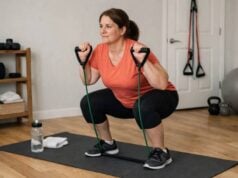
Many people start a weight-loss training plan by focusing on the obvious parts: workouts, calories, steps, and maybe a new weekly schedule. The less obvious pieces, like warming up properly, improving mobility where it actually matters, and recovering well enough to train again, often get treated as extras. That is a mistake. These pieces do not directly cause fat loss the way a calorie deficit does, but they strongly influence whether you can stay consistent, move well, and keep your training quality high enough to matter.
A good warm-up helps you feel ready instead of stiff and sluggish. Smart mobility work can make certain movements more comfortable and more effective. Recovery habits keep soreness, fatigue, and small aches from turning into missed sessions. In practice, these three habits help you train more often with less friction. This article explains what each one should do, what it should not do, and how to use warm-up, mobility, and recovery to make your weight-loss training more sustainable.
Table of Contents
- Why these habits matter
- What a good warm-up looks like
- Mobility that improves training
- Recovery after strength and cardio
- Weekly recovery plan for fat loss
- Common mistakes and when to pull back
Why these habits matter
Warm-up, mobility, and recovery do not burn many calories compared with the main workout, so people often assume they are optional. But when weight loss is the goal, the real value of these habits is not direct calorie burn. It is repeatability. They help you keep moving well enough, feeling well enough, and recovering well enough to train again tomorrow, two days later, and next week.
That matters because body-fat loss usually comes from months of decent training rather than a few heroic sessions. A workout only helps if you can keep doing some version of it consistently. If you are constantly sore, stiff, or dealing with minor aches that make training feel harder than it should, you are much more likely to skip sessions or reduce effort without meaning to. Over time, that hurts results more than a slightly less aggressive plan ever would.
A useful way to think about this is that weight-loss training has two jobs. First, it should help raise energy expenditure and support a sustainable calorie deficit. Second, it should preserve or improve your ability to train. Warm-up, mobility, and recovery mostly serve the second job. They keep your training engine running.
They also improve the quality of your sessions. A bodyweight workout, treadmill walk, rower interval, or strength session usually feels better after 5 to 10 minutes of focused preparation. Joints move more freely. Breathing settles. Balance improves. The first work set feels like part of the session instead of a shock to the system. That is particularly important if you are older, coming back after time off, training early in the morning, or dealing with stiffness from sitting for long hours.
Mobility and recovery also help you make better decisions. When you know the difference between normal soreness, stiffness that improves with movement, and the kind of fatigue that signals you need to back off, you stop treating every uncomfortable feeling as failure. That makes the plan more stable emotionally as well as physically.
This is one reason sustainable programs tend to work better than chaotic ones. The most effective approach is usually not the hardest approach. It is the one that lets you keep stacking good sessions. That is also why the best exercises for weight loss are rarely just about calorie numbers. They are about what you can perform, recover from, and repeat.
When these habits are working well, training feels more predictable. You start the session more prepared, you finish with less unnecessary wear and tear, and you recover in a way that protects the next workout. That is not flashy, but it is exactly the kind of system that tends to produce better long-term results.
What a good warm-up looks like
A good warm-up is not random stretching and it is not a mini workout that leaves you tired before the real work begins. Its job is simple: raise body temperature, increase blood flow, rehearse the movement patterns you are about to use, and help you feel more coordinated and ready to train.
For most weight-loss workouts, a warm-up only needs about 5 to 10 minutes. That is enough time to improve readiness without wasting energy. The structure matters more than the length. A useful warm-up usually includes three parts:
- General movement
Start with 2 to 3 minutes of easy movement that gradually raises your heart rate. This could be brisk walking, light cycling, marching in place, easy rowing, or slow treadmill work. - Dynamic mobility
Move the joints you are about to use through comfortable ranges of motion. Think leg swings, arm circles, hip hinges, ankle rocks, bodyweight squats, and walking lunges if tolerated. - Specific rehearsal
Perform lighter or easier versions of the main workout movements. Before strength work, that may mean slow squats, incline push-ups, glute bridges, or band pull-aparts. Before cardio, it may mean gradually increasing pace or incline.
The best warm-up depends on the session. A heavy lower-body day needs a different emphasis than an easy walk. A treadmill interval workout might only need a brisk walk, some ankle and hip movement, and a gradual build in speed. A full-body circuit might need bodyweight squats, hip hinges, shoulder mobility, and a short plank. Someone doing a no-equipment routine can often prepare well with the same patterns they will use later, just slower and easier, which fits naturally with a bodyweight training session.
A few practical rules help:
- Warm up the areas you will actually use.
- Keep it dynamic rather than passive when possible.
- Finish feeling ready, not tired.
- If you are stiff in one area, spend a little more time there without turning the warm-up into a therapy session.
For people with joint sensitivity, the warm-up can matter even more. Knees, hips, and lower backs often feel better after a gradual build rather than an abrupt start. If impact or bending feels uncomfortable at first, a slower ramp-up is often better than pushing through cold. This is especially true if you already need joint-friendly cardio options.
One more point is worth remembering: the warm-up should match the goal. If the session is simple, the warm-up should be simple too. Many people overcomplicate this step because it feels productive to keep adding drills. Most do better with a short, repeatable sequence they will actually use before every session. The best warm-up is the one you can remember and apply consistently, not the one that looks most technical on social media.
Mobility that improves training
Mobility is one of the most misunderstood parts of training. Many people use the word to mean any stretching at all, but useful mobility work is more specific than that. It is about improving how well you can actively move through the ranges of motion your training and daily life actually require.
That distinction matters because not everyone needs the same mobility routine. A person who sits most of the day and struggles to squat comfortably may benefit from ankle, hip, and upper-back mobility. Someone who already moves well but feels generally tight may need more strength and better warm-ups, not more stretching. Mobility should solve a real problem, not just fill time.
For weight-loss training, the most helpful mobility areas are often:
- Ankles, which affect squat depth, walking mechanics, and step comfort
- Hips, which influence lunges, hinging, walking stride, and back comfort
- Thoracic spine, which affects posture, reaching, and upper-body movement
- Shoulders, especially if you row, lift, swim, or do upper-body circuits
A practical mobility routine is usually short. Five to eight minutes before training, or 10 minutes on rest days, is enough for most people. Good options include:
- Ankle rocks against a wall
- Hip flexor stretches with glute squeeze
- Controlled bodyweight squats
- Cat-cow or thoracic rotations
- Shoulder circles and wall slides
- Deep breathing while holding a supported position
What mobility should not become is endless passive stretching done out of guilt. If you spend 25 minutes stretching but still cannot control the movement pattern you care about, the routine is probably missing something. Mobility works best when it connects directly to the exercises you do. If you are trying to improve squat comfort, mobility plus glute and leg strength usually works better than mobility alone. That is one reason well-chosen glute and leg training often improves movement quality as much as flexibility drills do.
It also helps to understand that “tightness” is not always a flexibility problem. Sometimes it is a fatigue problem. Sometimes it is a coordination problem. Sometimes the body is protecting a range you do not control well yet. In those cases, the answer may be better strength, slower exercise progressions, or lighter sessions for a few days rather than forcing more stretch.
Mobility is also specific to the activity. A person doing mostly walking and machine cardio needs a different emphasis than someone doing deep squats, kettlebell swings, or overhead work. Mobility should make training feel smoother and more comfortable, not become a second workout with no clear purpose.
Used well, mobility helps you access the positions your training demands. Used poorly, it becomes busywork. The key question is always the same: does this help me move better in the workout I am actually doing? If the answer is yes, keep it. If the answer is unclear after a few weeks, simplify it and refocus on the movements that matter most.
Recovery after strength and cardio
Recovery is where a lot of useful training adaptation actually gets protected. It is also where people often get distracted by gadgets, soreness hacks, or complicated routines while skipping the habits that matter most. For most people trying to lose weight, the foundations of recovery are simple: enough sleep, enough protein, enough hydration, sensible training volume, and some light movement between harder sessions.
Start with what matters most after training:
- Downshift, do not collapse
After a tougher session, spend a few minutes walking, breathing more slowly, and letting your heart rate come down. This small transition often leaves people feeling better later than stopping abruptly. - Eat in a way that supports the next session
Weight loss does not require huge post-workout meals, but it does help to eat enough total protein across the day. A steady protein intake for weight loss supports muscle retention and recovery while dieting. - Rehydrate normally
You do not need an elaborate formula after every workout, but replacing lost fluids matters, especially after longer or sweatier sessions. - Sleep like recovery matters
Hard training on poor sleep is one of the fastest ways to make workouts feel flat. Better sleep for weight loss helps with training quality, appetite regulation, and recovery all at once. - Use light movement to reduce stiffness
Easy walking, gentle cycling, or a short mobility sequence the next day can help more than total inactivity if you are sore but otherwise fine.
This is also where soreness needs context. Mild muscle soreness, especially after a new exercise or a harder session, is normal. It does not mean the workout was perfect, and it does not mean you need to chase that feeling every time. Severe soreness that changes how you walk, makes stairs miserable for several days, or ruins the next planned session is usually a sign that the dose was too high.
Recovery is also individual. Some people handle four or five training days well if the intensity is distributed sensibly. Others do better with fewer hard sessions and more walking. Stress, age, sleep quality, food intake, and training history all affect how much you can recover from. That is why copying someone else’s split rarely works as well as adjusting to your own response.
The simplest recovery question is not, “What tool should I buy?” It is, “Can I perform well again soon enough to stay consistent?” If the answer is no, look first at sleep, nutrition, stress, and training load before assuming you need a more advanced solution.
For most people, recovery should feel boring in a good way. It should rely on habits strong enough to support training week after week, not on desperate fixes after every hard workout.
Weekly recovery plan for fat loss
Recovery is easier when it is planned into the week instead of treated as something you remember only when you feel wrecked. The goal is not to avoid fatigue completely. Training is supposed to create some. The goal is to organize your week so fatigue rises and falls in a way that still lets you progress.
A practical weekly recovery plan usually includes:
- 1 to 3 harder training sessions
- Easier movement on most other days
- At least one lower-stress day
- A realistic number of rest days based on your training age and recovery capacity
For example, a balanced fat-loss week might look like this:
- Monday: strength training
- Tuesday: easy walk or zone 2 cardio
- Wednesday: intervals or a harder circuit
- Thursday: easy movement and mobility
- Friday: strength training
- Saturday: longer walk or moderate cardio
- Sunday: rest or very light activity
That kind of structure works because it protects training quality. It also gives soreness and fatigue somewhere to go. If every day is hard, nothing stands out as productive. Everything just feels heavy. A better pattern alternates stress and recovery more deliberately.
This is where rest days become strategic rather than emotional. Many people assume taking a day off means losing momentum, but the opposite is often true. A smart approach to rest days per week usually improves both performance and consistency. A rest day is not just “no calories burned.” It is part of the process that keeps the next important session useful.
Daily movement still matters on easier days. Recovery does not mean staying glued to the couch unless you are genuinely ill or injured. In many cases, light activity helps you feel better. A casual walk, mobility work, chores, or easy cycling can support circulation, reduce stiffness, and help you feel more normal than doing nothing at all. That is one reason walking for weight loss fits so well into recovery-focused weeks. It adds movement without requiring the same recovery cost as harder training.
You can also build small recovery cues into the day:
- Five minutes of mobility after long periods of sitting
- A short walk after meals
- A wind-down routine before bed
- A regular bedtime on training nights
- Light movement on mornings after hard sessions
None of these habits is dramatic, but together they reduce the friction that makes training harder to sustain. The weekly plan becomes more predictable, and you spend less time guessing whether you are lazy or under-recovered. Usually, you are not either. You just need a plan that respects both effort and recovery instead of treating them like competing priorities.
Common mistakes and when to pull back
The most common warm-up, mobility, and recovery mistakes come from imbalance. Some people rush through everything and wonder why every session starts stiff and ends messy. Others spend so long “preparing” that the actual workout becomes secondary. The useful middle ground is specific, repeatable, and tied to the demands of the training plan.
A few mistakes show up repeatedly:
- Skipping the warm-up when short on time
This often makes the first half of the session worse, especially for strength work or faster cardio. - Using the same mobility routine for every problem
Tight hips, cranky shoulders, and poor squat control do not always need the same fix. - Treating soreness as proof of success
Soreness can happen after good training, but it is not the goal. - Ignoring sleep while chasing recovery tricks
Fancy recovery tools cannot reliably outwork chronic poor sleep. - Adding hard sessions faster than recovery improves
This is one reason motivation fades. The body starts falling behind the plan.
There are also signs that it is time to reduce volume, lower intensity, or insert an easier day:
- Your performance drops across multiple sessions, not just one bad day.
- You feel unusually heavy, flat, or irritable before training begins.
- Soreness lingers long enough to affect movement quality.
- Minor aches are increasing instead of settling.
- Sleep gets worse while training load climbs.
- You keep needing willpower just to start sessions that used to feel manageable.
That does not always mean you need a full week off. Often the fix is smaller: shorten one or two sessions, switch hard intervals to easy aerobic work, reduce the number of sets, or use machines and simple patterns for a few days. If progress feels slow, that is also a moment to protect consistency rather than panic. In many cases, a short reset works better than trying to grind harder through a plan that is already fraying. This is closely related to staying motivated when results slow, which is why motivation during weight loss often improves when the plan feels manageable again.
Medical review makes sense if pain is sharp, swelling is persistent, dizziness is frequent, fatigue feels extreme, or exercise tolerance worsens in a way that does not fit normal training ups and downs. If broader health questions are part of the picture, talking to a doctor before a weight-loss effort is often the smarter move than endlessly adjusting workouts on your own.
The goal is not perfect recovery. The goal is enough recovery to keep the plan moving. Warm up with purpose, use mobility where it solves real problems, and recover in a way that supports the next session. That is the kind of boring competence that makes a weight-loss plan much more likely to last.
References
- Physical Activity and Excess Body Weight and Adiposity for Adults. American College of Sports Medicine Consensus Statement 2024 (Consensus Statement)
- A systematic review and net meta-analysis of the effects of different warm-up methods on the acute effects of lower limb explosive strength 2023 (Systematic Review and Meta-Analysis)
- Dynamic Warm-ups Play Pivotal Role in Athletic Performance and Injury Prevention 2024 (Review)
- The Impact of Sleep Interventions on Athletic Performance: A Systematic Review 2023 (Systematic Review)
- Heat and cold therapy reduce pain in patients with delayed onset muscle soreness: A systematic review and meta-analysis of 32 randomized controlled trials 2021 (Systematic Review and Meta-Analysis)
Disclaimer
This article is for general educational purposes only and is not a substitute for medical advice, diagnosis, or treatment. If pain, swelling, dizziness, persistent fatigue, or worsening exercise tolerance keeps interfering with training, seek individualized guidance from a qualified clinician.
If this article helped you, please share it on Facebook, X, or another platform you use so more readers can build weight-loss training plans that feel stronger, safer, and easier to sustain.