There is no validated test for “adrenal fatigue,” and major endocrine organizations do not recognize it as a medical diagnosis. The term is used to explain fatigue, sleep trouble, brain fog, cravings, and difficulty coping with stress, but research has not shown that ordinary chronic stress makes otherwise healthy adrenal glands gradually wear out. Commercial saliva panels, multi-point cortisol curves, and questionnaires cannot confirm the condition.
The symptoms are real and deserve a thoughtful evaluation. They may come from sleep apnea, anemia, thyroid disease, medication effects, depression, anxiety, diabetes, infection, undernutrition, overtraining, long COVID, or a recognized adrenal disorder. True adrenal insufficiency is uncommon but potentially life-threatening. It is diagnosed with clinically validated tests such as an 8–9 a.m. serum cortisol, paired ACTH, and, when needed, an ACTH stimulation test. A random cortisol or an isolated low-normal salivary value cannot make the diagnosis. Treatment marketed for adrenal fatigue can also be harmful: glandular supplements may contain hidden steroid or thyroid hormone, and unnecessary glucocorticoids can suppress the body’s own cortisol production.
- No blood, saliva, urine, hair, or questionnaire test has been validated to diagnose adrenal fatigue.
- A true adrenal-insufficiency evaluation usually starts with an early-morning serum cortisol and often ACTH, not a commercial daily saliva curve.
- Fatigue and cravings are nonspecific; sleep, anemia, thyroid, mood, infection, nutrition, and medication causes are much more common.
- Do not take hydrocortisone or adrenal glandular products without a confirmed indication, because they can suppress the HPA axis and create real adrenal insufficiency.
- Repeated vomiting, dehydration, confusion, fainting, severe weakness, or very low blood pressure needs emergency assessment.
Table of Contents
- What “Adrenal Fatigue” Means
- Why the Symptoms Still Matter
- Valid Tests for Adrenal Insufficiency
- Saliva Panels and Cortisol Curves
- Understanding Cortisol Results
- A Safer Fatigue Evaluation
- Treatment Risks and Next Steps
What “Adrenal Fatigue” Means
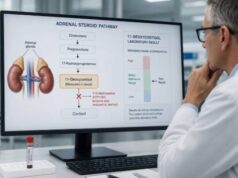
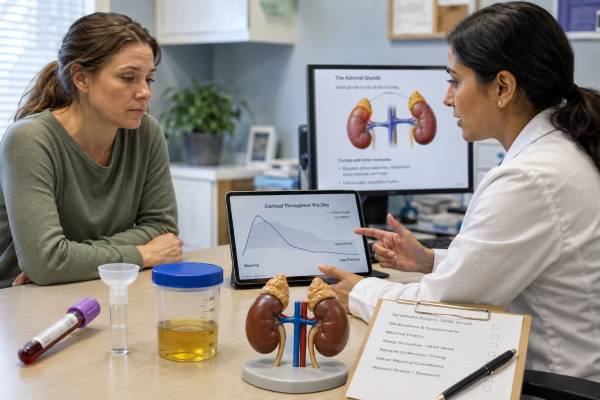
The adrenal glands sit above the kidneys and produce cortisol, aldosterone, adrenal androgens, and catecholamines. Cortisol supports blood pressure, metabolism, immune regulation, and the response to illness. The hypothalamus and pituitary control its production through the HPA axis. Cortisol normally rises before waking and falls toward bedtime, with smaller pulses across the day.
The adrenal-fatigue theory proposes that repeated stress overworks the adrenal glands until they cannot make enough cortisol. Advocates often describe stages that move from high cortisol to low cortisol and use nonspecific symptoms to assign a stage. These stages do not have agreed diagnostic criteria, validated thresholds, characteristic pathology, or proven treatment outcomes.
Chronic stress can affect sleep, mood, appetite, blood pressure, glucose, pain, and the HPA axis. Those effects are real, but altered stress signaling is not the same as adrenal gland failure. In many stress states, cortisol is normal or elevated rather than depleted. Research findings vary by population, sampling method, time, sleep, and psychiatric or medical condition; they do not establish a single adrenal-fatigue disease.
A systematic review examining the evidence found no substantiation for adrenal fatigue as a distinct condition. The Endocrine Society states that no scientific proof supports it and warns that the label can delay diagnosis of the actual cause. Lack of support for the label does not mean a clinician should dismiss the person’s experience. It means the evaluation should use testable diagnoses and safe, evidence-based steps.
Adrenal fatigue is not adrenal insufficiency
Adrenal insufficiency is a recognized disorder in which the body cannot produce adequate cortisol, at baseline or during stress. Primary adrenal insufficiency, including Addison disease, begins in the adrenal cortex and may also reduce aldosterone. Secondary disease begins with inadequate pituitary ACTH. Tertiary disease reflects hypothalamic suppression, most often after prolonged glucocorticoid exposure.
| Feature | “Adrenal fatigue” | Adrenal insufficiency |
|---|---|---|
| Medical status | Not a recognized diagnosis | Established endocrine disorder |
| Validated test | None | Morning cortisol, ACTH, and dynamic testing |
| Typical cause | Proposed chronic-stress depletion | Adrenal damage, pituitary disease, or glucocorticoid suppression |
| Emergency risk | No defined adrenal crisis | Adrenal crisis can be fatal |
| Hormone treatment | Unproven and potentially harmful | Glucocorticoid replacement is lifesaving when indicated |
Why the Symptoms Still Matter
Fatigue is a symptom, not a diagnosis. It can mean sleepiness, physical weakness, reduced stamina, post-exertional worsening, lack of motivation, or mental fog. Clarifying the experience narrows the differential more effectively than ordering a broad hormone bundle.
Symptoms commonly attributed to adrenal fatigue include difficulty waking, an afternoon slump, insomnia, salt or sugar cravings, dizziness, low libido, irritability, and poor concentration. None is specific to adrenal disease. The daily timing may reflect insufficient sleep, circadian misalignment, meal pattern, caffeine withdrawal, medication effects, or workload.
Common and important alternatives include:
- insufficient sleep, insomnia, obstructive sleep apnea, or restless legs;
- iron deficiency, anemia, vitamin B12 deficiency, or inadequate calorie intake;
- hypothyroidism or hyperthyroidism;
- diabetes or wide glucose swings;
- depression, anxiety, trauma, grief, or burnout;
- medication effects from sedatives, antihistamines, blood pressure drugs, opioids, or others;
- pregnancy, perimenopause, or heavy menstrual bleeding;
- infection, inflammatory disease, heart, lung, kidney, or liver disease;
- long COVID, myalgic encephalomyelitis/chronic fatigue syndrome, or postural orthostatic tachycardia syndrome; and
- overtraining, alcohol use, or stimulant cycles.
Clues that increase concern for genuine adrenal insufficiency include unintentional weight loss, persistent nausea or abdominal pain, recurrent vomiting, low blood pressure, low sodium, high potassium, low glucose, salt craving, and progressive skin or mouth darkening. A history of pituitary disease, adrenal surgery, autoimmune disease, tuberculosis, adrenal hemorrhage, or glucocorticoid use also raises risk.
External steroid exposure is easily overlooked. Repeated joint or spinal injections, high-potency skin creams, inhalers, and interactions with medicines that slow steroid metabolism can suppress ACTH. Symptoms may emerge during tapering or after the drug is stopped. This is real glucocorticoid-induced adrenal insufficiency and needs a supervised plan.
Valid Tests for Adrenal Insufficiency
When symptoms and risk factors justify testing, an early-morning serum cortisol is the usual starting point. Current NICE guidance recommends sampling between 8 and 9 a.m. for people aged 1 year or older with suspected adrenal insufficiency. Local assay thresholds should guide action.
A clearly low morning cortisol increases concern; a clearly adequate value makes adrenal insufficiency less likely. Intermediate results lead to endocrine review or dynamic testing. Generic internet cutoffs are unsafe because cortisol assays differ. Estrogen raises cortisol-binding globulin and total cortisol, while low albumin or binding globulin can lower it.
Paired ACTH testing helps locate a confirmed cortisol problem. Low cortisol with high ACTH suggests primary adrenal failure. Low cortisol with low or inappropriately normal ACTH suggests a pituitary, hypothalamic, or glucocorticoid-related cause. ACTH requires chilled, promptly processed plasma.
The ACTH stimulation test measures cortisol before and after cosyntropin. A normal adrenal gland reaches the assay-specific peak. Modern assays may use lower pass thresholds than the historical 18 mcg/dL. The test is strong for established primary disease but can miss newly developed central suppression before adrenal atrophy occurs.
Other tests are chosen for a reason:
- renin, aldosterone, sodium, and potassium assess mineralocorticoid function in primary disease;
- 21-hydroxylase antibodies evaluate autoimmune Addison disease;
- pituitary hormones and MRI investigate central disease;
- adrenal imaging is used when hemorrhage, infection, infiltration, or a mass is suspected; and
- insulin tolerance or metyrapone testing is reserved for selected central-axis questions.
Random serum cortisol, DHEA-S alone, a 24-hour urine cortisol, and a multi-time-point saliva panel are not standard stand-alone tests for adrenal insufficiency. Urine free cortisol and late-night salivary cortisol are mainly used to detect cortisol excess, not subtle deficiency.
Saliva Panels and Cortisol Curves
Salivary cortisol is a real laboratory measurement. It reflects free cortisol and has validated uses in specific settings, especially late-night testing for Cushing syndrome. The problem is not saliva itself; it is using an unvalidated pattern to diagnose adrenal fatigue.
Commercial panels may collect samples on waking, at noon, late afternoon, and bedtime, then compare them with broad time ranges. A result labeled “flat,” “low,” or “high” can be influenced by:
- the exact clock time and time since waking;
- night-shift work, jet lag, or an irregular sleep schedule;
- eating, caffeine, nicotine, exercise, or acute stress;
- tooth brushing, gum bleeding, food contamination, or sample volume;
- topical hydrocortisone contamination from hands or lips;
- oral estrogen, pregnancy, and other physiologic factors;
- laboratory extraction and assay method; and
- normal day-to-day and pulse-to-pulse variation.
The cortisol awakening response is a research measure that depends on collection immediately at waking and again at exact intervals. Delayed or estimated sampling can change the apparent curve. Even a carefully measured difference has no accepted threshold that diagnoses adrenal fatigue or selects a supplement.
Some reports pair salivary cortisol with DHEA and calculate a ratio. DHEA-S naturally falls with age and varies by sex and health. A ratio has no validated role in diagnosing adrenal fatigue. Treating a low DHEA-S without considering age, sex, symptoms, and risks can cause acne, hair changes, menstrual effects, or androgen exposure.
A four-point curve may feel more comprehensive than one blood test, yet more measurements can create more opportunities for a value to fall outside a range. If each marker has a 5% chance of being flagged in a healthy person, a panel of many independent comparisons increases the chance of at least one abnormal-looking result. The label can then drive treatment even though the pattern has not been shown to identify a disease.
At-home collection adds another uncertainty: adherence cannot be confirmed from the number alone. A sample labeled “on waking” may have been taken after checking messages, making coffee, or commuting. Cortisol changes quickly around awakening, so a short delay can alter the curve. Laboratories can measure a substance precisely while the clinical interpretation remains invalid. Analytical validity—measuring cortisol correctly—is different from clinical validity—showing that the result reliably identifies a disorder.
Insurance coverage and cost also deserve attention. Repeating unvalidated panels can consume money that might be better used for a sleep study, primary-care visit, therapy, physical rehabilitation, or targeted blood work. Before purchasing a panel, ask what diagnosis each result can confirm, what guideline recommends it, and what action follows a normal or abnormal result. If no answer is specific, the panel is unlikely to shorten the path to effective care.
Understanding Cortisol Results
Cortisol is not a simple “stress score.” A high value during acute illness may be appropriate, while a low value after dexamethasone can be the intended response. Timing, specimen type, binding proteins, medicines, and the clinical question define meaning.
| Test | Validated clinical use | What it cannot establish alone |
|---|---|---|
| 8–9 a.m. serum cortisol | Initial assessment for adrenal insufficiency | The exact cause when borderline |
| Cosyntropin-stimulated cortisol | Adrenal cortisol reserve | All recent central deficiencies |
| Late-night salivary cortisol | Loss of nighttime low point in Cushing screening | Adrenal fatigue |
| 24-hour urine free cortisol | Integrated cortisol excess | Subtle cortisol deficiency |
| Commercial daily saliva curve | No established adrenal-fatigue diagnosis | A cause of nonspecific fatigue |
A value within range does not prove that all symptoms are psychological or trivial. It only makes the tested endocrine disorder less likely. A flagged value does not prove that the adrenal glands are damaged. Mild abnormalities should be repeated under controlled conditions or followed with the correct confirmatory test.
Reference intervals are built from populations and usually include the central 95% of results. Healthy people can fall just outside them, and ill people can fall inside them. This statistical fact is particularly important with large panels. Interpretation begins with pretest probability: a very low morning cortisol in a person with weight loss, low pressure, and high potassium carries different meaning from a similar isolated number collected late in the day after an unknown supplement.
When a report uses terms such as “stage 2 adrenal dysfunction,” ask which peer-reviewed diagnostic criteria, sensitivity, specificity, and patient outcomes support that stage. Also ask whether the laboratory is certified for clinical testing and whether the result would change care in a way shown to help.
A Safer Fatigue Evaluation
A productive evaluation begins with a timeline. Note when fatigue started, whether it followed infection or a medication change, how sleep and activity affect it, and whether exertion causes delayed worsening. Record weight change, fever, pain, bleeding, bowel symptoms, snoring, witnessed breathing pauses, mood, menstrual changes, and orthostatic symptoms.
The clinician can then select targeted tests rather than a maximal panel. Depending on history and examination, initial work may include a complete blood count, ferritin, metabolic panel, TSH, glucose or A1C, pregnancy testing, and selected inflammatory or nutritional studies. Sleep assessment, medication review, and mental health screening can be as important as blood work.
Adrenal testing belongs in the plan when symptoms or risk factors support it. An adrenal insufficiency test panel is designed around low cortisol and its cause; it is not a general fatigue bundle.
While evaluation continues, low-risk supportive steps can help regardless of diagnosis:
- keep a regular wake time and allow adequate sleep opportunity;
- use morning light and reduce bright light near bedtime;
- eat regular, balanced meals and avoid extreme restriction;
- hydrate according to medical needs rather than forcing excess water;
- pace activity if exertion causes prolonged symptom flares;
- reduce alcohol and avoid cycling between heavy caffeine and sedatives; and
- seek evidence-based support for stress, anxiety, depression, or burnout.
Exercise advice should fit the person. Gradual activity can help deconditioning, mood, sleep, and metabolic health, but pushing through post-exertional malaise can worsen some post-viral illnesses. “Just exercise more” is no more individualized than “your adrenals are tired.”
Follow-up works best when it is planned. Agree on which symptoms to track, which tests are pending, what changes should prompt earlier review, and when to reassess. A simple two-week log of sleep duration, meals, medications, menstrual bleeding, activity, heart rate, and symptom severity may reveal patterns without assigning a hormone diagnosis. It should support, not replace, medical assessment.
Orthostatic symptoms deserve measured evaluation. A clinician may compare blood pressure and heart rate after lying down and standing, review hydration and medicines, and consider autonomic disorders. Salt loading is not universally safe; it can worsen hypertension, heart failure, or kidney disease. Cravings alone do not prove aldosterone deficiency.
Treatment Risks and Next Steps
Products sold for adrenal fatigue may contain vitamins, herbs, licorice, DHEA, pregnenolone, desiccated adrenal tissue, thyroid hormone, or glucocorticoids. Ingredient amounts can vary, and hormone contamination may not be obvious on the label.
Unnecessary hydrocortisone or other glucocorticoids can cause weight gain, high glucose, infection risk, thin skin, mood changes, osteoporosis, cataracts, high blood pressure, and HPA-axis suppression. After suppression develops, abrupt stopping can cause real adrenal insufficiency. Licorice can raise blood pressure and lower potassium. DHEA can cause androgenic effects and interact with hormone-sensitive conditions.
The word “natural” does not make a hormone product gentle. Desiccated glandular tissue is biologically sourced but may deliver variable active compounds. Compounded preparations can be appropriate for specific medical needs, yet they still require a valid indication, known dose, and monitoring. Lifestyle changes such as regular sleep and balanced meals are lower risk, but they should not be sold as a cure for an unproven adrenal lesion.
If someone is already taking an adrenal product, do not abruptly stop it if it may contain a steroid. Bring the bottle, ingredient list, dose, purchase source, and duration to a clinician or pharmacist. A supervised taper and morning cortisol plan may be needed.
Questions worth asking include:
- Which recognized conditions could explain my symptom pattern?
- Do my history or electrolytes justify an 8–9 a.m. cortisol?
- Could any injection, inhaler, cream, supplement, or medicine suppress ACTH?
- If cortisol is borderline, what validated confirmatory test will be used?
- Does the proposed treatment contain a hormone, and what evidence shows benefit?
- What warning signs require urgent care?
Seek emergency care for repeated vomiting, severe dehydration, confusion, fainting, very low blood pressure, or sudden marked weakness. People with known adrenal insufficiency should follow sick-day rules and use emergency hydrocortisone as prescribed.
Rejecting an unsupported diagnosis should open the door to better care, not close it. The safest path validates the symptoms, checks for true adrenal insufficiency when risk supports it, searches systematically for more common causes, and avoids treatments that can create the hormonal problem they claim to cure.
Bring prior laboratory reports to the visit, including collection times and any supplements used. Repeating the same unvalidated panel rarely resolves uncertainty. A focused second opinion from primary care, sleep medicine, endocrinology, or another relevant specialty can turn a vague label into a testable plan with measurable outcomes.
Agree on a follow-up date rather than waiting indefinitely for symptoms to disappear. A defined review keeps the evaluation active and allows the plan to change as new clues emerge.
A More Useful Record to Bring to an Appointment
A short symptom record often provides more clinical value than an unvalidated “adrenal fatigue” panel. For one to two weeks, note sleep and wake times, fever or recent illness, meals, caffeine and alcohol use, exercise, menstrual timing when relevant, and the exact time symptoms occur. Record objective details when possible: seated and standing blood pressure, temperature, weight change, hours of sleep, or whether dizziness improves after sitting. Include every prescription, supplement, inhaler, cream, and injection, because products marketed for energy or adrenal support may contain stimulants, thyroid ingredients, or undisclosed steroid-like substances.
The pattern helps a clinician choose focused tests. Loud snoring and unrefreshing sleep may point toward sleep apnea. Heavy menstrual bleeding can contribute to iron deficiency. Increased thirst and urination may warrant glucose testing. Weight loss, persistent nausea, salt craving, low blood pressure, or abnormal sodium and potassium can raise concern for genuine adrenal insufficiency, especially after steroid withdrawal or in someone with autoimmune disease. Palpitations, tremor, heat intolerance, and weight change may instead lead to thyroid evaluation.
It is also useful to state what has already been tried and what happened. Temporary improvement after rest, caffeine, or a supplement does not identify the underlying cause. Ask which diagnoses are being considered, which test would change management, and how abnormal results would be confirmed. Seek urgent care for fainting, confusion, severe dehydration, chest pain, marked shortness of breath, persistent vomiting, or rapidly worsening weakness. Those features require prompt medical evaluation rather than commercial saliva testing or self-directed hormone treatment.
References
- Adrenal Fatigue 2022
- Adrenal insufficiency: identification and management 2024 (Guideline)
- Glucocorticoid-Induced Adrenal Insufficiency 2024 (Guideline)
- Adrenal Crisis 2025 (Review)
- Adrenal fatigue does not exist: a systematic review 2016 (Systematic Review)
Disclaimer
This article is educational and does not diagnose the cause of fatigue or replace a medical evaluation. Do not start, stop, or taper steroid or hormone products without clinical guidance. Emergency symptoms of possible adrenal crisis require immediate care.