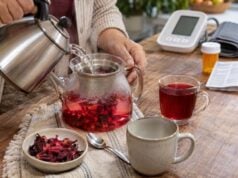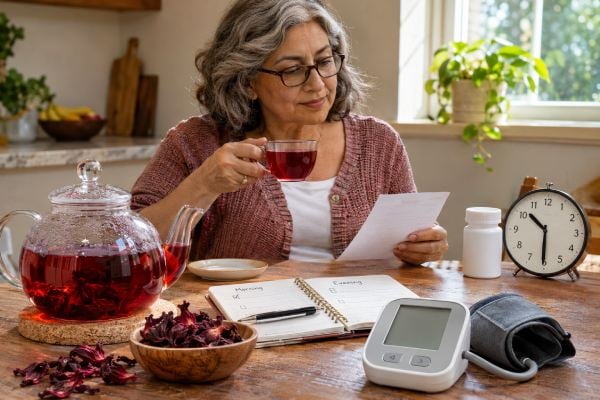
There is no proven best time of day to drink hibiscus tea for blood pressure. The research that finds a blood-pressure benefit mainly supports regular use over days to weeks, not a special morning, afternoon, or bedtime window. If hibiscus agrees with you, the most useful timing is the time you can follow consistently without disrupting sleep, causing frequent urination, or overlapping awkwardly with medicines. Morning or early afternoon works well for many people, while an evening cup may be less convenient if fluids make you wake to urinate. Timing matters more for safety when you already take blood-pressure or diabetes medicine, tend to have low readings, are pregnant, or use concentrated hibiscus products. In those situations, tracking your readings and checking with a clinician or pharmacist is more important than choosing a clock time. Hibiscus can be a supportive habit, but it should not replace prescribed treatment or be used to rapidly correct a high reading.
Table of Contents
- Is There a Best Time to Drink Hibiscus Tea?
- Morning vs Evening Hibiscus Tea
- Should You Drink Hibiscus With Food or on an Empty Stomach?
- How Often and How Long to Drink It
- How to Time Hibiscus With Blood Pressure Medicine
- Who Should Avoid or Limit Hibiscus?
- A Practical Hibiscus Timing Plan
Is There a Best Time to Drink Hibiscus Tea?
No clinical evidence shows that hibiscus tea lowers blood pressure better at a specific hour. Studies have used different schedules, including one or more servings during the day, but they were generally designed to test whether repeated hibiscus intake lowers blood pressure over time. They were not designed to prove that 8 a.m. works better than 2 p.m. or 8 p.m.
That distinction prevents a common mistake: treating hibiscus like a fast-acting rescue treatment. Blood pressure changes throughout the day, and a single reading can rise because of activity, stress, pain, caffeine, a full bladder, poor sleep, or measurement technique. Drinking a cup of hibiscus because one reading is unexpectedly high is not a reliable way to manage hypertension.
Recent evidence reviews suggest that Hibiscus sabdariffa can produce a modest average reduction in systolic and diastolic blood pressure when used regularly. The size of the effect varies across trials, and people with higher starting blood pressure often appear to benefit more. The evidence does not establish a precise clock-time effect.
For that reason, consistency is a better target than timing precision. Pick a time that fits your routine, use a similar amount, and evaluate the trend in your home readings over several weeks. If you are still learning what counts as normal or high, start with normal blood pressure ranges and what they mean rather than reacting to one isolated number.
The strongest blood-pressure strategies also do not depend on a cup of tea. Sodium reduction, physical activity, weight management when appropriate, sleep, limited alcohol, and a dietary pattern rich in minimally processed foods have broader evidence. Hibiscus is best viewed as one optional part of that bigger plan.
Morning vs Evening Hibiscus Tea
Morning and evening hibiscus tea are both reasonable for most people. The better choice depends mainly on comfort, medication schedule, sleep, and when you can drink it consistently.
Morning may be convenient if your blood pressure runs higher early
Many people notice higher readings after waking because normal hormones, nervous-system activity, movement, caffeine, and the transition from sleep all affect blood pressure. This is sometimes called the morning surge. Drinking hibiscus in the morning may fit naturally into a routine, but there is no evidence that it specifically blocks the morning surge or provides immediate protection during those hours.
If your readings are repeatedly high in the morning, it is more important to confirm the pattern correctly. Measure before caffeine, exercise, smoking, or breakfast when possible, after resting quietly. Persistently high morning blood pressure can reflect overall hypertension, sleep apnea, medication coverage, poor sleep, alcohol use, or other factors. It deserves assessment rather than simply adding more tea. The common reasons are discussed in why blood pressure can be high in the morning.
Evening can work, but sleep comes first
Hibiscus itself is naturally caffeine-free unless it is blended with black tea, green tea, yerba mate, or another caffeinated ingredient. That makes plain hibiscus more bedtime-friendly than many teas.
The practical downside is fluid. A large mug close to bed may increase nighttime bathroom trips, especially in older adults, people taking diuretics, or anyone who already has nocturia. Repeated awakenings can reduce sleep quality, and poor sleep can work against blood-pressure control. If evening tea wakes you at night, move it earlier rather than assuming bedtime is physiologically superior.
If you enjoy an evening ritual, try having the tea with dinner or two to three hours before bed. That is a convenience strategy, not a proven blood-pressure rule.
Should You Drink Hibiscus With Food or on an Empty Stomach?
There is no strong evidence that hibiscus lowers blood pressure better on an empty stomach. You can drink it with food or between meals based on how your stomach feels.
Hibiscus is naturally tart because it contains organic acids. Some people tolerate it easily before breakfast; others notice heartburn, nausea, or stomach discomfort when they drink acidic beverages without food. If you are sensitive, take it with or after a meal.
Food may also make it easier to build hibiscus into a sustainable routine. For example, one cup with breakfast or lunch is simpler to remember than an isolated “therapeutic” time in the middle of the day. Regularity matters more than whether your stomach is empty.
Watch what you add to the cup. A heavily sweetened hibiscus drink may provide a lot of added sugar, especially if it is bottled or prepared as a sweetened agua de jamaica. If blood pressure and cardiovascular health are the goals, use unsweetened tea or only a small amount of sweetener. Cinnamon, mint, ginger, or citrus peel can change the flavor without turning the drink into a dessert beverage.
Also check blended teas for licorice root. Natural licorice containing glycyrrhizin can raise blood pressure in susceptible people, so a “blood-pressure tea” that combines hibiscus with licorice can be counterproductive.
If you use hibiscus because you are building a broader dietary plan, meal quality matters much more than whether the tea comes before or after food. A pattern such as the DASH diet targets sodium, potassium-rich foods, produce, whole grains, and other factors with stronger hypertension evidence.
How Often and How Long to Drink It
Hibiscus is usually studied as a repeated daily intervention, not an occasional treatment. Trials have used different amounts, including several cups per day or measured quantities of calyx or extract, for periods ranging from a few weeks to longer.
A practical starting approach for many adults is one cup once daily. If you tolerate it and your clinician has no concerns, one to three cups spread through the day is within the range commonly seen in food-level use and some tea studies. Research has not established one universally recommended dose, so escalating intake simply because “more should lower blood pressure more” is not a sound strategy.
One classic trial used three 240 mL cups daily for six weeks. Other studies have used two servings per day or standardized amounts of dried hibiscus. A 2025 review found evidence of a dose-response effect across trials, but it also emphasized that long-term safety at therapeutic doses still needs better evidence.
Expect any meaningful effect to be judged over weeks, not minutes. Reviews have found more convincing reductions in trials lasting at least several weeks. That gives you a useful way to test the habit:
- Record your baseline home blood pressure for about a week.
- Add a consistent amount of hibiscus at a consistent time.
- Keep other major habits as stable as practical.
- Continue accurate home measurements for two to six weeks.
- Compare averages rather than single readings.
If your pressure does not change, do not keep increasing the tea indefinitely. If it falls substantially, especially while you take medication, tell your clinician. You may need a medication review, but you should not make dose changes on your own.
Hibiscus is also different from other food-based blood-pressure strategies. For example, dietary nitrate from beets works through a different pathway and has different timing considerations. If you are deciding between options, review beetroot juice and blood pressure separately rather than assuming all “natural” approaches behave the same way.
How to Time Hibiscus With Blood Pressure Medicine
Do not change your medication time just to make room for hibiscus tea. Prescription antihypertensive drugs have specific durations of action, side effects, and dosing instructions, while hibiscus does not have a validated medication-like timing schedule.
Because hibiscus can lower blood pressure, taking it regularly may add to the effect of medicines such as ACE inhibitors, angiotensin receptor blockers, calcium-channel blockers, beta blockers, diuretics, or other antihypertensives. The concern is not necessarily a dangerous “interaction” at the moment the tea touches the medicine. The larger issue is the combined blood-pressure effect over time.
That means spacing hibiscus two hours away from a blood-pressure pill does not guarantee that the combination cannot lower your pressure too much. If you are prone to dizziness, start conservatively and monitor your readings. Symptoms such as fainting, persistent lightheadedness, weakness, or confusion deserve medical attention, particularly if the blood pressure is unusually low for you.
Do not use hibiscus to decide whether to skip a dose. If your blood pressure improves after weeks of diet and lifestyle changes, a clinician can review whether your prescription needs adjustment.
Medication timing itself is a separate clinical question. Large randomized evidence has not shown that everyone with hypertension should routinely move all medicines to bedtime for better cardiovascular outcomes. The best schedule depends on the specific medication, side effects, adherence, and individual pattern. If you need guidance, see when to take blood-pressure medication and confirm any change with the prescriber.
If you take a diuretic, an evening hibiscus drink may be particularly inconvenient if you already urinate more often. In that situation, morning or early afternoon may simply fit better.
Who Should Avoid or Limit Hibiscus?
Ordinary hibiscus tea appears well tolerated by many adults, but some people should avoid concentrated use or get individualized advice first.
People with low blood pressure or frequent fainting: A drink that may lower blood pressure is not an obvious benefit if your pressure is already low. Recurrent dizziness needs an explanation, not a stronger hibiscus routine.
People taking several blood-pressure medicines: Multiple agents already increase the chance of low readings or orthostatic symptoms. Introduce hibiscus cautiously and keep a home log if your care team agrees.
People taking diabetes medicine: Hibiscus has been studied for possible glucose-lowering effects. That does not make it a diabetes treatment, but concentrated products could complicate medication management in some people.
Pregnant or breastfeeding people: Evidence is not strong enough to establish medicinal-dose hibiscus as safe during pregnancy or breastfeeding. Occasional food use is not the same as concentrated daily dosing. Ask an obstetric clinician before making it a regular therapeutic habit.
People preparing for surgery or a procedure: Tell the medical team about herbal products and supplements because blood-pressure, glucose, and medication effects may matter around anesthesia and fasting.
People taking many medications or using concentrated extracts: Supplements can expose you to more hibiscus compounds than ordinary tea, and quality varies between products. A pharmacist can check your medication list for plausible interactions.
Anyone with severe or symptomatic hypertension: Hibiscus is not emergency treatment. Very high blood pressure with chest pain, shortness of breath, severe headache with neurologic symptoms, confusion, weakness, numbness, trouble speaking, or vision changes requires urgent medical assessment.
If your readings are mildly but repeatedly elevated, the next step is not simply to drink more tea. Confirm the pattern and address the major drivers. For people in the stage 1 range, stage 1 hypertension management explains when lifestyle changes may be enough and when medication may be considered.
A Practical Hibiscus Timing Plan
For most people who want to try hibiscus, a simple routine works better than a complicated timing protocol.
If you take no blood-pressure medicine: Start with one unsweetened cup in the morning or early afternoon. Keep the same timing for a few weeks while tracking your blood pressure accurately. If you enjoy it and tolerate it, a second cup later in the day is reasonable for many adults.
If you take blood-pressure medicine: Ask your clinician or pharmacist whether regular hibiscus use fits your regimen, especially if your readings already run near the low end. Start with a small amount and watch both numbers and symptoms. Do not assume separating tea and medication by a few hours removes all combined effects.
If you have high morning readings: Measure correctly before trying to “fix” them with tea. A consistent morning cup is fine, but repeated morning hypertension deserves evaluation for overall control, sleep apnea, medication coverage, and other causes.
If you wake to urinate at night: Drink hibiscus earlier. A daytime cup that supports hydration and does not interrupt sleep is preferable to a bedtime cup that fragments your night.
If you dislike plain hibiscus: Chill it, dilute it, add herbs or spices, or mix it with an unsweetened caffeine-free tea. The goal is a routine you can maintain without excess sugar.
If you want to know whether it is working: Use averages. Measure at similar times, take two readings about one minute apart, and look at several days of data. A home blood-pressure trend is more useful than how relaxed you feel after a warm drink.
For a fair test, keep the measurement conditions consistent. Sit quietly for at least five minutes, support your back and arm, keep both feet on the floor, and place a validated upper-arm cuff on bare skin. Avoid measuring immediately after exercise, caffeine, smoking, or a large meal. If you drink hibiscus every morning, you can still take a morning baseline reading before the tea and an evening reading later in the day. You do not need to chase the minute-by-minute effect after each cup.
Also pay attention to symptoms that numbers do not fully capture. A modestly lower reading is not a win if you become lightheaded every time you stand up. Conversely, feeling calm after tea does not prove your pressure has fallen. Record symptoms beside your readings when they occur. That makes the log more useful if a clinician needs to decide whether your medicine, hydration, or hibiscus routine should change.
The central point is straightforward: there is no evidence-based “magic hour” for hibiscus tea. Drink it when it fits your day, avoid timing that harms sleep or worsens dizziness, and focus on consistent intake rather than clock precision. Most importantly, keep the proven foundations in place, including sodium awareness. If sodium is a major issue in your diet, how salt and sodium affect blood pressure is a higher-priority place to make changes.
References
- Efficacy and safety of Hibiscus sabdariffa in cardiometabolic health: An overview of reviews and updated dose-response meta-analysis. 2025 (Systematic Review)
- A systematic review and meta-analysis of the effects of Hibiscus sabdariffa on blood pressure and cardiometabolic markers 2022 (Systematic Review)
- Physiological Effects and Human Health Benefits of Hibiscus sabdariffa: A Review of Clinical Trials 2022 (Review)
- Cardiovascular outcomes in adults with hypertension with evening versus morning dosing of usual antihypertensives in the UK (TIME study): a prospective, randomised, open-label, blinded-endpoint clinical trial 2022 (RCT)
- 2025 AHA/ACC/AANP/AAPA/ABC/ACCP/ACPM/AGS/AMA/ASPC/NMA/PCNA/SGIM Guideline for the Prevention, Detection, Evaluation and Management of High Blood Pressure in Adults: A Report of the American College of Cardiology/American Heart Association Joint Committee on Clinical Practice Guidelines 2025 (Guideline)
Disclaimer
Hibiscus tea can lower blood pressure and may add to the effects of blood-pressure or diabetes medicines. If you are pregnant, have low blood pressure, take multiple medications, or plan to use concentrated hibiscus products, discuss regular use with a healthcare professional. Do not use hibiscus to replace prescribed treatment or to self-treat severe or symptomatic hypertension.