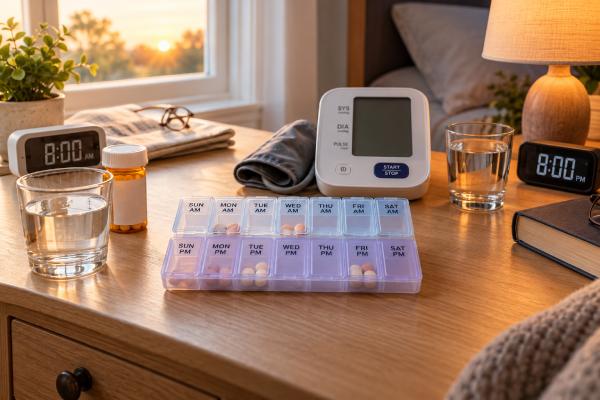
For most people, there is no universal cardiovascular advantage to taking blood pressure medication at night instead of in the morning. Large randomized trials have found similar rates of heart attack, stroke, heart failure, and cardiovascular death with morning and evening dosing. The best time is usually the time you can take the medicine consistently, while following any drug-specific instructions and avoiding side effects that interfere with sleep or daily activities. Diuretics often work better earlier in the day because they increase urination. Some people may need a different schedule because of dizziness, shift work, multiple daily doses, unusually high nighttime blood pressure, or another medical condition. Do not move all of your blood pressure pills to bedtime just because a home reading is high at one particular time. Medication timing should support steady 24-hour blood pressure control, good adherence, and safety. If readings remain high despite regular treatment, review the pattern, measurement technique, doses, and medication choices with your clinician before changing the clock time on your own.
Table of Contents
- Morning vs Night: What the Evidence Shows
- How to Choose a Practical Dosing Time
- Timing by Medication Type
- When Nighttime Dosing May Need Individualization
- How to Use Home Blood Pressure Readings
- Missed Doses, Side Effects, and Common Mistakes
- When to Contact Your Clinician
Morning vs Night: What the Evidence Shows
The main goal of hypertension treatment is not to make blood pressure lowest at one particular hour. It is to keep blood pressure safely controlled across the full day and night while reducing the long-term risk of stroke, heart attack, heart failure, kidney disease, and other complications.
Earlier research suggested that taking antihypertensive medicines at bedtime might improve nighttime blood pressure and substantially reduce cardiovascular events. That idea became known as blood pressure chronotherapy. However, several influential older studies raised methodological concerns, and more recent large randomized trials have not shown that bedtime dosing is generally superior.
The 2022 TIME trial enrolled more than 21,000 adults with hypertension in the United Kingdom and compared evening with morning use of usual blood pressure medicines. Cardiovascular outcomes were similar between groups. The 2025 BedMed trial in community-dwelling Canadian adults likewise found no reduction in major cardiovascular events or death when once-daily antihypertensive medicines were moved to bedtime. BedMed-Frail, which studied frail older adults in continuing-care settings, also found no meaningful cardiovascular advantage to bedtime dosing.
These findings support a practical conclusion: for most once-daily blood pressure medicines, morning or evening can both be reasonable when the medicine is taken reliably and tolerated well. A 2023 systematic review also found that apparent nighttime advantages became much smaller when controversial studies were removed from the analysis.
This does not mean timing never matters. It means routine “everyone should take blood pressure pills at bedtime” advice is not supported. Timing may still affect side effects, adherence, urination, interactions with other medicines, and the blood pressure pattern of a particular patient.
Blood pressure follows a daily rhythm. It often rises around waking, varies with activity and stress during the day, and falls during sleep. That pattern helped create the theory that bedtime treatment might be especially protective. But the effect of a tablet is not limited to the hour it is swallowed. Many modern antihypertensive drugs are designed to work for about 24 hours, and their duration, dose, and consistency can matter more than whether they are taken before or after sunset.
The trial results also help separate two different questions. One question is whether bedtime dosing can shift a person’s nighttime blood-pressure readings. In some studies, it can. The more important question is whether routinely making that shift prevents more strokes, heart attacks, or deaths. The best contemporary outcome trials have not shown a general advantage. That is why a small difference in a nighttime reading should not be treated as proof that bedtime dosing is healthier.
There are also limits to applying any trial to every patient. People with secondary hypertension, severe autonomic dysfunction, pregnancy, advanced kidney disease, or complex heart failure may need individualized schedules that were not the main focus of these pragmatic trials. The evidence supports flexibility for typical hypertension treatment, not a rule that dose timing never matters in specialized care.
How to Choose a Practical Dosing Time
A useful dosing time is one you can repeat every day without creating avoidable problems. For a once-daily medicine, consistency is usually more important than whether the clock says 8 a.m. or 8 p.m.
Consider these factors:
- Your routine: Link the dose to a stable habit, such as breakfast, brushing your teeth, or an evening medication routine.
- Side effects: If a medicine makes you dizzy shortly after taking it, the timing may need adjustment—but dizziness at night can also increase fall risk when getting out of bed.
- Urination: Medicines with a diuretic effect can disrupt sleep if taken too close to bedtime.
- Work schedule: A person who works nights should think in terms of waking and sleeping periods rather than conventional morning and evening labels.
- Other prescriptions: Some medicines need spacing from supplements or other drugs, and a pharmacist can help simplify a complicated schedule.
- Blood pressure pattern: Persistent high readings at a particular time may justify closer assessment rather than an automatic timing change.
Try to take a once-daily medicine at roughly the same time each day. An exact minute is rarely necessary. A regular window that fits your routine is more realistic and can improve adherence.
If you take several antihypertensive drugs, do not assume they all need to be swallowed together. Some clinicians intentionally separate doses to improve tolerability, but others prefer a simple once-daily combination because a simpler regimen is easier to follow. The right balance depends on the medication, your readings, and side effects.
People who frequently forget doses may benefit more from a pill organizer, phone reminder, pharmacy blister packaging, or a simplified prescription than from switching from morning to night. Better adherence can have a much larger effect on blood pressure than small differences related to dose timing.
Timing by Medication Type
Drug class can influence the most convenient schedule, although individual products differ. Follow the pharmacy label and your prescriber’s instructions first.
| Medication type | Common timing consideration |
|---|---|
| Thiazide or thiazide-like diuretics | Often taken in the morning because increased urination can disturb sleep |
| Loop diuretics | Usually scheduled early enough to limit nighttime urination; some people need more than one daily dose |
| ACE inhibitors and ARBs | Many once-daily products can be taken morning or evening; consistency and tolerance usually guide timing |
| Calcium channel blockers | Many long-acting forms can be taken at either time; product-specific instructions still apply |
| Beta blockers | Timing can depend on the specific drug, heart rate, fatigue, other cardiac conditions, and whether it is once or twice daily |
| Alpha blockers | Some can cause postural dizziness, so clinicians may individualize timing carefully, especially when treatment starts |
Diuretics are the clearest example of why the clock matters for comfort. Hydrochlorothiazide, chlorthalidone, indapamide, furosemide, and similar medicines can increase urine production. Taking a diuretic at bedtime may lead to repeated nighttime trips to the bathroom, poor sleep, and falls. If a second daily diuretic dose is needed, clinicians often place it earlier in the afternoon rather than right before sleep, although the exact plan varies.
Some blood pressure medicines are prescribed for reasons beyond hypertension. A beta blocker may also be used for angina, a prior heart attack, an abnormal rhythm, migraine prevention, or heart failure. An ACE inhibitor, ARB, mineralocorticoid receptor antagonist, or other drug may be part of a heart-failure or kidney-protection plan. Those conditions can affect dose selection and schedule, so avoid changing timing based only on general hypertension advice.
Food instructions also vary by product. If your bottle says to take a medication with food, without food, or in a particular way, follow that direction. A pharmacist can confirm whether your specific drug has a meaningful food or timing interaction.
When Nighttime Dosing May Need Individualization
Nighttime blood pressure is clinically important. Blood pressure normally falls during sleep in many people. Some have a smaller-than-expected fall, called a nondipping pattern, while others have hypertension that is mainly present at night. These patterns are associated with cardiovascular risk, but they cannot be diagnosed reliably from a few readings before bed.
When a clinician suspects nocturnal hypertension, 24-hour ambulatory blood pressure monitoring can show measurements during normal daytime activity and sleep. The information may help determine whether medication duration, dose, drug choice, sleep problems, or another factor needs attention.
Even in someone with elevated nighttime pressure, moving every medication to bedtime is not automatically the best solution. A long-acting drug may already provide 24-hour coverage. The clinician may instead adjust the dose, choose a longer-acting agent, investigate missed doses, or evaluate conditions such as sleep apnea that can contribute to high blood pressure.
Night dosing also deserves extra caution in people prone to low blood pressure. Older adults, people with autonomic disorders, patients taking several pressure-lowering drugs, and anyone with recurrent falls may be more vulnerable to dizziness when standing during the night. Orthostatic hypotension can cause lightheadedness or fainting when blood pressure falls after standing.
If your clinician recommends changing timing, ask what problem the change is intended to solve. A clear goal—such as reducing nocturia, preventing daytime dizziness, improving adherence, or addressing a documented nighttime pattern—is more useful than a blanket rule that nighttime is “better.”
How to Use Home Blood Pressure Readings
Home measurements are valuable when they are collected consistently. They can show whether treatment controls blood pressure outside the clinic and can help identify morning or evening patterns. But one isolated high reading is usually not enough reason to change medication timing or take an extra dose.
For a useful trend, follow a structured home blood pressure monitoring routine. Unless your clinician gives different instructions, a common approach is to measure twice in the morning and twice in the evening for several days, taking readings about one minute apart after at least five minutes of quiet rest. Use a validated upper-arm cuff that fits properly, sit with your back supported and feet flat, keep the arm supported at heart level, and avoid caffeine, smoking, and exercise for about 30 minutes beforehand.
Morning readings are often taken before breakfast and before morning blood pressure medicine so the result reflects the end of the dosing interval. Evening readings are typically taken before bed or at another consistent evening time. The exact protocol matters less than using the same method and recording the timing of both readings and medicines.
Look at averages rather than chasing individual numbers. Blood pressure naturally changes with stress, pain, exercise, sleep, caffeine, bladder fullness, temperature, and many other factors. Rechecking every few minutes because one reading is high can create more anxiety and a misleading record.
A pattern of repeatedly high morning values deserves discussion. Possible explanations include inadequate 24-hour drug coverage, sleep apnea, high sodium intake, alcohol, pain, missed medication, an inaccurate cuff, or the normal morning rise in blood pressure. The article on normal blood pressure readings and current categories explains how systolic and diastolic values are classified, but treatment decisions should use averages and overall cardiovascular risk rather than a single cutoff alone.
Do not take an extra dose unless your clinician has specifically created an as-needed plan. Doubling up can cause delayed hypotension because many antihypertensive medicines continue working for a full day or longer.
Missed Doses, Side Effects, and Common Mistakes
If you miss a dose, the safest next step depends on the specific medicine and how close you are to the next scheduled dose. The pharmacy label or medication guide may provide instructions. When uncertain, ask a pharmacist or prescriber. Do not routinely double the next dose to make up for a missed tablet unless you have been told to do so.
Common timing mistakes include:
- Moving all medications to bedtime based on a social-media claim about chronotherapy.
- Skipping a diuretic on busy days because bathroom access is inconvenient.
- Taking extra tablets in response to one high home reading.
- Stopping a medicine suddenly because blood pressure has become normal.
- Changing several medicines at once, making it impossible to tell which change caused dizziness or another side effect.
- Measuring blood pressure immediately after taking a pill and expecting an instant correction.
Many blood pressure drugs need days or weeks to show their full steady effect. The goal is usually long-term control, not rapid correction of ordinary day-to-day fluctuations.
Side effects can provide clues that a schedule needs attention. Lightheadedness after standing, unusual weakness, fainting, swelling, cough, slow pulse, or excessive urination should be discussed with a clinician. Do not assume timing is the only cause; the dose or drug itself may need review.
Alcohol, dehydration, hot weather, vomiting, diarrhea, and other medicines can amplify blood-pressure lowering. Nonsteroidal anti-inflammatory drugs, decongestants, stimulants, and some supplements can also alter blood pressure or interact with treatment. A complete medication review is often more helpful than simply moving a prescription from morning to night.
When to Contact Your Clinician
Contact your healthcare team if home averages remain above your prescribed target despite taking medication consistently, or if your readings are repeatedly much lower than usual and you feel dizzy, weak, or faint. The 2025 U.S. guideline generally uses a treatment goal below 130/80 mm Hg for adults, with individual considerations in some situations. Your own target may differ because of age, pregnancy, frailty, kidney disease, cardiovascular disease, or other factors.
Ask for review if you are unsure about any of the following:
- Whether a medicine should be taken once or twice daily.
- Whether a diuretic can be moved earlier because of nighttime urination.
- Whether morning dizziness suggests excessive overnight blood-pressure lowering.
- Whether persistent nighttime or morning hypertension warrants ambulatory monitoring.
- How to schedule medicines around shift work, fasting, meals, or other prescriptions.
- What to do when a dose is missed.
Do not stop antihypertensive therapy simply because several readings are normal. Normal readings often mean the treatment is working. Stopping can allow blood pressure to rise again, and abrupt withdrawal of certain drugs can be especially risky.
Severely elevated blood pressure requires attention to symptoms as well as the number. A reading above 180/120 mm Hg should be repeated after a short period of quiet rest and handled according to your clinician’s plan. If severe blood pressure elevation occurs with chest pain, shortness of breath, weakness, trouble speaking, confusion, vision changes, fainting, or other signs of acute organ injury, seek emergency care. Hypertensive crisis warning signs help distinguish an emergency from a high reading that may be managed promptly in an outpatient setting.
For most people, the practical answer remains straightforward: take each medicine at a consistent time that fits the drug and your daily routine, and let blood-pressure averages, side effects, and your clinical situation guide any changes. Morning is not inherently superior, and bedtime is not inherently superior. Reliable 24-hour control is what matters.
References
- Antihypertensive Medication Timing and Cardiovascular Events and Death: The BedMed Randomized Clinical Trial 2025 (RCT)
- Bedtime vs Morning Antihypertensive Medications in Frail Older Adults: The BedMed-Frail Randomized Clinical Trial 2025 (RCT)
- Cardiovascular outcomes in adults with hypertension with evening versus morning dosing of usual antihypertensives in the UK (TIME study): a prospective, randomised, open-label, blinded-endpoint clinical trial 2022 (RCT)
- Timing of Antihypertensive Drug Therapy: A Systematic Review and Meta-Analysis of Randomized Clinical Trials 2023 (Systematic Review)
- Bedtime dosing of antihypertensive medications: systematic review and consensus statement: International Society of Hypertension position paper endorsed by World Hypertension League and European Society of Hypertension 2022 (Position Statement)
- Top Things to Know: 2025 High Blood Pressure (BP) Guideline 2025 (Guideline)
Disclaimer
This article provides general information about medication timing and does not replace individualized prescribing advice. Do not change the dose, timing, or frequency of a blood pressure medicine without checking the instructions for your specific drug or discussing the change with a clinician or pharmacist. Seek urgent care for severe blood pressure elevation accompanied by symptoms such as chest pain, shortness of breath, neurologic changes, or fainting.