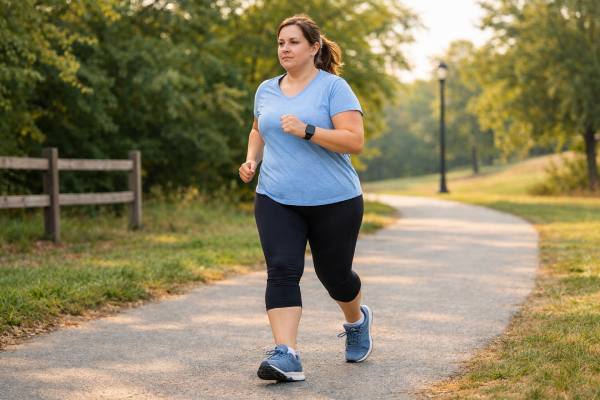
Couch to 5K can help with weight loss, but not because running is a magic fat-burning shortcut. It works when it helps you move more consistently, improve fitness, burn meaningful calories over time, and build an exercise habit you can actually keep. For many beginners, the real power of the plan is not the 5K itself. It is the structure: short run-walk sessions, gradual progression, and a clear goal.
This article explains how Couch to 5K fits into fat loss, what kind of results are realistic, how to follow a beginner-friendly running schedule, and how to reduce the common problems that make people quit early, including soreness, hunger, and overuse aches.
Table of Contents
- Can Couch to 5K help you lose fat?
- Why running works and where it falls short
- A simple Couch to 5K schedule
- How to combine running with strength and walking
- What results to expect
- How to avoid common running mistakes
- When Couch to 5K is not your best starting point
Can Couch to 5K help you lose fat?
Yes, Couch to 5K can help you lose fat, but only as part of the bigger picture. Running increases energy expenditure, improves cardiovascular fitness, and can make it easier to create a calorie deficit. It also gives many beginners a concrete target that feels more motivating than a vague plan to “do more cardio.”
That said, the plan does not cause fat loss automatically. A beginner can complete a full Couch to 5K cycle and still see limited scale change if food intake rises enough to offset the extra activity. This is why running works best when it is treated as one useful tool inside a broader weight loss routine rather than the whole strategy.
For fat loss, Couch to 5K helps in several practical ways:
- It raises weekly activity in a structured, progressive way
- It can burn more calories per minute than easy walking for many people
- It improves fitness, so everyday movement starts to feel easier
- It gives you a repeatable routine with measurable progress
- It often builds confidence quickly because you can feel the improvement session to session
The beginner-friendly run-walk format is especially helpful. Many people assume “running for weight loss” means trying to jog continuously from day one. That usually leads to a miserable first week, overly sore calves, or shin pain. Couch to 5K avoids that by alternating short running intervals with walking recovery. That makes the entry point much more realistic for someone who has been sedentary or is carrying extra weight.
Another reason the plan can help is consistency. A mediocre plan done three times a week beats the perfect plan you quit after nine days. The gradual design of Couch to 5K gives people a chance to stick with running long enough to improve both endurance and confidence.
Still, it helps to be honest about what the plan is and what it is not. It is not a guarantee of dramatic weight loss. It is not ideal for every body or every injury history. It is not the only way to lose fat. For some people, a beginner cardio workout plan with lower-impact options may be easier to sustain at first. For others, daily walking for weight loss works better as a first step.
The good news is that you do not have to choose one forever. You can start where your body is now, then build toward running later if it makes sense.
Why running works and where it falls short
Running is appealing for weight loss because it is simple, accessible, and efficient. You do not need a gym. You do not need complicated programming. Once you have suitable shoes and a safe place to move, you can begin.
From a fat-loss perspective, running works because it can increase total weekly energy expenditure with relatively short sessions. It also tends to improve aerobic fitness quickly in beginners. That matters because better fitness often leads to more spontaneous movement outside workouts. Stairs feel easier. Walking stops feeling like a chore. Your baseline activity can rise even when you are not “training.”
Running can also be mentally useful. A lot of people find that training for a 5K gives them a performance goal rather than a body-size goal. That shift often helps motivation. Instead of asking, “Why is the scale not changing fast enough?” they start asking, “Can I complete the next interval?” That is often a healthier mindset.
But running has limits too.
The first limit is appetite compensation. Some people feel a strong increase in hunger once they start running regularly. Others reward themselves with food because they believe they “earned it.” That can shrink or erase the calorie deficit. This is one reason exercise can increase hunger and slow weight loss in real life even when the training itself is helping.
The second limit is injury tolerance. Running is a weight-bearing activity with repeated impact. That does not make it bad, but it does mean your tissues need time to adapt. A beginner’s heart and lungs may feel ready before their feet, calves, shins, knees, or hips are ready. Couch to 5K reduces that problem, but it does not eliminate it.
The third limit is that calorie burn is often overestimated. People frequently assume a short run “cancels out” a restaurant meal or dessert. In practice, the numbers are usually less dramatic than expected. Running is still effective, but not powerful enough to override consistently high intake. If you are trying to keep expectations realistic, articles on calories burned by common exercises can be useful for context.
There is also a body-composition point many beginners miss: running helps with calorie burn and fitness, but strength training helps protect muscle while you lose weight. If you only run and diet aggressively, you may lose weight while feeling weaker, flatter, and more fatigued. That is why a balanced plan usually works better than a run-only plan.
So where does Couch to 5K fit? It fits best as a practical cardio framework. It gives you structure, a clear progression, and a finish line. But the best version of the plan usually includes better food habits, enough protein, smart recovery, and at least some basic strength work.
A simple Couch to 5K schedule
A standard Couch to 5K setup uses three running sessions per week, with at least one rest or easy movement day between them. The core idea is simple: alternate short running efforts with walking, then gradually shift the balance toward more running and less walking.
A 5K is 5 kilometers, or about 3.1 miles. Reaching that point usually takes around 8 to 10 weeks for beginners, depending on the program and your starting fitness.
Here is a simple 8-week version that keeps the spirit of Couch to 5K without overcomplicating it.
| Week | Session format | Total goal |
|---|---|---|
| 1 | Run 1 minute, walk 2 minutes, repeat 8 times | Ease in and learn pacing |
| 2 | Run 90 seconds, walk 2 minutes, repeat 6 to 8 times | Build comfort with short intervals |
| 3 | Run 2 minutes, walk 2 minutes, repeat 6 times | Increase run time gradually |
| 4 | Run 3 minutes, walk 90 seconds, repeat 5 times | Improve control and rhythm |
| 5 | Run 5 minutes, walk 2 minutes, repeat 3 to 4 times | Longer steady efforts |
| 6 | Run 8 minutes, walk 2 minutes, repeat 3 times | Stretch aerobic capacity |
| 7 | Run 10 to 12 minutes, walk 2 minutes, repeat 2 times | Reduce walk dependence |
| 8 | Run 20 to 30 minutes continuously or with one short walk break if needed | Finish near 5K ability |
A few rules make this progression work better:
- Keep the running pace easy enough that you could say a short sentence.
- Do not turn beginner intervals into sprint intervals.
- Repeat a week if your legs feel beat up or your breathing is out of control.
- Warm up with 5 minutes of brisk walking before each session.
- Cool down with 3 to 5 minutes of walking after each session.
Many beginners fail because they run too fast. They assume the running portions should feel hard because walking portions exist. In reality, the best pace is usually slower than your ego wants. You should finish feeling challenged but not shattered.
You can do these sessions outdoors or on a treadmill. Outdoors builds practical pacing and tolerance for real terrain. Treadmills make speed easier to control and can feel safer for some beginners. If you prefer indoor work at first, a guide to treadmill walking for weight loss can also help on days when you want lower-impact movement.
If a week feels too aggressive, do not force the jump. Repeating a week is not failure. It is smart programming.
How to combine running with strength and walking
Couch to 5K works better for body composition when it is not your only activity. The strongest setup for most beginners is a combination of running, walking, and basic strength training.
Running gives you structured cardio. Walking helps you add low-stress activity and burn more calories without much recovery cost. Strength training helps preserve lean mass and makes you more resilient. Together, they usually work better than trying to squeeze every result out of running alone.
A simple weekly example looks like this:
| Day | Focus | Notes |
|---|---|---|
| Monday | Couch to 5K session | Easy effort, follow the interval plan |
| Tuesday | Strength training | Full-body beginner session |
| Wednesday | Walk | Easy recovery movement |
| Thursday | Couch to 5K session | Same week progression |
| Friday | Strength training or long walk | Choose based on recovery |
| Saturday | Couch to 5K session | Stay controlled, not all-out |
| Sunday | Rest or easy walk | Lower stress day |
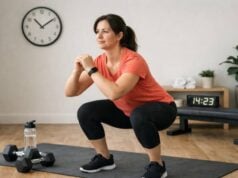
For strength work, you do not need an advanced lifting program. Two short full-body sessions per week can be enough for a beginner. A plan like strength training for weight loss can help if you want more structure, but even basic work with squats, hinges, rows, presses, and core exercises can make a difference.
Walking is even simpler. Use it to raise daily activity without adding much fatigue. A 20- to 40-minute brisk walk on non-running days often helps more than another punishing cardio session. Some people also find that steps are easier to sustain than formal cardio once motivation dips. That is where burning more calories through daily movement becomes useful.
This combination also improves adherence. If one running day feels rough, you still have productive ways to stay active that week. That matters because consistency across months beats intensity for two weeks.
The same logic applies to nutrition. Running improves the output side of the equation. Food habits shape the input side. A clear guide on creating a calorie deficit helps connect the training plan to actual fat loss.
The best blend for most beginners is not “run as much as possible.” It is “run enough to improve, walk enough to stay active, and lift enough to stay strong.”
What results to expect
The most realistic answer is this: Couch to 5K can contribute to steady fat loss, but the results vary a lot depending on body size, starting fitness, consistency, food intake, sleep, and how much other activity you do.
Some people lose noticeable weight during the program. Others mostly gain fitness at first, then see body-composition changes once their eating patterns and weekly volume improve. Some see the scale barely move but feel major changes in stamina, mood, waist size, or how their clothes fit.
This is normal.
You may notice a few different phases:
In the first 2 weeks
You are more likely to notice effort, soreness, and breathing changes than major fat loss. Your legs may feel heavy. Your heart rate may shoot up quickly. Your scale weight may even bounce because new exercise can temporarily affect water retention.
By weeks 3 to 5
Many beginners start to feel real fitness gains. The same intervals feel easier. Recovery improves. Walking pace naturally gets faster. This is also when adherence matters most, because the novelty is wearing off but the actual results are starting to build.
By weeks 6 to 8
You may be running for much longer stretches than you thought possible when you started. At this stage, people often notice some mix of improved body composition, better endurance, and stronger exercise identity. Even when scale loss is modest, fitness progress can be dramatic.
One common mistake is expecting Couch to 5K alone to produce rapid scale change. Exercise helps, but fat loss usually becomes more visible when training is paired with better eating consistency. That may include:
- More protein at meals
- Fewer liquid calories
- Better portion control
- More high-volume foods
- Less weekend overeating
For many runners, a sensible guide to what to eat in a calorie deficit is what turns “I am training hard but not losing much” into actual progress.
It is also important to separate fat loss from performance. As you lose weight, running may eventually feel easier because you are moving less total mass. But if you diet too aggressively, your runs can feel flat, recovery can worsen, and your motivation can crash. The goal is not to become lighter at any cost. The goal is to build a routine that helps you lose fat while keeping enough energy to keep training.
Good progress markers include:
- Waist measurements
- Weekly average body weight, not single weigh-ins
- Distance covered in the same time
- How long you can run before needing a walk break
- Resting heart rate trend
- Perceived effort on familiar sessions
That gives you a more honest picture than the scale alone.
How to avoid common running mistakes
The biggest Couch to 5K mistake is running too hard, too soon, too often. That single pattern causes a huge share of beginner frustration.
Many people turn an easy run-walk plan into a test of willpower. They blast the running intervals, skip recovery days, ignore aches, and then conclude they are “not built for running.” Usually the issue is not talent. It is pacing and progression.
Here are the most common mistakes and the better fix for each one.
Running every interval too fast
Your breathing should feel controlled enough that you are working but not gasping. If every run interval feels like a race, slow down immediately. Couch to 5K is an aerobic base plan, not a speed plan.
Skipping rest days
Running creates repeated impact stress. Your fitness improves during recovery, not just during workouts. If you are unsure how much downtime you need, a guide on rest days per week for weight loss can help keep the plan productive instead of excessive.
Ignoring warm-up and cool-down
A few minutes of brisk walking before and after each session makes the whole workout feel smoother. It also gives your calves, ankles, and breathing a gentler ramp.
Using pain as a badge of honor
Normal beginner discomfort is one thing. Sharp pain, worsening joint pain, limping, or pain that changes your stride is something else. Pushing through that is how small problems become layoffs.
Assuming more running always means more fat loss
Sometimes more running just means more fatigue, more hunger, and worse adherence. If you keep adding volume but feel rundown, you may not get leaner. You may just get crankier.
Wearing poor shoes
You do not need elite racing shoes, but you do need comfortable running shoes that fit well and feel stable. Beginners often do better with cushioning and comfort than with chasing trends.
Neglecting basic recovery
Sleep, hydration, and protein intake matter more once you begin regular running. Recovery is not glamorous, but it affects soreness, motivation, and whether you can complete the next session well.
A final point: do not compare your early pace to experienced runners. The real beginner win is going from “I cannot run for a minute without stopping” to “I can run for 20 or 30 minutes without panicking.” That is serious progress.
When Couch to 5K is not your best starting point
Couch to 5K is a strong option for many beginners, but not for all of them. Sometimes the smartest move is to start with lower-impact exercise, build capacity, and come back to running later.
You may want a different first step if:
- You have significant knee, ankle, foot, or hip pain
- You have a history of recurrent shin splints or stress injuries
- You are carrying enough extra weight that running feels very jarring
- You become extremely sore after short run-walk sessions
- You dread every run and only enjoy lower-impact cardio
- You have a medical condition that needs exercise clearance first
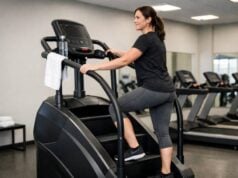
In those cases, walking, cycling, elliptical training, swimming, or a lower-impact plan may be more sustainable. You are not “cheating” by doing that. You are choosing the version of cardio your body can tolerate well enough to repeat.
For example, low-impact cardio for bad knees can be a much better entry point than forcing a running plan that flares symptoms. Someone with severe deconditioning may also do better with a lower-impact beginner workout plan before starting a true run progression.
You should also consider medical advice before beginning a running plan if you have chest pain, dizziness with exertion, uncontrolled blood pressure, uncontrolled diabetes, significant shortness of breath beyond normal deconditioning, recent surgery, or other conditions that make vigorous activity uncertain.
The bigger lesson is that the best fat-loss exercise is not the one that sounds hardest or most impressive. It is the one you can recover from, perform consistently, and build on over time.
For one person, that is Couch to 5K. For another, it is walking until joints feel better, then progressing toward jogging later. For someone else, it is combining strength training with cycling and steps. The destination is the same: better fitness, better health, and a calorie deficit you can actually maintain.
If running helps you get there, great. If another method gets you there more reliably, that is just as valid.
References
- WHO guidelines on physical activity and sedentary behaviour 2020 (Guideline)
- Aerobic Exercise and Weight Loss in Adults: A Systematic Review and Dose-Response Meta-Analysis 2024 (Meta-Analysis)
- Effect of exercise training on weight loss, body composition changes, and weight maintenance in adults with overweight or obesity: An overview of 12 systematic reviews and 149 studies 2021 (Review)
- Resistance training effectiveness on body composition and body weight outcomes in individuals with overweight and obesity across the lifespan: A systematic review and meta-analysis 2022 (Systematic Review)
- A systematic review of running-related musculoskeletal injuries in runners 2021 (Systematic Review)
Disclaimer
This article is for general educational purposes only and is not a substitute for medical advice, diagnosis, or treatment. If you have joint pain, a heart or lung condition, a history of exercise-related injury, or any concern about starting a running program, speak with a qualified healthcare professional before beginning.
If this guide helped you, share it on Facebook, X, or your preferred platform so more beginners can start running for fat loss with better expectations and a safer plan.