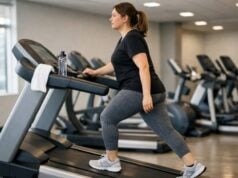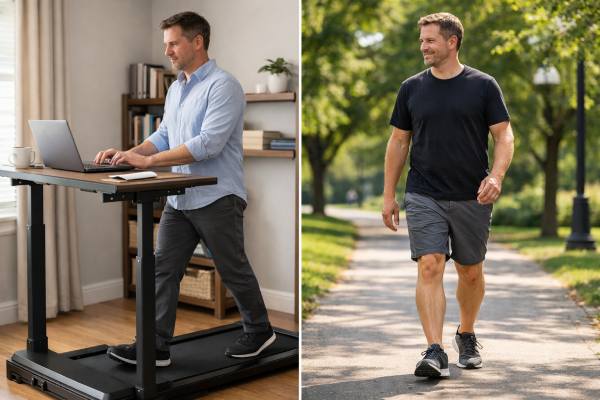
For weight loss, neither a desk treadmill nor walking outside is automatically “better” in every case. The better choice is the one that helps you move more often, for longer, and with less friction. A desk treadmill usually wins for convenience and total daily steps, especially if you sit for work. Walking outside often wins for pace, enjoyment, scenery, and the ability to turn a walk into a more deliberate workout.
The real comparison is not machine versus fresh air. It is controlled convenience versus natural variety. This article breaks down calorie burn, pace, adherence, joint comfort, mental benefits, and the situations where one option clearly makes more sense than the other.
Table of Contents
- Quick answer
- Calories and intensity
- Consistency and daily steps
- Joints, posture and safety
- Motivation, mood and environment
- Which option fits you best
- Best way to use both
Quick answer
If your main goal is to burn more calories during the day without carving out a separate workout block, a desk treadmill often has the advantage. It can quietly turn inactive work hours into light movement, which helps raise total daily energy expenditure and reduce long sitting streaks. For many desk workers, that matters more than the exact pace.
If your main goal is to get a better walking workout, walking outside usually comes out ahead. Most people walk faster outdoors, cover more ground naturally, and feel less constrained by typing, meetings, or workstation setup. Outdoor walking also makes it easier to add hills, longer routes, brisk intervals, and intentional workout time.
That is why the best answer is usually this:
- Desk treadmill is better for adding movement to a sedentary day.
- Walking outside is better for dedicated exercise quality.
- For weight loss, the winner is often the one you will do most consistently.
This matters because fat loss is rarely about one perfect workout. It is driven by a repeatable pattern of movement, nutrition, and recovery. Walking is useful partly because it is low impact and easy to recover from, which makes it easier to repeat day after day. That makes it different from harder exercise forms that may burn more per minute but are harder to sustain over time.
A desk treadmill also has a very practical strength: it can increase activity without demanding a separate chunk of willpower later in the day. In contrast, outdoor walking usually asks you to change clothes, leave the house, deal with weather, and find a time slot. That sounds small, but friction like that is exactly what stops many routines.
On the other hand, outside walking often feels more like real exercise. You can swing your arms, pick up the pace, vary your route, and mentally separate work from movement. That can make it feel more satisfying and help you build a walking habit that is not tied to your laptop.
If you already spend most of the day seated, a desk treadmill can be a strong tool for increasing daily non-exercise movement. If you want a more traditional walking plan with pace, distance, and progression, a structured walking routine will usually look more like outdoor walking.
Calories and intensity
When people compare a desk treadmill to walking outside for weight loss, they often want a simple calorie answer. The honest answer is that calorie burn depends more on pace, time, body size, and total volume than on whether you are indoors or outdoors.
If you walk at the same speed for the same duration, the calorie difference is usually not dramatic. Outdoor walking may burn slightly more in some situations because of hills, wind resistance, uneven terrain, turns, and small pace changes. But in practice, the larger difference usually comes from how each option gets used.
Most people use a desk treadmill at an easy pace. That is by design. It needs to be slow enough to type, read, attend meetings, or work without feeling unstable. Outdoor walking is often naturally faster. Even a normal “I am going somewhere” pace outside can exceed the pace people tolerate while working at a desk.
That leads to an important distinction:
- A desk treadmill is usually a low-intensity, long-duration tool.
- Walking outside is often a moderate-intensity, shorter but more focused session.
For example, an easy desk treadmill session spread across the day may not feel like much in any single block, but an hour or more of accumulated light walking can still add up. Outdoor walks, meanwhile, may produce more calorie burn per minute because the pace is usually brisker and posture more natural.
Intensity matters, but not as much as many people think. Walking does not need to be exhausting to support weight loss. It needs to be frequent enough to meaningfully raise weekly activity. That is one reason walking works so well for beginners and for people trying to stay active while in a calorie deficit.
A useful way to think about it:
- If you can only manage short, slow movement during work, a desk treadmill still beats sitting.
- If you can handle a dedicated 30- to 45-minute brisk walk outside, that will often feel more like a workout and may burn more in less time.
- If you want the most from treadmill-based walking, a more deliberate incline or interval walking approach is usually more demanding than desk-treadmill use.
None of this changes a core fat-loss reality: exercise supports weight loss, but it does not override eating patterns. Walking works best when paired with a manageable calorie deficit strategy. That is why chasing “which burns more” can be less helpful than asking “which helps me move more every week without burning out?”
Consistency and daily steps
This is where desk treadmills often shine.
Weight loss is strongly influenced by total weekly movement, not just formal workout sessions. A desk treadmill can turn otherwise inactive hours into low-level activity. That can increase daily steps in a way that feels almost automatic, especially for people who work from home or spend long hours at a computer.
That convenience is hard to overstate. Outdoor walking asks for a separate decision: when will you go, what will the weather be like, what will you wear, do you have the time, and do you feel like leaving the house? A desk treadmill removes most of those barriers.
That makes it especially useful for people who:
- work at home
- live in very hot, cold, rainy, or unsafe environments
- struggle to find time for formal exercise
- tend to skip workouts after a draining workday
- want movement built into the workday rather than added on afterward
Outdoor walking, however, has a different consistency advantage: it often feels less mentally cramped. Some people simply enjoy it more. They do not want to walk while emailing, balancing on a workstation, or worrying about desk height and screen position. They want air, a route, a mental break, and the freedom to move naturally.
That is why adherence is personal. The best plan is not the one with the highest theoretical calorie burn. It is the one you can repeat on tired days, busy days, and average days.
A simple question helps:
- Do you need movement to happen automatically? A desk treadmill may be better.
- Do you need movement to feel refreshing and separate from work? Walking outside may be better.
For many people, a desk treadmill improves steps but not necessarily workout quality. That is still valuable. It raises baseline activity and reduces sedentary time, both of which matter for health and weight management. If your bigger problem is prolonged sitting, it may pair well with a broader desk job movement plan.
If you are specifically considering equipment, it also helps to understand the difference between a walking pad and a work-focused treadmill setup. A more detailed look at under-desk treadmill use can help you decide whether the convenience is worth the cost and space.
Joints, posture and safety
From a joint-impact perspective, both options are generally beginner-friendly compared with running, jumping, or many gym-based cardio workouts. But they stress the body a little differently in real life.
A desk treadmill usually offers a flatter, more predictable surface. That can feel safer for people who dislike uneven sidewalks, curbs, traffic, or weather-related slip risk. The pace is also slower, which can make it more approachable for beginners, larger bodies, and people returning to exercise after a long break.
That said, desk treadmills can introduce their own problems if the setup is poor. Common issues include:
- hunching over the keyboard
- looking down too much
- taking shortened, unnatural steps
- gripping the desk or armrests
- staying at one slow gait pattern for long stretches
Walking outside often encourages more natural arm swing, posture shifts, and stride variety. Small changes in terrain and direction can make movement feel more normal and less repetitive. For many people, that improves comfort. But outdoor walking can also be harder on sore knees, ankles, or feet if the ground is uneven or the route is hilly.
A few practical takeaways:
- Choose supportive shoes either way.
- Start with shorter sessions if your feet or calves are not used to regular walking.
- If you use a desk treadmill, adjust desk height so you are not rounded forward all day.
- Break longer sessions into chunks instead of forcing one continuous block.
- If you have knee pain, hip pain, or balance issues, slower treadmill walking may feel better than uneven pavement.
The “safer” choice depends on what usually aggravates you. Some people feel better on the stable surface of a treadmill. Others feel better outdoors because they are not trying to walk and work at the same time.
If joint comfort is a major concern, it can help to compare walking with other low-impact options too. A guide to joint-friendly cardio choices may help if walking itself is not always comfortable. And whether you walk indoors or out, basic warm-up and recovery habits can make a noticeable difference in how your legs and feet tolerate higher step counts.
Motivation, mood and environment
Weight loss is not just a math problem. It is also a behavior problem. That is why environment matters.
Walking outside often feels mentally easier to sustain because it changes your sensory input. You see different places, get daylight, hear ambient sounds, and step away from screens. For many people, that makes outdoor walking feel restorative rather than task-like. It can lower mental fatigue, break work stress, and help separate “moving” from “being productive.”
That matters more than it may seem. The walk you actually enjoy is often the walk you repeat.
Outdoor walking also gives you natural progression tools:
- longer routes
- hills
- brisk intervals
- destination walks
- walking with a friend
- phone-free decompression time
A desk treadmill, by contrast, is highly efficient but can feel monotonous. Even people who like theirs often use it for practical reasons more than emotional ones. It is movement layered onto a work task, not movement as a break from a work task.
Still, that practicality has its own motivational edge. A desk treadmill removes decision fatigue. You do not need good weather, extra travel time, or the motivation to “go exercise.” You just start walking at an easy pace while working. For some personalities, that is exactly what makes it sustainable.
The environment you respond to best matters. Some people are more consistent when movement is bundled into an existing routine. Others need movement to feel separate, deliberate, and refreshing. Neither is more disciplined. They are just different behavior patterns.
There is also a hidden factor: food choices after movement. A refreshing outdoor walk may reduce stress and improve decision-making for the rest of the day. On the other hand, a desk treadmill can help prevent the long, motionless workdays that often blend into mindless snacking. Both can support better habits indirectly.
If you want walking to improve more than calorie burn, consider what role it plays in your day:
- stress relief
- screen break
- workday movement
- appetite management
- mood reset
- transition between tasks
If you notice cravings spike during long sedentary stretches, a few short walking breaks can be useful. That is one reason short movement breaks and brief walks after meals often work well in real life. If you also find that being outdoors improves routine quality, early daylight and movement may support consistency in ways a desk setup cannot fully replace.
Which option fits you best
The most useful comparison is not abstract. It is personal. The better option depends on your schedule, preferences, body, and environment.
| Situation | Usually better choice | Why |
|---|---|---|
| You sit for work all day | Desk treadmill | It reduces sedentary time and makes extra steps easier to accumulate |
| You want a real walking workout | Walking outside | You will usually walk faster and more naturally |
| You have very limited free time | Desk treadmill | It lets you stack movement into time you already use for work |
| You get bored indoors | Walking outside | Scenery, route changes, and mental refresh improve adherence |
| Weather is harsh or your area feels unsafe | Desk treadmill | Indoor access removes major barriers |
| You want stress relief and a screen break | Walking outside | It creates separation from work and screen fatigue |
| You are easing back into movement | Either | The lower-barrier option is usually the one to start with |
A few common profiles make the choice clearer.
The remote worker
If you are home all day and struggle to hit even a modest step count, a desk treadmill may do more for your weekly energy expenditure than relying on motivation for one outdoor walk. In that situation, convenience is not a small bonus. It is the difference between moving and not moving.
The stressed office worker
If your day is mentally heavy and you need a reset, outdoor walking may be more valuable. It gives you a break from screens, posture compression, and work noise. That can improve consistency even if the total minutes are lower.
The beginner trying to lose weight
Choose the easier starting point. If leaving the house feels like a barrier, go indoor. If being stuck near work makes movement feel miserable, go outside. The goal is to build a repeatable habit first, not optimize every variable on day one.
The person who wants the best fat-loss setup
The best setup is often not either-or. It is using a desk treadmill for extra baseline steps and outdoor walking for one or more intentional brisk sessions each week.
Best way to use both
For many people, the strongest weight-loss strategy is to stop treating this like a duel and use each option for what it does best.
Use the desk treadmill to:
- break up sitting time
- add easy movement during work
- raise baseline daily steps
- make low-effort movement happen on busy days
Use outdoor walking to:
- get a brisker dedicated session
- improve mood and focus
- add hills or intervals
- create a real exercise block away from work
A simple weekly structure might look like this:
- Use the desk treadmill on 3 to 5 workdays for short, easy blocks.
- Take 2 to 4 outdoor walks each week at a more natural, purposeful pace.
- Keep at least one or two of those outdoor walks brisk enough that they feel like exercise, not just background movement.
- Pair walking with a broader weekly target for activity based on your schedule and recovery.
This hybrid approach solves the biggest weakness of each method. The desk treadmill prevents low-movement workdays. Outdoor walking prevents all your activity from becoming slow, repetitive, and tied to a screen.
If you are building a complete plan, walking should usually sit alongside strength training and a reasonable calorie deficit. That broader structure matters more than endlessly comparing one walking mode to another. A good starting point is to match your walking routine to your overall weekly exercise needs for weight loss. If you want more structured cardio planning beyond walking, a beginner cardio schedule can help you place walks, rest days, and other sessions more intelligently.
The simplest bottom line is this:
A desk treadmill is usually better for increasing movement opportunities. Walking outside is usually better for exercise quality. For weight loss, the best answer is often to use the desk treadmill to make movement easier and outdoor walking to make movement better.
References
- WHO guidelines on physical activity and sedentary behaviour 2020 (Guideline)
- A systematic review and meta-analysis of the effect of treadmill desks on energy expenditure, sitting time and cardiometabolic health in adults 2021 (Systematic Review)
- The effects of active workstations on reducing work-specific sedentary time in office workers: a network meta-analysis of 23 randomized controlled trials 2023 (Systematic Review)
- Daily steps and all-cause mortality: a meta-analysis of 15 international cohorts 2022 (Meta-Analysis)
- Effect of exercise training on weight loss, body composition changes, and weight maintenance in adults with overweight or obesity: an overview of 12 systematic reviews and 149 studies 2021 (Review)
Disclaimer
This article is for general educational purposes only and is not a substitute for medical advice, diagnosis, or treatment. If you have balance problems, significant joint pain, heart or lung disease, or symptoms such as chest pain, dizziness, or severe shortness of breath during walking, speak with a qualified clinician before starting or changing your routine.
If you found this comparison helpful, share it on Facebook, X, or your preferred platform to help someone choose the walking option they are most likely to stick with.