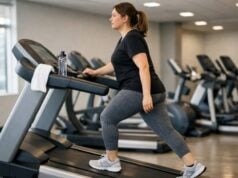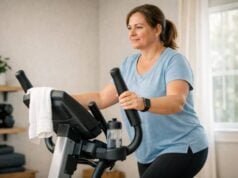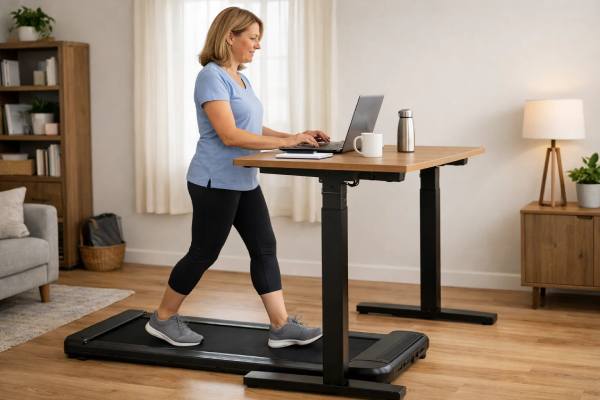
An under-desk treadmill can help with weight loss, but not because it is a magic shortcut. Its biggest value is that it makes movement easier to accumulate during hours that would otherwise be almost completely sedentary. That can raise daily calorie burn, increase step count, reduce sitting time, and make it easier to stay in a calorie deficit without adding another hard workout to your week.
For many people, especially desk workers, that is a meaningful advantage. The real question is not whether an under-desk treadmill “works.” It is how much it can realistically contribute, how to use it without wrecking posture or productivity, and whether it fits your routine better than normal walking breaks or traditional cardio.
Table of Contents
- Can an under-desk treadmill help you lose weight?
- Main benefits of an under-desk treadmill
- How many calories can you burn?
- Best speed, time and step targets
- How to use it safely and comfortably
- Mistakes that limit results
- Is it worth it for you?
Can an under-desk treadmill help you lose weight?
Yes, an under-desk treadmill can help you lose weight, but it works best as a daily movement tool, not as a replacement for everything else. It helps most by increasing the amount of light physical activity you do during the day, especially if your normal routine involves long hours of sitting.
That distinction matters. Weight loss still depends on overall energy balance. If you consistently eat more than you burn, walking while answering emails will not erase that. But if you already have a reasonably controlled diet, an under-desk treadmill can make it much easier to create or maintain the modest calorie deficit that fat loss requires.
That is why this kind of device is often more useful than it first appears. Many people think only “real workouts” matter. In practice, the extra movement between workouts matters a lot too. Under-desk treadmills mainly raise what is often called daily non-exercise movement, the kind of calorie burn that comes from walking, standing, and moving more across the day. If you want a broader look at that idea, burning more calories through NEAT is one of the most underrated parts of fat loss.
The biggest strength of an under-desk treadmill is that it uses time you already have. You are not driving to the gym. You are not changing clothes. You are not trying to “find” an extra 45 minutes after work. You are turning part of your desk time into low-intensity movement.
For office workers and work-from-home professionals, that can be a major difference-maker because sedentary jobs tend to create a huge gap between “I work out” and “I barely move the rest of the day.” An under-desk treadmill helps close that gap.
Still, expectations need to be realistic:
- It is not the same as a hard cardio session.
- It will not build much fitness at slow walking speeds.
- It will not outwork a chaotic diet.
- It usually works best when paired with strength training, regular walking, and a sensible eating plan.
In other words, it is not an all-in-one weight-loss solution. It is a tool that can make the rest of your plan easier to execute.
That is also why it tends to work better for some people than for others. If you already walk a lot, take frequent breaks, and have an active job, the added benefit may be modest. But if your day is mostly chair-to-chair and screen-to-screen, the upside can be surprisingly meaningful. For many people, it is less about burning huge calories in one hour and more about no longer losing eight to ten hours of potential movement each workday.
And that is where the real weight-loss benefit shows up: more steps, less sitting, more daily energy expenditure, and fewer “I was too busy to move today” days.
Main benefits of an under-desk treadmill
The obvious benefit is more calorie burn, but that is only part of the picture. Under-desk treadmills can be useful because they improve the structure of your day, not just the numbers on a watch or app.
The first major benefit is simple: they reduce sedentary time. Many desk workers sit for long uninterrupted blocks, and that tends to drag down total daily movement. An under-desk treadmill makes it easier to interrupt that pattern without needing a full workout window.
The second benefit is that it raises step count almost automatically. People often struggle to hit a meaningful daily step number because work crowds out movement. A treadmill under the desk turns otherwise inactive hours into a steady source of steps. If daily movement is one of your weak spots, a desk job movement plan and step habits for busy days are built around the same idea.
A third benefit is adherence. Traditional cardio requires intention, time, and effort. Under-desk walking often requires less mental resistance. Many people will skip a formal cardio session when tired, but they will still walk slowly during meetings, emails, or phone calls. For weight loss, easier adherence often beats the “perfect” plan that rarely happens.
Other practical benefits can include:
- More total daily activity without adding another commute
- Better separation between work sitting and movement
- Less stiffness from remaining seated for hours
- A lower-impact option than running or jumping cardio
- An easier entry point for people who dislike intense exercise
There is also a hidden behavior benefit: walking while working can shift your identity from “someone trying to exercise more” to “someone who builds movement into the day.” That matters because weight loss often works better when healthy choices are part of your routine rather than isolated acts of willpower.
Still, there are limits. Under-desk treadmills are usually designed for slow walking, not running. They will not replace strength training if you want to preserve muscle. They will not create the cardiovascular challenge of intervals, cycling, or faster outdoor walking. And for some types of work, especially precision tasks, walking may reduce performance.
That is why the most helpful way to think about the device is this: it is a movement multiplier, not a full fitness system. It helps you reclaim hours that would otherwise be inactive.
For some people, that is enough to meaningfully improve body-weight trends over time. For others, it is a support tool that works best alongside a structured plan for food and formal training. Either way, its biggest value is often not dramatic. It is cumulative. Small increases in movement, repeated day after day, are exactly the kind of change that can make a fat-loss plan easier to sustain.
How many calories can you burn?
This is the question most people want answered first, and the honest answer is: more than sitting, but usually less than you think if you are imagining a full workout.
Under-desk treadmills are typically used at slow speeds, often around 1.0 to 2.0 mph. That is enough to raise energy expenditure meaningfully above sitting, but not enough to match brisk outdoor walking, incline walking, or a standard treadmill session.
A useful way to think about it is in two layers:
- Total calories burned while walking
- Extra calories burned compared with sitting
For weight loss, the second number is often the more useful one, because you would have burned some calories sitting at your desk anyway.
| Body weight | At about 1.0 mph | At about 2.0 mph | Extra above sitting |
|---|---|---|---|
| 150 lb | About 160 to 170 calories per hour | About 195 to 210 calories per hour | About 70 to 115 extra calories per hour |
| 200 lb | About 215 to 225 calories per hour | About 260 to 275 calories per hour | About 95 to 150 extra calories per hour |
| 250 lb | About 270 to 285 calories per hour | About 325 to 340 calories per hour | About 120 to 185 extra calories per hour |
These are estimates, not guarantees. Actual numbers depend on body size, gait, speed, desk setup, and how steadily you walk. Device calorie readouts can also be noisy, so it is better to treat them as rough feedback than precise truth.
Even so, the practical takeaway is encouraging. If you add 60 to 120 minutes of slow walking on many workdays, the extra calorie burn can add up. The effect becomes bigger when under-desk walking also nudges up your total daily steps, reduces long sitting blocks, and makes you less likely to “make up” for inactivity later with fatigue-based snacking.
Here is where many people go wrong: they expect one hour of slow treadmill walking to behave like a hard cardio session. It does not. But that misses the point. Under-desk treadmills work best because they make more movement possible on days that would otherwise be almost motionless.
That is also why they pair well with broader walking goals. If your under-desk treadmill helps move you from 3,500 daily steps to 7,500 or 9,000, the impact is much larger than the treadmill hour in isolation. For that reason, it helps to think of the device as part of your full movement picture, not as a single workout. Readers who want more context on that bigger picture often do well with walking for weight loss and 10,000 steps for weight loss as complementary guides.
The bottom line is straightforward: an under-desk treadmill usually will not torch calories, but it can reliably create a useful calorie gap over time, especially for people starting from a very sedentary baseline.
Best speed, time and step targets
The best way to use an under-desk treadmill is not to max out speed. It is to choose a pace you can actually sustain while working well.
For most people, the practical sweet spot looks like this:
- Typing and detailed computer work: about 0.8 to 1.3 mph
- Reading, email and lighter tasks: about 1.0 to 1.7 mph
- Phone calls or meetings with low typing demand: about 1.5 to 2.0 mph
Trying to walk too fast is one of the biggest mistakes beginners make. At higher speeds, typing becomes sloppier, posture tends to deteriorate, and the device quickly feels annoying instead of useful. The best under-desk treadmill speed is usually the one that is slow enough to be repeatable, not the one that feels most “athletic.”
Time goals should also build gradually. A realistic progression looks like this:
| Week | Daily walking goal | How to split it up |
|---|---|---|
| 1 | 20 to 30 minutes | Two 10 to 15 minute blocks |
| 2 | 30 to 45 minutes | Two or three short blocks |
| 3 | 45 to 60 minutes | Three moderate blocks or one longer and one shorter block |
| 4 and beyond | 60 to 120 minutes if tolerated | Spread across the workday based on tasks |
Not everyone needs two hours a day. For some people, even 30 to 45 minutes most workdays creates a noticeable increase in step count and energy expenditure. Others do best with several 10-minute bouts, especially if concentration drops during longer walking blocks.
As for step targets, think of the under-desk treadmill as a way to support your daily total rather than a separate universe of movement. If your average day is very low, a strong first target may simply be adding 2,000 to 4,000 extra steps through desk walking. That alone can be a major upgrade.
A few practical benchmarks:
- Low baseline movers: aim to add 2,000 extra steps
- Moderate baseline movers: aim to add 3,000 to 5,000 extra steps
- Already active walkers: use it to keep activity high on busy desk days
This is also where consistency matters more than hero days. Walking 45 minutes on most workdays is often more useful than doing three hours once and then abandoning the treadmill for the rest of the week. People who do best with this device usually treat it like a background habit, not a performance test.
If you want more structure, walking pad workouts for weight loss and how much cardio per week for weight loss can help you fit under-desk walking into a bigger weekly routine.
How to use it safely and comfortably
An under-desk treadmill only helps if you can use it regularly without pain, awkward posture, or constant frustration. Setup matters more than people expect.
Start with the desk itself. The biggest mistake is trying to force treadmill walking into a workstation designed only for seated posture. Your monitor should be high enough that you are not looking down. Your elbows should rest comfortably around a right angle when typing. And your shoulders should stay relaxed rather than creeping upward all day.
A good setup should let you:
- Keep your head stacked over your torso
- Avoid leaning forward into the screen
- Swing your arms naturally when not typing
- Land quietly rather than stomping
- Step on and off easily without clutter nearby
Footwear also matters. Some people like barefoot-style walking at home, but most people do better with light supportive shoes, especially for longer sessions. You do not need thick running shoes, but you do want something comfortable enough to avoid foot fatigue.
Safety tips that matter:
- Begin at a very slow speed before trying to type
- Use the safety clip if your device includes one
- Stop walking during tasks that require fine motor precision
- Step off fully before adjusting cables, reaching low, or turning around
- Keep pets, children, and objects away from the belt area
It is also smart to separate task types. Under-desk treadmill walking works best for email, meetings, reading, planning, brainstorming, and routine admin work. It is usually worse for spreadsheets that require precision, detailed design work, complex writing, or anything that already feels mentally demanding. Matching the walking block to the right type of task is one of the easiest ways to make the habit stick.
Some people should be more cautious before using one regularly, especially those with:
- Balance issues
- Significant dizziness
- Severe neuropathy
- Uncontrolled cardiovascular problems
- Recent lower-body injury
- Joint pain that worsens with walking
If that sounds familiar, lower-impact options may fit better at first, including low-impact cardio for bad knees or more traditional walking breaks. And if your main question is whether an under-desk treadmill beats other forms of walking, desk treadmill vs walking outside for weight loss is really a question of context: desk walking wins on convenience, while outdoor walking often wins on pace, freshness, and mental reset.
The final comfort tip is not to force all-day use. Many people imagine they should walk for entire work blocks. In reality, most people do better with shorter, high-quality bouts that fit the flow of the day. Comfort is what makes consistency possible, and consistency is what makes the treadmill useful for fat loss.
Mistakes that limit results
The most common mistake is expecting the treadmill to do too much. Under-desk treadmills work well as a support tool, but they are not strong enough on their own to overcome poor eating habits, very low overall activity outside work, or an all-or-nothing approach to weight loss.
Another common mistake is walking too fast for the type of work you are doing. That usually leads to poor typing, annoyance, and abandonment. The better strategy is to keep speeds low enough that work quality stays acceptable. If the treadmill makes your job harder every time you use it, you will stop using it.
A few other mistakes show up repeatedly:
- Treating desk walking as a substitute for all other exercise
- Ignoring posture and desk height
- Starting with too much time too soon
- Using it only once motivation is high
- Overestimating calories burned
- Rewarding the extra walking with more food
That last point matters. A lot of people unconsciously eat back the benefit of low-intensity movement because it feels productive and healthy. Sometimes that happens directly through bigger meals. Sometimes it happens indirectly through “I earned this” thinking or the assumption that the treadmill created a huge calorie deficit. It usually did not.
This is part of a broader pattern called compensation. You move more, then rest more, snack more, or become less active later because you feel you already did your part. That does not mean under-desk treadmills fail. It means results improve when you notice the compensation effect early rather than assuming more movement automatically guarantees progress.
Another mistake is forgetting that hunger and food quality still matter. Under-desk walking tends to be easier to recover from than intense cardio, which is useful, but fat loss still works best when the rest of your diet supports it. For many people, the best pairing is simple: keep protein high, keep meals filling, and let the treadmill add movement without turning the day into an exhausting grind. That is why protein intake for weight loss and what to eat in a calorie deficit often matter just as much as the treadmill itself.
Finally, do not confuse low intensity with low value. Under-desk walking is not meant to feel like a brutal workout. Its value comes from repetition. Quiet, sustainable movement done most days of the week often produces more useful weight-loss support than random intense efforts that make the rest of the week worse.
Is it worth it for you?
An under-desk treadmill is usually worth it if your biggest problem is not a lack of knowledge, but a lack of daily movement because work keeps you sitting for long stretches. In that situation, it can be one of the most practical ways to increase energy expenditure without adding another formal workout.
It is especially worth considering if you:
- Work from home or at a desk most of the day
- Struggle to get enough steps on busy workdays
- Want a low-impact option
- Prefer easy, repeatable movement to hard cardio
- Already have your food intake mostly under control
It may be less worth it if you:
- Already walk a lot during the day
- Have limited space or noise tolerance
- Need high precision computer work all day long
- Dislike treadmill walking enough that you will not use it
- Are hoping it will replace all other exercise
For many people, the best comparison is not “under-desk treadmill versus no treadmill.” It is “under-desk treadmill versus what I would realistically do instead.” If the honest answer is “I would otherwise sit all day,” the device can be very helpful. If the honest answer is “I already take several brisk outdoor walks and train consistently,” the added value may be smaller.
There is also a cost-benefit angle. The best device is not automatically the most expensive one. The best device is the one you will use often, that fits under your desk properly, stays quiet enough for your environment, and feels smooth enough that you do not dread turning it on.
The most realistic success story looks like this:
- Your average daily steps rise
- Your sitting time falls
- Your body weight trends down more steadily
- You feel less stiff and more active during workdays
- You still do normal exercise and eat sensibly
That is a strong outcome, even if the treadmill does not feel dramatic.
If your bigger goal is building an overall fat-loss system, not just adding one gadget, it helps to zoom out and think about where desk walking fits alongside strength training, steps, and nutrition. In that bigger picture, under-desk treadmills are rarely the star of the show. But they can absolutely be one of the most useful supporting tools, especially for people whose main obstacle is a sedentary workday.
References
- WHO guidelines on physical activity and sedentary behaviour 2020 (Guideline)
- A systematic review and meta-analysis of the effect of treadmill desks on energy expenditure, sitting time and cardiometabolic health in adults 2021 (Systematic Review)
- Non-exercise activity thermogenesis in the workplace: The office is on fire 2022 (Review)
- The effects of active workstations on reducing work-specific sedentary time in office workers: a network meta-analysis of 23 randomized controlled trials 2023 (Systematic Review)
- 2024 Adult Compendium of Physical Activities: A third update of the energy costs of human activities 2024 (Review)
Disclaimer
This article is for general educational purposes only and is not a substitute for medical advice, diagnosis, or treatment. If you have balance problems, nerve symptoms, recent injury, significant joint pain, or a medical condition that affects exercise safety, speak with a qualified clinician before using an under-desk treadmill regularly.
If this article helped you, please share it on Facebook, X, or your preferred platform so someone else can make a smarter choice about under-desk walking and weight loss.