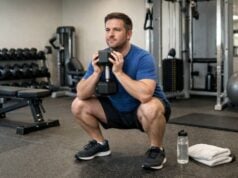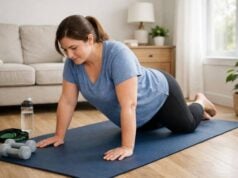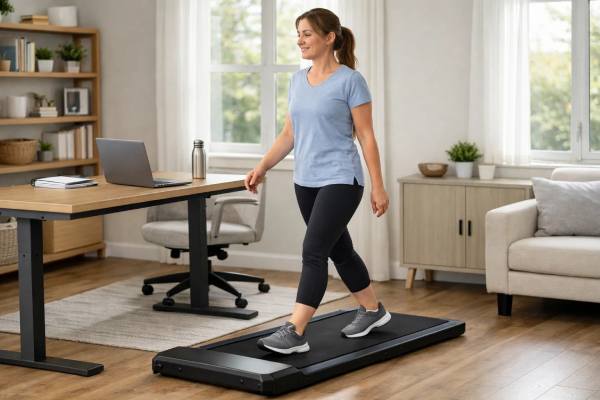
Walking pad workouts for weight loss can be one of the most practical ways to move more, especially if you spend long hours sitting, work from home, or struggle to fit formal workouts into your day. A walking pad does not turn weight loss into a shortcut, but it can make it much easier to increase daily activity, burn more calories, and reduce the all-or-nothing mindset that derails consistency.
Used well, a walking pad can serve two roles: a low-intensity movement tool during work hours and a dedicated cardio option for short home sessions. This guide covers how walking pads help with fat loss, how many calories they can realistically contribute, the best workout styles for home and office use, and how to build a weekly plan that is effective without becoming exhausting.
Table of Contents
- Are walking pads good for weight loss
- Walking pad vs regular treadmill use
- How many calories can a walking pad burn
- Best walking pad workouts for home
- Best walking pad plans for office hours
- Weekly walking pad schedule
- Safety, setup and common mistakes
Are walking pads good for weight loss
Yes, walking pads can be very useful for weight loss, but not because they are magical. They work because they make movement easier to repeat.
That may sound too simple, but it is the real strength of a walking pad. Many people do not struggle because they lack the “perfect” workout. They struggle because regular exercise keeps losing to work, commuting, weather, fatigue, or schedule chaos. A walking pad removes several of those barriers. It gives you a way to walk at home, during work breaks, while listening to meetings, or in short bursts that would not feel worth the effort if you had to change clothes, leave the house, or drive to a gym.
For fat loss, this matters in three main ways:
- it helps increase total daily movement
- it can reduce long, uninterrupted periods of sitting
- it makes it easier to accumulate extra active minutes across the week
That combination is powerful because weight loss rarely depends on one heroic workout. It usually comes from what you can sustain for months. A walking pad is good at turning scattered time into useful movement.
It can also help people who dislike high-impact cardio. If running bothers your joints, structured walking can be a much more realistic way to increase energy expenditure. Some people treat a walking pad as a backup plan for bad weather. Others make it a daily cornerstone of their routine because it fits desk work, family life, or apartment living.
Still, a walking pad does not replace nutrition. You can walk every day and still stall if food intake quietly rises to match the extra activity. That is why walking-pad workouts work best when paired with a manageable calorie deficit approach and reasonable expectations.
Another useful point is that walking pads support what people often overlook in fat loss: low-intensity movement done often. A hard workout can burn a lot in one shot, but a walking pad can help you keep total daily movement higher without wrecking your recovery or motivation. That is one reason it fits so well with NEAT and daily calorie burn strategies.
The best mindset is to treat a walking pad as a consistency tool, not a miracle machine. It is a way to walk more, sit less, and make activity feel easier to fit into real life. For many people, that is exactly what makes it effective.
Walking pad vs regular treadmill use
Walking pads and regular treadmills overlap, but they are not quite the same tool.
A regular treadmill is built for a wider range of training. It usually has a larger deck, stronger motor, sturdier frame, higher speed range, and often incline settings. A walking pad is usually smaller, quieter, easier to store, and built mainly for walking rather than hard running.
That difference affects how you use it for weight loss.
A walking pad is often better for:
- desk-work walking
- short movement breaks
- apartment-friendly use
- easy and moderate walking
- people who want a low-friction option at home or in an office
A regular treadmill is usually better for:
- faster intervals
- incline training
- longer brisk workouts
- heavier users who want more stability
- mixed walking and running plans
If your goal is simply to move more and get more steps, a walking pad may be enough. If you want a broader cardio machine that can also handle faster training, a treadmill may make more sense. This is why some people comparing the two end up choosing based more on lifestyle than on “best machine” logic. A machine that folds under a desk and gets used five days a week often beats a more advanced machine that rarely gets touched.
The biggest advantage of a walking pad is convenience. Many people can step onto it in work clothes, walk for 10 to 30 minutes, and get back to their day with almost no setup. That low friction changes behavior. It is also why walking pads overlap with under-desk treadmill use and why they are often compared with other movement-friendly work setups.
The main limitation is intensity. Most walking pads are not the best tool for hard cardio. They usually shine at easy and moderate walking, not aggressive treadmill sessions. That is not a flaw if your main goal is fat loss through higher daily activity. It just means you should use the machine for what it is good at.
A helpful way to think about it:
| Feature | Walking pad | Regular treadmill |
|---|---|---|
| Best use | Daily walking and desk use | Dedicated cardio training |
| Space needs | Smaller | Larger |
| Speed range | Usually lower | Usually wider |
| Incline options | Limited or none | Often included |
| Office-friendly | Better | Less practical |
| Workout variety | Moderate | Higher |
If you are mainly trying to walk more during a busy day, the walking pad often wins. If you want a fuller cardio machine, a standard treadmill usually offers more.
How many calories can a walking pad burn
Walking pads can contribute meaningfully to calorie burn, but the exact number depends on your body size, walking speed, session length, and whether you are doing a focused workout or a slower workday walk.
That last part matters a lot. A slow walking-pad session while answering emails is not the same as a 30-minute brisk walk done with arm swing, upright posture, and full attention. Both can help with weight loss, but they serve different purposes.
In general, walking-pad calorie burn is driven by:
- body weight
- speed
- total minutes walked
- consistency across the week
- whether the walking replaces sitting or merely adds small extra movement
The most useful truth is this: the machine becomes effective when it helps you walk more than you otherwise would. That means it is often the accumulated weekly total, not one dramatic session, that matters most.
A rough practical breakdown looks like this:
- Light desk walking: useful for steps, low fatigue, modest calorie burn
- Moderate steady walking: better for dedicated fat-loss sessions
- Brisk walking intervals: stronger cardio effect, higher burn per minute
Many people make the mistake of trying to force office-style walking and workout-style walking into the same pace. They are better treated as separate modes.
Office mode
This is usually slower and more controlled. The goal is not to get breathless. The goal is to reduce sitting time and keep your body moving while you work.
Workout mode
This is a dedicated session where you walk at a pace that clearly feels like exercise. You may sweat a little, breathe harder, and treat it as planned cardio rather than background movement.
Walking-pad workouts also help because they support higher step counts. That alone can matter for weight loss, especially for people who were previously very sedentary. If you are building your routine around more daily walking, walking for weight loss and step-based weight-loss guidance can help you set expectations.
A better way to judge the machine is not “How many calories did it burn today?” but “How much more movement does this let me do each week?” For example:
- 20 extra minutes on five workdays
- three brisk 30-minute sessions at home
- several 10-minute post-meal walks
- replacing one or two hours of sitting with easy walking
That kind of pattern can create a meaningful difference over time.
Also remember that walking-pad workouts are easier to recover from than most harder cardio. That means you may be able to do them more often without feeling wrecked. That repeatability is part of the calorie story too.
So yes, walking pads can help you burn more calories. The most important point is not the exact device estimate on the screen. It is whether the machine helps you move enough, often enough, to shift your weekly energy balance in the right direction.
Best walking pad workouts for home
At home, a walking pad works best when you stop thinking of it as just a step counter and start using it like a simple cardio tool. That does not mean every session needs to be hard. It means you should give some of your walks structure.
Here are four of the most useful home workout formats.
1. Easy starter walk
Best for beginners, low-energy days, or returning after a break.
- 5 minutes easy pace
- 10 minutes steady comfortable walk
- 5 minutes easy cooldown
This is the kind of session that builds the habit. It may not feel dramatic, but it is extremely useful when repeated regularly.
2. Brisk steady walk
Best for simple fat-loss cardio.
- 5 minutes easy warm-up
- 20 to 30 minutes brisk steady walking
- 5 minutes easy finish
This is often the most reliable walking-pad workout for weight loss because it is challenging enough to count as exercise but simple enough to repeat several times per week.
3. Interval walk
Best for people who get bored with one pace.
- 5 minutes easy warm-up
- 1 minute brisk pace
- 2 minutes moderate pace
- Repeat 6 to 8 rounds
- 5 minutes easy cooldown
Intervals can make a walking pad feel more like a true cardio session without needing a machine built for running.
4. Post-meal walk session
Best for consistency and appetite management.
- 10 to 15 minutes at an easy-to-moderate pace after one or two meals
This format is especially helpful for people who struggle to fit in longer blocks of exercise. It also stacks nicely with short walks after meals as a habit.
| Workout | Length | Effort | Best for |
|---|---|---|---|
| Easy starter walk | 20 minutes | Easy | Beginners and recovery days |
| Brisk steady walk | 30 to 40 minutes | Moderate | Simple fat-loss sessions |
| Interval walk | 25 to 35 minutes | Moderate to brisk | Variety and stronger cardio |
| Post-meal walk | 10 to 15 minutes | Easy to moderate | Busy days and habit building |
The key with home walking-pad workouts is not complexity. It is using the pad for a clear purpose. Some days that purpose is a proper workout. On other days it is just making sure you still move.
Best walking pad plans for office hours
Office walking-pad use is different from home workout use. You are not trying to simulate a gym session while typing. You are trying to reduce sitting and increase movement without making work impossible.
That means slower, steadier pacing is usually better during work tasks.
A smart office plan treats walking as background activity for parts of the day, not as constant all-day motion. Most people do better with blocks rather than endless low-level walking.
Three effective office formats
1. The 20-20 plan
Use the walking pad for 20 minutes once in the morning and once in the afternoon at a comfortable pace. This works well for emails, reading, audio meetings, and lighter task blocks.
2. The meeting walk plan
Use the pad only for calls, internal meetings, or listening-based work. This is often one of the easiest ways to build walking into a desk job because it ties movement to something that is already scheduled.
3. The break-replacement plan
Replace one or two sedentary breaks with 10 to 15 minutes of easy walking. This is useful if your job requires too much precision to walk while actively working.
These formats work because they do not ask the walking pad to do too much. Trying to walk through every spreadsheet, detailed writing task, or high-focus problem-solving block often backfires. Productivity drops, posture gets sloppy, and the machine becomes annoying instead of useful.
The best office walking-pad pace is usually the pace that still lets you work well. That will vary by person and task. Lighter cognitive work can usually tolerate more walking than fine-motor or high-concentration tasks.
Office walking-pad use can also help with more than calorie burn:
- less total sitting time
- more step accumulation on workdays
- better energy during long desk hours
- less “I sat all day, so now I need a big workout tonight” pressure
That last benefit is underrated. A walking pad can reduce the gap between “sedentary all day” and “trying to fix it with one workout.” It gives you movement throughout the day instead of relying on one later session to do all the work. That is why it fits well with an office movement plan and with broader strategies for staying active in desk-based routines.
The most effective office walking-pad user is not the person who tries to walk every minute. It is the person who identifies a few repeatable windows and uses them consistently:
- morning email block
- lunch break
- afternoon slump
- internal meetings
- end-of-day wrap-up
That approach is sustainable, which is exactly what you want from a workday movement tool.
Weekly walking pad schedule
A good walking-pad schedule should combine office-style easy movement with a few more intentional workout sessions. That balance makes the machine more useful for fat loss than relying on either one alone.
Here is a practical beginner-to-intermediate weekly framework.
| Day | Main session | Optional extra movement |
|---|---|---|
| Monday | 20 to 30 minute brisk steady walk | 10 minute office or post-meal walk |
| Tuesday | Two 15 to 20 minute office walks | Easy evening stroll |
| Wednesday | 25 to 30 minute interval walk | Short recovery walk |
| Thursday | Two 10 to 15 minute workday walks | Rest if needed |
| Friday | 30 minute brisk steady walk | 10 minute after-dinner walk |
| Saturday | Longer 40 to 50 minute easy-to-moderate walk | None needed |
| Sunday | Rest or easy recovery walk | Light movement only |
This kind of plan works because it layers movement in sensible ways:
- two to three dedicated workouts
- several lighter movement blocks
- at least one easier day
- room for life to happen
You do not need every day to be impressive. You need enough total weekly movement to matter. For many people, that means building toward 150 or more minutes of purposeful walking and then adding extra easy movement where possible. If you want a bigger-picture benchmark, weekly cardio guidance for weight loss helps put walking-pad sessions in context.
Walking pads also pair well with strength training. That matters because fat loss is not just about burning calories. It is also about protecting muscle and maintaining a routine you can live with. Even two weekly lifting sessions can make the overall plan stronger. A simple beginner strength routine or a shortened two-day version can fit well alongside walking-pad work.
A few progression rules help:
- add minutes before you add more daily sessions
- increase one thing at a time
- keep at least one easy day in the week
- do not force every walk to become brisk
- judge progress by weekly consistency, not one great day
A walking pad becomes much more effective when it is part of a weekly rhythm rather than a random tool you remember only after overeating or missing a workout.
Safety, setup and common mistakes
Walking pads are simple, but there are still a few ways people make them less effective or more uncomfortable than they need to be.
Common mistake 1: using too much speed during work
If the speed is too high, typing gets sloppy, concentration drops, and posture gets awkward. Work walking and workout walking are not the same thing.
Common mistake 2: holding the handles or desk strangely
A tense upper body defeats the point of natural walking mechanics. Stand tall, keep your shoulders relaxed, and avoid leaning heavily forward.
Common mistake 3: expecting the pad to do all the work
A walking pad can help a lot, but it is not a substitute for sensible eating, sleep, and broader activity habits. It is one tool in the system.
Common mistake 4: going from sedentary to hours of walking
Feet, calves, hips, and low back need time to adapt. Start with manageable blocks. More is not automatically better.
Common mistake 5: never changing the routine
If every session is the same easy pace forever, the fat-loss effect may be smaller than you expect. Keep some easy walking, but also include a few more intentional sessions each week.
Setup tips that help
- Place the pad on a stable surface.
- Wear comfortable shoes unless you know barefoot use feels good on your machine and floor setup.
- Keep the work desk height compatible with upright posture.
- Use the safety key if your machine has one.
- Keep cords, rugs, and clutter away from the belt area.
- Clean the area regularly, especially if dust builds up around the machine.
If your knees, hips, or feet get irritated, reduce volume before blaming walking entirely. Sometimes the issue is simply too much too soon. If joint discomfort is a regular problem, options from low-impact cardio for bad knees may help you compare alternatives or modifications.
A brief warm-up can also help before brisker sessions:
- 2 to 5 minutes of easy walking
- ankle circles
- calf raises
- a few bodyweight squats
For dedicated workouts, especially longer ones, basic warm-up and recovery habits can reduce stiffness and keep your routine feeling smoother.
Finally, remember what the walking pad is best at: making movement easier to do often. If you use it that way, it can become one of the most practical fat-loss tools for home and office life. If you treat it like a miracle machine or a guilt machine, it usually becomes another abandoned gadget.
References
- WHO guidelines on physical activity and sedentary behaviour 2020 (Guideline)
- A systematic review and meta-analysis of the effect of treadmill desks on energy expenditure, sitting time and cardiometabolic health in adults 2021 (Systematic Review)
- The effects of active workstations on reducing work-specific sedentary time in office workers: a network meta-analysis of 23 randomized controlled trials 2023 (Systematic Review)
- 2024 Adult Compendium of Physical Activities: A third update of the energy costs of human activities 2024 (Reference Update)
- Effect of exercise training on weight loss, body composition changes, and weight maintenance in adults with overweight or obesity: An overview of 12 systematic reviews and 149 studies 2021 (Review)
Disclaimer
This article is for general educational purposes only and is not a substitute for medical advice, diagnosis, or treatment. If you have significant joint pain, balance problems, heart disease, or symptoms such as chest pain, dizziness, or unusual shortness of breath during exercise, speak with a qualified clinician before starting a walking-pad program.
If this article helped you, share it on Facebook, X, or your preferred platform so someone else can build a smarter walking-pad routine for home or office life.