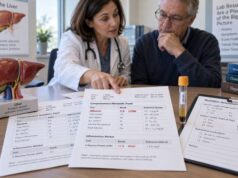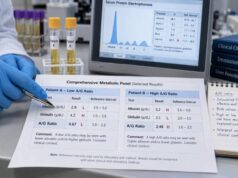
A fibrinogen blood test measures a liver-made protein with two important roles: it helps form blood clots, and it rises during the body’s inflammatory response. When bleeding occurs, thrombin converts fibrinogen into strands of fibrin that stabilize the clot. During infection, injury, pregnancy, smoking exposure, or chronic inflammatory disease, the liver may release more fibrinogen into the bloodstream. This means a high result can reflect inflammation and may be associated with a more clot-promoting environment, but it does not prove that a dangerous clot is present or predict an individual heart attack or stroke by itself. Interpretation depends on why the test was ordered, the laboratory method, symptoms, pregnancy status, medicines, liver health, and related results such as CRP, platelet count, PT, aPTT, and D-dimer. This guide explains normal ranges, common causes of high fibrinogen, its connection with cardiovascular risk, and how clinicians decide what to do next.
- What fibrinogen is: Clotting factor I, a soluble blood protein converted into insoluble fibrin during clot formation.
- Typical range: Many laboratories use roughly 200–400 mg/dL, but the report’s own interval is the correct comparison.
- Why it rises: Infection, inflammation, tissue injury, pregnancy, smoking, estrogen exposure, and some metabolic or cardiovascular conditions can increase it.
- Clot meaning: High fibrinogen is associated with thrombosis risk at a population level but does not diagnose deep-vein thrombosis, pulmonary embolism, heart attack, or stroke.
- Best interpretation: Read the value as part of the clinical picture and a broader coagulation or inflammatory assessment.
Table of Contents
- How fibrinogen works and how it is tested
- Normal range and result patterns
- Common causes of high fibrinogen
- Fibrinogen as an inflammation marker
- Clotting and cardiovascular meaning
- How clinicians evaluate an abnormal result
- Management, follow-up, and urgent warning signs
How Fibrinogen Works and How It Is Tested
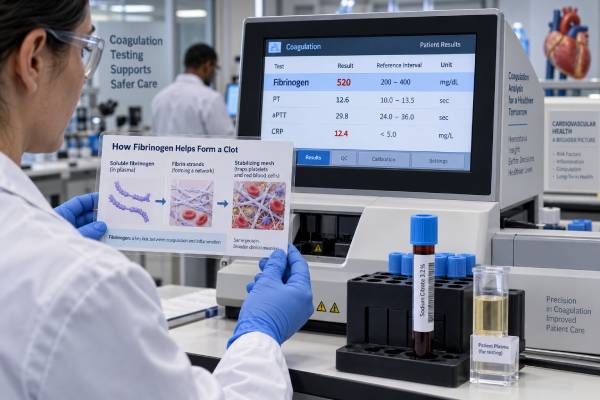
Fibrinogen is a large protein made mainly by the liver and released into plasma. It is also known as coagulation factor I. At the end of the clotting cascade, thrombin cuts fibrinogen molecules so they can join into fibrin fibers. Factor XIII then cross-links those fibers, creating a stronger mesh that traps platelets and blood cells at an injured vessel. The clot is later broken down through fibrinolysis after repair has progressed.
Fibrinogen also influences how platelets bind to one another, blood viscosity, wound healing, and inflammatory signaling. Because it sits at the intersection of coagulation and inflammation, abnormal concentrations can have several meanings. Too little functional fibrinogen can cause bleeding. A high concentration may accompany an acute-phase response and can contribute to denser clot structure, yet the clinical effect depends on many other procoagulant and anticoagulant systems.
The most common quantitative test is the Clauss fibrinogen assay. The laboratory adds a high concentration of thrombin to diluted plasma and measures how quickly a clot forms. Faster clotting generally corresponds to more functional fibrinogen. Some reports use a fibrinogen value calculated from the optical change during a prothrombin-time test, but this derived result is not interchangeable with every functional assay. An antigen test measures the amount of fibrinogen protein rather than how well it works. Comparing activity with antigen can help investigate rare dysfibrinogenemia, in which fibrinogen is present but functions abnormally.
A sample is collected into a citrate tube. No special preparation is usually needed, although the ordering clinician should know about anticoagulants, pregnancy, recent surgery, infection, transfusion, and any personal or family history of abnormal bleeding or thrombosis. An underfilled tube, a clotted specimen, very high heparin levels, direct thrombin inhibitors, or technical issues can affect some results.
Fibrinogen may be ordered for very different questions:
- Unexplained bleeding, bruising, or prolonged coagulation tests
- Suspected disseminated intravascular coagulation (DIC)
- Major trauma, surgery, postpartum hemorrhage, or severe liver disease
- Monitoring replacement treatment for low fibrinogen
- Evaluation of inflammation or an unexpectedly high ESR
- Selected cardiovascular or thrombosis research and risk assessments
The purpose of testing determines whether a high, low, falling, or discordant result is most important.
Normal Range and Result Patterns
A frequently quoted adult interval is about 200–400 mg/dL, equivalent to 2.0–4.0 g/L. Laboratories establish their own reference intervals, and pregnancy, age, assay method, and clinical setting matter. A result slightly above a laboratory limit is common during a recent illness and is not interpreted like a severe or persistent elevation.
| Result pattern | Common interpretation | Important next context |
|---|---|---|
| High fibrinogen | Acute-phase response, pregnancy, smoking, metabolic inflammation, tissue injury, or another ongoing stimulus | Symptoms, CRP, ESR, blood count, liver and metabolic tests |
| Low fibrinogen | Consumption, reduced production, dilution, medication effect, or inherited deficiency | Bleeding, PT/aPTT, D-dimer, liver disease, trauma or obstetric emergency |
| Normal concentration with abnormal clotting | A qualitative fibrinogen disorder or another coagulation problem may be present | Thrombin time, reptilase time, antigen/activity comparison, specialist testing |
| Falling fibrinogen in critical illness | Consumption may be outpacing acute-phase production | Platelets, D-dimer, serial coagulation tests, organ function |
Fibrinogen is often relatively stable in a healthy person but can rise over hours to days after an inflammatory trigger and remain elevated while the stimulus continues. Serial results can be more useful than one measurement. In DIC, for example, a single “normal” fibrinogen does not always reassure because inflammation may increase production while coagulation consumes it. A downward trend alongside thrombocytopenia, high D-dimer, and prolonged clotting times can be more significant than the absolute number.
Conversely, an elevated result is not automatically dangerous. A value of 430 mg/dL during a respiratory infection may return to baseline after recovery. A similar value that persists alongside obesity, diabetes, smoking, and vascular disease may be a sign of chronic inflammatory burden, although it still does not identify a specific blocked vessel.
Units deserve attention. Some laboratories report mg/dL and others g/L. To convert g/L to mg/dL, multiply by 100. Thus, 3.5 g/L equals 350 mg/dL. D-dimer is sometimes reported in “fibrinogen-equivalent units,” but that phrase does not mean a D-dimer result is a fibrinogen concentration. They are different tests measuring different parts of clot formation and breakdown.
Common Causes of High Fibrinogen
High fibrinogen is usually an acquired response. The liver increases production under the influence of inflammatory cytokines, especially interleukin-6. Several conditions can operate at once, so clinicians often look for the most plausible combination rather than one single cause.
Acute Infection, Injury, and Surgery
Bacterial and viral infections, burns, trauma, surgery, and tissue damage can raise fibrinogen as part of healing and host defense. The result may remain high after symptoms begin improving because fibrinogen changes more slowly than some markers. A recent vaccination or vigorous physical stress may cause a smaller temporary response in some people.
Chronic Inflammatory Disease
Rheumatoid arthritis, inflammatory bowel disease, chronic lung disease, vasculitis, persistent infection, and some cancers can maintain higher concentrations. Disease activity is not always proportional to the fibrinogen value. A C-reactive protein test often responds more rapidly, while fibrinogen may help explain why the ESR remains elevated.
Pregnancy and Estrogen
Fibrinogen normally rises during pregnancy, particularly later gestation, as part of physiologic preparation for delivery. Pregnancy-specific ranges should be used. A value that would be high outside pregnancy may be expected during the third trimester. Estrogen-containing contraceptives and hormone therapy can also increase several clotting proteins. The overall thrombosis risk depends on age, smoking, body weight, personal history, inherited factors, and other conditions—not fibrinogen alone.
Smoking and Cardiometabolic Factors
Smoking is consistently associated with higher fibrinogen and endothelial injury. Obesity, insulin resistance, type 2 diabetes, hypertension, fatty liver, and physical inactivity may also accompany low-grade inflammation and increased fibrinogen. Chronic kidney disease can contribute through inflammation and vascular dysfunction. These factors matter because they independently increase cardiovascular risk as well.
Other Associations
Higher levels may occur with aging, malignancy, nephrotic syndrome, and after certain acute cardiovascular events. Genetic variation partly influences baseline fibrinogen, but routine testing does not usually try to assign a genetic cause to a modest elevation. Dehydration may concentrate many blood components, although it is rarely the sole explanation for a clearly abnormal result.
A high value should not be blamed on diet alone. Fibrinogen is a protein synthesized by the liver, not a substance absorbed directly from food. Dietary patterns can influence inflammation, body weight, glucose control, and lipid levels over time, but there is no single “fibrinogen food” that explains a laboratory spike.
Fibrinogen as an Inflammation Marker
Fibrinogen is a positive acute-phase reactant. During inflammation, the liver shifts protein production toward molecules involved in defense, repair, and coagulation. This response increases fibrinogen and can lower negative acute-phase proteins such as albumin and transferrin. The same process links fibrinogen to the erythrocyte sedimentation rate: fibrinogen helps red blood cells form stacks called rouleaux, which settle faster in a test tube. For that reason, high fibrinogen is a major contributor to an elevated ESR result.
Fibrinogen is not usually the first test chosen to screen for inflammation because it is influenced by coagulation, pregnancy, and other factors. CRP is more commonly used for rapid changes, while ESR is a broad indirect measure. Fibrinogen can add context when coagulation and inflammation overlap or when a clinician is already evaluating bleeding, DIC, liver disease, or a vascular condition.
The markers do not always move together:
- CRP can rise and fall rapidly, while fibrinogen may change more gradually.
- ESR can stay elevated because of anemia, age, immunoglobulins, and red-cell factors even if acute inflammation has resolved.
- Fibrinogen may be high in pregnancy without disease.
- Severe liver failure or consumption can lower fibrinogen despite intense inflammation.
This is why no single number defines “chronic inflammation.” An inflammatory marker panel can reveal patterns, but diagnosis still requires symptoms, examination, and condition-specific testing.
A persistent elevation may support an ongoing inflammatory or metabolic process, yet it is not specific enough to identify the organ or disease. Repeating the test after an acute illness and reviewing trends can prevent unnecessary investigation of a transient response. If the elevation remains, the workup should be guided by clinical clues rather than an indiscriminate search for every possible inflammatory disorder.
Clotting and Cardiovascular Meaning
Fibrinogen is biologically involved in thrombosis. More fibrinogen provides additional substrate for fibrin formation, supports platelet aggregation, increases plasma viscosity, and may produce clots with a denser fiber network that is harder to break down. Population studies have linked higher concentrations with greater rates of coronary heart disease, stroke, and peripheral vascular disease.
Association does not mean that an isolated high result directly causes an event or can diagnose one. Fibrinogen often rises alongside smoking, diabetes, obesity, infection, and established atherosclerosis. These shared factors may account for part of the risk. Levels can also increase after a heart attack or stroke because tissue injury itself triggers inflammation, making it difficult to separate cause from response in an acutely ill person.
Fibrinogen is therefore not commonly used as a stand-alone cardiovascular screening test. Standard risk assessment relies more heavily on age, blood pressure, cholesterol, diabetes, smoking, kidney disease, family history, and prior vascular events. In selected research or specialist settings, fibrinogen may refine understanding of inflammatory and thrombotic biology, but lowering the laboratory number is not a routine treatment goal in the way lowering LDL cholesterol can be.
A high fibrinogen result also cannot confirm venous thromboembolism. Deep-vein thrombosis and pulmonary embolism are assessed using symptoms, clinical probability, D-dimer when appropriate, and imaging. Fibrinogen may be normal or high in someone with a clot and high in someone without one. Likewise, it does not replace electrocardiography and cardiac biomarkers for suspected heart attack or brain imaging for suspected stroke.
The reverse problem—low fibrinogen—can be more immediately relevant to bleeding, especially in major trauma, obstetric hemorrhage, severe liver dysfunction, or DIC. In these settings, clinicians monitor the value closely and may replace fibrinogen with cryoprecipitate or fibrinogen concentrate according to local protocols. This emergency use is distinct from interpreting a chronic high result.
How Clinicians Evaluate an Abnormal Result
The first step is to clarify why the test was ordered. A high value discovered during an inflammatory workup is approached differently from a low value during uncontrolled bleeding. Clinicians confirm the units, reference interval, method, specimen quality, and any previous results.
For high fibrinogen, history and examination may address recent infection, inflammatory symptoms, pregnancy, smoking, estrogen use, surgery, cancer history, vascular disease, weight change, diabetes, and kidney or liver disease. Common companion tests include:
- Complete blood count and platelet count
- CRP and ESR
- PT/INR and aPTT when a coagulation disorder is suspected
- D-dimer when clinically appropriate—not as a routine response to high fibrinogen
- Liver enzymes, bilirubin, albumin, creatinine, glucose or A1c, and lipids
- Disease-specific tests directed by symptoms
A repeat test after recovery may be reasonable for a mild elevation found during acute illness. Persistent values should be interpreted alongside modifiable risk factors and the broader medical picture. There is no standard threshold at which every asymptomatic person needs a hematologist.
For low fibrinogen or unexplained bleeding, evaluation is more urgent and specialized. PT, aPTT, thrombin time, reptilase time, D-dimer, blood count, liver testing, and serial fibrinogen measurements can help distinguish consumption, liver failure, dilution, medication interference, and inherited disorders. If activity is low but antigen is relatively preserved, dysfibrinogenemia may be considered. Some qualitative fibrinogen disorders cause bleeding, some thrombosis, and some no symptoms, so specialist interpretation is important.
In DIC, no single laboratory test is diagnostic. Clinicians combine the underlying trigger, platelet trend, PT, fibrinogen, D-dimer or fibrin degradation products, blood-film findings, and signs of organ dysfunction. Because fibrinogen can be driven upward by inflammation, a falling trend may carry more information than whether the latest value still falls inside the usual reference interval.
Management, Follow-Up, and Urgent Warning Signs
There is no approved treatment whose sole purpose is to lower an asymptomatic high fibrinogen number. Management targets the cause and overall vascular risk. An infection is treated when indicated; an inflammatory disease is controlled with condition-specific therapy; smoking cessation, physical activity, sleep, weight management, glucose control, blood-pressure treatment, and lipid lowering address shared cardiometabolic drivers.
Some medicines used for cardiovascular prevention may indirectly reduce inflammation or fibrinogen, but they should be prescribed for established indications, not chosen from one laboratory value. Aspirin and anticoagulants can cause serious bleeding and should not be started simply because fibrinogen is elevated. Similarly, supplements marketed to “thin the blood” can interact with medicines and do not replace risk-based care.
During pregnancy, interpretation belongs within obstetric context. A high value is often physiologic; an unexpectedly low or rapidly falling value during bleeding, placental abruption, severe preeclampsia, or suspected DIC can be an emergency. In major hemorrhage, treatment decisions are based on active bleeding, serial coagulation testing, and protocol targets.
Seek emergency care for signs of a possible clot or major bleeding, including sudden shortness of breath, chest pain, coughing blood, one-sided leg swelling, new facial droop, arm weakness, speech difficulty, severe unexplained headache, fainting, uncontrolled bleeding, vomiting blood, black stools, or heavy postpartum bleeding. Do not wait for a fibrinogen result to decide whether these symptoms are urgent.
A high result without severe symptoms usually calls for measured follow-up, not alarm. Ask what clinical question the test was meant to answer, whether the elevation could be temporary, and which related findings change its meaning. When interpreted in context, fibrinogen can connect useful information about inflammation and coagulation without being mistaken for a diagnosis of a clot.
References
- Fibrinogen Blood Test 2025
- CLFIB – Overview: Fibrinogen, Clauss, Plasma 2026
- Inflammatory Markers 2025
- Disseminated Intravascular Coagulation (DIC) 2025
- Inflammation Biomarkers Are Associated With the Incidence of Cardiovascular Disease: A Meta-Analysis 2023
- Fibrinogen and Atherosclerotic Cardiovascular Diseases—Review of the Literature 2022
Disclaimer
This article is for general education and does not diagnose a bleeding, clotting, inflammatory, or cardiovascular disorder. Fibrinogen methods and reference ranges vary, and personal interpretation requires symptoms, medications, pregnancy status, and related laboratory results. Seek emergency care for symptoms of a blood clot, stroke, heart attack, or major bleeding.