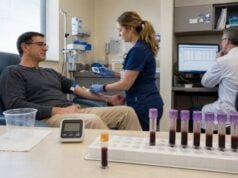
A luteinizing hormone test measures LH, a pituitary hormone that helps regulate ovulation, testosterone production, puberty, and fertility. The number is useful only when interpreted with the person’s age, sex organs, menstrual timing, symptoms, and related hormones. In people with ovaries, LH normally changes across the menstrual cycle and rises sharply before ovulation. In people with testes, LH stimulates Leydig cells to produce testosterone. High LH with low sex hormones often points toward ovarian or testicular failure, while low or inappropriately normal LH with low estradiol or testosterone can suggest reduced signaling from the hypothalamus or pituitary. Pregnancy, menopause, hormonal medicines, illness, energy deficiency, and puberty can all change the result. A single LH value cannot confirm ovulation, diagnose polycystic ovary syndrome, or locate a pituitary problem by itself.
- LH must be read with estradiol or testosterone, FSH, age, and menstrual or pubertal stage.
- High LH plus low sex hormones often suggests primary ovarian or testicular dysfunction.
- Low or normal LH plus low sex hormones may reflect pituitary or hypothalamic suppression.
- A urine LH surge predicts that ovulation may occur soon but does not prove an egg was released.
- Hormonal contraception, testosterone therapy, and fertility medicines can substantially alter results.
Table of Contents
- What LH Does in the Body
- Why an LH Test Is Ordered
- Preparation, Timing, and Test Methods
- Normal Ranges and Expected Changes
- What High LH Results Can Mean
- What Low LH Results Can Mean
- Interpreting LH With Other Hormones
- Follow-Up Testing and When to Seek Care
What LH Does in the Body
Luteinizing hormone is a glycoprotein made by gonadotroph cells in the anterior pituitary gland. The hypothalamus controls its release through pulses of gonadotropin-releasing hormone, or GnRH. LH then travels through the bloodstream to the ovaries or testes. Sex hormones feed back to the hypothalamus and pituitary, creating a three-part system called the hypothalamic-pituitary-gonadal axis.
In people with ovaries, LH works with follicle-stimulating hormone. During the first part of a menstrual cycle, FSH supports growth of ovarian follicles while LH helps the follicle make steroid hormones. Sustained high estradiol from a mature follicle briefly changes feedback from negative to positive, triggering the midcycle LH surge. That surge promotes final egg maturation, ovulation, and formation of the corpus luteum, which makes progesterone.
In people with testes, LH stimulates Leydig cells to make testosterone. FSH acts mainly on Sertoli cells and supports sperm production. Testosterone and inhibin B provide feedback to the brain and pituitary. LH is therefore especially useful for deciding whether low testosterone originates mainly in the testes or higher in the hypothalamus and pituitary.
LH also participates in puberty. GnRH secretion is quiet through much of childhood and becomes more active as puberty begins, first especially during sleep. LH and FSH rise, which stimulates ovarian estrogen or testicular testosterone and leads to secondary sexual development.
A blood test captures LH at one moment. Because GnRH and LH are released in pulses, a single value can vary even within the same day. This is particularly important in early puberty and in people with pituitary or hypothalamic disorders. Sometimes repeat samples or a stimulation test provide more information than one basal level.
Urine LH tests measure hormone excreted into urine. Home ovulation kits are designed to detect the preovulatory surge rather than assess pituitary disease. Blood and urine results answer different questions and should not be treated as interchangeable.
Why an LH Test Is Ordered
LH testing is used to investigate fertility, menstrual changes, low testosterone, puberty, and suspected pituitary or gonadal disease. It is usually ordered with other hormones rather than alone.
Menstrual cycles and fertility
A clinician may check LH in someone with absent periods, irregular cycles, infertility, possible ovarian insufficiency, or signs of androgen excess. Estradiol, FSH, prolactin, TSH, pregnancy testing, and sometimes anti-Müllerian hormone or ultrasound may be included.
LH is not a stand-alone test for polycystic ovary syndrome. Some people with PCOS have an elevated LH-to-FSH ratio, but many do not, and the ratio changes with assay and cycle timing. Diagnosis rests on ovulatory dysfunction, clinical or biochemical androgen excess, and ovarian morphology after other causes are excluded.
For ovulation timing, urine LH kits can help identify the fertile window. A positive test generally means the surge has been detected and ovulation may follow within roughly one to two days. The test can miss a short surge, detect a surge that does not lead to ovulation, or remain positive because baseline LH is high. Progesterone testing after the expected ovulation date or ultrasound monitoring may be used when confirmation matters.
Low testosterone and male fertility
When an adult has symptoms of testosterone deficiency and repeatedly low morning testosterone, LH helps classify the cause. High LH suggests the pituitary is signaling strongly but the testes are not responding adequately. Low or inappropriately normal LH suggests reduced hypothalamic or pituitary stimulation.
Symptoms that may prompt testing include reduced libido, fewer spontaneous erections, erectile dysfunction, infertility, hot flashes, low bone density, reduced body hair, breast enlargement, low muscle mass, or delayed puberty. Symptoms are nonspecific, so diagnosis requires both clinical findings and properly timed testosterone testing.
Fertility assessment may include LH, FSH, testosterone, prolactin, and semen analysis. Testosterone treatment suppresses LH and intratesticular testosterone and can reduce sperm production. A person who wants fertility should tell the clinician before starting testosterone.
Puberty and pituitary function
In children, LH may be tested for puberty that starts unusually early, puberty that is delayed, or sexual development that does not progress as expected. Basal LH can support central precocious puberty when clearly in the pubertal range, but early puberty may require GnRH or GnRH-agonist stimulation testing because daytime basal LH can still be low.
Low LH can occur with congenital GnRH deficiency, pituitary tumors, brain injury, radiation, systemic illness, excessive exercise, or inadequate energy intake. High LH may reflect primary failure of the ovaries or testes, including gonadal dysgenesis or damage from chemotherapy.
A broader pituitary hormone test panel may be needed when headaches, visual symptoms, excessive thirst, multiple hormone deficiencies, or a history of pituitary disease is present.
Preparation, Timing, and Test Methods
A blood LH test uses a sample from a vein. Fasting is usually not required for LH alone. Timing may matter more than food.
For people with menstrual cycles, the ordering clinician may specify a cycle day. Early-follicular testing, often near cycle days 2 to 5, can help assess baseline gonadotropins and estradiol. Testing for the LH surge occurs later and may involve daily urine testing. If cycles are very irregular or absent, testing may be done on any day with the timing documented.
For people being evaluated for low testosterone, LH is commonly drawn with morning total testosterone. Testosterone has a daily rhythm, especially in younger adults. A low testosterone diagnosis generally requires repeat morning measurements under stable conditions. LH itself is less strongly tied to a single morning cutoff, but collecting the hormones together improves interpretation.
Tell the clinician about:
- Birth control pills, patches, rings, injections, implants, or hormonal IUDs
- Estrogen, progesterone, testosterone, or puberty-inducing therapy
- Fertility medicines, including gonadotropins or GnRH analogs
- Opioids and glucocorticoids
- Antipsychotics or other medicines that can raise prolactin
- Anabolic steroids or performance-enhancing hormones
- Recent pregnancy, breastfeeding, or menopause treatment
- High-dose biotin supplements
Do not stop medicine unless instructed. Exogenous sex hormones often suppress LH through negative feedback. GnRH agonists can initially increase LH and later suppress it. Fertility injections may be detected by some assays or deliberately alter the values.
Acute illness can temporarily suppress reproductive hormones. Major calorie restriction, intense training, sleep disruption, and severe stress may also affect the axis. A result obtained during hospitalization or a period of unstable health may need later confirmation.
Home urine LH kits work best when used according to the manufacturer’s timing instructions. Dilute urine can reduce sensitivity. Testing at the same general time each day and limiting excessive fluid intake beforehand may improve detection. A home result should not be used to diagnose infertility, menopause, pituitary disease, or ovarian reserve.
Normal Ranges and Expected Changes
There is no single LH normal range that applies across childhood, reproductive years, pregnancy, menopause, and adult male physiology. Laboratories use method-specific intervals, commonly reported in international units per liter or milli-international units per milliliter, which are numerically equivalent in many reports.
In a menstruating person, LH is usually lower during the early follicular phase, rises sharply at midcycle, and falls during the luteal phase. The surge can be several times the baseline level, but its height and duration vary. A random result cannot be labeled high or low without knowing the cycle phase.
After menopause, estradiol and progesterone feedback decreases, so LH and FSH usually rise. FSH often rises more consistently and is generally more useful than LH when evaluating ovarian insufficiency or menopausal status. Hormone therapy can lower both values.
During pregnancy, placental hormones and high estrogen and progesterone suppress pituitary LH. Standard reproductive-age ranges do not apply. Human chorionic gonadotropin shares structural features with LH but is measured with separate assays.
In adult males, LH tends to remain within a narrower range than it does across a menstrual cycle. Interpretation still depends on testosterone. An LH level in the middle of the reference range can be “inappropriately normal” when testosterone is clearly low, because a healthy pituitary would normally increase LH in response.
In children, LH is low through much of prepubertal life, apart from the temporary activation of the reproductive axis in early infancy called mini-puberty. At puberty, pulsatile LH rises, initially more at night. Reference ranges must match age, sex, and ideally pubertal stage.
Laboratory methods differ in sensitivity and calibration. This is especially important at the very low concentrations measured in young children. A result that suggests puberty on one assay may not use the same cutoff on another. Pediatric endocrinologists use the local method and clinical signs such as breast development, testicular enlargement, growth acceleration, and bone age.
The LH-to-FSH ratio is sometimes displayed or calculated. It does not have a universal normal target. A ratio may add context in selected fertility or puberty evaluations, but it should not override the individual hormone values and clinical picture.
What High LH Results Can Mean
High LH usually means the pituitary is increasing its signal because the ovaries or testes are producing less sex hormone than expected. It can also be a normal phase of the menstrual cycle, menopause, or puberty.
Ovarian causes
High gonadotropins with low estradiol can indicate primary ovarian insufficiency in someone younger than 40, especially with absent or irregular periods. FSH is the main diagnostic gonadotropin, and results may need repetition when uncertainty remains. Causes include chromosome conditions, autoimmune disease, genetic variants, ovarian surgery, chemotherapy, and radiation; many cases remain unexplained.
Natural menopause also raises LH and FSH. A single LH result is usually unnecessary for diagnosing menopause in an adult over the typical age with characteristic symptoms and cycle changes. Testing becomes more useful when the age, symptoms, hysterectomy status, or treatment makes the picture uncertain.
LH may be high in some people with PCOS, but the finding is neither required nor specific. An LH surge around ovulation is normal and should not be confused with chronic elevation.
Testicular causes
High LH with low testosterone suggests primary hypogonadism. The testes are not producing enough testosterone despite increased pituitary stimulation. Causes include Klinefelter syndrome, testicular injury or torsion, orchitis, chemotherapy, radiation, undescended testes, advanced testicular damage, and certain genetic or metabolic conditions.
High LH with testosterone still within range may indicate compensated testicular dysfunction. The pituitary is maintaining testosterone by increasing stimulation. The significance depends on symptoms, repeat results, age, comorbidities, and whether the pattern persists.
Puberty and rare causes
In a child with early sexual development, pubertal-range LH can support central precocious puberty, meaning the normal brain-pituitary pathway has activated too soon. The cause may be idiopathic, particularly in girls, or related to a brain lesion, prior radiation, or another neurologic condition. A stimulation test and brain imaging may be considered based on age, sex, progression, and symptoms.
Rarely, assay interference can falsely raise LH. Heterophile antibodies or other immunoassay effects are considered when the value is implausible and conflicts with sex hormones and clinical findings. Repeating on another platform or using laboratory blocking procedures may clarify the issue.
What Low LH Results Can Mean
Low LH can be normal in childhood, pregnancy, or while taking suppressive hormonal medicine. It becomes concerning when sex hormones are low and the pituitary response is insufficient.
Hypothalamic or pituitary suppression
Low or inappropriately normal LH with low estradiol or testosterone is called hypogonadotropic hypogonadism. The problem may arise in the hypothalamus, pituitary, or both. Causes include pituitary tumors, surgery, radiation, head trauma, infiltrative disease, high prolactin, congenital GnRH deficiency, and multiple pituitary hormone deficiencies.
Symptoms can include absent periods, infertility, low libido, erectile dysfunction, hot flashes, reduced bone density, and delayed puberty. Additional testing may include FSH, prolactin, TSH and free T4, morning cortisol, iron studies, and pituitary MRI.
A large pituitary lesion can compress normal gonadotroph cells. The LH number may still fall within the printed laboratory range, yet be too low for the accompanying low sex hormone level. This relative interpretation is why hormones must be paired.
Functional suppression
The reproductive axis can reduce activity as an adaptive response to inadequate energy, significant weight loss, excessive exercise, systemic disease, or severe psychological stress. In people with ovaries, this can cause functional hypothalamic amenorrhea. LH may be low or normal, often with low estradiol and a low or normal FSH.
Obesity and chronic illness can contribute to low testosterone with low-normal LH in men. Opioids suppress GnRH, and glucocorticoids can reduce reproductive signaling. Hyperprolactinemia inhibits GnRH and may lower LH and FSH.
Treatment focuses on the cause. Restoring adequate energy intake, reducing excessive training, treating illness, changing a causative medication when safe, or treating high prolactin may allow recovery. Sex-hormone replacement may be used to protect bone and relieve symptoms, but it does not always restore fertility.
Hormonal treatment and anabolic steroids
Testosterone, anabolic steroids, estrogen, progestins, and many contraceptives suppress LH by negative feedback. A low result in this setting may be expected. After stopping anabolic steroids or testosterone, recovery can take months and varies with dose, duration, age, and baseline function.
People seeking fertility should not assume that a low LH can be corrected with an over-the-counter supplement. Treatment may involve specialist-supervised hCG, FSH, or pulsatile GnRH in selected cases. The choice depends on whether the goal is symptom treatment, pubertal development, ovulation, or sperm production.
Interpreting LH With Other Hormones
Paired results help locate the level of dysfunction. The patterns below are simplified and need clinical confirmation.
| LH result | Related result | Possible meaning |
|---|---|---|
| High | Low testosterone | Primary testicular dysfunction is likely. |
| Low or normal | Low testosterone | Hypothalamic or pituitary hypogonadism, illness, obesity, opioids, or hormonal suppression may be present. |
| High | Low estradiol and high FSH | Ovarian insufficiency or menopause is possible, depending on age and menstrual history. |
| Low or normal | Low estradiol with absent periods | Functional hypothalamic amenorrhea or pituitary disease may be considered. |
| Sharp urine rise | Midcycle timing | Ovulation is likely approaching, but release of an egg is not guaranteed. |
| Pubertal range | Early physical puberty and advanced bone age | Central precocious puberty may be active. |
LH and FSH testing answer related but different questions. FSH more directly reflects follicle stimulation and Sertoli-cell function, while LH more directly reflects ovulation signaling and Leydig-cell testosterone production. Both should be assessed when the site of reproductive dysfunction is unclear.
Prolactin is important when LH is low with menstrual changes, infertility, low libido, or low testosterone. High prolactin can suppress GnRH. A prolactin blood test may also identify medication effects or a prolactinoma.
For low testosterone, the testosterone value must first be valid. It is generally repeated in the morning, with sex hormone-binding globulin and calculated free testosterone considered when binding is altered. LH should not be used to diagnose testosterone deficiency when testosterone is normal and symptoms have another likely cause.
For amenorrhea, pregnancy must be excluded first. TSH, prolactin, FSH, LH, and estradiol can then help distinguish ovarian failure, hypothalamic suppression, and other causes. Pelvic ultrasound or androgen testing may be added when PCOS or an anatomical condition is suspected.
Follow-Up Testing and When to Seek Care
An abnormal LH result is usually followed by confirmation of the associated sex hormone and review of timing, medicines, and physiologic state. The clinician may repeat testing after acute illness resolves or after a medication change has had time to take effect.
Possible next steps include:
- Repeat morning testosterone, SHBG, and free testosterone assessment
- FSH, estradiol, prolactin, TSH, and free T4
- Pregnancy testing
- Semen analysis for male infertility
- Progesterone or ultrasound monitoring to confirm ovulation
- Bone age and GnRH stimulation testing in children
- Iron studies when hemochromatosis is possible
- Pituitary MRI when central hypogonadism, high prolactin, multiple pituitary deficits, severe headache, or visual symptoms are present
- Chromosome or genetic testing in selected cases of gonadal failure or delayed puberty
Seek urgent medical care for a sudden severe headache, new vision loss or double vision, vomiting, confusion, fainting, or severe weakness. These symptoms can occur with pituitary apoplexy or another neurologic emergency and should not wait for routine hormone follow-up.
Prompt assessment is also appropriate for a child with rapidly progressing puberty, a teenager with no pubertal development by the expected age, testicular pain or swelling, or pregnancy symptoms with pelvic pain or bleeding. LH testing alone cannot evaluate these urgent conditions.
Treatment is directed at the diagnosis and the person’s goals. It may involve nutrition restoration, treatment of a pituitary disorder, stopping or replacing a causative medicine under supervision, sex-hormone replacement, or fertility-specific therapy. Raising or lowering the LH number itself is not the goal; restoring safe reproductive and endocrine function is.
One isolated LH value should therefore be treated as a time-stamped sample of a pulsatile system, not a complete measure of reproductive function.
References
- Luteinizing Hormone (LH) Levels Test 2023 (Official Health Resource)
- Physiology, Luteinizing Hormone 2022 (Review)
- MALE HYPOGONADISM 2025 (Guideline)
- Evidence-based guideline: Premature Ovarian Insufficiency 2024 (Guideline)
- Screening for central precocious puberty by single basal Luteinizing Hormone levels 2024 (Original Research)
Disclaimer
LH results vary with age, menstrual timing, puberty, pregnancy, medicines, and the laboratory method. This article is for general education and cannot diagnose infertility, hypogonadism, ovarian insufficiency, or pituitary disease. Review abnormal results and any hormone treatment with a qualified clinician.