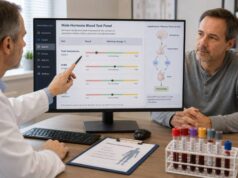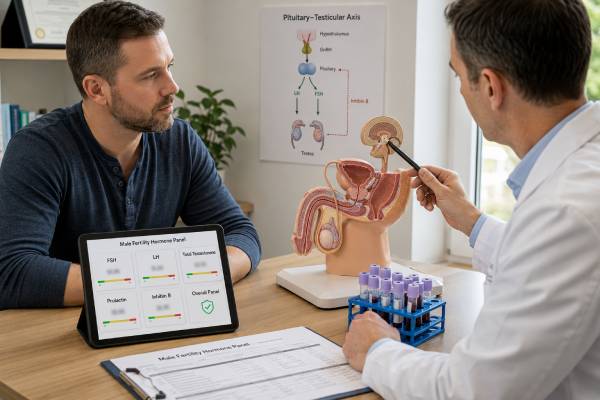
A male fertility hormone panel evaluates the signals that support testosterone production and spermatogenesis. It commonly includes FSH, LH, total testosterone, prolactin, and sometimes inhibin B, with free testosterone, SHBG, estradiol, thyroid tests, or other studies added when the initial pattern requires them. The panel is most useful after an abnormal semen analysis, with small testes, sexual symptoms, delayed puberty, or risk factors for pituitary or testicular disease. It cannot determine fertility by itself. Men with normal hormones may still have low sperm count, poor motility, abnormal morphology, obstruction, ejaculatory problems, or sperm-function defects. Conversely, an abnormal hormone result does not prove that conception is impossible. Results are interpreted as coordinated patterns: high FSH may suggest impaired sperm-producing tissue, while low testosterone with low LH can indicate central suppression. Testing should be paired with reproductive history, physical examination, at least one properly collected semen analysis, and evaluation of both partners. Treatment must protect fertility; exogenous testosterone can suppress sperm production even when it improves serum testosterone.
- Semen analysis is the direct first-line test of sperm in the ejaculate; the hormone panel helps explain why it may be abnormal.
- High FSH with low inhibin B often supports impaired spermatogenesis, but neither value proves complete absence of sperm.
- Low testosterone with high LH suggests primary testicular dysfunction; low testosterone with low or normal LH suggests central or functional suppression.
- High prolactin can reduce gonadotropin signaling, libido, erections, testosterone, and fertility.
- Testosterone therapy is generally avoided when conception is desired because it can reduce sperm count to very low levels or zero.
Table of Contents
- What the panel can and cannot show
- Who needs hormone testing
- Tests in a male fertility panel
- Preparation and semen analysis
- How result patterns are interpreted
- Azoospermia and severe oligospermia
- Additional tests and treatment
- Fertility-preserving next steps
What the panel can and cannot show
Male reproduction depends on the hypothalamic–pituitary–testicular axis. Pulsatile gonadotropin-releasing hormone from the hypothalamus stimulates pituitary LH and FSH. LH acts on Leydig cells to produce testosterone. FSH and high intratesticular testosterone act on Sertoli cells to support sperm development. Inhibin B from Sertoli cells feeds back mainly on FSH, while testosterone and estradiol contribute broader feedback.
A hormone panel can identify primary testicular failure, hypothalamic or pituitary suppression, high prolactin, abnormal testosterone binding, and some treatment or medication effects. It may suggest whether sperm production is globally impaired or whether obstruction is more plausible, although no blood pattern confirms obstruction.
The panel does not measure sperm directly. Semen analysis reports volume, sperm concentration or total count, motility, and sometimes morphology and other features. Hormones cannot show whether sperm reach the ejaculate, whether retrograde ejaculation is occurring, whether sperm DNA is damaged, or whether intercourse timing and female-partner factors are favorable.
Fertility is a couple-level outcome. A man with a modest semen abnormality may conceive naturally, while a man with values inside reference limits may face difficulty because reference intervals do not define guaranteed fertility. Female age, ovarian reserve, tubal status, ovulation, sexual frequency, and duration of trying all affect urgency and treatment choices.
The panel should therefore answer a clinical question: is an endocrine disorder contributing, does the pattern point to primary or central dysfunction, and will treatment improve reproductive potential without suppressing sperm? It should not be used as a pass–fail fertility certificate.
Who needs hormone testing
Hormone testing is commonly recommended when semen concentration is low, especially with oligospermia or azoospermia; when testes are small or soft; when sexual symptoms suggest low testosterone; or when examination and history raise concern for endocrine disease. Testing is also appropriate with delayed or incomplete puberty, gynecomastia, reduced body hair, prior testicular injury, chemotherapy, radiation, undescended testes, orchitis, or a pituitary condition.
Men with normal semen analysis and no endocrine symptoms may not benefit from a broad hormone panel. Similarly, ordering numerous uncommon markers before obtaining a semen analysis can create confusing incidental results without addressing the main question.
The history should cover duration of infertility, prior pregnancies, timing and frequency of intercourse, erectile and ejaculatory function, childhood testicular conditions, infections, operations, fever, heat exposure, occupational risks, cancer treatment, chronic disease, and family history. Medicines and substances are crucial: testosterone, anabolic steroids, finasteride or dutasteride, opioids, glucocorticoids, sulfasalazine, chemotherapy, psychotropic drugs, and supplements can affect hormones or semen.
A physical examination assesses testicular size and consistency, epididymides, presence of the vas deferens, varicocele, penis, secondary sexual characteristics, gynecomastia, and signs of systemic disease. Findings determine which tests are worth adding.
Both partners should be evaluated in parallel rather than completing a prolonged male workup before the female partner is assessed. Earlier specialist referral is appropriate when the female partner is older, azoospermia is found, severe sperm abnormalities are present, there is a testicular mass, or the couple has been trying for a substantial period.
Tests in a male fertility panel
FSH
FSH stimulates Sertoli cells and supports sperm production. High FSH commonly reflects reduced inhibin B feedback from damaged seminiferous tubules. It is particularly informative with azoospermia or severe oligospermia. Normal FSH does not prove normal spermatogenesis because focal damage, maturation defects, or obstruction can exist. A dedicated FSH test in men is interpreted with testicular volume and semen findings.
LH
LH stimulates Leydig-cell testosterone production. High LH with low testosterone suggests primary Leydig-cell failure. Low or inappropriately normal LH with low testosterone suggests hypothalamic or pituitary suppression. LH may be suppressed by exogenous testosterone or anabolic steroids even when serum testosterone is high.
Total and free testosterone
Total testosterone is usually measured in the morning and repeated if low. It supports libido, erections, accessory gland function, and spermatogenesis through high intratesticular concentrations. Free testosterone or SHBG can clarify a borderline total result when obesity, aging, thyroid disease, liver disease, or another binding abnormality is present. Serum testosterone does not reveal intratesticular testosterone during exogenous therapy.
Prolactin
Persistent prolactin elevation can suppress gonadotropin-releasing hormone, lower LH and testosterone, and contribute to reduced libido, erectile dysfunction, and infertility. Medicines, hypothyroidism, kidney disease, stress, macroprolactin, and pituitary adenomas are possible causes. Mild elevations are often repeated before imaging.
Inhibin B
Inhibin B is produced mainly by Sertoli cells and broadly reflects active sperm-producing tissue. Low inhibin B often accompanies high FSH and impaired spermatogenesis. However, an inhibin B test in men cannot determine sperm motility, predict natural conception, or reliably rule sperm retrieval in or out.
Estradiol, SHBG, thyroid tests, iron studies, DHEA-S, or other hormones are added only when a specific pattern or symptom supports them.
Preparation and semen analysis
Hormone samples are often collected in the morning, with testosterone preferably measured after adequate sleep and under the laboratory’s fasting instructions. Acute illness, severe sleep deprivation, undernutrition, and extreme exercise can temporarily suppress testosterone and gonadotropins. An abnormal result obtained during illness may need confirmation after recovery.
List every prescription, injection, supplement, and recreational or performance-enhancing substance. Do not stop medicine without advice. The date of the last testosterone, anabolic steroid, hCG, FSH, or selective estrogen receptor modulator dose can radically change interpretation.
Semen analysis requires careful collection. The laboratory usually specifies an abstinence period, often within a range of several days. The entire ejaculate should be collected into the supplied sterile container without ordinary lubricants, which may impair sperm. The sample must reach the laboratory within the requested time and temperature conditions. A lost first portion matters because it often contains the highest sperm concentration.
Semen values vary from sample to sample. Fever, illness, incomplete collection, abstinence duration, stress, and ordinary biological variation can affect results. An abnormal analysis is commonly repeated, with timing guided by the finding and clinical urgency. Waiting an entire sperm-production cycle may be useful after a temporary insult, but severe abnormalities should not delay referral.
Azoospermia should be confirmed by careful examination of a centrifuged semen pellet. Low-volume semen may prompt assessment for incomplete collection, retrograde ejaculation, ejaculatory duct obstruction, androgen deficiency, or congenital absence of the vas deferens. Hormone values alone cannot distinguish these.
For men who work shifts, testosterone timing may be based on the main sleep period. Long-term comparisons are most useful when the same laboratory and similar collection conditions are used.
How result patterns are interpreted
No single cutoff explains male infertility. The coordinated pattern narrows the likely site of dysfunction.
| Hormone pattern | Possible interpretation | Common follow-up |
|---|---|---|
| High FSH, low inhibin B, normal or low testosterone | Impaired seminiferous tubule function; primary spermatogenic failure | Repeat semen analysis, genetics when severe, reproductive urology review |
| Low FSH/LH and low testosterone | Hypothalamic or pituitary hypogonadism, functional suppression, or drug effect | Prolactin, pituitary hormones, medicine review, imaging when indicated |
| High LH and low testosterone | Primary Leydig-cell failure | FSH, examination, karyotype or cause-specific testing |
| Normal FSH, LH, testosterone, and inhibin B with azoospermia | Obstruction may be more likely, but nonobstructive causes remain possible | Examination, semen volume/pH, genetics, imaging or surgical assessment |
| Suppressed FSH/LH with normal or high testosterone | Exogenous androgen or hCG effect | Detailed exposure history and fertility-preserving management |
| High prolactin with low testosterone | Hyperprolactinemic suppression | Repeat prolactin, TSH, medication review, macroprolactin/pituitary evaluation |
High FSH is a strong clue to widespread germ-cell damage, but it does not establish complete absence of sperm in every part of the testis. Focal production can remain. Conversely, normal FSH may occur with maturation arrest or mixed histology.
Low testosterone should be confirmed. Obesity may lower SHBG and total testosterone while free testosterone remains adequate. High SHBG can conceal low free testosterone behind a normal total value. The SHBG test in men helps resolve this discordance.
A mildly high prolactin after a stressful blood draw does not immediately indicate a tumor. The value, symptoms, medicine list, thyroid and kidney function, and repeat result determine the next step. Very high or persistently elevated concentrations deserve more urgent pituitary assessment.
Hormones can be normal in varicocele, obstruction, genetic sperm defects, infection, sexual dysfunction, and many unexplained cases. Normal results narrow the endocrine differential; they do not end the fertility evaluation.
Azoospermia and severe oligospermia
Azoospermia means no sperm are identified in the ejaculate after appropriate laboratory processing. Severe oligospermia means the sperm concentration is very low. These findings warrant prompt, structured evaluation because genetic testing, fertility preservation, and assisted-reproduction decisions may be time-sensitive.
The first broad distinction is obstructive versus nonobstructive azoospermia. In obstruction, sperm production may be intact but a blockage or congenital absence prevents sperm from reaching the ejaculate. Testes are often normal in size, FSH may be normal, and inhibin B may be preserved. Causes include vasectomy, congenital bilateral absence of the vas deferens, infection, surgery, and ejaculatory duct obstruction.
In nonobstructive azoospermia, production is severely impaired. Testes may be small, FSH high, and inhibin B low. Causes include Klinefelter syndrome, Y-chromosome microdeletions, cryptorchidism, chemotherapy, radiation, torsion, orchitis, and idiopathic testicular failure. Central hypogonadism is a potentially treatable nonobstructive cause with low gonadotropins rather than high FSH.
Karyotype and Y-chromosome microdeletion testing are recommended in selected men based on sperm concentration and clinical features. CFTR testing is important when absence of the vas deferens or another obstructive pattern is suspected. Genetic counseling explains implications for the man, relatives, embryos, and offspring.
Blood markers cannot reliably predict microdissection testicular sperm extraction. High FSH and low inhibin B reduce the probability at a group level but do not rule out focal sperm. Certain complete Y-chromosome deletions, however, may make retrieval futile. The decision requires reproductive urology counseling rather than a laboratory threshold alone.
Men with very low sperm counts may be advised to cryopreserve sperm because future samples can fluctuate or become azoospermic. The laboratory and fertility clinic can discuss whether multiple collections are helpful.
Additional tests and treatment
Additional testing is selected from the pattern. Thyroid-stimulating hormone and free thyroxine identify thyroid disease. Iron studies may reveal hemochromatosis affecting the pituitary or testes. Liver and kidney tests explain chronic illness, hormone clearance, SHBG changes, or prolactin elevation. Estradiol may be useful with gynecomastia, marked obesity, or suspected estrogen excess.
Scrotal ultrasound is used for a mass, difficult examination, significant asymmetry, pain, or a targeted structural question. Routine ultrasound in every infertile man can find incidental lesions that do not explain infertility. Transrectal ultrasound may be considered with low-volume acidic semen and suspected ejaculatory duct obstruction.
Treatment is cause-specific. Hypogonadotropic hypogonadism may respond to hCG, often with FSH added, to restore intratesticular testosterone and stimulate spermatogenesis. A prolactinoma may be treated with a dopamine agonist. Thyroid disease, infection, and medication effects are managed directly. A palpable varicocele may be repaired in selected infertile men with abnormal semen parameters.
Antioxidant supplements are widely marketed, but products, doses, evidence, purity, and safety vary. They should not delay diagnosis of obstruction, genetic disease, endocrine disorders, or a testicular mass. More is not necessarily better, and some supplements contain undeclared hormones.
Assisted reproductive options include intrauterine insemination, in vitro fertilization, intracytoplasmic sperm injection, surgical sperm retrieval, donor sperm, and embryo or sperm cryopreservation. Choice depends on sperm quantity and quality, female-partner factors, genetics, cost, time, and the couple’s preferences.
Lifestyle measures support general and reproductive health: stop smoking, avoid anabolic steroids, limit harmful alcohol use, manage weight, treat sleep apnea, control chronic disease, and reduce avoidable heat or toxin exposure. No lifestyle step can reverse every genetic or structural cause, so advice should remain realistic.
Fertility-preserving next steps
The most important medication warning is that exogenous testosterone suppresses LH and FSH. It may improve libido and serum testosterone while sharply reducing intratesticular testosterone and sperm production. Men trying to conceive should not start testosterone injections, gels, pellets, or unregulated androgen products without reproductive specialist input.
If a man is already using testosterone or anabolic steroids, abrupt self-management with multiple “post-cycle” medicines is risky. A clinician can document the exposure, assess hematocrit and liver or cardiovascular concerns, repeat hormones at meaningful times, and discuss recovery or fertility treatment. Sperm recovery may take months or longer.
Bring previous semen analyses, childhood and surgical records, cancer treatment details, and a complete product list to the appointment. The couple should also clarify whether the goal is natural conception, fertility preservation for later, or assisted reproduction now. That goal changes the value of time and the treatment sequence.
Seek prompt assessment for a testicular lump, acute testicular pain, rapidly changing testicular size, severe headache with visual symptoms, or breast discharge. These findings may require urgent imaging or endocrine evaluation.
A well-chosen hormone panel can reveal a treatable central disorder, document primary testicular damage, or prevent harmful testosterone therapy. Its role is explanatory. Semen analysis, examination, genetics when indicated, and coordinated couple care turn that explanation into a useful fertility plan.
Male fertility testing after fever, illness, or medication exposure
Sperm developing today began their maturation weeks earlier. A high fever, severe illness, surgery, toxin exposure, or medication change can therefore affect a semen sample after the event and recovery can lag behind clinical improvement. Hormone levels may remain normal because the injury is temporary or focused on germ cells. The timeline should be recorded before a single abnormal semen result is labeled permanent infertility.
Repeat testing is scheduled according to severity and urgency. A mildly abnormal result after fever may be repeated after enough time for a new cycle of sperm development, while azoospermia or a very low count warrants earlier specialist assessment and often confirmation without unnecessary delay. The female partner’s age and reproductive diagnosis also affect timing.
Anabolic steroids and testosterone create a different recovery pattern. LH and FSH are suppressed, intratesticular testosterone falls, and sperm can disappear from the ejaculate. Serum testosterone may look high during use and low after withdrawal. Recovery can take months or longer, and prior normal fertility does not guarantee rapid return. A complete exposure history prevents mistaken diagnoses and unsafe treatment.
Sexual and ejaculatory factors that hormones do not show
Infertility can persist despite normal hormones and sperm production when intercourse is infrequent, erectile function is inadequate, ejaculation is absent or retrograde, or sperm are deposited outside the fertile window. Diabetes, neurological disease, pelvic surgery, alpha-blockers, antidepressants, and relationship or psychological factors can contribute.
Low semen volume may suggest incomplete collection, androgen deficiency, retrograde ejaculation, ejaculatory duct obstruction, or congenital absence of the vas deferens. Post-ejaculatory urine testing, semen pH and fructose, examination, or imaging may be selected. Hormone values alone cannot distinguish these mechanisms.
A reproductive history should ask about orgasm, ejaculation, lubricants, timing, pain, and prior conception without assuming the difficulty is purely a sperm-count problem. Treating erectile or ejaculatory dysfunction can sometimes restore the opportunity for conception without changing FSH or testosterone.
Coordinating care with assisted reproduction
The threshold for moving to intrauterine insemination, in vitro fertilization, or intracytoplasmic sperm injection depends on repeated semen results, total motile sperm, female factors, duration of infertility, prior treatment, cost, and couple preference. A hormone panel can reveal a treatable cause, but waiting indefinitely for a marginal hormonal improvement may reduce overall success when female reproductive time is limited.
Cryopreservation is considered when sperm counts are severely low or fluctuating, before gonadotoxic treatment, and when surgical retrieval succeeds. Even a small number of viable sperm can be valuable for intracytoplasmic sperm injection. The fertility laboratory can advise on the number and timing of collections.
Couple-centered care avoids treating laboratory normalization as the endpoint. The meaningful outcomes are a clarified diagnosis, preserved options, informed consent, and a plan that balances natural conception, medical or surgical treatment, and assisted reproduction.
Results should be shared in plain language: which compartment appears affected, which findings remain uncertain, and what action follows. This reduces the tendency to chase isolated hormone values and keeps attention on semen output, treatable causes, genetic implications, and the couple’s reproductive timeline.
The final plan should identify who will repeat semen testing, when specialist review occurs, and how long the couple will pursue each option before reassessing.
References
- Diagnosis and Treatment of Infertility in Men: AUA/ASRM Guideline 2024 (Clinical Guideline)
- Updates to Male Infertility: AUA/ASRM Guideline (2024) 2024 (Guideline Amendment)
- Sexual and Reproductive Health 2026 (Clinical Guideline)
- Male Infertility 2024 (Clinical Review)
- Recent advances in the management of male infertility 2025 (Clinical Review)
- Current treatment for male infertility: an umbrella review of systematic reviews and meta-analyses 2024 (Umbrella Review)
Disclaimer
This article is educational and cannot determine whether an individual or couple is fertile. Hormone results require interpretation with semen analysis, examination, medication and steroid exposure, genetics when appropriate, and evaluation of both partners. Do not use testosterone or fertility drugs without a qualified reproductive clinician.