A psychiatric pharmacogenetic test analyzes inherited gene variants that may affect the metabolism, exposure, or tolerability of selected antidepressants and antipsychotics. The strongest prescribing guidance usually involves CYP2D6, CYP2C19, and sometimes CYP2B6, because these enzymes help process commonly used psychiatric medicines. Some antipsychotic recommendations also involve CYP1A2 or CYP3A4. Testing may help a clinician avoid a predictable drug–gene mismatch, choose a different starting dose, or explain unusually high side effects or poor response. It cannot diagnose depression, anxiety, bipolar disorder, schizophrenia, or attention-deficit/hyperactivity disorder, and it cannot identify one guaranteed “best” medication. Commercial panels often include SLC6A4, HTR2A, COMT, MTHFR, and proprietary combined scores, but evidence for using many of these findings in routine prescribing is limited. Results are most useful when interpreted for one specific medicine at a time and combined with symptoms, past treatment, drug interactions, organ function, age, and patient preferences.
- CYP2D6 and CYP2C19 are the most commonly actionable psychiatric pharmacogenes, especially for selected antidepressants.
- SLC6A4 and HTR2A results do not currently support routine antidepressant prescribing changes under major clinical guidance.
- A red or yellow report category does not mean a drug is dangerous or ineffective for everyone; the exact recommendation matters.
- Testing cannot predict the correct psychiatric diagnosis, suicide risk, or a guaranteed treatment response.
- No fasting or medication pause is usually required for a blood, saliva, or cheek-swab test.
- New suicidal thoughts, severe agitation, mania, confusion, high fever, or dangerous muscle rigidity require urgent clinical assessment, regardless of test results.
Table of Contents
- What psychiatric pharmacogenetics can show
- Antidepressant gene–drug pairs
- Antipsychotic gene–drug pairs
- Limited-evidence genes and commercial scores
- When testing may be helpful
- How the test is performed
- Reading a psychiatric PGx report
- Using results safely in treatment
What psychiatric pharmacogenetics can show
Psychiatric pharmacogenetics focuses on gene variants that influence how the body handles a medication or, less reliably, how a drug interacts with its target. It is a specialized form of pharmacogenetic testing for medication response. The test uses germline DNA, so it generally needs to be performed only once. The result can be reused, although its interpretation may change as guidelines are updated.
Most clinically useful findings describe pharmacokinetics: absorption, metabolism, and elimination. A person with reduced CYP2D6 activity may have higher exposure to an active medicine that depends on CYP2D6 for clearance. The same person may have lower benefit from a prodrug that requires CYP2D6 activation. The direction of the effect therefore depends on the drug.
Reports commonly translate genotypes into phenotype categories:
- Poor metabolizer: little or no enzyme activity.
- Intermediate metabolizer: reduced activity.
- Normal metabolizer: expected activity.
- Rapid metabolizer: activity above the normal range for genes that use this category.
- Ultrarapid metabolizer: markedly increased activity, often from extra functional gene copies.
- Indeterminate: the laboratory cannot confidently assign a phenotype.
These labels are not psychiatric diagnoses and do not describe personality, intelligence, resilience, or illness severity. They also do not establish that a medicine caused a symptom. Sedation, anxiety, insomnia, emotional blunting, weight gain, sexual adverse effects, tremor, and movement symptoms can have several causes.
The test cannot measure current drug concentration. Therapeutic drug monitoring, when available and clinically indicated, answers a different question by measuring the amount of medicine in blood at a particular time. Genotype may help explain why a concentration is unusual, but dose, adherence, timing, smoking, inflammation, kidney or liver function, and interacting drugs also matter.
Psychiatric panels vary substantially. A focused test may analyze CYP2D6 and CYP2C19. A larger panel may include CYP2B6, CYP1A2, CYP3A4, SLC6A4, HTR2A, HLA genes, COMT, UGT enzymes, ABCB1, and MTHFR. The number of genes is not a measure of clinical quality. The useful portion is the set of gene–drug pairs supported by reliable, current prescribing guidance.
Testing also does not replace measurement-based psychiatric care. Symptom scales, functional goals, sleep, substance use, adherence, trauma history, medical conditions, and patient experience remain central. Pharmacogenetics may reduce one source of uncertainty; it cannot remove the need to observe treatment response over time.
Antidepressant gene–drug pairs
The clearest antidepressant recommendations involve CYP2C19, CYP2D6, and CYP2B6. These genes affect exposure to selected selective serotonin reuptake inhibitors, serotonin-norepinephrine reuptake inhibitors, tricyclic antidepressants, and other agents. The guidance is medication-specific; a phenotype that changes one drug may have little effect on another.
CYP2C19
CYP2C19 is important for citalopram, escitalopram, and sertraline, among other medicines. Poor metabolizers may have higher exposure and a greater chance of concentration-related adverse effects. Depending on the drug, a clinician may choose a lower starting dose, slower titration, a lower maintenance dose, or an alternative that is not mainly metabolized by CYP2C19.
Rapid or ultrarapid metabolism can lower exposure to some drugs. For citalopram or escitalopram, a prescriber may select an alternative not substantially affected by CYP2C19 when reduced concentrations could compromise benefit. The choice should also consider prior response, cardiac risk, other medications, and the reason the medicine was selected.
Sertraline is metabolized through several pathways. CYP2C19 poor metabolizers may need a lower starting dose, slower titration, or an alternative if adverse effects occur. A result does not dictate an exact final dose, because response and tolerability still guide treatment.
A dedicated CYP2D6 and CYP2C19 antidepressant test may be sufficient when the treatment question centers on common antidepressants rather than a broad medication list.
CYP2D6
CYP2D6 affects paroxetine, fluvoxamine, venlafaxine, vortioxetine, and many tricyclic antidepressants, but recommendations differ. Poor metabolizers may have higher parent-drug exposure and more adverse effects with selected active drugs. Ultrarapid metabolizers may have lower concentrations and reduced benefit. Clinicians may adjust the dose or select an alternative, depending on the medicine and guideline.
Paroxetine is also a strong CYP2D6 inhibitor. It can reduce CYP2D6 activity during treatment, a process called phenoconversion. A genetically normal metabolizer can function more like a poor metabolizer when taking paroxetine, fluoxetine, bupropion, or another strong inhibitor. This is why a medication list is essential even after testing.
Venlafaxine is converted by CYP2D6 to an active metabolite. Poor metabolism changes the ratio of parent drug to metabolite. Recommendations vary by guideline and clinical context, so the report should identify the source rather than applying a generic “dose lower” rule.
Tricyclic antidepressants often involve both CYP2D6 and CYP2C19. These medicines have narrower safety margins than many newer antidepressants, and serum concentrations can be useful. Genotype-guided starting choices do not replace electrocardiographic assessment, overdose precautions, or therapeutic drug monitoring when indicated.
CYP2B6
CYP2B6 contributes to sertraline metabolism and is a major pathway for bupropion. Current antidepressant guidance includes selected CYP2B6 recommendations, but the evidence and actions are not identical across medicines. Bupropion is also a CYP2D6 inhibitor, so it can affect other drugs even though CYP2D6 is not its main metabolic pathway.
A normal-metabolizer result never guarantees remission. Antidepressant benefit depends on diagnosis, dose, duration, adherence, comorbidity, psychosocial factors, and individual biology beyond the tested genes. Most medicines require several weeks at a therapeutic dose before response can be judged, unless adverse effects require an earlier change.
Antipsychotic gene–drug pairs
Pharmacogenetic guidance for antipsychotics is more limited and fragmented than for many antidepressants, but several clinically relevant associations exist. CYP2D6 is the most common. CYP3A4 and CYP1A2 may also matter for selected drugs, although environmental effects can be large.
CYP2D6 affects aripiprazole, brexpiprazole, risperidone, haloperidol, zuclopenthixol, and several other antipsychotics to varying degrees. Poor metabolizers may have higher exposure to certain active drugs and greater risk of dose-related adverse effects such as akathisia, sedation, prolactin elevation, or movement symptoms. Some product labels and guidelines recommend lower maximum doses or dose reductions for particular medicines.
For aripiprazole, CYP2D6 poor metabolizers generally require reduced dosing, especially when a strong CYP3A4 inhibitor is also present. Long-acting injectable formulations need careful product-specific interpretation because dose schedules and label instructions differ.
Risperidone is converted by CYP2D6 to active 9-hydroxyrisperidone. The combined active moiety may not change as dramatically as the parent-to-metabolite ratio, but poor metabolizers can have higher risperidone exposure and may experience more adverse effects. Clinical guidance may recommend a lower dose, closer monitoring, or an alternative in selected situations.
CYP1A2 is especially relevant to clozapine and olanzapine, but genotype is only part of the picture. Cigarette smoke induces CYP1A2 and can lower drug concentrations. Stopping smoking during hospitalization may rapidly increase clozapine exposure even though nicotine replacement itself does not produce the same induction. Inflammation, infection, caffeine intake, and interacting medicines can also change CYP1A2 activity. Clozapine concentration monitoring and clinical observation are therefore more immediately useful than a CYP1A2 genotype alone.
CYP3A4 and CYP3A5 influence several antipsychotics, but strong inhibitors and inducers often create larger effects than common inherited variants. Carbamazepine, certain antiseizure drugs, some antibiotics, antifungals, and antiviral medicines can substantially change exposure. A pharmacogenetic report should not distract from these interactions.
A recent systematic review found that evidence for pharmacogenetic testing to guide antipsychotic treatment remains limited and heterogeneous. Some studies show potential improvements in tolerability or prescribing fit, but panels, outcomes, and algorithms vary. Testing should support—not replace—careful titration, metabolic monitoring, movement-disorder assessment, and drug-level measurement when appropriate.
The result cannot predict whether a person will develop tardive dyskinesia, metabolic syndrome, or treatment resistance with enough reliability to remove standard monitoring. Weight, waist circumference, blood pressure, glucose, lipids, prolactin, electrocardiograms, and movement examinations remain important according to the medicine and patient.
Limited-evidence genes and commercial scores
Psychiatric panels often emphasize genes that sound directly connected to mood or neurotransmitters. Biological plausibility is not the same as clinical utility.
SLC6A4 encodes the serotonin transporter, the target of selective serotonin reuptake inhibitors. The commonly reported promoter polymorphism is often described with short and long alleles. Although many studies have examined its relationship with antidepressant response and adverse effects, results vary across ancestry, assay method, diagnosis, and treatment. Current major antidepressant pharmacogenetic guidance does not support routine prescribing changes from SLC6A4 alone.
HTR2A encodes a serotonin receptor. Variants have been associated with response or adverse effects in some studies, but evidence is inconsistent. No standard antidepressant dose change is recommended solely from HTR2A genotype. An HTR2A test result should be labeled as limited or nonactionable unless a specific validated program says otherwise.
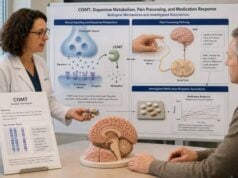
COMT affects dopamine and catecholamine metabolism. It has been studied in pain, cognition, stimulant response, and psychiatric symptoms, but a common COMT variant cannot select a reliable antidepressant, antipsychotic, or stimulant dose. Statements such as “high dopamine” or “warrior gene” oversimplify its effects.
MTHFR variants influence folate metabolism but do not establish that depression is caused by folate deficiency or that a specific supplement will work. Common MTHFR genotypes are not a substitute for measuring folate, vitamin B12, homocysteine when clinically relevant, or evaluating other causes of symptoms. High-dose supplements can have adverse effects and should not be started solely from a panel score.
Commercial combinatorial tests may combine multiple genes into a proprietary color or ranking system. These systems can be easier to read, but different companies may classify the same drug differently because gene selection, weighting, and algorithms differ. Independent systematic reviews have found possible modest improvements in remission for some patients with major depressive disorder, while also noting study limitations, sponsorship concerns, heterogeneity, and uncertainty about which components drive benefit.
A combined score should be evaluated by asking:
- Are the algorithm and evidence publicly described?
- Does the recommendation match a current professional guideline?
- Were outcomes replicated independently?
- Does the test include technically adequate CYP2D6 copy-number analysis?
- Are SLC6A4 or HTR2A findings being presented as stronger than guidelines support?
- Is the report predicting pharmacokinetics, clinical response, or both?
- Does the result apply to the patient’s ancestry, age group, diagnosis, and medication?
The most defensible use is to extract the transparent, guideline-supported gene–drug findings from the panel and treat proprietary rankings as supplemental rather than definitive.
When testing may be helpful
Testing may be considered before starting a medicine with established guidance, after repeated treatment intolerance, or when several past medication trials have produced unexpected results. It may be especially useful when a person has had strong adverse effects at low doses, little response at adequate doses, or a complex regimen involving multiple CYP2D6 or CYP2C19 substrates.
Potentially helpful situations include:
- two or more antidepressant trials limited by adverse effects or nonresponse;
- planned use of a tricyclic antidepressant or another medicine with a narrow safety margin;
- an antipsychotic dose that seems unusually difficult to tolerate despite appropriate monitoring;
- polypharmacy with possible gene–drug and drug–drug interactions;
- an existing pharmacogenetic result that can be interpreted before a new prescription;
- care in a system with pharmacists and electronic prescribing support.
Testing may be less useful when the main issue is an uncertain diagnosis, inconsistent medication use, untreated substance use, inadequate treatment duration, or a severe crisis requiring immediate intervention. A DNA result cannot replace a diagnostic interview or determine whether symptoms arise from bipolar disorder, trauma, psychosis, medical illness, medication withdrawal, or intoxication.
The PRIME Care trial found that pharmacogenomic testing reduced prescribing of antidepressants with predicted drug–gene interactions. Differences in symptom remission were small and not sustained at every time point. This supports a measured interpretation: testing can improve medication matching, but it is not a stand-alone treatment for depression.
A result may be particularly useful when it changes a choice before exposure. If several suitable medicines are available and one has a strong predicted interaction, selecting another can avoid unnecessary risk. When a person is already stable on a medicine, an unfavorable category does not automatically justify switching. Actual benefit and tolerability may outweigh a genotype-based concern.
Testing in children and adolescents requires extra care because evidence is less extensive, dosing changes with development, and family expectations may be high. The result should be interpreted by a clinician experienced in pediatric psychopharmacology. Testing should never delay urgent treatment for severe depression, psychosis, mania, catatonia, or dangerous behavior.
How the test is performed
The test usually uses a cheek swab, saliva sample, or blood sample. Fasting is not required. Psychiatric medicines generally should not be stopped for DNA collection. Stopping an antidepressant, benzodiazepine, mood stabilizer, or antipsychotic abruptly can cause withdrawal, relapse, agitation, seizures, or other serious problems.
Before ordering, the clinician should document current and past medications, doses, treatment duration, adverse effects, diagnoses, smoking status, caffeine use, kidney and liver conditions, and concurrent supplements. This information does not change the genotype, but it changes interpretation.
The laboratory analyzes selected variants and converts them into star alleles or named genotypes. For CYP2D6, high-quality testing should address copy-number changes and other structural variants. A limited assay that checks only a few common single-nucleotide variants can misclassify some patients.
Turnaround is often several days to a few weeks. Results may return as a gene table, a medication list, or both. A clinical pharmacist, psychiatrist, primary-care clinician, or pharmacogenetics specialist may review the report. Complex or indeterminate CYP2D6 findings may require laboratory consultation.
The report should include:
- genes and variants tested;
- genotype or diplotype;
- predicted phenotype;
- medication-specific recommendations;
- evidence or guideline source;
- assay limitations;
- date of interpretation;
- relevant drug-interaction cautions.
Insurance coverage varies. Some plans cover testing after treatment failures or for particular drugs; others consider broad panels investigational. Before collection, ask about prior authorization, laboratory network status, expected out-of-pocket cost, and whether interpretation is included.
A result from a direct-to-consumer raw-data file should not guide prescription changes without confirmation. Consumer arrays may miss CYP2D6 copy-number changes, use incomplete allele coverage, or contain genotyping errors. Clinical testing should be performed in an appropriately regulated laboratory.
Reading a psychiatric PGx report
Start with the medicine being considered, not the most dramatic color on the page. Then identify the gene, phenotype, clinical effect, and action.
| Report finding | Possible meaning | Appropriate response |
|---|---|---|
| Poor metabolism of an active drug | Higher exposure and greater adverse-effect risk may occur | Consider a lower dose, slower titration, or alternative if supported for that drug |
| Rapid or ultrarapid metabolism | Lower exposure or reduced benefit may occur for some drugs | Consider an alternative or guideline-directed dose strategy |
| Normal metabolizer | No gene-based change is expected for that pathway | Use standard prescribing and monitoring; response is not guaranteed |
| SLC6A4 or HTR2A “reduced response” | Association may be inconsistent or nonactionable | Do not change treatment from this finding alone |
| Indeterminate or no-call result | The phenotype could not be assigned | Ask the laboratory whether repeat or expanded testing is needed |
A green category usually means that the tested genes do not require a change, not that the drug is more effective than alternatives. A yellow category may call for monitoring rather than avoidance. A red category can represent high exposure, low exposure, a contraindication, or simply limited evidence. Read the explanatory text.
Check for phenoconversion. Strong CYP2D6 inhibitors can make genetically normal activity functionally low. Strong CYP3A4 inhibitors or inducers can change antipsychotic exposure. Smoking changes CYP1A2 activity. These factors may make a color category inaccurate for the current regimen if the report considers genotype alone.
Review the date and guideline. Recommendations evolve, and different organizations may use different thresholds. A clinician should reconcile the report with current CPIC, Dutch Pharmacogenetics Working Group, product-label, and specialty guidance as appropriate.
Ask whether the panel tested all needed alleles. A negative result is limited to the assay’s coverage. Ancestry-associated variants may be missed by narrow panels. “No actionable variants detected” does not mean the person will respond normally to every psychiatric medicine.
Finally, compare the result with the patient’s experience. A person who is stable and functioning well on a medication may not need a change. A person with severe adverse effects needs clinical reassessment even when the panel says “use as directed.”
Using results safely in treatment
A pharmacogenetic result should refine a treatment plan rather than replace it. The clinician may choose a different medicine, alter the starting dose, titrate more slowly, obtain a serum level, or intensify monitoring. The decision should be documented with the exact gene–drug rationale.
Medication changes require attention to withdrawal and relapse. Paroxetine and venlafaxine can produce prominent discontinuation symptoms. Antipsychotic withdrawal or rapid switching can worsen insomnia, agitation, psychosis, or movement symptoms. Benzodiazepines and some mood stabilizers can cause dangerous withdrawal or seizures. Genetic results do not make abrupt cessation safe.
Monitoring remains essential. Antidepressant follow-up should assess mood, anxiety, sleep, activation, sexual effects, bleeding risk, sodium when indicated, and suicidal thinking. Antipsychotic care should assess weight, glucose, lipids, blood pressure, movement symptoms, prolactin, sedation, and cardiac risk as appropriate. Clozapine requires mandated blood monitoring and careful attention to infection, constipation, myocarditis, seizures, and drug levels.
Seek urgent help for suicidal intent, inability to stay safe, severe mania, psychosis with dangerous behavior, catatonia, or rapidly worsening confusion. High fever, marked muscle rigidity, autonomic instability, or altered consciousness may indicate neuroleptic malignant syndrome. Agitation, sweating, diarrhea, tremor, clonus, and fever after serotonergic medication changes may indicate serotonin toxicity. These conditions require immediate evaluation rather than report interpretation.
Patients can make the result more useful by keeping the full report, sharing it with prescribers and pharmacists, and asking that actionable phenotypes be entered into the medical record. A concise note such as “CYP2C19 poor metabolizer—consider lower exposure strategy for selected SSRIs” is more useful than “failed genetic test.”
The most reliable expectation is modest: testing may help avoid some mismatched prescriptions and clarify dose-related adverse effects. It cannot eliminate trial and error, because psychiatric treatment depends on diagnosis, therapeutic relationship, psychotherapy, sleep, substance use, medical health, social conditions, and biology far beyond the tested variants.
References
- Clinical Pharmacogenetics Implementation Consortium (CPIC) Guideline for CYP2D6, CYP2C19, CYP2B6, SLC6A4, and HTR2A Genotypes and Serotonin Reuptake Inhibitor Antidepressants 2023 (Guideline)
- Effect of Pharmacogenomic Testing for Drug-Gene Interactions on Medication Selection and Remission of Symptoms in Major Depressive Disorder: The PRIME Care Randomized Clinical Trial 2022 (RCT)
- Dutch Pharmacogenetics Working Group (DPWG) guideline for the gene-drug interaction between CYP2D6, CYP3A4 and CYP1A2 and antipsychotics 2024 (Guideline)
- A systematic review of pharmacogenetic testing to guide antipsychotic treatment 2024 (Systematic Review)
- Pharmacogenomic Testing and Depressive Symptom Remission: A Systematic Review and Meta-Analysis of Prospective, Controlled Clinical Trials 2022 (Systematic Review)
- Pharmacogenomic scores in psychiatry: systematic review of current evidence and recommendations for clinical use 2024 (Systematic Review)
Disclaimer
This information is educational and does not replace diagnosis or treatment by a qualified mental health professional. Pharmacogenetic findings must be interpreted for the exact medicine, dose, interactions, and clinical situation. Do not stop or change psychiatric medication without prescriber guidance; urgent safety concerns, suicidal thoughts, severe agitation, or dangerous physical symptoms require immediate clinical help.