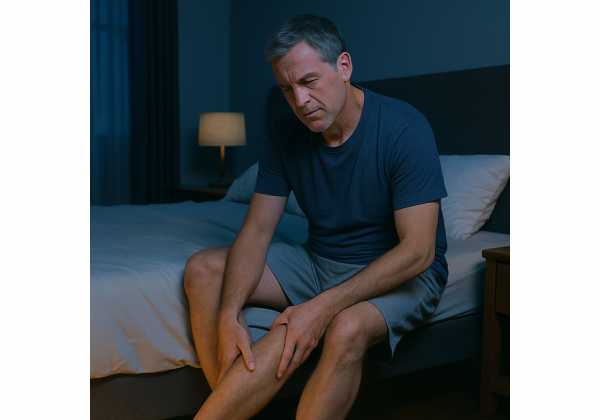
Restless legs syndrome and periodic limb movements turn rest into work. The person is tired, the bed is comfortable, and the room is quiet, yet the legs feel driven to move. Some describe crawling, pulling, buzzing, aching, or an inner pressure that eases only after walking, stretching, rubbing, or changing position. Periodic limb movements are different: the legs jerk during sleep, often without the person knowing, while a bed partner notices repeated kicks or the sleep study records them.
These problems matter more with age because sleep already becomes lighter and more easily broken. Leg discomfort, repeated awakenings, iron changes, kidney disease, neuropathy, medications, and untreated sleep apnea all overlap in midlife and later life. Good care starts with a careful symptom pattern, a medication review, and iron testing before jumping to sedatives. The right plan reduces nighttime restlessness without adding morning grogginess, falls, or medication problems.
Table of Contents
- RLS, PLMS, and PLMD Are Related but Not the Same
- Why Aging Changes the Picture
- Causes, Triggers, and Mimics to Check First
- Testing and Clinician Evaluation
- Daily Habits That Reduce Symptoms
- Iron and Medication Options
- Monitoring Progress and Avoiding Setbacks
- When to Seek Help
RLS, PLMS, and PLMD Are Related but Not the Same
Restless legs syndrome, often shortened to RLS, is diagnosed by symptoms while awake. The classic pattern is an urge to move the legs during rest, worse in the evening or at night, with relief from movement. The sensation often feels deep rather than skin-level. People use different words for it: crawling, fizzing, pulling, electric, tight, itchy, painful, or simply “I have to move.”
RLS is not the same as fidgeting. A person with fidgeting usually moves out of habit or tension. A person with RLS moves because staying still feels unbearable. The relief from movement is a major clue. Walking around the bedroom helps, but symptoms often return when the person lies down again.
Periodic limb movements during sleep, shortened to PLMS, are repeated leg movements recorded during sleep. They often involve the big toe, ankle, knee, or hip. A bed partner might notice rhythmic kicks every 20 to 40 seconds during parts of the night. The sleeper might wake often without knowing why, or might sleep through the movements.
Periodic limb movement disorder, shortened to PLMD, is less common than PLMS. PLMD requires more than leg movements on a sleep study. The movements must also cause insomnia, unrefreshing sleep, daytime sleepiness, or other impairment, and the problem must not be better explained by RLS, sleep apnea, narcolepsy, medication effects, or another sleep disorder.
| Pattern | Main clue | When it happens | How it is usually confirmed |
|---|---|---|---|
| Restless legs syndrome | Urge to move, often with strange leg sensations | At rest, especially evening or night | Clinical history and exclusion of mimics |
| Periodic limb movements during sleep | Repeated leg jerks during sleep | During sleep | Sleep study |
| Periodic limb movement disorder | PLMS plus sleep disruption or daytime impairment | During sleep, with daytime consequences | Sleep study plus clinical evaluation |
| Nocturnal leg cramps | Sudden painful muscle tightening | Usually calf or foot, often waking the person | Symptom description |
| Neuropathy | Burning, numbness, tingling, or reduced sensation | Often present day and night | Exam, history, and targeted lab testing |
Many people with RLS also have PLMS on a sleep study. That overlap causes confusion. The awake symptoms guide the diagnosis of RLS. The sleep-study movements guide the diagnosis of PLMS or PLMD. A person with classic RLS usually does not need a sleep study just to prove RLS, but a sleep study becomes useful when symptoms suggest sleep apnea, unexplained daytime sleepiness, unusual movements, or unclear insomnia.
Why Aging Changes the Picture
RLS becomes more common with age, and sleep becomes more vulnerable to interruption. Older adults spend less time in deep sleep, wake more often, and recover more slowly from a bad night. Even mild leg restlessness feels larger when it arrives on top of pain, nocturia, hot flashes, medication effects, or a partner’s snoring.
The same symptom also carries different risks later in life. A 30-year-old who walks the hallway at 1 a.m. usually faces lost sleep. A 75-year-old who does the same in a dark room faces lost sleep plus fall risk. Nighttime pacing, rushing to stretch, or stepping over pets and rugs turns RLS into a safety issue.
RLS also strains recovery. Poor sleep raises next-day fatigue, lowers exercise tolerance, worsens pain sensitivity, and makes stress feel harder to regulate. People tracking recovery with wearables often notice more movement, more awakenings, and lower overnight calm when symptoms flare. Wearables do not diagnose RLS or PLMD, but they help reveal patterns when used carefully. A guide to sleep wearable signals worth tracking helps separate useful trends from misleading sleep-stage labels.
Several aging-related conditions raise the chance of restless legs or limb movements:
- Lower iron stores or poor iron handling
- Chronic kidney disease
- Diabetes and peripheral neuropathy
- Parkinson’s disease and other neurologic conditions
- Spinal disease or nerve compression
- Sleep apnea
- Depression or anxiety treated with certain medications
- Arthritis, pain, and reduced daytime movement
Women often report RLS more than men, and symptoms sometimes worsen during pregnancy. In later life, menopause-related sleep disruption, hot flashes, and mood changes add another layer. When night sweats, awakenings, and leg sensations overlap, it helps to review broader hormone-related sleep changes in midlife rather than treating every awakening as a separate problem.
Aging also changes medication tolerance. A drug that quiets the legs might cause dizziness, swelling, fogginess, or unsteady walking the next morning. The best treatment plan for later life reduces symptoms while protecting balance, breathing, cognition, and daytime function.
Causes, Triggers, and Mimics to Check First
RLS often has more than one driver. Some people have a strong family pattern and symptoms that began decades earlier. Others develop symptoms after iron loss, kidney disease, medication changes, or neuropathy. In midlife and later life, the most effective plan starts by looking for reversible triggers.
Iron deserves special attention. RLS is linked to iron availability in the nervous system, and a normal hemoglobin level does not rule out low iron stores. Ferritin, a marker of stored iron, and transferrin saturation, a marker of circulating iron availability, often guide decisions. Ferritin also rises with inflammation, infection, liver disease, and chronic illness, so interpretation needs context. A deeper guide to iron and ferritin testing is useful when iron numbers look confusing.
Medications are another common reason symptoms appear or worsen. The timing often tells the story: symptoms increase within days to weeks after a new prescription, dose increase, or over-the-counter sleep aid.
Common medication-related triggers include:
- Sedating antihistamines, including diphenhydramine and doxylamine
- Some antidepressants, especially certain SSRIs, SNRIs, and mirtazapine
- Antipsychotic medications and other dopamine-blocking drugs
- Dopamine-blocking nausea medicines, such as metoclopramide and prochlorperazine
- Some older vertigo or allergy medicines with strong sedating effects
Do not stop prescribed psychiatric, neurologic, or nausea medications suddenly. Bring the pattern to the prescribing clinician and ask whether an alternative fits. This matters in older adults because many “PM” sleep products contain sedating antihistamines that worsen RLS and increase next-day confusion or falls. A separate review of sleep aids in aging helps identify products that look harmless but carry real risk.
Sleep apnea deserves a close look when snoring, witnessed pauses, morning headaches, dry mouth, high blood pressure, or daytime sleepiness appear with leg movements. Untreated apnea fragments sleep and often coexists with PLMS. Treating the breathing disorder first prevents a common mistake: blaming every awakening on leg movements while oxygen drops and airway obstruction continue. Learn the warning signs in a plain guide to sleep apnea testing and treatment basics.
RLS mimics also need attention. Nocturnal cramps cause sharp muscle tightening, usually in the calf or foot, and stretching the muscle gives relief. Neuropathy often causes burning, numbness, or tingling that persists during the day and does not reliably improve with walking. Arthritis and spinal stenosis cause pain linked to position, joint use, or nerve compression. Akathisia, a medication-related inner restlessness, often affects the whole body and lasts through the day rather than appearing mainly at night.
Lifestyle triggers do not cause every case, but they often raise symptom intensity. Alcohol close to bedtime, nicotine, high caffeine intake, long sedentary evenings, and very late hard exercise all provoke symptoms in some people. Meal timing and stimulants also shape sleep continuity; practical timing rules for caffeine, alcohol, and late meals help reduce avoidable sleep disruption.
Testing and Clinician Evaluation
A clinician usually diagnoses RLS from the story, not from a machine. The most useful visit starts with a clear description of the pattern. Bring notes rather than relying on memory after weeks of poor sleep.
A simple 2-week symptom log should include:
- Time symptoms start
- Body areas involved
- Words that describe the sensation
- Whether movement relieves it
- Bedtime and wake time
- Caffeine, alcohol, nicotine, and late exercise
- New or changed medications
- Night awakenings and next-day sleepiness
- Bed partner reports of kicking, snoring, or breathing pauses
Four questions form the core of RLS recognition: Is there an urge to move the legs? Does it begin or worsen during rest? Does movement partly or fully relieve it? Is it worse in the evening or at night? A yes pattern strongly supports RLS, especially when mimics do not fit.
Blood testing often includes iron studies. Many sleep clinicians prefer a morning fasting sample because iron values shift through the day and after meals. A common panel includes ferritin, serum iron, total iron-binding capacity, transferrin saturation, and a complete blood count. Depending on the person, the clinician might also check kidney function, glucose or A1c, B12, folate, thyroid markers, and markers of inflammation.
| Area to review | Why it matters | Typical next step |
|---|---|---|
| Iron status | Low iron stores or low transferrin saturation often worsen RLS | Ferritin, iron, TIBC, transferrin saturation, CBC |
| Medication list | Several sleep, mood, allergy, nausea, and dopamine-blocking drugs worsen symptoms | Clinician-led medication review |
| Kidney function | RLS is common in chronic kidney disease and dialysis | Creatinine, eGFR, urine testing when indicated |
| Neuropathy risk | Diabetes, B12 deficiency, alcohol use, and nerve disease mimic or worsen symptoms | Exam and targeted labs |
| Sleep apnea signs | Breathing-related awakenings and PLMS often overlap | Home sleep apnea test or lab sleep study when appropriate |
| Safety and function | Night walking, sleep loss, and sedating drugs raise fall and driving risk | Falls review and treatment adjustment |
A sleep study is not required for straightforward RLS. It becomes more useful when the main complaint is unexplained insomnia, bed-partner reports of frequent kicking, suspected sleep apnea, unusual behaviors during sleep, or daytime sleepiness that seems out of proportion to the history.
A sleep study reports a periodic limb movement index, often shown as movements per hour of sleep. In adults, more than 15 periodic limb movements per hour is commonly considered elevated, but the number alone does not equal disease. Some older adults have PLMS without major symptoms. Treatment decisions should connect the sleep-study finding to the person’s awakenings, sleep quality, daytime function, and other disorders.
Daily Habits That Reduce Symptoms
Daily habits rarely erase severe RLS by themselves, but they reduce the load on the nervous system and make medical treatment work better. The best habits are specific, repeatable, and timed around the evening symptom window.
Movement helps, but timing matters. Regular daytime walking, cycling, resistance training, and mobility work reduce restlessness in many people. The dose should feel sustainable. Long inactivity often worsens symptoms, yet a very hard workout late at night sometimes triggers them. A useful pattern is moderate exercise earlier in the day, light movement after dinner, and gentle stretching before bed.
Evening strategies work best when they start before symptoms become intense. Try a short routine 30 to 60 minutes before bed:
- Gentle calf, hamstring, and hip stretches
- Warm bath or warm shower
- Heat pack or cool pack on the legs
- Light self-massage or foam rolling
- Relaxed breathing to lower arousal
- A quiet activity that keeps the mind engaged during early symptoms
Counter-stimulation helps some people. Rubbing the legs, using a massage tool, applying temperature changes, or wearing comfortable compression socks in the evening sometimes reduces the urge to move. People with neuropathy, poor circulation, skin fragility, or diabetes should ask a clinician before using tight compression, heat, or cold.
Sleep timing also matters. Irregular bedtimes and long daytime naps increase light sleep and nighttime wakefulness. A steady wake time, morning outdoor light, and a darker evening help anchor the body clock. When insomnia has become conditioned, with the bed turning into a place of frustration and vigilance, a structured CBT-I approach for insomnia often works better than adding more supplements.
Food and drinks deserve a practical review. Caffeine has a long half-life, so even afternoon coffee affects sensitive sleepers. Alcohol might feel relaxing at first, then fragments sleep and worsens leg symptoms later in the night. Heavy late meals raise reflux, glucose swings, and awakenings. Hydration should be steady through the day, not forced at bedtime, especially for people who already wake to urinate.
Bedroom safety is part of treatment in later life. Keep a clear path to the bathroom, use low night lighting, remove loose rugs, and place slippers within reach. RLS often drives people out of bed quickly. A safe room lowers injury risk on difficult nights.
Magnesium, stretching, and relaxation are common topics. Magnesium helps when a person has low intake or cramps, but it is not a proven stand-alone treatment for moderate to severe RLS. Food-first magnesium choices are reasonable for general sleep and muscle health. High-dose supplements cause diarrhea and interact with some medications, especially in kidney disease. Treat supplements as add-ons, not substitutes for iron testing, medication review, or sleep apnea evaluation.
Iron and Medication Options
Iron treatment is often the first medical lever when ferritin or transferrin saturation is low. Adults with RLS commonly receive iron consideration when ferritin is at or below about 75 ng/mL or transferrin saturation is below about 20%, though clinicians adjust for inflammation, kidney disease, and the full iron panel. Some patients with ferritin between 75 and 100 ng/mL still need specialist-guided iron treatment, especially when oral iron is unlikely to absorb well or symptoms are severe.
Oral iron is usually taken as ferrous sulfate or another iron salt, often with vitamin C and away from calcium, tea, coffee, and some medications that block absorption. Many clinicians now use every-other-day dosing to improve absorption and reduce stomach upset. Oral iron often takes weeks to months to improve symptoms, so it suits non-urgent cases with low stores and good absorption.
Intravenous iron works faster for selected patients and avoids gut absorption problems. It is not a casual wellness infusion. It requires proper iron studies, attention to iron overload risk, and medical supervision. People with inflammatory disease, chronic kidney disease, prior reactions, or complex anemia need individualized guidance.
Medication becomes appropriate when symptoms remain frequent, distressing, or sleep-disrupting after triggers and iron status are addressed. Modern treatment has moved away from routine long-term use of dopamine agonists as the default first choice because of augmentation. Augmentation means the treatment eventually worsens the disorder: symptoms start earlier in the day, become more intense, spread to the arms, or require higher doses for less relief.
Current medication categories include:
- Alpha-2-delta calcium channel ligands: gabapentin enacarbil, gabapentin, and pregabalin. These are often favored for chronic persistent RLS, especially when pain, insomnia, or anxiety overlap.
- Dopamine agonists: pramipexole, ropinirole, and rotigotine. These reduce symptoms short term but carry augmentation and impulse-control risks with longer use.
- Iron therapy: oral or intravenous, chosen by iron status, symptom severity, and absorption.
- Low-dose opioids: reserved for severe refractory RLS under careful supervision.
- Benzodiazepines and sedative hypnotics: sometimes improve sleep continuity but do not treat the underlying urge to move and raise risks in older adults.
Gabapentin-type medications need careful dosing in later life. They cause dizziness, morning fogginess, fluid retention, weight gain, and gait instability in some people. Kidney function affects dosing. Combining them with alcohol, opioids, benzodiazepines, or untreated sleep apnea increases breathing and sedation risk.
Dopamine agonists require equally careful monitoring. They sometimes cause nausea, sleepiness, lightheadedness, hallucinations, impulse-control problems, and augmentation. Impulse-control problems include compulsive shopping, gambling, eating, sexual behavior, or repetitive activities that feel hard to stop. The person taking the medication might not recognize the behavior as drug-related, so family input helps.
For PLMD without RLS, treatment is more cautious. The evidence for treating PLMD itself is weaker than the evidence for treating RLS. Clinicians usually address iron deficiency, sleep apnea, medication triggers, and other sleep disorders first. If periodic movements remain strongly linked to awakenings and daytime impairment, a sleep specialist should guide treatment.
Monitoring Progress and Avoiding Setbacks
Progress should show up in daily life, not only in a sleep score. Better treatment means shorter symptom periods, fewer trips out of bed, less dread at bedtime, fewer awakenings, safer nights, and steadier daytime energy. Track those outcomes directly.
A useful monthly review asks:
- How many nights per week had symptoms?
- What time did symptoms begin?
- How long did it take to fall asleep?
- How many times did symptoms force walking or stretching?
- Was there next-day sleepiness, irritability, or brain fog?
- Did symptoms spread from legs to arms?
- Did the medication dose creep upward?
- Did any new compulsive behavior, dizziness, swelling, or imbalance appear?
Earlier symptom timing is a warning sign. If symptoms once started at 10 p.m. and now start at 5 p.m., tell the clinician. If symptoms spread to the arms or become stronger despite higher dopamine agonist doses, ask specifically about augmentation. Raising the dose without naming augmentation often deepens the problem.
Do not judge success after one night. RLS fluctuates with stress, travel, illness, activity, alcohol, and sleep debt. Look for patterns across two to four weeks. A bad night after a long flight or a late dinner does not mean the plan failed. A steady drift toward earlier and stronger symptoms means the plan needs revision.
Travel needs a separate strategy because immobility triggers symptoms. For long flights or drives, choose an aisle seat when possible, stand before symptoms peak, flex the ankles, avoid heavy alcohol, and keep evening medications timed to the destination schedule with clinician guidance. Pack iron or prescription medications in carry-on luggage, not checked bags.
Wearable data needs restraint. More movement and lower sleep efficiency during symptom flares are useful clues. Exact deep sleep and REM numbers from consumer devices are less reliable. Treat wearable trends as prompts for pattern recognition, not as medical proof.
Setbacks often follow medication changes outside the sleep plan. A new antidepressant, allergy pill, nausea drug, or sleep aid might restart symptoms after months of control. Keep an updated medication list and include over-the-counter products, cannabis products where legal, supplements, and “PM” pain relievers.
Pain also complicates tracking. Hip arthritis, spinal stenosis, and neuropathy disturb sleep and sometimes masquerade as RLS. If pain is the main driver, sleep improves only when the pain plan improves. Older adults with mixed pain and restlessness benefit from reviewing pain, inflammation, and sleep comfort strategies alongside RLS care.
When to Seek Help
Seek medical help when leg restlessness disrupts sleep more than once a week, causes daytime sleepiness, leads to nighttime pacing, or pushes you toward regular sedating sleep aids. RLS is treatable, but the right treatment depends on iron status, medications, kidney function, neuropathy risk, and sleep apnea signs.
Book a clinician visit sooner when symptoms start suddenly after age 50, change quickly, affect only one leg, include weakness or numbness, or appear with unexplained weight loss, bleeding, severe fatigue, or worsening kidney disease. Sudden one-sided leg swelling, redness, warmth, or severe calf pain needs urgent assessment because it does not fit typical RLS.
A sleep specialist is especially useful when:
- Symptoms remain moderate to severe after basic steps
- Iron treatment is unclear or has not helped
- Dopamine agonist augmentation is suspected
- There is heavy snoring, witnessed pauses, or unexplained daytime sleepiness
- A bed partner reports frequent kicking
- Several sedating medications are already in use
- Falls, cognitive fog, or morning grogginess are concerns
Bring specific observations to the appointment. “My legs feel awful at night” is real, but “symptoms start around 8 p.m., improve when I walk, return when I lie down, and began after starting diphenhydramine” gives the clinician a much stronger starting point.
A good plan protects sleep and safety at the same time. It does not simply sedate the person through the problem. It checks iron, removes avoidable triggers, treats coexisting sleep disorders, uses medication thoughtfully, and watches for side effects. For aging sleep, that balance matters: quieter legs, clearer mornings, safer nights, and better recovery.
References
- Treatment of restless legs syndrome and periodic limb movement disorder: an American Academy of Sleep Medicine clinical practice guideline 2025 (Guideline)
- Treatment of restless legs syndrome and periodic limb movement disorder: an American Academy of Sleep Medicine systematic review, meta-analysis, and GRADE assessment 2025 (Systematic Review)
- The Management of Restless Legs Syndrome: An Updated Algorithm 2021 (Clinical Algorithm)
- Restless Legs Syndrome: Contemporary Diagnosis and Treatment 2021 (Review)
- Periodic limb movements during sleep: a narrative review 2021 (Review)
- Sleep related movement disorders in the elderly: a review of recent literature 2024 (Review)
Disclaimer
This article is educational and does not replace care from a qualified clinician. Restless legs symptoms, iron problems, sleep apnea, neuropathy, medication side effects, and kidney disease need individualized evaluation. Do not start iron, stop prescribed medication, or use sedating sleep aids regularly without medical guidance.