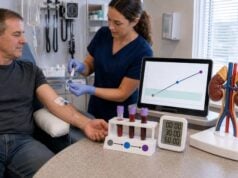
A urine catecholamines test measures epinephrine, norepinephrine, and dopamine excreted during a timed collection, usually 24 hours. It can help evaluate a suspected catecholamine-producing tumor, but fractionated urine metanephrines or plasma free metanephrines are generally preferred for pheochromocytoma and paraganglioma screening. Metanephrines are produced continuously inside tumor cells, while catecholamine release can be intermittent. A urine catecholamine result may therefore be normal between attacks or elevated by exercise, pain, stress, nicotine, caffeine, medicines, sleep apnea, or an incomplete collection. Accurate timing matters: every urine specimen during the collection period must enter the container, which is stored as instructed. The laboratory often measures urine creatinine to judge completeness. A high value is interpreted by analyte, degree of elevation, symptoms, medicines, and related metanephrine results. One mild abnormality rarely justifies imaging without controlled confirmation.
- The test usually measures 24-hour urine epinephrine, norepinephrine, and dopamine.
- Urine fractionated metanephrines are generally more sensitive for pheochromocytoma and paraganglioma screening.
- Missing a urine void can create a false-low result, while collecting longer than 24 hours can raise the total.
- Exercise, stress, nicotine, caffeine, pain, illness, and medicines can elevate catecholamines.
- Marked, repeatable elevation with matching metanephrines is more concerning than a small isolated rise.
Table of Contents
- What the Urine Test Measures
- Why Urine Catecholamines Are Ordered
- How to Complete a 24-Hour Collection
- Preparation: Food, Medicines, and Activity
- Understanding High and Normal Results
- Epinephrine, Norepinephrine, and Dopamine Patterns
- Urine Catecholamines Versus Metanephrines
- Repeat Testing, Imaging, and Follow-Up
What the Urine Test Measures
Catecholamines are short-lived signaling chemicals made from tyrosine. Epinephrine comes mainly from the adrenal medulla. Norepinephrine comes largely from sympathetic nerve endings, with additional production by adrenal and extra-adrenal chromaffin tissue. Dopamine is a precursor and neurotransmitter with several sources.
The kidneys filter and excrete catecholamines and their metabolites. A 24-hour collection captures total excretion across waking, sleep, activity, meals, and possible symptoms. This is less dependent on one blood-draw moment than a plasma catecholamine test, but it remains affected by daily physiologic stress.
The report may include epinephrine, norepinephrine, dopamine, total catecholamines, and creatinine. Results can be expressed as micrograms per 24 hours, nanomoles per day, or a ratio to creatinine. The laboratory’s unit and age-specific reference interval must be used.
Catecholamines are metabolized to metanephrine, normetanephrine, and 3-methoxytyramine. Pheochromocytomas and paragangliomas can form these metabolites continuously within tumor cells, which is why metanephrine testing usually has better sensitivity.
A urine catecholamine test does not assess adrenal cortex hormones such as cortisol, aldosterone, or DHEA-S. An adrenal mass may require separate tests for each relevant hormone system.
The test is not a general measure of emotional stress or nervous-system “overactivity.” It answers a defined endocrine or autonomic question and is most useful when the collection is complete and the pretest probability is reasonable.
Why Urine Catecholamines Are Ordered
The test may be ordered when a person has episodes of severe headache, sweating, palpitations, tremor, pallor, anxiety, chest discomfort, or sudden blood pressure elevation. These symptoms can occur with pheochromocytoma or sympathetic paraganglioma, but they are also common in panic, arrhythmia, medication effects, sleep apnea, low glucose, and other conditions.
Urine catecholamines may be included with fractionated metanephrines to characterize a known tumor’s secretory pattern. They can also be used when a specialist wants integrated 24-hour catecholamine output or when a prior tumor produced a clearly measurable catecholamine.
Other indications include:
- An adrenal mass with biochemical or imaging concern for pheochromocytoma.
- Surveillance after treatment of a catecholamine-producing tumor.
- A hereditary PPGL syndrome under a center-specific protocol.
- A suspected dopamine-producing tumor.
- Selected neurologic or autonomic investigations.
For initial PPGL screening, most guidelines and expert reviews favor plasma free metanephrines or 24-hour urine fractionated metanephrines. Direct urine catecholamines can miss tumors that metabolize catecholamines internally or release them only intermittently.
Testing everyone with mild hypertension or occasional palpitations produces many false positives. The decision should consider symptom severity, blood-pressure pattern, adrenal imaging, family history, and inherited risk.
A hypertensive emergency, chest pain, stroke-like symptoms, pulmonary edema, fainting, or a dangerous arrhythmia requires emergency care. A 24-hour collection is not an appropriate response to an acute crisis.
How to Complete a 24-Hour Collection
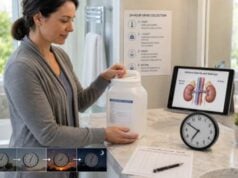
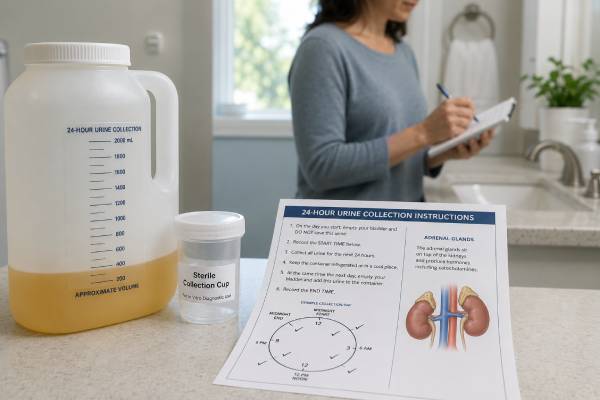
The collection must include every urine specimen for exactly the instructed period. A typical process is:
- Choose a day when the full collection can be completed.
- On waking, urinate into the toilet and record that as the start time.
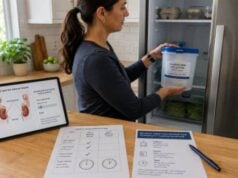
- Collect every urine specimen after that, including overnight urine, in the supplied container.
- At the same time the next morning, urinate into the container to finish the 24 hours.
- Keep the container refrigerated, on ice, or otherwise stored exactly as instructed.
- Return it promptly with start and stop times, total volume, and requested documentation.
If even one substantial void is missed, the collection may be falsely low. Tell the laboratory rather than adding extra time to compensate. Collecting for 25 or 26 hours without instruction can falsely raise total excretion.
Some containers contain acid preservative. Do not touch, discard, or replace it. Avoid splashing. Keep the container away from children. If urine is collected in a separate clean cup before transfer, use the equipment provided.
Urine creatinine helps assess completeness. A very low creatinine for body size may suggest undercollection, while an unexpectedly high value may indicate overcollection or unusual muscle mass. Creatinine is an imperfect check, so an honest collection record remains important.
Menstrual blood, stool, toilet paper, or water should not enter the container. Ask the laboratory how to handle collection during menstruation or bowel contamination.
People with urinary incontinence, a catheter, or very frequent urination may need practical planning. The clinic can provide additional containers or an alternative plasma test.
Preparation: Food, Medicines, and Activity
Preparation rules depend on the assay. Laboratories may ask patients to avoid caffeine, nicotine, alcohol, vigorous exercise, and certain foods for a period before and during collection. Older methods were more vulnerable to food-related interference, while modern techniques may have narrower restrictions.
Commonly discussed foods include bananas, chocolate, vanilla, citrus, and other items that contain amines or related compounds. Do not follow an internet list in place of the laboratory’s instructions; unnecessary restriction can be burdensome and method-specific requirements differ.
Medicines and substances that may elevate or interfere include:
- Stimulants and amphetamine-type medicines.
- Decongestants and other sympathomimetics.
- Tricyclic antidepressants and serotonin-norepinephrine reuptake inhibitors.
- Monoamine oxidase inhibitors.
- Levodopa and dopamine-related medicines.
- Caffeine and nicotine.
- Withdrawal from clonidine, alcohol, benzodiazepines, or opioids.
- Some blood-pressure and psychiatric medicines.
Do not stop a prescription without medical guidance. Withdrawal can be dangerous and may increase catecholamines. The clinician may interpret the result while treatment continues, choose metanephrine testing, or arrange a safe temporary adjustment.
Acute illness, severe pain, low blood glucose, strenuous exercise, heart failure, panic, and untreated obstructive sleep apnea can elevate catecholamine output. A nonurgent collection may be postponed until the person is stable.
Try to follow an ordinary, calm day rather than intentionally provoking symptoms. Exercise or skipped meals should never be used to “make the tumor show up.” A catecholamine surge can be dangerous in someone who truly has a PPGL.
Record major symptoms and their times during the collection. This can help the clinician compare the daily total with the clinical pattern, although a diary cannot correct an incomplete specimen.
Understanding High and Normal Results
A normal urine catecholamine result does not exclude every pheochromocytoma or paraganglioma. Secretion may be intermittent, the tumor may be small, or the collection may be incomplete. A normal fractionated metanephrine result from a high-quality test is generally more reassuring.
A mild elevation is commonly caused by physiologic stress, exercise, medicines, nicotine, caffeine, or collection problems. The clinician should evaluate the degree above the upper limit and whether metanephrines show a matching rise.
Marked elevation in one or more catecholamines, reproduced on a complete collection and accompanied by high metanephrines, strongly increases concern. The exact multiple considered highly suggestive depends on the analyte and laboratory.
| Result pattern | General interpretation | Typical response |
|---|---|---|
| Normal catecholamines and metanephrines | Secretory PPGL unlikely with a complete collection | Further testing only if imaging or hereditary risk remains strong |
| Mild isolated catecholamine rise | Stress, medicine, activity, or collection effect common | Review conditions and repeat or use plasma metanephrines |
| Marked matching catecholamine and metabolite elevation | Strong biochemical concern for PPGL | Prompt endocrine evaluation and imaging |
| Low total with low creatinine | Undercollection possible | Repeat the 24-hour collection |
Low catecholamine excretion is usually not clinically meaningful in a routine tumor screen. It does not diagnose adrenal insufficiency, depression, or a brain dopamine disorder.
Kidney dysfunction can alter excretion and make a 24-hour urine test less reliable. Plasma free metanephrines may be preferred, although chronic illness can still affect normetanephrine.
Epinephrine, Norepinephrine, and Dopamine Patterns
Epinephrine-predominant secretion suggests adrenal medullary production and may accompany an adrenal pheochromocytoma. Metanephrine should usually rise as the matching metabolite. Hypoglycemia, acute stress, and exercise can also increase epinephrine.
Norepinephrine-predominant secretion can occur in adrenal pheochromocytoma or extra-adrenal sympathetic paraganglioma. It is also the analyte most easily raised by ordinary sympathetic activity, sleep apnea, pain, illness, and standing or exercise.
Dopamine elevation may reflect levodopa, dietary or analytical influences, or a rare dopamine-producing tumor. Measuring 3-methoxytyramine can help characterize a dopamine phenotype. Such tumors may cause fewer classic hypertensive spells.
| Analyte | Possible tumor association | Common non-tumor influence |
|---|---|---|
| Epinephrine | Adrenal pheochromocytoma | Hypoglycemia, acute stress, exercise |
| Norepinephrine | Adrenal or sympathetic extra-adrenal tumor | Sleep apnea, pain, illness, medicines |
| Dopamine | Rare dopamine-secreting PPGL | Levodopa, diet, assay effects |
The phenotype can guide imaging and genetic interpretation but cannot prove tumor location. The same tumor may produce more than one catecholamine.
Urine Catecholamines Versus Metanephrines
Fractionated metanephrines are the preferred biochemical screen because tumor cells continuously convert catecholamines into metabolites. Direct catecholamine output depends more on episodic release and daily stress.
A 24-hour urine metanephrines test uses the same collection period but measures more stable metabolites. Plasma free metanephrines avoid collection completeness problems but require controlled posture and rest for best specificity.
The plasma catecholamines test captures a moment and is especially sensitive to the blood draw. Urine catecholamines integrate a day but can still miss a tumor or reflect physiologic activation.
| Test | Strength | Main limitation |
|---|---|---|
| Urine catecholamines | Integrated 24-hour secretion | Lower tumor sensitivity and collection errors |
| Urine fractionated metanephrines | Continuous tumor metabolism over 24 hours | Requires complete collection |
| Plasma free metanephrines | High sensitivity with one blood draw | Posture, rest, and stress affect specificity |
Ordering multiple overlapping tests in a low-risk patient can increase false positives. The clinician should choose the method that fits the risk and practical circumstances.
Repeat Testing, Imaging, and Follow-Up
After a mild abnormality, confirm that every void was collected for exactly 24 hours, review creatinine, and check medicines, exercise, caffeine, nicotine, illness, and sleep apnea. Repeat collection or optimized plasma free metanephrines may be more useful than immediate imaging.
After marked, reproducible elevation with matching metanephrines, CT or MRI is used to locate the tumor. Functional imaging may be added according to location, hereditary background, biochemical phenotype, and metastatic risk.
Adrenal nodules are common, so imaging without convincing biochemistry can create a false link. A needle biopsy should not be performed until pheochromocytoma has been excluded because manipulation can trigger a catecholamine crisis.
Confirmed functional tumors require preoperative alpha-adrenergic blockade, careful salt and fluid preparation when appropriate, and coordinated endocrine, surgical, and anesthesia care. Beta-blockers are added for tachycardia only after adequate alpha blockade.
Genetic counseling is broadly considered after a confirmed PPGL. Hereditary results influence family testing, imaging, recurrence risk, and long-term surveillance.
After treatment, the marker that was elevated before surgery is remeasured. A new baseline helps detect residual or recurrent disease. Follow-up may be lifelong because recurrence can occur many years later.
Questions to ask include:
- Was my 24-hour collection complete according to creatinine and timing?
- Which analyte was high and by how much?
- Were urine fractionated metanephrines also measured?
- Could medicine, exercise, sleep apnea, illness, caffeine, or nicotine explain it?
- Should I repeat urine testing or use plasma free metanephrines?
- Is the biochemical evidence strong enough for imaging?
A urine catecholamines result is most useful when the collection is complete and the analyte pattern agrees with more sensitive metanephrine testing and the clinical picture.
Special collection and interpretation situations
Collection quality becomes harder when urine volume is very high or very low. A person with diabetes insipidus, uncontrolled diabetes, diuretic use, or heavy fluid intake may need more than one container. Someone who is dehydrated may produce a small, concentrated volume. Total 24-hour excretion, not concentration alone, is usually the relevant measure, so the laboratory must know the complete volume.
Creatinine checks are helpful but imperfect. Expected creatinine excretion varies with age, sex, body size, muscle mass, diet, amputation, and kidney function. A low value in a frail older adult does not automatically prove undercollection, while a seemingly acceptable value cannot guarantee that every void was captured. The collection diary and honest report of missed urine remain essential.
Children need age-specific reference intervals and practical family planning. A child may forget a school-time specimen or have difficulty transferring urine safely. Families should coordinate with the laboratory and school, use all supplied containers, and avoid starting on a day when collection cannot be supervised. Pediatric PPGL evaluation often favors plasma metanephrines in an experienced setting when a reliable urine collection is unlikely.
Pregnancy changes kidney filtration and catecholamine physiology, while symptoms may overlap with preeclampsia or panic. A suspected catecholamine-producing tumor during pregnancy is uncommon but high risk. Testing and imaging should be coordinated by endocrinology and maternal-fetal medicine rather than interpreted through routine outpatient cutoffs alone.
Kidney impairment can reduce the reliability of urinary excretion. A low total may reflect reduced filtration rather than absence of a tumor, and a collection may be difficult in advanced disease. Plasma free metanephrines are often preferred, with awareness that chronic illness and sympathetic activation can raise normetanephrine.
Collection during a symptomatic spell does not guarantee a diagnostic result. Catecholamines can be released in brief bursts, and the 24-hour total may dilute a short episode. Conversely, a day with repeated panic, pain, or strenuous activity may raise the total without a tumor. Fractionated metanephrines remain the stronger screening marker because their production is more continuous.
Preservative and temperature instructions vary. Some containers contain acid to stabilize catecholamines, while others rely on refrigeration and rapid processing. Adding household chemicals, pouring out preservative, or transferring the final collection into an unapproved bottle can invalidate the result. If the container spills, the laboratory should be contacted for a new collection rather than estimating the lost volume.
Dietary restrictions should be assay-specific. Older colorimetric or electrochemical methods were affected by a broader range of foods and medicines. Modern LC-based assays reduce some interferences but do not eliminate physiologic effects. A laboratory instruction sheet is more reliable than a generic online list.
After surgery for a known tumor, the best surveillance marker is usually the analyte that was clearly elevated before treatment. If only catecholamines were elevated, repeating them may be useful, but metanephrines are commonly included because of their sensitivity. An immediate postoperative collection can be distorted by pain, anesthesia, and hemodynamic stress; the treating center chooses the timing.
A tumor can be biochemically silent. Many head-and-neck paragangliomas do not release substantial catecholamines, and very small hereditary lesions may produce little signal. Normal urine catecholamines should not overrule a clearly suspicious lesion or genetic surveillance plan.
At the other extreme, markedly high results require safe handling. Patients should not undergo biopsy or unprepared surgery on an adrenal mass until pheochromocytoma is excluded. If the biochemical pattern is strong, the next step is coordinated endocrine localization and preoperative preparation, not an attempt to provoke another episode.
Volume and timing should be checked before the laboratory number is accepted. If a person starts at 7 a.m. after discarding urine, the final specimen belongs in the container at 7 a.m. the next day. Waking later and ending at 9 a.m. creates a 26-hour collection. The total may then appear high even though the hourly excretion is ordinary.
Episodes should be documented without changing behavior to provoke them. Recording headache, palpitations, medication time, exercise, and sleep can help explain a rise. A symptom diary is supportive, however, and cannot establish tumor secretion without the laboratory pattern.
When both urine catecholamines and metanephrines are normal in a complete collection, a functional PPGL is unlikely. If only catecholamines are mildly high, optimized metanephrine testing usually clarifies the issue. If both are markedly high, the clinician should move toward localization rather than repeatedly collecting urine while the patient remains at risk.
Long-term surveillance is individualized. Hereditary disease, extra-adrenal location, large tumors, and younger age generally justify closer and longer follow-up. Patients should keep copies of their original biochemical phenotype because the marker that was elevated before treatment is especially useful when recurrence is assessed years later.
The final report should be reviewed alongside the total urine volume, creatinine, collection duration, and metanephrine values. Those quality details determine whether a normal or high total can be trusted.
If the laboratory rejects a collection because of volume, preservative, timing, or contamination, recollection is safer than estimating a result. A rejected specimen is inconvenient, but it prevents false reassurance or an unnecessary tumor workup based on data that cannot support either conclusion.
References
- Diagnosis and Management of Pheochromocytomas and Paragangliomas: A Guide for the Clinician 2023 (Review)
- Pheochromocytoma: an updated scoping review from clinical presentation to management and treatment 2024 (Review)
- Japan Endocrine Society Clinical Practice Guideline for the Diagnosis and Management of Pheochromocytoma and Paraganglioma 2025 2026 (Guideline)
- International consensus statement on the diagnosis and management of phaeochromocytoma and paraganglioma in children and adolescents 2024 (Guideline)
- Pheochromocytoma and Paraganglioma: An Endocrine Society Clinical Practice Guideline 2014 (Guideline)
Disclaimer
This article is educational and cannot diagnose or exclude pheochromocytoma or paraganglioma. Urine catecholamines depend on collection completeness, medicines, diet instructions, activity, illness, kidney function, and laboratory method. Severe hypertension, chest pain, neurologic symptoms, fainting, or breathing difficulty requires urgent medical care.