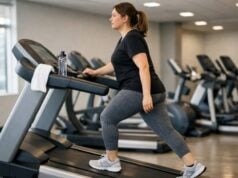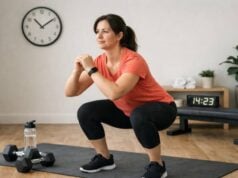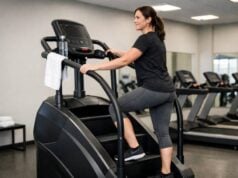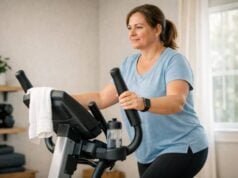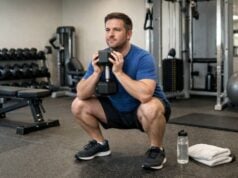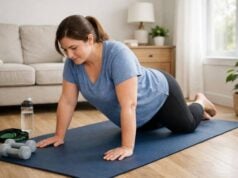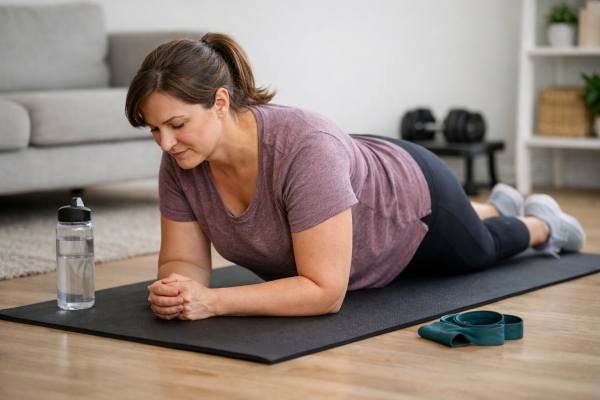
Calisthenics can absolutely help with weight loss, but not because bodyweight training is secretly better than every other workout. It works when it helps you train consistently, build or hold onto muscle, raise your total activity, and support a calorie deficit you can actually maintain. That makes it especially useful for people who want effective exercise without a gym membership, machines, or complicated programming.
The real advantage of calisthenics is how practical it is. You can do it at home, outdoors, while traveling, or in short sessions that still feel productive. The challenge is knowing which exercises matter most, how to structure them for fat loss, and how to progress once beginner gains slow down. That is where most people either spin their wheels or quit too early.
Table of Contents
- Can calisthenics help you lose weight?
- Why bodyweight training works for fat loss
- Best calisthenics exercises for fat loss
- How to structure calisthenics workouts
- A beginner weekly plan that is realistic
- How to progress when bodyweight feels easy
- Mistakes and safety issues to watch
- How to get better results from calisthenics
Can calisthenics help you lose weight?
Yes, calisthenics can help you lose weight, but it is best understood as one part of a fat-loss system rather than a standalone trick. Bodyweight workouts increase energy expenditure, improve fitness, and help preserve lean mass while you diet. All three matter. Still, the actual driver of weight loss is a sustained energy deficit. If your eating habits do not support that, even very hard calisthenics sessions may produce little visible change.
That does not make calisthenics weak. It makes it honest.
For many people, bodyweight training is easier to repeat than a gym-based plan. There is no commute, no waiting for machines, and no need to know how to use equipment. That often leads to better consistency, which is more important than finding the “perfect” workout style. A modest plan you follow for six months beats an ambitious plan you abandon in two weeks.
Calisthenics can also work well for body recomposition. Someone who is newer to training may lose fat, improve muscle tone, and get noticeably fitter at the same time. The scale may move slowly at first, but waist size, photos, work capacity, and how clothes fit often improve sooner than people expect.
Still, there are limits. Bodyweight training does not automatically burn more calories than every other form of exercise. A brisk walk, a run, a bike ride, and a hard circuit can all be useful tools. Calisthenics shines because it mixes strength and conditioning in one format, not because it breaks the rules of physiology. If your main goal is the biggest possible calorie burn per minute, some forms of cardio may outpace a typical bodyweight session. If your goal is a practical, repeatable routine that builds strength while helping with fat loss, calisthenics is a strong option.
The best way to think about it is this:
- Calisthenics can support fat loss.
- It is especially good when you need convenience and flexibility.
- It works better when paired with enough walking, sleep, and food structure.
- It does not remove the need for a calorie deficit.
If you want a broad comparison of where bodyweight training fits, it helps to understand the larger picture of the best exercises for weight loss. Calisthenics belongs in that conversation, but it is not magic. It is effective because it is accessible, scalable, and good enough to do often.
Why bodyweight training works for fat loss
The main reason calisthenics works for fat loss is not that push-ups or squats “torch belly fat.” They do not. Spot reduction is still a myth. What bodyweight training does well is combine muscular work, movement quality, and often a moderate cardiovascular demand in the same session.
When you choose the right exercises and keep rest periods under control, calisthenics can feel surprisingly demanding. Movements like squats, reverse lunges, push-ups, step-ups, mountain climbers, and burpees recruit a lot of muscle at once. That raises your heart rate, increases energy use during the session, and can improve fitness over time. If you organize those moves in circuits, density blocks, or intervals, the workout becomes both strength-oriented and metabolically challenging.
Another major advantage is lean mass retention. Weight loss is not just about getting lighter. It is about losing fat while keeping as much muscle, strength, and function as possible. Pure dieting without resistance work often leads to more muscle loss than people realize. Calisthenics is not identical to heavy barbell training, but it still gives your body a reason to keep muscle, especially if you train close enough to fatigue and include progression over time.
There is also a behavioral reason calisthenics works. It lowers friction.
- You can start with no equipment.
- You can do short sessions when time is tight.
- You can scale most movements up or down.
- You can train at home without feeling like you need a “perfect” setup.
That matters because successful fat loss usually comes from repeatable habits, not heroic effort. A ten-minute bodyweight circuit you actually do can be more useful than a ninety-minute gym plan you keep postponing. This is one reason simple no-equipment bodyweight workouts remain popular: they are easier to fit into real life.
Calisthenics also plays well with daily movement. A person who trains three days per week but stays inactive the rest of the time can still struggle to lose weight. That is why bodyweight sessions work best when they support, not replace, your overall movement level. Small actions outside formal workouts still matter a lot, especially the kind of everyday activity covered in NEAT and daily calorie burn.
So bodyweight training works for fat loss because it can improve training consistency, preserve lean tissue, and raise total activity without demanding much equipment or setup. Those are powerful advantages. They are just not the same as a shortcut.
Best calisthenics exercises for fat loss
The best calisthenics exercises for weight loss are not necessarily the flashiest. They are the ones that train a lot of muscle, can be repeated safely, and are easy to organize into effective workouts. In practice, that means focusing on big, basic patterns rather than trying to build an entire routine around advanced skills.
| Exercise | Main focus | Why it works well | Easy progression or regression |
|---|---|---|---|
| Bodyweight squat | Quads, glutes, general conditioning | Easy to learn, scalable, good for higher reps | Use a chair target or slow tempo |
| Reverse lunge | Glutes, quads, balance | Unilateral work raises effort quickly | Hold onto support or reduce depth |
| Step-up | Legs, glutes, heart rate | Practical and joint-friendly for many people | Use a lower step |
| Incline push-up or push-up | Chest, shoulders, triceps, core | Classic upper-body calisthenics move with clear progression | Hands on a bench, wall, or counter |
| Glute bridge | Glutes, posterior chain | Useful for people who sit a lot and need hip work | Shorter range or pause at the top |
| Mountain climber | Core, shoulders, conditioning | Adds pace and heart-rate demand without much space | Slow them down and keep hands elevated |
| Plank shoulder tap | Core, shoulder stability | Builds trunk control while adding movement | Wider stance or elevated hands |
| Burpee | Full-body conditioning | High effort and high fatigue when used sparingly | Remove the jump or step back instead of hopping |
A smart fat-loss calisthenics plan usually includes four categories:
- Lower-body compound moves like squats, lunges, and step-ups
- Upper-body pushing like incline push-ups and push-ups
- Core and trunk stability like planks, dead bugs, and shoulder taps
- Conditioning-style moves like mountain climbers, jumping jacks, squat thrusts, or burpees
This is where people often overcomplicate things. They chase advanced calisthenics skills like muscle-ups, handstands, or pistol squats before they have earned the basics. Those skills can be impressive, but they are not required for fat loss. For most readers, stronger returns come from mastering the same movement patterns consistently and training them with more control, more reps, harder variations, or less rest.
If you want movements that do more work per rep, the principles behind compound exercises for weight loss still apply even when the exercise uses only your body weight. And if impact is a concern, it is better to swap in lower-stress options than to force jump-heavy circuits that leave your joints angry. In that case, these ideas pair well with more joint-friendly cardio options.
The best exercises are the ones you can perform cleanly, load with effort, and keep doing long enough to create progress.
How to structure calisthenics workouts
A good bodyweight workout for fat loss is not random. It has enough total work to challenge you, enough structure to make progress measurable, and enough restraint that you can recover and train again. That usually means choosing one of three simple formats.
1. Circuit training
This is the most practical option for many people. Pick 4 to 6 exercises, move from one to the next with short rests, and repeat for several rounds. Circuits keep the pace up and make bodyweight training feel efficient.
A simple example:
- Squats
- Incline push-ups
- Reverse lunges
- Glute bridges
- Mountain climbers
You might do 30 to 45 seconds per exercise, rest briefly, and repeat 3 to 5 rounds.
2. Straight sets
This works better when your goal is more strength-oriented. You perform multiple sets of one exercise before moving to the next. The session feels less breathless than a circuit, but it can be better for improving movement quality and getting closer to muscular fatigue.
Example:
- 3 to 4 sets of squats
- 3 to 4 sets of incline push-ups
- 3 sets of reverse lunges
- 3 sets of planks
3. Intervals or density blocks
This style is useful when you want more of a conditioning effect. Set a timer for 10 to 20 minutes and complete as many quality rounds as you can, or alternate work and rest periods such as 40 seconds on and 20 seconds off.
No matter which format you choose, a few rules matter:
- Include at least one lower-body movement and one upper-body movement.
- Do not turn every workout into nonstop chaos.
- Leave one to two reps in reserve on some sets, especially as a beginner.
- Keep the total session length realistic enough to repeat.
Most people do well with 20 to 40 minutes per session. That is long enough to create a real training effect without turning bodyweight workouts into endless punishment. If you are unsure how often to train, the simplest starting point is to follow general guidance on strength-training frequency for weight loss and build from there.
A good rule of thumb: if your form falls apart halfway through every session, the workout is not “hardcore.” It is poorly structured.
A beginner weekly plan that is realistic
The best weekly calisthenics plan is not the one that looks hardest on paper. It is the one you can recover from while still walking, working, and living like a normal person. For many beginners, three structured bodyweight sessions per week is enough to start.
A simple weekly template could look like this:
- Monday: full-body calisthenics workout
- Tuesday: easy walking or general movement
- Wednesday: full-body calisthenics workout
- Thursday: easy recovery day or short mobility work
- Friday: full-body calisthenics workout
- Saturday: longer walk, light hike, or active day
- Sunday: rest or very light movement
Here is what one beginner session might look like:
- Squat: 3 sets of 10 to 15
- Incline push-up: 3 sets of 8 to 12
- Reverse lunge: 3 sets of 8 to 10 per side
- Glute bridge: 3 sets of 12 to 20
- Mountain climber: 3 rounds of 20 to 40 seconds
- Plank: 2 to 3 rounds of 20 to 40 seconds
Rest just enough to keep good technique. That usually means 30 to 90 seconds depending on the exercise and your fitness level.
Many people make the mistake of treating bodyweight workouts as their only movement. That leaves results on the table. Calisthenics gets much better when it sits on top of a strong daily movement base, especially regular walking. The simplest add-on is to keep steps up on non-training days and use walks as recovery rather than as punishment for eating. If that matters for your routine, it helps to understand how walking supports weight loss alongside structured training.
The other reason this setup works is that it is easy to expand later. Once three days feels manageable, you can add a fourth lighter session, longer walks, or a more detailed weekly workout schedule. Starting with something sustainable is usually smarter than copying an advanced five-day challenge that leaves you sore and discouraged.
How to progress when bodyweight feels easy
Progression is where calisthenics either becomes effective long term or stalls out. Doing the same easy squats and knee push-ups forever may burn some calories, but it eventually stops giving your body a meaningful reason to adapt. You need a progression plan even when no dumbbells or machines are involved.
The easiest ways to progress bodyweight training are:
- Add reps while keeping form strong
- Add sets to increase total work
- Slow the tempo with controlled lowering phases or pauses
- Reduce rest slightly to increase workout density
- Use harder variations such as deeper squats, standard push-ups, split squats, or single-leg bridge work
- Improve range of motion where safe and controlled
For example, if 3 sets of 10 bodyweight squats feel easy, you might move to 3 sets of 15, then 4 sets of 15, then tempo squats with a 3-second lowering phase, then split squats or jump squats if your joints tolerate them. With push-ups, the classic path is wall push-up to incline push-up to lower incline to floor push-up.
This is also where many people discover that “bodyweight only” can be more demanding than expected. High reps, controlled tempo, shortened rest, and unilateral work can make simple movements brutally effective. You do not always need external load right away.
Still, bodyweight progression is not unlimited. If you become much stronger, eventually some movements stop being ideal for lower-rep strength work. That is one reason some people later add bands, a weighted vest, or dumbbells. But for basic fat loss, that ceiling is often much farther away than beginners assume.
Nutrition matters here too. If you want calisthenics to help you look firmer and perform better while losing fat, protein intake matters. A diet that is too low in protein can make it harder to preserve lean mass and recover well from training. Practical guidance on protein intake for weight loss can make a noticeable difference when bodyweight training becomes more challenging.
Progression does not have to be dramatic. It just has to exist.
Mistakes and safety issues to watch
One of the biggest misconceptions about calisthenics is that because it uses only body weight, it is automatically easy and risk-free. It is accessible, but that is not the same thing as foolproof. Poor exercise choice, sloppy form, and bad workout design can still derail progress.
A common mistake is doing too many advanced or high-impact moves too soon. Burpees, jump squats, explosive lunges, and high-volume mountain climbers can be effective, but they are also fatiguing. If you are new, carrying more body weight, or dealing with knee discomfort, they can quickly turn from productive to punishing.
Another mistake is building workouts around fatigue instead of quality. People chase the feeling of being destroyed rather than the goal of getting better. That leads to rushed reps, half-range squats, sagging planks, flared push-up elbows, and joint irritation. A clean incline push-up is usually more useful than an ugly full push-up.
Watch for these red flags:
- repeating the same few movements without progression
- doing only ab exercises and expecting fat loss from the midsection
- skipping warm-ups because the workout is “just bodyweight”
- turning every session into max-effort intervals
- ignoring pain signals because the moves look simple online
You should also be realistic about your current body and training history. Someone with obesity, poor balance, wrist pain, shoulder issues, or knee problems may need modifications from the start. That is not failure. It is smart programming. Using a wall for push-ups, a chair for squats, or slower tempos can keep sessions effective without making them unnecessarily harsh.
A brief warm-up helps more than many people realize. A few minutes of marching, arm circles, hip hinges, easy squats, and shoulder mobility can make bodyweight training feel better and look better. Warm muscles move more smoothly, and better setup usually means better reps.
The safest mindset is this: bodyweight training should feel challenging, not reckless. You want effort, not chaos. If form degrades so much that the workout becomes a contest of survival, you are not training fat loss more efficiently. You are just practicing sloppy movement.
How to get better results from calisthenics
If you want better results from calisthenics, do not immediately ask whether you need harder exercises. First ask whether the basics around the workouts are good enough. Most fat-loss problems are not caused by a lack of fancy bodyweight moves. They come from a mismatch between training, food intake, recovery, and everyday activity.
A stronger setup usually looks like this:
- train calisthenics two to four times per week
- keep daily movement high, especially steps
- eat enough protein to support recovery and muscle retention
- sleep enough to keep hunger and energy more stable
- track progress with more than just scale weight
That last point matters a lot. Good calisthenics programs often improve strength endurance, body control, and work capacity before you see major scale changes. If you only judge success by weekly scale drops, you may quit even while getting fitter and leaner.
It also helps to match the style of session to your goal. If your current workouts are very strength-focused with long rests, your conditioning may lag. If every session is a breathless circuit, you may not progress strength well enough. The best results usually come from keeping some structure: a few core strength-focused moves, a few conditioning-oriented moves, and enough total weekly movement outside the workouts.
If fat loss has slowed, do not assume you need more burpees. Sometimes the real issue is lower daily activity, more weekend eating, or workouts that are too fatiguing to sustain. At that point, a plateau is rarely fixed by random exercise variety. It is fixed by a calmer review of volume, effort, food intake, and routine consistency.
The bottom line is simple: calisthenics can be a very good fat-loss method when it is progressive, repeatable, and paired with the habits that actually control body composition. It is not the best choice because it is trendy or minimalist. It is the best choice for some people because it is realistic enough to keep doing.
References
- Effects of a 12-Week Calisthenics Exercise Program on Physical Fitness in Adults With Obesity 2025 (RCT)
- Resistance training effectiveness on body composition and body weight outcomes in individuals with overweight and obesity across the lifespan: A systematic review and meta-analysis 2022 (Systematic Review and Meta-Analysis)
- Physical activity and exercise for weight loss and maintenance in people living with obesity 2023 (Review)
- Aerobic Exercise and Weight Loss in Adults: A Systematic Review and Dose-Response Meta-Analysis 2024 (Systematic Review and Meta-Analysis)
- WHO guidelines on physical activity and sedentary behaviour 2020 (Guideline)
Disclaimer
This article is for general educational purposes only and is not a substitute for medical advice, diagnosis, or treatment. If you have joint pain, balance issues, heart symptoms, a recent injury, or a medical condition that affects exercise tolerance, get personalized guidance before starting a new calisthenics routine.
If this article helped, please share it on Facebook, X, or any other platform you prefer so more people can find it.