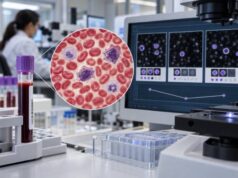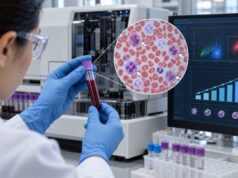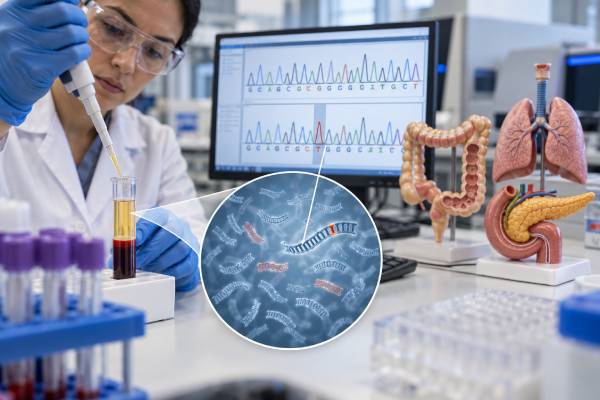
A KRAS liquid biopsy is a blood test that looks for tumor-derived KRAS mutations in circulating tumor DNA (ctDNA). It can help characterize some advanced cancers when tumor tissue is unavailable, difficult to obtain, or no longer reflects the cancer’s current biology. KRAS results are especially important in colorectal cancer, non-small cell lung cancer, and pancreatic ductal adenocarcinoma because the mutation can affect treatment options, prognosis, or clinical-trial eligibility. The test is not a general cancer screening test, and a negative blood result does not prove that a tumor lacks a KRAS mutation. Some cancers release very little DNA into the bloodstream, particularly when disease volume is low or confined to certain sites. For that reason, clinicians often interpret plasma KRAS testing alongside tissue testing, imaging, treatment history, and the rest of a molecular profile rather than as a stand-alone answer.
- A positive KRAS liquid biopsy means a KRAS alteration was detected in plasma DNA; the exact variant, such as G12C, G12D, G12V, or G12R, matters for treatment interpretation.
- A negative result can be falsely reassuring when ctDNA shedding is low, so tissue testing may still be needed if the result does not explain the cancer or would change therapy.
- No fasting is usually required; the main practical issue is collecting and processing blood in a way that preserves cell-free DNA.
- Variant allele frequency is not the same as tumor percentage or cancer stage; it is the fraction of analyzed DNA molecules carrying a particular alteration.
- KRAS blood testing is most useful for molecular profiling and treatment planning in known cancer, not for diagnosing cancer in otherwise healthy people.
Table of Contents
- What a KRAS Liquid Biopsy Measures
- How the Test Is Performed
- KRAS Results in Colorectal Cancer
- KRAS Results in Lung Cancer
- KRAS Results in Pancreatic Cancer
- How to Interpret Positive and Negative Results
- Limitations, Follow-Up, and Questions to Ask
What a KRAS Liquid Biopsy Measures
A KRAS liquid biopsy looks for specific changes in the KRAS gene within cell-free DNA circulating in plasma. Everyone has cell-free DNA in the bloodstream because normal cells release small DNA fragments as they turn over. In a person with cancer, a portion of that DNA may come from tumor cells. That tumor-derived portion is called circulating tumor DNA, or ctDNA.
KRAS is an oncogene involved in cellular growth signaling. Certain activating mutations can keep the KRAS protein switched on, promoting cancer-cell growth. A blood assay may test only a small set of common KRAS hotspots, or KRAS may be one gene inside a broad ctDNA mutation panel that examines many cancer-related genes at once.
The exact KRAS variant matters. Common examples include:
- G12C, in which glycine at position 12 is replaced by cysteine
- G12D, glycine replaced by aspartic acid
- G12V, glycine replaced by valine
- G12R, glycine replaced by arginine
- Other alterations at codons 12, 13, 61, and less commonly other positions
A report may also provide a variant allele frequency (VAF) or mutant allele fraction. For example, a VAF of 1% means roughly 1% of DNA molecules covering that location carried the reported variant in that specimen. It does not mean that 1% of the body contains cancer, that 1% of tumor cells are abnormal, or that the cancer is stage I.
KRAS liquid biopsy is one application of a broader circulating tumor DNA test. Depending on the clinical situation, ctDNA testing can help with treatment selection, identify resistance mechanisms, provide a current molecular snapshot when old tissue is outdated, or support research into disease monitoring. The value of KRAS testing therefore depends not just on whether a mutation is present, but on why the test was ordered and what decision it is supposed to inform.
How the Test Is Performed
Most KRAS liquid biopsy testing starts with a routine venous blood draw. The laboratory separates plasma from blood cells and extracts cell-free DNA. It then analyzes the DNA using a method suited to the clinical question.
Two broad approaches are common:
| Method | Typical strength | Typical limitation |
|---|---|---|
| Digital PCR or BEAMing | Very sensitive detection of predefined hotspot mutations | Only detects alterations specifically built into the assay |
| Next-generation sequencing (NGS) | Can survey KRAS together with many other genes and alteration types | Performance varies by panel, DNA input, tumor fraction, and alteration class |
A focused digital assay can be useful when the question is narrow, such as whether a known RAS mutation is present at a very low level. The OncoBEAM approach, for example, uses BEAMing digital PCR to detect predefined mutations. Broader NGS is more useful when clinicians need a fuller profile that may include KRAS plus genes such as EGFR, BRAF, ERBB2, MET, ALK, or others relevant to the cancer type.
No special diet or fasting is normally needed. More important factors include the timing of the sample, blood-tube type, transport conditions, prompt plasma preparation, and whether the patient has enough tumor DNA circulating for the assay to detect. Testing immediately after a major treatment change may answer a different question from testing at clear radiographic progression.
The report turnaround time varies by laboratory and platform. Targeted PCR tests may be relatively fast, while broad NGS panels often take several days to roughly two weeks. A faster blood test can be clinically valuable when waiting for tissue acquisition or tissue sequencing would delay a treatment decision.
KRAS Results in Colorectal Cancer
In metastatic colorectal cancer, KRAS and NRAS status is central to treatment planning because activating RAS mutations predict lack of benefit from anti-EGFR antibodies such as cetuximab or panitumumab when those drugs are used in settings that require RAS wild-type disease. Modern RAS testing therefore extends beyond the classic KRAS codon 12 and 13 mutations and typically evaluates clinically relevant regions of both KRAS and NRAS.
Plasma testing can be useful when adequate tumor tissue is unavailable or when clinicians want a current view of tumor evolution. Blood can sample DNA released from multiple metastatic sites, whereas a tissue biopsy represents one sampled lesion at one point in time. That can matter after several lines of therapy because resistant subclones may emerge or disappear.
One important use is assessment around anti-EGFR therapy. A patient whose original tumor was RAS wild type may develop RAS-mutant resistant clones during cetuximab or panitumumab treatment. After anti-EGFR therapy stops, those resistant clones can sometimes decline below detection. This is one reason serial plasma RAS testing is being studied and used in selected settings to help identify patients who may be candidates for an anti-EGFR rechallenge strategy.
KRAS G12C has also become a therapeutically relevant subtype in colorectal cancer. However, treatment strategies differ from those in lung cancer because colorectal tumors often reactivate upstream EGFR signaling. Combination approaches pairing a KRAS G12C inhibitor with EGFR blockade have therefore become clinically important for eligible patients. The exact drug combination, treatment line, and regulatory indication can change, so a KRAS G12C result should be matched to current oncology guidance rather than interpreted as a simple “targetable” label.
A negative plasma RAS result does not automatically establish RAS-wild-type status if the sample contains little or no detectable tumor DNA. Low-shedding disease, limited tumor burden, recent therapy, or metastases in sites that release less ctDNA can reduce sensitivity. When a negative result would open the door to anti-EGFR treatment, clinicians may need tissue confirmation or another way to show that the plasma specimen was informative.
KRAS Results in Lung Cancer
KRAS is one of the most common oncogenic drivers in lung adenocarcinoma, and KRAS G12C is the most clinically established targetable KRAS subtype in non-small cell lung cancer (NSCLC). Broad plasma NGS can identify KRAS G12C as well as co-mutations that may affect prognosis, trial eligibility, or treatment strategy.
For a person with advanced NSCLC, liquid biopsy can be especially useful when tissue is scant, biopsy is unsafe, or rapid molecular results are needed. It can also complement tissue because not every alteration appears in both specimens. Plasma may detect a clone shed by a metastatic site that was not represented in the sampled biopsy.
A positive KRAS G12C result in a person with established NSCLC can be clinically actionable, but the treatment decision still depends on factors such as disease stage, prior therapy, performance status, coexisting genomic findings, and the current approved indications for KRAS inhibitors. Other KRAS variants such as G12D or G12V do not automatically have the same standard targeted options as G12C, although drug development is rapidly expanding.
A negative blood test needs more caution. Systematic reviews of liquid biopsy in NSCLC consistently find high specificity but less-than-perfect sensitivity. In practical terms, when a clinically important mutation is found in plasma, it is often trustworthy; when no mutation is found, the blood may simply have contained too little ctDNA. Tissue-based genotyping remains important after a non-informative plasma result when tissue can be obtained safely.
The same principle applies to broad panels. “No actionable alterations detected” is not equivalent to “the tumor has no actionable alterations” unless the laboratory and clinical context support adequate tumor DNA shedding. Reviewing the ctDNA fraction, maximum VAF, and other quality indicators can help clinicians judge how informative a negative specimen really was.
KRAS Results in Pancreatic Cancer
KRAS mutations are present in the large majority of pancreatic ductal adenocarcinomas, most often at codon 12. G12D, G12V, and G12R are common, while G12C is much less frequent. This makes KRAS biologically central to pancreatic cancer, but the clinical role of plasma KRAS testing differs from its role in metastatic colorectal or lung cancer.
In advanced pancreatic cancer, ctDNA testing may help when tissue is insufficient for comprehensive molecular profiling or when a blood-based panel can speed the search for actionable alterations. A positive KRAS result can support the molecular picture of the known cancer, and serial levels are being studied as markers of tumor burden, response, and prognosis.
However, KRAS ctDNA is not sensitive enough to rule out pancreatic cancer, especially in localized or resectable disease. In one 2024 study using digital PCR, KRAS mutations were detected in plasma far more often in metastatic disease than in resectable disease. This reflects a basic limitation of liquid biopsy: smaller tumors often release less ctDNA into the bloodstream.
For diagnosis, pancreatic imaging, endoscopic evaluation, pathology, and tissue or cytology remain essential. Blood KRAS testing should not replace evaluation of a suspicious pancreatic mass. It also should not be confused with the conventional blood tumor marker CA 19-9; the two tests measure completely different biological signals and have different limitations.
KRAS-directed therapy in pancreatic cancer is evolving. Some rare KRAS subtypes may provide access to approved targeted therapy in selected contexts or to clinical trials, while common variants such as G12D are active areas of drug development. A broad molecular profile may therefore be more useful than a KRAS-only test because pancreatic cancers can also carry less common but potentially actionable findings in genes or pathways such as BRCA1, BRCA2, PALB2, NTRK, BRAF, HER2, or mismatch-repair genes.
How to Interpret Positive and Negative Results
The safest way to read a KRAS liquid biopsy is to separate three questions: Was tumor DNA detected? Which KRAS variant was found? Does that variant change management in this cancer type?
Positive KRAS result
A positive result means the laboratory detected a KRAS alteration in circulating DNA above its reporting threshold. In a patient with known cancer, a pathogenic KRAS mutation is often tumor-derived. The report should identify the exact variant and may provide VAF.
The next step is not simply “KRAS positive.” Clinicians ask whether that specific alteration predicts sensitivity, resistance, or no established treatment implication for the specific tumor. KRAS G12C in NSCLC, for example, has different therapeutic implications from KRAS G12D in pancreatic cancer or any activating RAS mutation in the context of anti-EGFR therapy for colorectal cancer.
A rising VAF on serial tests may sometimes reflect increasing tumor DNA burden, while falling or cleared ctDNA may accompany response. But VAF is affected by total cell-free DNA, disease location, assay design, treatment timing, and biological shedding. It should not be used as a universal replacement for imaging.
Negative KRAS result
A negative result means the assay did not detect a reportable KRAS alteration in that plasma sample. It can have several explanations:
- The tumor is truly KRAS wild type.
- The tumor has a KRAS mutation that the assay does not cover.
- The tumor is shedding too little ctDNA into plasma.
- Treatment recently reduced ctDNA below the test’s detection threshold.
- The cancer is located mainly in a low-shedding compartment.
- Sample quality or DNA quantity limited detection.
This distinction is why guidelines generally advise considering tissue-based testing after a non-informative plasma result when an actionable alteration is still clinically suspected. The same logic applies to liquid biopsy testing more broadly: a positive molecular finding can be highly useful, but a negative result needs context.
Unexpected result
Sometimes plasma identifies a mutation that was not found in old tumor tissue. That can reflect true tumor evolution or spatial heterogeneity. Less commonly, a blood-cell clone rather than the cancer may contribute a variant to plasma. This phenomenon, called clonal hematopoiesis, becomes more common with age and after some cancer therapies. Sophisticated assays may use paired white-blood-cell sequencing or bioinformatic filtering to reduce this source of false-positive interpretation.
Limitations, Follow-Up, and Questions to Ask
KRAS liquid biopsy is most useful when it answers a defined clinical question. It is less useful when ordered without a plan for how positive, negative, or uncertain results will change care.
Important limitations include variable ctDNA shedding, differences in assay sensitivity, limited hotspot coverage on some PCR tests, and the possibility that broad NGS finds variants of uncertain significance. A blood assay also cannot provide tumor architecture, cell type, grade, or the histologic information obtained from tissue.
Timing can affect interpretation. For baseline molecular profiling, blood is often collected before a new systemic therapy starts. At progression, a fresh plasma sample may reveal acquired resistance mechanisms that were absent from the original biopsy. This is the setting in which a liquid biopsy resistance mutation test can be especially informative.
Useful questions to ask the oncology team include:
- Was enough ctDNA present for a negative result to be considered informative?
- Does the assay cover the full KRAS region needed for this cancer, or only selected hotspots?
- Were NRAS and other treatment-relevant genes tested at the same time?
- Does the exact KRAS variant change a standard treatment option now?
- Would tissue testing add information if the plasma result is negative or unexpected?
- Is the reported VAF being used only as a molecular measurement, or is there validated evidence for using serial change in this particular clinical setting?
- Would the result qualify the patient for a clinical trial?
The key point is that KRAS is not a single yes-or-no biomarker. The variant, cancer type, treatment history, assay design, and amount of ctDNA in the sample all shape what the result means. When those pieces are considered together, a KRAS liquid biopsy can provide valuable molecular information without requiring another invasive biopsy.
References
- ESMO recommendations on the use of circulating tumour DNA assays for patients with cancer: a report from the ESMO Precision Medicine Working Group 2022 (Guideline)
- Clinical application of circulating tumour DNA in colorectal cancer 2023 (Review)
- Efficacy of liquid biopsy for genetic mutations determination in non-small cell lung cancer: a systematic review on literatures 2025 (Systematic Review)
- KRAS mutation detection by liquid biopsy for pancreatic ductal adenocarcinoma 2025 (Review)
- Application of plasma circulating KRAS mutations as a predictive biomarker for targeted treatment of pancreatic cancer 2024
- Clinical utility of comprehensive circulating tumor DNA genotyping compared with standard of care tissue testing in patients with newly diagnosed metastatic colorectal cancer 2022
Disclaimer
KRAS liquid biopsy results should be interpreted by an oncology team in the context of the confirmed cancer type, tissue findings, treatment history, imaging, and the specific assay used. A negative plasma result does not exclude a KRAS mutation or cancer, and treatment should not be started, stopped, or changed based on this article alone.