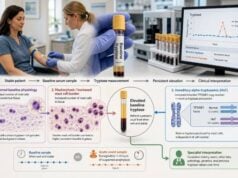
A leukotriene E4 urine test measures the stable end product of cysteinyl leukotriene production. These inflammatory chemicals are released by mast cells, eosinophils, basophils, macrophages, and other cells during allergic and inflammatory responses. The test is most often used as one part of an evaluation for mast cell activation, systemic mastocytosis, aspirin-exacerbated respiratory disease, or certain asthma patterns. It may be collected over 24 hours or from a random urine sample obtained near a symptom flare. An elevated result can show increased leukotriene activity, but it is not specific to one disease and cannot diagnose mast cell activation syndrome on its own. A normal result also does not rule out episodic mediator release, especially when collection occurs after symptoms have passed. Interpretation depends on the laboratory method, creatinine adjustment, collection timing, medicines, symptoms, and results of other tests such as serum tryptase and urinary histamine or prostaglandin metabolites.
- Urinary leukotriene E4 reflects total cysteinyl leukotriene production and is more stable than leukotrienes C4 and D4.
- Many laboratories use a reference limit near 104 pg/mg creatinine, but the range on the actual report controls interpretation.
- An elevated value supports increased inflammatory mediator production, not a stand-alone diagnosis of mast cell activation syndrome.
- A random sample is often most informative within several hours of a flare, while a 24-hour collection can capture production across a full day.
- Asthma, aspirin-exacerbated respiratory disease, allergic reactions, eosinophilic inflammation, and mast cell disorders can all raise urinary LTE4.
- Severe breathing trouble, throat swelling, faintness, or rapidly worsening multisystem symptoms require emergency treatment rather than waiting for urine results.
Table of Contents
- What Urinary Leukotriene E4 Shows
- Why the Test Is Ordered
- Collection, Timing, and Preparation
- Interpreting High, Normal, and Changing Results
- Its Role in Mast Cell Activation Evaluation
- Asthma, AERD, and Other Causes of Elevation
- Medicines and Other Factors That Affect the Result
- Next Steps After Testing
What Urinary Leukotriene E4 Shows
Leukotrienes are lipid signaling molecules made from arachidonic acid through the 5-lipoxygenase pathway. Three related compounds—leukotriene C4, D4, and E4—are called cysteinyl leukotrienes. They tighten airway smooth muscle, increase mucus, promote swelling, and attract or activate inflammatory cells. Leukotriene C4 and D4 are short-lived. The body converts them to leukotriene E4, a more stable end product that is excreted in urine.
Because LTE4 is stable enough to measure, urine testing provides an indirect record of cysteinyl leukotriene production. Modern laboratories commonly use liquid chromatography–tandem mass spectrometry, or LC-MS/MS. This method separates LTE4 from other molecules and measures it at very low concentrations.
Random urine results are usually divided by urine creatinine and reported as picograms of LTE4 per milligram of creatinine, or pg/mg creatinine. Creatinine adjustment helps correct for a very dilute or concentrated sample. Twenty-four-hour reports may also include total volume, collection time, and creatinine values, although laboratories differ in exactly how they express the result.
LTE4 is sometimes described as a “mast cell mediator,” but mast cells are not its only source. Eosinophils, basophils, macrophages, and interactions involving platelets and leukocytes can contribute. For that reason, a high value means the cysteinyl leukotriene pathway is active; it does not reveal which cell type produced the signal or why.
The test also differs from direct allergy testing. It does not identify a specific allergen and does not measure IgE. A person may have elevated LTE4 during a non-IgE inflammatory episode, while another person with a proven food allergy may have a normal sample when tested between reactions. It is best understood as a pathway marker rather than an allergy trigger test.
Why the Test Is Ordered
Clinicians order urinary LTE4 when symptoms suggest episodic release of inflammatory mediators or when they need more information about leukotriene-driven disease. It is often included with other urine and blood tests rather than ordered alone.
Common reasons include:
- recurrent flushing, hives, swelling, abdominal cramping, diarrhea, wheezing, rapid heart rate, dizziness, or faintness affecting more than one organ system;
- suspected mast cell activation syndrome, especially when baseline tryptase is normal or acute tryptase samples were missed;
- known or suspected systemic mastocytosis;
- unexplained anaphylaxis or repeated severe allergic-type episodes;
- asthma that is difficult to control or has prominent eosinophilic features;
- suspected aspirin-exacerbated respiratory disease, also called AERD or NSAID-exacerbated respiratory disease;
- evaluation of a response to medicines that affect leukotriene production or signaling;
- an effort to document mediator elevation during a characteristic flare.
Urinary LTE4 is particularly attractive because urine collection is noninvasive and the metabolite remains measurable longer than some mediators in blood. Plasma histamine, for example, changes quickly and is vulnerable to collection and handling errors. A timed urine sample can sometimes capture a biochemical signal after the most dramatic symptoms have begun to settle.
The test should still follow a defined clinical question. Vague chronic symptoms alone do not make a high or low result diagnostic. A clinician first considers the symptom pattern, timing, triggers, response to treatment, and alternative explanations. The laboratory result then either strengthens or weakens one part of that assessment.
A broad mast cell activation test panel may include LTE4, tryptase, N-methylhistamine, and a prostaglandin D2 metabolite. The markers reflect different pathways, so one may rise while another remains normal. More tests are not automatically better, however. Collection quality and timing matter more than ordering every available assay without a clear plan.
Collection, Timing, and Preparation
The most useful sample is collected according to the performing laboratory’s exact instructions. Requirements vary by test platform, and errors in timing, storage, or preservatives can make a result less reliable.
Random urine collection
A random or spot sample is often preferred for episodic symptoms. Many specialists try to collect it within about three to six hours after a flare begins, when feasible. The patient urinates into a clean container supplied or approved by the laboratory. The result is usually normalized to creatinine.
A random sample is practical because it can be collected soon after flushing, hives, wheezing, abdominal symptoms, or another typical episode. Its weakness is that a brief surge may be missed, especially if the sample is delayed or the flare does not involve strong leukotriene production.
Twenty-four-hour urine collection
A 24-hour collection measures excretion across a full day. A typical process is:
- On the starting morning, empty the bladder and discard that first urine. Record the time.
- Collect every urine passed after that point for the next 24 hours.
- Include the final urine at the same time the following morning.
- Keep the container refrigerated or otherwise stored exactly as instructed.
- Record the total collection interval and return the complete container or required aliquot.
Missing one void, collecting for the wrong duration, or failing to keep the specimen at the required temperature can distort the result. Do not add a preservative unless the laboratory specifically provides or requests it.
Some laboratories prefer a 24-hour specimen started within a few hours of symptom onset. Others recommend a random sample for a short flare and a 24-hour sample for broader assessment. The ordering clinician should specify which question the chosen format is meant to answer.
Preparation before collection
Fasting is usually unnecessary. Normal fluid intake is generally appropriate; drinking excessive water to “make enough urine” can create a very dilute sample. Record the time of symptoms, foods, medicines, exercise, alcohol, infections, and known exposures around the collection.
Do not stop prescription or over-the-counter medicines on your own. Leukotriene modifiers, corticosteroids, aspirin, other nonsteroidal anti-inflammatory drugs, and some treatments for mast cell symptoms may alter the pathway or the clinical episode. The clinician and laboratory must decide whether medicine should continue, be held safely, or simply be documented.
Interpreting High, Normal, and Changing Results
An elevated urinary LTE4 result shows increased cysteinyl leukotriene production during the collection period. It does not name a disease. A normal result means the sample did not show excess production by that laboratory’s method and cutoff; it does not exclude a disorder that is intermittent or driven mainly by different mediators.
A commonly used adult reference limit for creatinine-adjusted testing is 104 pg/mg creatinine or less. This value comes from a specific validated LC-MS/MS method and appears in several laboratory catalogs. Other laboratories may use a different assay, unit, age range, or reference population. Results from separate laboratories therefore should not be compared as though they were produced by the same scale.
| Pattern | Possible meaning | Main caution |
|---|---|---|
| Within the laboratory reference range | No measurable excess during that collection | May miss episodic release or a non-leukotriene pathway |
| Mildly elevated once | Recent inflammation, asthma activity, allergy, medicine effect, or mast cell activation is possible | Nonspecific; needs clinical context and often repeat comparison |
| Clearly elevated during typical symptoms | Supports active cysteinyl leukotriene production during the event | Still does not identify the source or establish MCAS alone |
| Higher during a flare than at baseline | A dynamic rise may strengthen evidence of mediator release | Samples must use comparable methods, units, and collection conditions |
| Persistently elevated between episodes | Ongoing airway, eosinophilic, mast cell, or other inflammatory activity may be present | Requires evaluation for competing causes |
A spot value and a 24-hour value answer related but different questions. A spot sample provides a snapshot and may show a sharp event-related increase, especially when collected promptly. A 24-hour specimen averages excretion across periods of activity and quiet, so a brief peak can be diluted by many symptom-free hours. Conversely, a full-day collection can reveal sustained production that one random sample misses. The two formats also use different reporting conventions, so their numbers should not be placed side by side without checking units and creatinine correction. When follow-up testing is planned, using the same specimen type, laboratory, collection window, storage method, and medication conditions makes the trend more meaningful. A change caused by switching methods is not evidence that the disease improved or worsened, and should not drive treatment without clinical confirmation.
The relationship between an acute value and the patient’s own baseline may be more informative than a single isolated number. Recent reviews describe comparing a symptom-period sample with a stable baseline, although unlike serum tryptase, LTE4 does not have one universally accepted event-related formula used across all laboratories and diagnostic criteria.
The magnitude of elevation does not translate directly into symptom severity. A person can have severe symptoms with a modest biochemical rise, and another can have a high value without an emergency. Sample timing, metabolism, kidney handling, disease phenotype, and treatment all influence the number.
Creatinine deserves attention. Very low urine creatinine may signal a dilute sample and can complicate the ratio. Kidney function, muscle mass, age, and collection completeness also affect creatinine. The laboratory’s comments and the clinician’s review help determine whether the specimen is technically adequate.
Its Role in Mast Cell Activation Evaluation
Urinary LTE4 can support evidence of mast cell mediator release, but accepted evaluation of mast cell activation syndrome is broader. Clinicians look for recurrent, acute symptoms consistent with systemic mast cell activation, objective mediator elevation associated with episodes, and a meaningful response to treatments that block mast cell mediators or their effects. Other diseases that explain the symptoms must also be considered.
Serum tryptase remains the best-established marker for a severe systemic episode. An acute sample is ideally compared with a baseline sample obtained after recovery. The event-related threshold often used is a rise greater than the baseline multiplied by 1.2, plus 2 ng/mL. A tryptase blood test can be normal in some genuine reactions, especially when the episode is less severe, the sample is late, or the mediator pattern is not tryptase-dominant.
Urine markers add complementary information:
- N-methylhistamine reflects histamine metabolism over a longer period than plasma histamine.
- 2,3-dinor-11β-prostaglandin F2α reflects prostaglandin D2 production.
- LTE4 reflects the cysteinyl leukotriene pathway.
An N-methylhistamine urine test and urinary prostaglandin metabolite may rise in a different pattern from LTE4. A person does not need every marker to be elevated during every episode. At the same time, one abnormal urine marker without compatible systemic symptoms is insufficient for MCAS.
Mast cell activation can be primary, secondary, or idiopathic. Primary disorders involve clonal mast cells, as in systemic mastocytosis or monoclonal mast cell activation syndrome. Secondary activation has a recognized trigger such as IgE-mediated allergy. Idiopathic MCAS is considered only after a careful evaluation fails to identify a clonal or secondary cause.
Overdiagnosis can occur when chronic nonspecific symptoms are attributed to mast cells without event-related objective evidence. Underdiagnosis can occur when all attention is placed on baseline tryptase and no properly timed event samples are collected. A prearranged testing plan can prevent both problems: know which laboratory will run the tests, keep containers available if advised, and collect during a representative episode without delaying emergency care.
Asthma, AERD, and Other Causes of Elevation
Urinary LTE4 is strongly linked to airway inflammation. It can rise during asthma exacerbations and is often higher in eosinophilic or type 2 asthma. In research and selected clinical settings, it may help describe an inflammatory phenotype, but it is not a routine stand-alone asthma diagnostic test.
AERD is a condition defined by asthma, chronic rhinosinusitis with nasal polyps, and respiratory reactions to aspirin or other cyclooxygenase-1–inhibiting NSAIDs. People with AERD often produce excess cysteinyl leukotrienes at baseline, with a further rise after aspirin exposure. Urinary LTE4 can support the evaluation, but a high value does not prove AERD. Clinical history and, when necessary, a medically supervised aspirin challenge establish the diagnosis.
Do not attempt an aspirin challenge at home. Reactions can involve severe bronchospasm, nasal symptoms, skin symptoms, or systemic effects. Challenge testing requires an experienced setting with respiratory monitoring and rescue treatment.
Other reasons for elevated LTE4 include:
- an acute IgE-mediated allergic reaction;
- active allergic rhinitis with lower-airway involvement;
- eosinophilic inflammation;
- systemic mastocytosis or another mast cell disorder;
- respiratory infection or an asthma flare;
- exposure to an NSAID in a susceptible person;
- smoking or other airway irritants in some contexts;
- differences in medicine use and disease control.
LTE4 is therefore a good example of a sensitive pathway clue with limited disease specificity. It becomes useful when paired with a precise symptom pattern. For instance, a rise during flushing, wheezing, diarrhea, and near-fainting has a different meaning from the same number during an isolated viral asthma exacerbation.
Medicines and Other Factors That Affect the Result
Medicines that act on the leukotriene pathway can change symptoms, LTE4 production, or both. Their effects are not interchangeable.
5-lipoxygenase inhibitors, such as zileuton, reduce leukotriene synthesis and can lower urinary LTE4. Leukotriene receptor antagonists, such as montelukast or zafirlukast, block a receptor rather than directly stopping production. Urinary LTE4 may remain measurable and can sometimes change in complex ways despite clinical benefit.
Aspirin and other NSAIDs can provoke a large leukotriene response in AERD. Outside that condition, their effect depends on the person and clinical setting. Corticosteroids, biologic medicines for asthma, antihistamines, mast cell–directed treatments, and acute rescue medicines may also influence the episode or related pathways.
Diet is less clearly standardized than medication. Laboratories may give specific instructions about foods, supplements, alcohol, caffeine, or smoking. Follow the performing laboratory’s directions rather than using a generic internet restriction list. Unnecessary diet changes can create a sample that does not reflect ordinary life and may not improve accuracy.
Other variables include:
- collecting too late after symptoms;
- incomplete 24-hour collection;
- incorrect storage temperature;
- using the wrong container or preservative;
- extreme fluid intake;
- vigorous exercise near the event;
- an acute infection;
- uncontrolled asthma or allergic disease;
- kidney function and unusual urine creatinine values;
- comparing results from different assay platforms.
Keeping a brief event log can make a borderline result far easier to interpret. Record the symptom start, sample time, medicines taken before and after symptoms, suspected trigger, and whether the day was typical. The numerical result without this timeline loses much of its clinical value.
Next Steps After Testing
A normal result may end the evaluation when the clinical suspicion is low. When the history is strong, the clinician may compare it with baseline testing, repeat a better-timed sample, or examine other mediator pathways. Repetition should have a purpose; collecting many random samples without documenting symptoms can produce more confusion than clarity.
After an elevated result, the next steps usually include:
- Confirming the unit, specimen type, reference interval, and adequacy of collection.
- Matching the sample time to the symptom episode.
- Reviewing asthma, nasal polyps, allergies, NSAID reactions, infections, and eosinophilic disease.
- Reviewing medicines that alter leukotriene synthesis or signaling.
- Comparing LTE4 with tryptase, histamine metabolites, prostaglandin metabolites, and relevant blood counts.
- Deciding whether allergy, pulmonary, hematology, or mast cell specialist evaluation is appropriate.
An elevated value does not automatically justify aggressive treatment. Therapy targets the diagnosed condition and the person’s symptom pattern. Leukotriene modifiers may help some patients with asthma, AERD, or mediator symptoms, but they have risks and do not prove the cause simply because symptoms improve. Montelukast, for example, carries an important warning about possible neuropsychiatric effects and should be used through shared clinical decision-making.
Emergency planning comes before perfect testing. Anyone with previous anaphylaxis or rapidly progressive multisystem reactions should discuss epinephrine, trigger avoidance, and a written action plan. A urine container should never delay epinephrine, emergency services, breathing support, or other acute treatment.
Questions worth asking include: Was my sample collected close enough to symptoms? Is the value adjusted for creatinine? Could asthma or an NSAID reaction explain it? What was my baseline? Which additional marker would answer a specific unresolved question? How will the result change treatment? These questions keep the test in its proper role—as supporting evidence within a complete clinical evaluation.
References
- Biomarkers in the diagnosis of mast cell activation 2024 (Review)
- Diagnosis and management of mast cell activation syndrome: a practical approach 2025 (Review)
- Mast cell activation syndrome: Current understanding and research needs 2024 (Review)
- Using the Right Criteria for MCAS 2024 (Review)
- Secretory and Membrane-Associated Biomarkers of Mast Cell Activation and Their Role in Clinical Practice 2023 (Review)
- TLTE4 – Overview: Leukotriene E4, 24 Hour, Urine 2026
Disclaimer
This article is for general education and does not diagnose mast cell activation, asthma, AERD, or another inflammatory disorder. Urinary LTE4 results should be interpreted by a qualified clinician using the laboratory’s own reference range, collection details, symptoms, and other tests. Seek emergency care for breathing difficulty, throat swelling, faintness, or rapidly worsening symptoms.