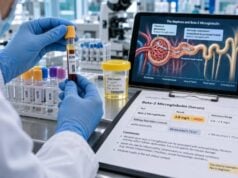
Neutrophil gelatinase-associated lipocalin (NGAL), also called lipocalin-2, is a small protein that can rise rapidly in blood after kidney tubule injury. Researchers and some specialized clinical laboratories use plasma or serum NGAL to look for acute kidney injury (AKI), sometimes hours before serum creatinine clearly increases. That makes NGAL different from traditional kidney function markers: it is mainly an injury and stress biomarker, while creatinine and estimated glomerular filtration rate (eGFR) describe filtration.
NGAL is useful but not perfectly kidney-specific. Neutrophils and other tissues can release it during infection, inflammation, cardiovascular disease, cancer, and other illnesses. Chronic kidney disease (CKD) can also raise baseline blood NGAL. For these reasons, there is no single blood NGAL cutoff that diagnoses AKI in every patient. The sample type, assay, timing, clinical setting, and presence of inflammation all affect interpretation. An NGAL result is most meaningful when it is considered alongside creatinine trends, urine output, eGFR, urinalysis, medications, and the person’s overall condition.
- Blood NGAL is an early kidney-injury biomarker: it may rise within hours of tubular injury, before creatinine reaches a diagnostic threshold.
- High NGAL does not automatically mean AKI: infection, systemic inflammation, CKD, heart disease, and other conditions can also increase blood levels.
- There is no universal “normal” or AKI cutoff: published thresholds vary by serum versus plasma, assay platform, patient group, and sampling time.
- NGAL complements rather than replaces creatinine, eGFR, and urine output, which remain central to routine AKI diagnosis and kidney monitoring.
- Urgent symptoms matter more than a biomarker number: sharply reduced urine, worsening swelling, breathlessness, confusion, fainting, or severe weakness require prompt medical assessment.
Table of Contents
- What the NGAL Blood Test Measures
- Why NGAL May Be Tested
- NGAL Ranges and What Results Mean
- Causes of High Blood NGAL
- NGAL Compared With Other Kidney Tests
- Sample Timing, Preparation, and Limitations
- What Happens After an Abnormal NGAL Result
What the NGAL Blood Test Measures
NGAL is a roughly 25-kDa protein involved in iron transport and innate immune defense. It is produced by several cell types, including neutrophils, and its production can increase sharply in stressed or injured kidney tubules. In the kidney, NGAL is associated especially with tubular injury and regeneration after ischemic, toxic, inflammatory, or septic insults.
A blood NGAL test measures NGAL circulating in serum or plasma. Those two specimen types are not always interchangeable because assay methods can behave differently. Laboratories may report NGAL in ng/mL, ng/L, or another concentration unit, so the unit must always be checked before comparing values.
The key concept is that NGAL and creatinine answer different questions. A creatinine blood test reflects the balance between creatinine production and kidney filtration. NGAL can rise because kidney cells are stressed or injured, even before filtration has fallen enough to make creatinine increase substantially.
This injury-versus-function distinction helps explain why NGAL is attractive in AKI. If an injury occurs at 8 a.m., a structural stress marker may change well before enough creatinine has accumulated in the blood to cross a diagnostic threshold. However, NGAL is also produced outside the kidney, so an early rise is not automatically proof of kidney-specific damage.
Blood NGAL also differs from urine NGAL. Plasma or serum NGAL is influenced by kidney production, extra-kidney production, inflammation, and reduced renal clearance. Urine NGAL reflects urinary excretion and kidney tubular production more directly but can still be affected by urinary inflammation. The two tests can provide related but not identical information.
Why NGAL May Be Tested
The main reason to measure NGAL is to identify kidney stress or injury earlier than traditional functional markers may allow. It is most often used in research, specialized hospital settings, and selected clinical pathways rather than routine annual kidney screening.
Situations in which NGAL has been studied include:
- after cardiac or major noncardiac surgery;
- in intensive care patients with sepsis or shock;
- after contrast exposure or other potential nephrotoxins;
- during treatment with medicines that can injure kidney tubules;
- in emergency departments when AKI is suspected;
- after kidney transplantation;
- in people with CKD who are being studied for progression or complications;
- when estimating the risk of severe AKI or dialysis.
The strongest clinical interest is in acute kidney injury. AKI can develop quickly, and a delay in recognizing the cause may allow dehydration, low blood pressure, infection, medication toxicity, or obstruction to continue. A broader AKI blood test panel is still needed because NGAL does not show potassium, bicarbonate, urea, or other complications that can determine treatment urgency.
Research also suggests that higher NGAL concentrations can help identify patients at greater risk of severe AKI or kidney replacement therapy. The predictive accuracy is moderate rather than perfect, and performance changes by population. A cutoff developed after cardiac surgery, for example, may not work equally well in sepsis or CKD.
For stable outpatients, NGAL is generally not a substitute for established screening with eGFR and urine albumin. Those tests are better standardized and directly tied to current CKD classification.
NGAL Ranges and What Results Mean
There is no universal blood NGAL reference range or diagnostic cutoff that applies to every laboratory. The correct comparison is the reference interval or decision threshold supplied with the specific assay, together with the clinical context in which it was validated.
Published studies have used very different thresholds. In one large meta-analysis of clinical laboratory platforms, plasma NGAL concentrations above roughly 364 ng/mL corresponded to high specificity for severe AKI, while other studies have used lower or higher decision points. That number should not be treated as a general diagnostic cutoff because the optimal threshold changes with assay, timing, patient population, and the outcome being predicted.
| Pattern | Possible meaning | Important caution |
|---|---|---|
| Low or within the assay’s expected range | No strong NGAL signal of acute tubular stress at that sampling time | Does not exclude every type or stage of kidney disease |
| Mildly elevated | Possible kidney stress, CKD-related elevation, inflammation, or another non-kidney source | Requires comparison with creatinine, eGFR, urine output, infection markers, and baseline NGAL if known |
| Markedly elevated | Greater likelihood of significant tubular injury or severe systemic illness, depending on context | Still not specific for one diagnosis |
| Rapidly rising | Potentially evolving injury or increasing inflammation | Serial samples should ideally use the same assay and specimen type |
| Falling | May indicate resolving tubular stress or clinical recovery | Improvement should also be confirmed with kidney function and clinical findings |
A useful way to read the test is as a pattern, not an isolated number. Consider a hospitalized patient whose creatinine is still near baseline but whose blood NGAL rises sharply after prolonged low blood pressure. That pattern may increase concern for early tubular injury and justify closer monitoring. By contrast, a person with advanced CKD may have chronically elevated NGAL without a new AKI event because reduced clearance and chronic kidney inflammation can increase baseline levels.
An eGFR result provides the filtration context. If NGAL is high while eGFR is stable, clinicians may ask whether there is new injury that has not yet changed filtration, chronic inflammation, or a non-kidney source. If NGAL and creatinine both rise while urine output falls, the combined pattern is more concerning for significant AKI.
The baseline value also matters. Suppose a patient with known CKD has plasma NGAL of 220 ng/mL on several stable outpatient visits, then develops pneumonia and the level increases to 500 ng/mL. The absolute result is less informative than the change, the infection severity, creatinine trend, and urine output. In another patient with previously normal kidney function, a new postoperative rise from a low baseline to a much higher value may carry a different level of concern even if the final number is similar. This is why the same cutoff cannot be applied mechanically across patients.
Some laboratories or research protocols also calculate a change from baseline rather than relying on one threshold. A percentage increase can reduce some of the problems created by individual baseline differences, but it still does not eliminate assay variability or non-kidney sources of NGAL. When serial testing is used, samples should ideally be collected under a consistent protocol and analyzed by the same method.
NGAL also illustrates a broader principle in biomarker medicine: a sensitive marker can be clinically valuable even when it is not highly specific. Early warning may prompt closer monitoring, medication review, or repeat testing, but the diagnosis still depends on the full pattern of evidence.
Causes of High Blood NGAL
High NGAL is not a diagnosis. It is a signal that must be explained. The main possibilities fall into kidney injury, chronic kidney dysfunction, and non-kidney inflammatory production.
Acute tubular injury and AKI
Kidney tubules can increase NGAL production after ischemia, toxins, severe infection, or other stress. AKI may follow dehydration, blood loss, low blood pressure, major surgery, sepsis, urinary obstruction, or nephrotoxic medicines. In these settings, NGAL may rise within a few hours and can precede a clear creatinine increase.
The timing is especially important. A blood sample drawn very early may capture a rising injury response, while a sample collected days later may reflect a different stage of injury or recovery. This is one reason serial trends can be more informative than one measurement.
Chronic kidney disease
People with CKD often have higher circulating NGAL than people with normal kidney function. Several mechanisms can contribute: persistent tubular stress, inflammation, reduced renal clearance, and structural kidney damage. Therefore, a patient with low baseline eGFR may need a different interpretive framework than a person with previously normal kidney function.
A CKD blood test panel helps distinguish chronic reduced filtration from a new superimposed injury. Prior creatinine values are particularly valuable when determining whether a change is acute.
Infection and systemic inflammation
NGAL is produced by activated neutrophils and other immune cells. Sepsis, severe bacterial infection, inflammatory disease, and some cancers can raise blood NGAL even when kidney injury is not the only driver. This is one of the biggest limitations of plasma and serum NGAL.
In sepsis, both mechanisms may occur at the same time: inflammation can increase extra-kidney NGAL production while the kidneys are also injured. A very high result may therefore signal severe illness without identifying how much of the concentration comes from renal versus systemic sources.
Cardiovascular and metabolic conditions
Higher NGAL concentrations have also been reported in heart failure, vascular disease, hypertension, diabetes, and obesity. These associations do not make NGAL a stand-alone diagnostic test for those conditions, but they show why interpretation requires more than a kidney-only lens.
NGAL Compared With Other Kidney Tests
NGAL is most useful when its role is contrasted with other markers rather than treated as a replacement for them.
| Test | What it mainly reflects | Typical strength | Main limitation |
|---|---|---|---|
| Blood NGAL | Tubular stress/injury plus inflammatory production | Can change early after injury | Not kidney-specific; no universal cutoff |
| Creatinine | Kidney filtration | Widely available and standardized | Can rise late and is affected by muscle mass and fluid status |
| eGFR | Estimated filtration capacity | Central for CKD staging | Not a direct structural injury marker |
| Cystatin C | Alternative filtration marker | Less dependent on muscle mass than creatinine | Can be influenced by inflammation, steroids, thyroid disease, and other factors |
| KIM-1 | Proximal tubule injury | More directly tied to tubular damage biology | Clinical thresholds are not standardized |
| Urine albumin-to-creatinine ratio | Albumin leakage and glomerular damage | Strongly validated for CKD risk | May be normal in some tubular or vascular kidney diseases |
NGAL and KIM-1 blood testing are often discussed together as emerging injury biomarkers. NGAL may be especially sensitive to acute tubular stress but is more strongly influenced by systemic inflammation. KIM-1 is more closely linked to injured proximal tubular epithelial cells, although it also lacks a single standardized clinical cutoff.
In everyday practice, a renal function panel can be more immediately actionable because it shows kidney filtration and electrolyte abnormalities. NGAL adds a different layer: it can help characterize whether structural stress may already be occurring.
Sample Timing, Preparation, and Limitations
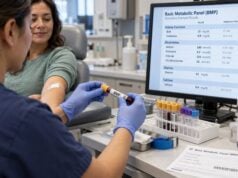
Blood NGAL requires a standard venous blood draw. Fasting is generally not required solely for NGAL, although another test ordered at the same time may require fasting or medication instructions. The laboratory should specify whether serum or plasma is needed.
Timing is central to interpretation. NGAL can rise within hours after kidney injury, may peak during an acute response, and can later decline as injury resolves. A result collected immediately after a suspected insult may not have the same meaning as one collected 12 or 24 hours later.
Important limitations include:
- Assay differences: commercial and research platforms do not all produce directly interchangeable values.
- Serum versus plasma differences: reference intervals and validated cutoffs may differ by specimen type.
- Inflammation: activated neutrophils can substantially increase circulating NGAL.
- Baseline CKD: chronic kidney dysfunction may elevate starting concentrations.
- Age and clinical setting: pediatric, surgical, ICU, transplant, and outpatient populations can have different performance characteristics.
- No single diagnostic threshold: published cutoffs optimize different goals, such as sensitivity, specificity, severe AKI, or dialysis prediction.
- AKI itself is a syndrome: NGAL cannot tell whether the cause is dehydration, sepsis, obstruction, medication toxicity, or another process.
The absence of standardization is why online cutoff tables can be misleading. A value should be interpreted against the exact platform used and the clinical question the test was intended to answer.
What Happens After an Abnormal NGAL Result
An abnormal NGAL result usually triggers contextual evaluation, not treatment of the NGAL number itself. Clinicians look for the cause of kidney stress and for complications that need immediate attention.
Depending on the setting, follow-up may include:
- repeat creatinine and eGFR testing;
- close urine-output measurement;
- potassium, bicarbonate, sodium, and urea testing;
- urinalysis and urine albumin or protein measurement;
- review of recent surgery, infection, blood pressure, fluid losses, and contrast exposure;
- review of prescription drugs, over-the-counter NSAIDs, supplements, and other possible nephrotoxins;
- kidney or bladder imaging if obstruction is possible;
- repeat NGAL when serial biomarker monitoring is part of the protocol.
The most useful question is often not “Is NGAL high?” but “Does this result fit a new kidney-injury pattern?” A new rise after a clear insult, particularly with worsening creatinine or reduced urine output, is more concerning than a stable elevation in someone with long-standing CKD and systemic inflammation.
Seek urgent medical care for little or no urine, rapidly increasing swelling, shortness of breath, chest symptoms, severe vomiting or diarrhea with dehydration, confusion, fainting, or profound weakness. Dangerous AKI can cause potassium and acid-base disturbances even before a person understands what an NGAL result means.
NGAL offers a valuable window into kidney stress, but its greatest strength is complementary use. It can potentially make early injury more visible; established tests and the clinical picture determine what that signal means and what should happen next.
References
- Neutrophil Gelatinase-Associated Lipocalin: Biological Aspects and Potential Diagnostic Use in Acute Kidney Injury 2025 (Review)
- The Review of Current Knowledge on Neutrophil Gelatinase-Associated Lipocalin (NGAL) 2023 (Review)
- Neutrophil gelatinase-associated lipocalin (NGAL) in kidney injury – A systematic review 2022 (Systematic Review)
- Neutrophil gelatinase-associated lipocalin as predictor of acute kidney injury requiring renal replacement therapy: A systematic review and meta-analysis 2022 (Systematic Review)
Disclaimer
NGAL is an evolving kidney injury biomarker and should not be used by itself to diagnose or rule out acute kidney injury. Reference ranges and decision thresholds vary by assay, specimen type, and clinical setting, and results should be interpreted by a qualified healthcare professional together with creatinine, eGFR, urine output, other laboratory tests, symptoms, and medical history. Seek urgent care for symptoms that could indicate severe kidney injury or dangerous electrolyte imbalance.