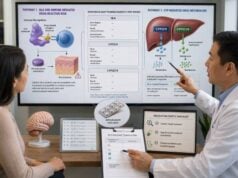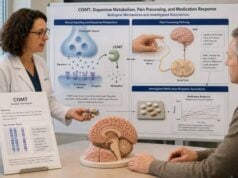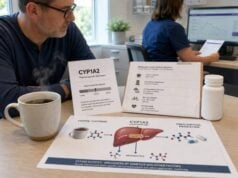
A pain medication pharmacogenetic test looks for inherited gene variants that may change how a person processes or responds to certain analgesics. The clearest clinical evidence involves CYP2D6, an enzyme that activates codeine and tramadol and contributes to the metabolism of several other opioids. A result may help explain unusually weak pain relief, excessive sleepiness, or a prior adverse reaction, but it does not identify one universally “best” pain medicine. OPRM1, COMT, CYP2C9, and other genes may appear on broader panels, yet their usefulness varies by drug and clinical setting. Results must be combined with the type and cause of pain, kidney and liver function, age, other medicines, substance-use history, and current symptoms. Testing is most helpful when a clinician uses a validated report with clear gene–drug recommendations rather than treating every reported variant as actionable.
- CYP2D6 results are most actionable for codeine and tramadol, especially in poor and ultrarapid metabolizers.
- A poor metabolizer may get little pain relief from codeine or tramadol because less active metabolite is formed.
- An ultrarapid metabolizer may form active opioid metabolites too quickly, increasing toxicity risk with codeine or tramadol.
- OPRM1 results do not currently justify a standard opioid dose change by themselves because clinical effects are inconsistent.
- No fasting or medication pause is usually required; testing commonly uses blood, saliva, or a cheek swab.
- Severe sleepiness, slow breathing, blue lips, or inability to wake requires emergency help, regardless of genotype.
Table of Contents
- What the test measures
- CYP2D6 and opioid metabolism
- OPRM1, COMT, and other genes
- Who may benefit from testing
- How testing is done
- How to read results
- Using results to choose treatment
- Limits, safety, and next steps
What the test measures
A pain medication pharmacogenetic test analyzes inherited DNA variants that can affect drug metabolism, transport, targets, or pain signaling. It is a type of pharmacogenetic testing for medication response, not a test that measures pain intensity or proves why pain is present.
The exact content depends on the laboratory. A focused test may examine CYP2D6 alone. A broader panel may include OPRM1, COMT, CYP2C9, CYP2C19, CYP3A4, CYP3A5, ABCB1, and other genes. More genes do not automatically make a panel more useful. The most important question is whether a reliable guideline connects a specific result to a specific drug choice or dose.
CYP2D6 is the main actionable gene for commonly prescribed opioid pain medicines. It converts codeine to morphine and tramadol to O-desmethyltramadol, which are more potent at the mu-opioid receptor than the parent drugs. The same enzyme converts some hydrocodone to hydromorphone and some oxycodone to oxymorphone, but those parent drugs already have analgesic activity. Evidence for changing hydrocodone or oxycodone solely from CYP2D6 status is therefore weaker.
OPRM1 encodes the mu-opioid receptor, the main target for morphine and many other opioids. COMT encodes an enzyme involved in catecholamine breakdown and may influence pain sensitivity. These genes are biologically plausible, but studies have produced variable results. A commercial report may label an OPRM1 or COMT result as “reduced response” or “higher dose requirement,” yet current clinical guidance does not support a standard dose adjustment based on either gene alone.
A test may also include non-opioid pain medicines. CYP2C9 can affect exposure to several nonsteroidal anti-inflammatory drugs, including celecoxib, flurbiprofen, meloxicam, and ibuprofen. Other genes may be relevant to antidepressants or anticonvulsants used for neuropathic pain. Those findings should be interpreted under the guideline for the actual drug rather than grouped into a general “pain tolerance” score.
Pharmacogenetic testing does not measure opioid addiction risk with enough accuracy for clinical prediction. A result cannot determine who will develop opioid use disorder, who is exaggerating pain, or who can use opioids without monitoring. Those judgments require clinical assessment and ongoing follow-up.
CYP2D6 and opioid metabolism
CYP2D6 results are usually translated from two inherited gene copies, called alleles, into an activity score and a predicted metabolizer phenotype. The report may list star alleles such as *1, *2, *4, *5, *10, *17, or *41. It may also identify gene duplications or deletions. Copy-number analysis matters because some people carry extra functional copies and may be ultrarapid metabolizers, while a complete gene deletion contributes no enzyme activity.
The usual phenotype categories are:
- Poor metabolizer: little or no CYP2D6 activity.
- Intermediate metabolizer: reduced activity.
- Normal metabolizer: activity within the expected reference range.
- Ultrarapid metabolizer: activity above the usual range, often because of extra functional gene copies.
- Indeterminate or uncertain: the laboratory cannot confidently translate the detected variants into a phenotype.
These categories describe enzyme activity, not whether a person is healthy or ill. “Poor” does not mean generally poor health, and “ultrarapid” does not mean all medicines are cleared quickly. Each drug has its own pathway.
Codeine
Codeine itself has relatively weak opioid activity. CYP2D6 converts part of the dose to morphine, which provides much of the analgesic effect. A poor metabolizer may produce too little morphine and get little pain relief even when taking codeine correctly. Raising the codeine dose is usually not a good solution because it can increase parent-drug adverse effects without reliably producing adequate morphine.
An ultrarapid metabolizer may convert codeine to morphine faster and more extensively. This can raise the risk of profound sedation and respiratory depression. The risk is especially concerning in children, after tonsil or adenoid surgery, during breastfeeding, and in anyone with sleep-disordered breathing or other respiratory vulnerability. Clinical guidance generally recommends avoiding codeine in CYP2D6 poor and ultrarapid metabolizers and choosing an analgesic that does not depend on CYP2D6 activation.
Tramadol
Tramadol has two components of action: the parent drug affects serotonin and norepinephrine signaling, while its CYP2D6-generated metabolite has stronger mu-opioid activity. Poor metabolizers may have inadequate analgesia. Ultrarapid metabolizers may generate higher active-metabolite exposure and face greater risk of serious toxicity. Guideline-based recommendations generally avoid tramadol in both groups.
Tramadol also carries risks that genotype does not remove, including seizures, respiratory depression, physical dependence, and serotonin toxicity when combined with other serotonergic medicines. A “normal metabolizer” result is not a declaration that tramadol is safe for a particular person.
Hydrocodone, oxycodone, and other opioids
CYP2D6 contributes to active metabolites of hydrocodone and oxycodone, but the evidence is less direct than for codeine and tramadol. For hydrocodone, a clinician may consider an alternative if a poor or intermediate metabolizer has inadequate pain relief despite appropriate use. For oxycodone, current evidence generally does not support a routine change based on CYP2D6 alone.
Morphine, hydromorphone, fentanyl, and several other opioids do not rely on CYP2D6 activation in the same way. That does not make them harmless or automatically preferable. Kidney function, liver function, route of administration, opioid tolerance, drug interactions, and the pain condition may be more important than the genotype.
A dedicated CYP2D6 opioid pharmacogenetic test may be easier to interpret than a large panel when the decision centers on codeine or tramadol.
OPRM1, COMT, and other genes
OPRM1 and COMT are frequently marketed as pain-response genes, but their clinical meaning needs careful restraint.
The best-known OPRM1 variant is often called A118G or rs1799971. It may alter expression or function of the mu-opioid receptor. Some studies have linked the G allele with modest differences in opioid dose requirements, pain scores, or adverse effects, while others have found no clinically useful relationship. Effects can vary by ancestry, surgical setting, opioid, dose, and study design. Current guideline evidence does not support changing an opioid prescription from OPRM1 genotype alone.
An OPRM1 genetic test result should therefore be treated as a limited-evidence finding unless a clinician is using it within a research protocol or a carefully validated local program. It should not override signs of oversedation, poor pain control, kidney disease, or drug interactions.
COMT variants, including Val158Met, may influence catecholamine metabolism and pain perception. However, pain is shaped by many genes plus injury, inflammation, sleep, mood, stress, prior treatment, and social factors. COMT results have not produced a consistent prescribing rule for routine opioid therapy. A report that predicts “high pain sensitivity” or “low pain tolerance” from one COMT variant is simplifying a complex trait beyond what the evidence supports.
Other panel genes require drug-specific interpretation:
- CYP2C9 may affect exposure to certain NSAIDs. Poor metabolizers can have higher drug concentrations and may need a lower starting dose or an alternative for selected medicines.
- CYP2C19 and CYP2D6 can guide use of some antidepressants prescribed for neuropathic pain, such as tricyclic antidepressants.
- CYP2B6 can affect methadone metabolism, but recommendations depend on the indication and evidence base.
- ABCB1 has been studied in opioid transport and response, but routine prescribing recommendations are not established.
- GCH1, KCNS1, and additional candidate genes may appear on proprietary panels without consensus clinical guidance.
The presence of a gene on a report does not mean it has equal clinical value. Actionable results should be separated from exploratory or informational results. A laboratory report is more useful when it clearly identifies the guideline, evidence level, tested variants, copy-number method, phenotype translation, and date of interpretation.
Who may benefit from testing
Testing is most likely to help when a medication decision involves a well-supported gene–drug pair and the result could change treatment. It may be reasonable before starting codeine or tramadol, after unexpected lack of benefit, or after disproportionate adverse effects. It may also be useful when a broader medication history suggests that several pharmacogenetic findings could affect current or future prescriptions.
Situations in which testing may offer practical value include:
- repeated failure of codeine or tramadol despite appropriate dosing and adherence;
- marked sedation or other toxicity at a low or standard dose;
- planned treatment in a person with a prior family history of unusual opioid reactions;
- a complex medication list in which a validated multigene result could inform several drugs;
- use in a health system that stores pharmacogenetic results in the electronic record and provides prescribing alerts;
- availability of an existing result from prior testing that can be reviewed before prescribing.
Testing is less likely to solve pain that has not been properly diagnosed. New severe pain, progressive weakness, loss of bowel or bladder control, fever, chest pain, abdominal rigidity, or pain after major trauma needs clinical evaluation rather than a genetic panel.
A result is also unlikely to explain every treatment failure. Pain medicines may not work because the dose is too low, the drug does not match the pain mechanism, the condition has progressed, adherence is difficult, absorption is impaired, or another medicine changes the drug’s metabolism. Psychological distress, poor sleep, and deconditioning can worsen pain without making it imaginary.
Testing may be ordered before treatment, called preemptive testing, or after a problem occurs, called reactive testing. Preemptive testing can be efficient when results are stored and reused, because germline DNA usually does not change. However, the interpretation can change as guidelines are updated. A report from years ago may need reinterpretation even though the DNA result remains valid.
Direct-to-consumer results deserve caution. Many consumer tests examine only a small set of variants and may miss copy-number changes, rare alleles, or ancestry-associated variants. Clinical decisions should use a qualified laboratory and, when needed, confirmatory testing. A broad pharmacogenetic panel test should be chosen for validated coverage, not the number of genes advertised.
How testing is done
Most pain pharmacogenetic tests use a blood sample, saliva sample, or cheek swab. These sample types generally provide the same inherited DNA information when collection quality is good. No fasting is usually needed. People should not stop an opioid, antidepressant, NSAID, or any other medicine merely to prepare for genetic testing.
The usual process is:
- Clinical review: The prescriber identifies the medicine or treatment question and records prior responses, current drugs, allergies, kidney and liver function, and relevant diagnoses.
- Consent and sample collection: The patient receives information about what the test can and cannot show. A sample is collected according to laboratory instructions.
- Laboratory analysis: The laboratory detects selected variants and, for CYP2D6, ideally evaluates deletions, duplications, and hybrid genes when its method supports them.
- Phenotype translation: Detected alleles are assigned function values and converted into a predicted metabolizer category.
- Clinical interpretation: The clinician matches the phenotype to the specific medicine, considering current guidelines and non-genetic factors.
- Recordkeeping: Results are stored where future prescribers can find them, often with the original laboratory report.
Turnaround time commonly ranges from several days to a few weeks. Rapid testing may be available in some hospitals, but same-day results are not universal. Insurance coverage varies by indication, laboratory, and health plan. Patients may want to ask about the expected out-of-pocket cost, whether prior authorization is required, and whether the laboratory offers financial assistance.
Medication lists are still important even though medicines do not change inherited DNA. Strong CYP2D6 inhibitors can create “phenoconversion,” in which a person’s actual enzyme activity behaves more like a poor metabolizer despite a normal genetic prediction. Fluoxetine, paroxetine, and bupropion are common examples of strong CYP2D6 inhibitors. Drug interactions, liver disease, and inflammation may therefore make the current response differ from the genotype-based prediction.
A useful report should state the sample type, genes and alleles tested, copy-number capability, genotype, predicted phenotype, limitations, and clinical recommendations. It should distinguish a negative result from a comprehensive absence of risk. “No variant detected” may only mean that none of the variants included in that assay was found.
How to read results
Pain pharmacogenetic reports often combine laboratory terminology with color-coded categories. Color alone is not enough. The prescriber should identify the exact gene, phenotype, medicine, evidence level, and recommended action.
| Reported phenotype | Expected effect | Typical clinical implication |
|---|---|---|
| Poor metabolizer | Little or no formation of the stronger active metabolite | Avoid codeine or tramadol because pain relief may be inadequate; choose a non-CYP2D6-dependent option |
| Intermediate metabolizer | Reduced active-metabolite formation | Use standard starting treatment with close assessment; consider an alternative if response is inadequate |
| Normal metabolizer | Expected active-metabolite formation | Use usual prescribing guidance, while still considering all standard safety factors |
| Ultrarapid metabolizer | Faster or greater active-metabolite formation | Avoid codeine or tramadol because toxicity risk may be increased |
| Indeterminate | Phenotype cannot be assigned reliably | Do not guess; ask the laboratory or a pharmacogenetics specialist for clarification |
The result should be read in this order:
- Verify the medicine. A CYP2D6 recommendation for codeine should not be automatically applied to morphine or every other opioid.
- Check the phenotype and underlying genotype. A phenotype is the clinically translated category; the genotype is the detected allele combination.
- Look for copy-number information. CYP2D6 duplications and deletions can materially change the result.
- Review the evidence level. A strong recommendation carries more weight than an informational association.
- Check current medicines. Enzyme inhibitors can alter real-world activity.
- Review the date. Laboratories may update phenotype translation as allele knowledge changes.
An “increased sensitivity” label does not provide a safe dose by itself. Likewise, a “normal response” label does not guarantee pain relief or freedom from adverse effects. Opioid response remains variable even within the same metabolizer group.
Some reports combine multiple weak associations into a proprietary score. Ask how the score was validated, whether the algorithm is transparent, whether it applies to the patient’s ancestry and clinical setting, and whether independent guidelines recommend a corresponding action. A black-box score should not outweigh a clear, guideline-supported CYP2D6 result.
Using results to choose treatment
The safest use of a result is to answer a specific prescribing question. For example, a CYP2D6 poor metabolizer with acute pain and prior codeine failure may be offered a non-opioid treatment, a regional or local approach, or an opioid that does not require CYP2D6 activation. The choice depends on the procedure, pain severity, contraindications, and expected duration.
Pharmacogenetics is one part of a multimodal pain plan. Depending on the condition, treatment may include acetaminophen, an NSAID, topical therapy, physical rehabilitation, heat or cold, nerve blocks, disease-specific treatment, sleep support, or psychological pain-management strategies. Neuropathic pain may respond better to selected antidepressants or anticonvulsants than to an opioid.
When an opioid is appropriate, clinicians still use the lowest effective dose for the shortest suitable duration, reassess pain and function, and monitor sedation, breathing, constipation, falls, and misuse risk. A genotype-guided alternative is not risk-free. Morphine can accumulate in kidney impairment. Methadone has complex interactions and cardiac risks. Fentanyl potency makes dosing errors dangerous. Hydromorphone can still cause respiratory depression.
Results should not prompt abrupt medication changes. A person taking opioids regularly may experience withdrawal if treatment stops suddenly. Dose reduction or rotation should be supervised, especially with high doses, long-term use, pregnancy, serious illness, or concurrent sedatives.
A clinician may document the result in a concise form such as “CYP2D6 poor metabolizer—avoid codeine and tramadol because of likely reduced analgesia.” This wording is more useful than a broad label such as “opioid resistant.” The result can then inform future emergency, dental, surgical, and primary-care prescribing.
Shared decision-making should cover the expected benefit, uncertainties, alternatives, and cost. A person may reasonably decline testing when the result would not change the plan. Conversely, an existing validated result should not be ignored merely because the immediate prescriber did not order it.
Limits, safety, and next steps
A pharmacogenetic result predicts tendencies, not certainty. It does not account for every variant, every gene, current organ function, age-related changes, drug interactions, tolerance, adherence, or the cause of pain. Laboratories may test different CYP2D6 alleles, and an assay designed for one ancestry may miss variants that are more common in another. Rare structural changes can be difficult to resolve.
The result also cannot determine a person’s exact opioid dose. Dose selection requires clinical observation. Pain relief, alertness, breathing rate, function, and adverse effects remain essential. In many situations, the response during the first days of treatment provides more immediate information than a low-evidence gene association.
After receiving results, useful next steps include:
- review the report with the prescribing clinician or pharmacist;
- ask which findings are guideline-supported and which are informational;
- confirm whether CYP2D6 copy number was assessed;
- update the medication list, including antidepressants that inhibit CYP2D6;
- place the full report in the medical record;
- carry a concise medication alert for clearly actionable findings;
- request reinterpretation if the report is old or unclear;
- avoid changing or sharing prescription pain medicine without medical guidance.
Seek urgent care for severe confusion, fainting, repeated vomiting with inability to stay awake, blue or gray lips, very slow or irregular breathing, pinpoint pupils with reduced responsiveness, or suspected overdose. Naloxone can reverse opioid overdose temporarily, but emergency services are still needed because symptoms can return after naloxone wears off.
Unexpectedly poor pain control also deserves review. Taking extra doses without guidance can increase harm, especially when delayed absorption or drug interactions are involved. Contact the prescriber when pain remains severe, side effects prevent normal activity, or the medicine is being used more often than directed.
A well-chosen test can prevent avoidable trial and error, especially for codeine and tramadol. Its value comes from accurate laboratory methods, current guidelines, and careful application to one drug at a time—not from a promise that DNA can fully predict pain or opioid response.
References
- Clinical Pharmacogenetics Implementation Consortium (CPIC) guideline for CYP2D6, OPRM1, and COMT genotype and select opioid therapy 2021 (Guideline)
- Evidence Regarding Pharmacogenetics in Pain Management and Cancer 2023 (Review)
- The Role of Pharmacogenomics in Opioid Prescribing 2022 (Review)
- CYP2D6-Guided Opioid Management and Postoperative Pain Control 2026 (RCT)
- The PGx Applied to Chronic Pain Treatment in Primary Care Study 2025 (Clinical Study)
- Table of Pharmacogenetic Associations 2022 (Official Resource)
Disclaimer
This information is educational and does not replace individualized medical care. Pharmacogenetic results should be interpreted by a qualified clinician who knows the specific medicine, health conditions, and full medication list. Do not start, stop, or change an opioid or other pain medicine based on a genetic report without medical guidance; suspected overdose requires emergency care.