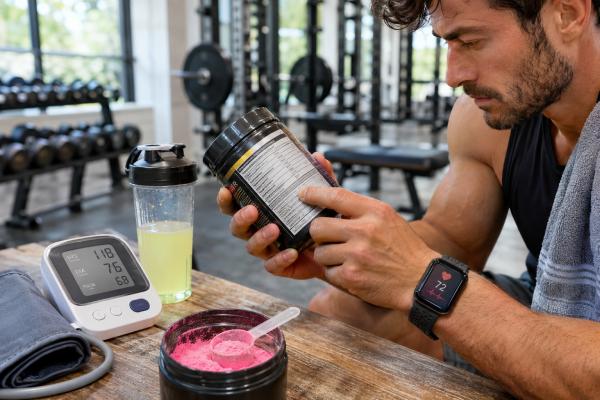
Pre-workout supplements can improve alertness and exercise performance, but some formulas can also push heart rate and blood pressure higher than expected. The biggest concern is usually not one familiar ingredient by itself. It is the total stimulant load: caffeine plus other stimulants, large scoops, extra coffee or energy drinks, and sometimes poorly disclosed or undeclared compounds. People with high blood pressure, rhythm problems, chest pain, heart disease, or strong stimulant sensitivity have less room for error.
A safer approach is to judge a pre-workout by its full label, not by claims such as “clean energy,” “thermogenic,” or “hardcore.” Caffeine dose, stimulant combinations, sodium, serving size, and third-party testing matter more than the front of the tub. Non-stimulant ingredients such as creatine or citrulline are different from stimulant blends and should not automatically be treated as heart risks. Knowing which ingredients deserve caution can help you train without turning a workout into an unnecessary cardiovascular stress test.
Table of Contents
- Why Pre-Workouts Can Raise Heart Rate and Blood Pressure
- Ingredients Most Likely to Spike BP or Heart Rate
- Ingredients That Are Not Automatically Heart Risks
- How to Read a Pre-Workout Label for Heart Safety
- Who Should Be Especially Cautious
- How to Use Pre-Workout More Safely
- When Symptoms Need Medical Attention
Why Pre-Workouts Can Raise Heart Rate and Blood Pressure
Pre-workouts are often designed to make exercise feel easier or more intense. They may increase alertness, reduce perceived effort, improve focus, or help you sustain power. The same ingredients that create that “wired” feeling can also stimulate the sympathetic nervous system—the body’s fight-or-flight system.
That matters because exercise already raises cardiovascular demand. Your heart pumps faster, systolic blood pressure rises, and blood flow shifts toward working muscles. Adding stimulants on top of that can amplify the response in some people.
Caffeine is the most common example. It blocks adenosine receptors, which reduces sleepiness and can increase catecholamine activity. In susceptible people, caffeine can temporarily increase blood pressure, cause a faster or more forceful heartbeat, or trigger jitteriness and anxiety. If you want a broader look at dose and individual response, see caffeine and blood pressure.
The response varies widely. A 200 mg dose may feel mild to a person who uses caffeine daily but intense to someone who rarely consumes it. Genetics, sleep loss, hydration, anxiety, medications, body size, and whether the supplement is taken on an empty stomach can all change how strongly it hits.
A single blood pressure rise after a stimulant does not automatically mean heart damage. The concern is greater when the increase is large, symptoms appear, the person already has cardiovascular disease, or the product contains multiple stimulants with uncertain combined effects.
It is also easy to underestimate the true dose. A pre-workout may contain 250 to 350 mg of caffeine per serving, while the user has already had coffee earlier in the day. A large brewed coffee can add another substantial amount. Some people also use energy drinks, fat burners, or caffeine pills without realizing the cumulative stimulant load.
If your numbers jump unexpectedly, it helps to understand other common blood pressure spike triggers rather than assuming the supplement is the only possible cause.
Ingredients Most Likely to Spike BP or Heart Rate
The highest-priority ingredients are stimulants. Some are well studied, while others have limited human safety data or have appeared in products despite regulatory concerns.
| Ingredient or category | Why it is used | Potential heart-related concern |
|---|---|---|
| Caffeine | Energy, focus, endurance, lower perceived effort | Can temporarily raise blood pressure; may cause palpitations, tremor, or rapid heartbeat in sensitive users |
| Synephrine / bitter orange | Stimulant or “fat-burning” effect | May increase cardiovascular stimulation, especially when combined with caffeine |
| Yohimbine / yohimbe | Stimulation and fat-loss claims | Can raise heart rate and blood pressure and provoke anxiety or palpitations |
| DMAA | Strong stimulant effect | FDA warns it can raise blood pressure and contribute to serious cardiovascular problems |
| Other stimulant analogs or poorly disclosed blends | Energy, intensity, thermogenic claims | Uncertain dose and safety; combination effects may be unpredictable |
Caffeine
Caffeine is not automatically dangerous. It is one of the most studied sports-performance ingredients, and many healthy adults tolerate moderate doses. The problem is dose, stacking, and individual sensitivity.
For perspective, many pre-workouts contain roughly 150 to 350 mg per serving, and some provide more. A person who takes a full scoop containing 300 mg and then adds coffee may quickly reach a high daily intake. Large doses are more likely to produce racing heart, tremor, headache, nausea, anxiety, or a noticeable blood pressure rise.
Exercise can make the sensation more dramatic because heart rate is already elevated. If caffeine repeatedly gives you pounding beats or makes you feel panicky, that is useful information about your personal tolerance. The article on caffeine sensitivity explains why the same amount can affect two people very differently.
Synephrine and bitter orange
Bitter orange products may contain p-synephrine, a stimulant-like compound often included in thermogenic or weight-management formulas. Safety concerns are most relevant when synephrine appears alongside caffeine or other stimulants. Research is less extensive than it is for caffeine, and combination products make it difficult to know which ingredient caused a reaction.
For a heart-conscious user, “caffeine plus synephrine” deserves more caution than caffeine alone because the goal should be to reduce unnecessary stimulant stacking.
Yohimbine and yohimbe
Yohimbine can increase sympathetic activity. Reported effects can include higher blood pressure, faster heart rate, anxiety, agitation, and palpitations. The dose in supplements may not always be obvious, especially in proprietary blends.
People who are already prone to anxiety, panic symptoms, high blood pressure, or rapid heartbeat may find yohimbine particularly unpleasant. It can also interact with medications, so it is not an ingredient to treat casually.
DMAA and hidden stimulants
DMAA, also called 1,3-dimethylamylamine, has been marketed in performance and weight-loss products. The FDA states that DMAA-containing dietary supplements are illegal and warns that the ingredient can raise blood pressure and lead to cardiovascular problems. In 2026, the agency also warned consumers about a pre-workout in which laboratory testing found undeclared DMAA.
That example highlights a broader problem: the label cannot protect you if the product contains an undeclared drug-like stimulant. This is one reason third-party certification and reputable manufacturing matter.
Ingredients That Are Not Automatically Heart Risks
A long ingredient list can look alarming, but not every pre-workout component raises blood pressure or heart rate. Separating stimulants from non-stimulants prevents unnecessary fear and makes label reading more useful.
Creatine is primarily used to improve high-intensity exercise performance and support gains in strength and lean mass. It is not a stimulant. Standard creatine monohydrate does not work by speeding the heart. If blood pressure is your concern, the more relevant issue is whether the product combines creatine with stimulants; you can also review creatine and high blood pressure separately.
Citrulline is commonly added for nitric-oxide-related blood-flow effects and the “pump” sensation. It is not generally expected to raise heart rate in the way caffeine does. Some people may experience gastrointestinal discomfort at larger doses.
Beta-alanine often causes tingling or prickling of the skin, called paresthesia. That sensation can feel intense but is not the same as a dangerous heart rhythm. Dividing the dose can reduce tingling.
Betaine, taurine, electrolytes, and amino acids are also not automatically stimulant ingredients. Their effects depend on dose and the rest of the formula.
Sodium deserves separate attention. A pre-workout or hydration blend may contain several hundred milligrams, especially if it is designed for heavy sweating. That may be reasonable for long, hot workouts in someone who loses a lot of salt, but it may be unnecessary for a short indoor session. People with hypertension, heart failure, kidney disease, or a sodium-restricted plan should check the amount carefully. For more detail, see hidden sodium in electrolyte powders.
Nitrate-containing ingredients such as beetroot are also different from stimulants. Dietary nitrate can support nitric oxide production and may lower rather than raise blood pressure in some settings. However, combining many ingredients still complicates prediction, particularly if you take blood pressure medication.
The key principle is simple: judge each ingredient by what it does. “Pre-workout” is a product category, not a single substance.
How to Read a Pre-Workout Label for Heart Safety
A useful label review takes less than a minute once you know what to look for.
- Find the actual serving size. Some products list one scoop as a serving; others suggest one or two scoops. Never assume the scoop in the tub equals the intended dose.
- Locate the caffeine amount in milligrams. If the product says only “energy blend” without disclosing caffeine content, that is a reason to choose something more transparent.
- Scan for additional stimulants. Look for bitter orange or synephrine, yohimbe or yohimbine, stimulant analogs, and unfamiliar compounds marketed for “extreme energy” or thermogenesis.
- Check sodium. This matters more if you have hypertension, heart failure, kidney disease, or a low-sodium target.
- Avoid proprietary blends when the dose matters. A blend may disclose the total combined weight while hiding individual ingredient quantities.
- Look for independent certification. Programs that test sports supplements can reduce—but not eliminate—the chance of contamination, adulteration, or major label inaccuracies.
Marketing language is not a safety standard. “Natural,” “herbal,” “clinically dosed,” and “doctor formulated” do not tell you whether a product will raise your blood pressure.
Also check what you are taking outside the tub. Decongestants, ADHD medications, thyroid replacement that is dosed too high, nicotine, energy drinks, and other supplements can change cardiovascular response. A pre-workout that seems tolerable by itself may feel very different when combined with another stimulant.
If you want to compare your response objectively, measure blood pressure correctly on a non-exercise day and, if your clinician agrees, at a consistent interval after the product. A single unusual reading is less informative than a repeatable pattern.
Who Should Be Especially Cautious
People with known cardiovascular conditions should be more conservative with stimulant pre-workouts. That includes anyone with uncontrolled hypertension, coronary artery disease, prior heart attack, cardiomyopathy, significant valve disease, heart failure, or a known arrhythmia.
Extra caution also makes sense if you have:
- recurrent palpitations or unexplained skipped beats;
- fainting or near-fainting with exercise;
- chest pressure during exertion;
- a resting heart rate that is persistently much faster than usual;
- poorly controlled thyroid disease;
- panic attacks that stimulants clearly worsen;
- kidney disease that affects fluid or electrolyte handling;
- prescriptions that already increase heart rate or blood pressure.
Pregnancy is another situation in which caffeine limits and supplement safety need individualized guidance. Multi-ingredient pre-workouts often contain compounds that have not been well studied during pregnancy.
If you are unsure whether a rapid pulse is actually abnormal, compare it with typical resting and exercise heart-rate ranges. Keep in mind that a “normal range” does not override symptoms. A heart rate that is technically within a broad population range can still be inappropriate for you if it is a sudden change accompanied by dizziness, chest pain, or shortness of breath.
People taking medication should not rely on internet interaction checkers alone for complex stimulant blends. Pharmacists are especially useful because they can compare the exact label with your medication list.
How to Use Pre-Workout More Safely
If you are healthy and choose to use a pre-workout, reducing the variables makes it easier to identify what you tolerate.
Start by choosing a transparent formula with a moderate caffeine dose and no extra stimulants. Avoid taking a new high-stimulant product for the first time before a maximal lift, race, or very intense interval session.
A practical approach is:
- Start with one-half serving when the label allows it, especially if you are caffeine-sensitive.
- Do not “dry scoop.” Mix the product with the recommended amount of fluid.
- Count caffeine from coffee, tea, energy drinks, gels, gum, medications, and other supplements.
- Avoid combining a pre-workout with a separate fat burner or stimulant pill.
- Do not compensate for poor sleep by repeatedly escalating the dose.
- Stay hydrated, particularly in heat or during long workouts.
- Stop using the product if it repeatedly causes pounding heartbeat, marked anxiety, dizziness, or unusually high blood pressure.
Dehydration itself can contribute to a fast pulse and palpitations, so it can be hard to tell whether the powder or the workout environment is responsible. The relationship between dehydration, heart rate, and palpitations is worth considering when symptoms happen during hot or long sessions.
Timing matters too. A large caffeine dose late in the day may impair sleep even if you can fall asleep. Poor sleep can increase sympathetic activity and make the next day’s workout feel harder, creating a cycle in which you use more stimulant to compensate.
You may not need a stimulant at all. A carbohydrate-containing snack, adequate fluid, a normal meal several hours before training, music, a warm-up, or simply better sleep may improve performance without pushing heart rate or blood pressure higher.
For people who like the ritual of a pre-workout but not the cardiovascular stimulation, stimulant-free products are an option. Check those labels as carefully as any other supplement; “stim-free” does not guarantee that every ingredient suits every medical condition.
When Symptoms Need Medical Attention
Mild jitteriness that resolves as caffeine wears off is different from chest pain, fainting, or a sustained abnormal rhythm. Do not try to “push through” serious symptoms just because they started after a supplement.
Stop exercising and seek urgent medical evaluation for symptoms such as:
- chest pressure, squeezing, or pain, especially with sweating, nausea, or shortness of breath;
- fainting or near-fainting during exercise;
- severe shortness of breath out of proportion to the workout;
- a sustained racing or irregular heartbeat with weakness, dizziness, or chest discomfort;
- neurologic symptoms such as one-sided weakness, trouble speaking, or sudden severe confusion;
- a very high blood pressure reading accompanied by concerning symptoms.
Emergency symptoms should be treated as medical problems first, not as supplement side effects to watch at home.
For less urgent but repeated palpitations, stop the suspected product and discuss the pattern with a clinician. Save the container or take a clear photo of the ingredient panel, lot number, and serving instructions. That information can help identify stimulant exposure and may be useful if an adverse event needs to be reported.
Occasional premature beats are common, but repeated symptoms deserve context. A guide to skipped beats and PVCs can help explain why some palpitations are benign while others need evaluation.
The safest pre-workout is not necessarily the one with the fewest ingredients. It is the one whose ingredients and doses are clearly disclosed, appropriate for your health, and used without unnecessary stacking. If a supplement makes your heart feel like the workout started before you did, that is a signal to reassess the formula rather than normalize the reaction.
A useful self-check is to compare the same moderate workout on a day with the supplement and a day without it, provided exercise is already safe for you. Notice resting pulse, pre-exercise blood pressure if you monitor it, perceived jitteriness, sleep later that night, and how hard the session feels. This is not a diagnostic test, but it can expose whether a product is adding stimulation without adding meaningful benefit. If performance feels similar without the stimulant while sleep, palpitations, or blood pressure improve, there is little reason to accept the extra cardiovascular load.
References
- Pre-Workout Supplements and Their Effects on Cardiovascular Health: An Integrative Review 2025 (Review)
- Pre-Exercise Caffeine as a Modulator of Exercise-Induced Acute Cardiometabolic Responses: A Narrative Review 2026 (Review)
- Prevalence of adulteration in dietary supplements and recommendations for safe supplement practices in sport 2023 (Review)
- RAPTURE Preworkout may be harmful due to hidden ingredient 2026
- Habitual preexercise caffeine supplementation prevents exercise training-induced attenuation of exercising systolic blood pressure and double product 2025 (RCT)
Disclaimer
This article provides general education and is not a substitute for personal medical advice. If you have high blood pressure, heart disease, an arrhythmia, take cardiovascular or stimulant medication, or develop chest pain, fainting, severe shortness of breath, or a sustained abnormal heartbeat, seek guidance from a qualified healthcare professional before using a stimulant pre-workout.