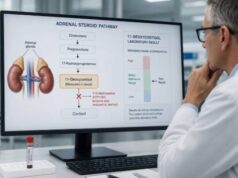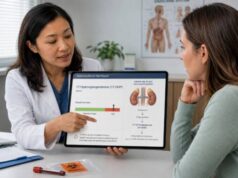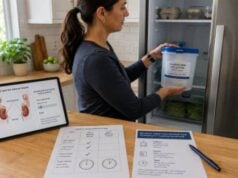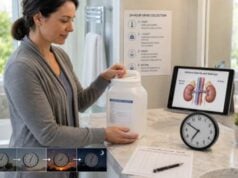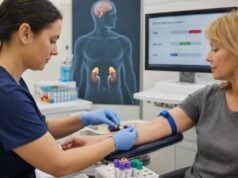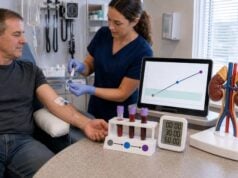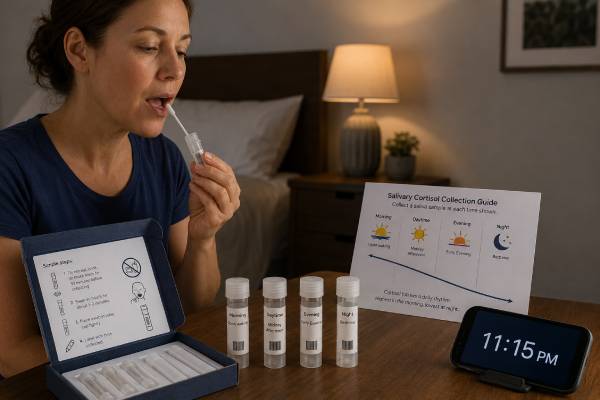
A salivary cortisol test measures free cortisol that has moved from blood into saliva. It can be collected at home without a needle, making it useful for repeated measurements at specific times. Its best-established clinical use is late-night salivary cortisol screening for Cushing syndrome, when cortisol should be near its daily low point. Saliva is also used in research to study the cortisol awakening response and daily rhythm, but commercial multi-sample “stress hormone” panels are often overinterpreted. A high or low value at one time does not diagnose chronic stress, burnout, “adrenal fatigue,” adrenal insufficiency, or Cushing syndrome. Collection time, sleep schedule, food, smoking, oral bleeding, steroid contamination, medicines, illness, and the laboratory method all affect results. The report must be interpreted against a time-specific and assay-specific reference interval. Repeated, correctly timed results and appropriate confirmatory tests are more meaningful than a single isolated number.
- Salivary cortisol reflects free cortisol and can be collected repeatedly at home.
- Late-night salivary cortisol is a validated first-line Cushing screening test, usually collected on two nights.
- Morning, awakening, and daytime saliva patterns are not stand-alone tests for adrenal insufficiency or “adrenal fatigue.”
- Hydrocortisone cream, oral steroid products, blood from the gums, smoking, and poor timing can distort results.
- Every sample needs a recorded collection time and a matching laboratory reference interval.
Table of Contents
- What Salivary Cortisol Measures
- Clinical and Research Uses
- How the Cortisol Rhythm Changes Through the Day
- How to Collect Saliva Correctly
- Understanding High, Low, and Flat Results
- Common Contamination and False Results
- Limits of Stress and Adrenal Fatigue Panels
- When Blood, Urine, or Dynamic Testing Is Needed
What Salivary Cortisol Measures
Most cortisol in blood is bound to cortisol-binding globulin and albumin. A small free fraction can enter saliva. Salivary cortisol therefore reflects free cortisol more directly than total serum cortisol and is less affected by changes in binding protein from oral estrogen or pregnancy.
The salivary concentration is much lower than the blood concentration. Laboratories may report nmol/L, ng/dL, mcg/dL, or another unit. Cutoffs cannot be transferred between units or assay methods.
Saliva can be measured by immunoassay or LC-MS/MS. LC-MS/MS can distinguish cortisol from cortisone and related steroids more specifically. Some laboratories report salivary cortisone as well as cortisol. Cortisone often occurs at a higher concentration in saliva because an enzyme in the salivary glands converts cortisol to cortisone.
The specimen captures free cortisol around the time of collection. It does not represent total daily output unless multiple carefully timed samples are obtained. Even then, the pattern reflects that day, not a fixed personal trait.
Salivary cortisol is useful because collection is noninvasive and can occur at home near bedtime or immediately after waking. Those advantages also create risks: the laboratory cannot directly observe the time, food intake, smoking, toothbrushing, medication use, or sample handling. Accurate documentation becomes part of the test.
A low saliva result does not directly show that the adrenal glands cannot respond to illness. A high value does not reveal whether the source is pituitary, adrenal, medication-related, or temporary stress. The specimen is a physiologic measurement, not a diagnosis.
Clinical and Research Uses
Late-night salivary cortisol is the clearest routine clinical use. Healthy cortisol should be low near the biological bedtime. Repeated elevation can show loss of the normal nighttime nadir, a feature of Cushing syndrome. The late-night cortisol test is usually collected on two separate nights because secretion varies.
Salivary cortisol may also be used during follow-up after treatment for Cushing syndrome. A return of high nighttime values can provide an early sign of recurrence, but surveillance protocols are specialist-directed.
Researchers use saliva to study the cortisol awakening response, which is the rise during the first 30–45 minutes after waking, and the decline across the day. These measures are sensitive to awakening time, light, sleep quality, work schedule, anticipation, and adherence. Their value in population research does not make them validated diagnostic tests for every individual symptom.
Specialized centers sometimes use salivary cortisol or cortisone during evaluation of adrenal insufficiency or glucocorticoid replacement, but blood-based morning cortisol and dynamic testing remain more established. Assay-specific evidence and local expertise are essential.
Saliva can be useful in children because it avoids repeated venipuncture. Pediatric timing, bedtime, pubertal stage, and reference ranges must be considered. A child who is awakened or distressed for collection may not provide a true resting sample.
Commercial panels may request four or more samples described as morning, noon, evening, and night. Such patterns can be informative in research, sleep medicine, or carefully defined endocrine contexts, but they should not be labeled adrenal failure from a “flat curve” without validated diagnostic criteria.
How the Cortisol Rhythm Changes Through the Day
Cortisol follows a circadian and sleep-related rhythm. In people who sleep at night, levels begin rising before waking. A further increase often occurs during the first 30–45 minutes after awakening. Cortisol then declines through the day and reaches a low point near midnight.
The clock time is not the only factor. The rhythm shifts with habitual sleep and wake timing, light exposure, night work, jet lag, and sleep deprivation. A sample at 11 p.m. may represent bedtime for one person and the middle of an active work period for another.
The cortisol awakening response is calculated from samples taken immediately on waking and at defined intervals afterward. A delay of even 10–15 minutes can change the curve. The person should collect before getting out of bed when instructed and record the exact time rather than estimate later.
A normal day is not perfectly smooth. Cortisol is released in pulses, and meals, exercise, pain, emotional events, and low blood glucose can create short rises. This means a single afternoon value has a broad normal range and limited diagnostic power.
| Collection time | Expected general pattern | Main interpretive issue |
|---|---|---|
| Immediately on waking | Moderate-to-high and rising | Exact awakening time and sleep schedule |
| 30–45 minutes after waking | Often near the awakening peak | Delay or food can alter the response |
| Afternoon | Lower than morning | Meals, exercise, stress, and broad variability |
| Near biological bedtime | Very low | Shift work, smoking, contamination, and sleep disruption |
A “flat” pattern can arise from incorrect timing, delayed morning collection, unusually early bedtime, acute illness, steroid use, or assay limitations. It is not a diagnosis by itself.
How to Collect Saliva Correctly
Use the laboratory’s device and instructions. Some kits use an absorbent swab, while others require passive drool into a tube. Materials are not interchangeable because certain fibers, flavors, or additives can affect measurement.
Most protocols advise avoiding food, drinks other than water, smoking, vaping, chewing gum, toothbrushing, and flossing for at least 30 minutes before collection. Some require a longer interval for caffeine, alcohol, exercise, or nicotine.
A typical sequence is:
- Confirm the required time relative to waking, meals, or bedtime.
- Wash and dry the hands thoroughly.
- Avoid touching the absorbent portion of the device.
- Collect saliva without vigorous chewing unless instructed.
- Record the exact time, sleep time, medicines, and any unusual event.
- Cap the tube and refrigerate or freeze it as directed.
- Return all samples with the collection log.
Hydrocortisone contamination is a major problem. Cream on fingers, steroid lip balm, oral ulcer gel, inhaler residue, or another person’s topical medication can create an extremely high result. Washing hands is essential. Do not apply steroid cream shortly before handling the tube unless the ordering team has provided a safe plan.
Visible oral blood can contaminate the sample with serum cortisol. Delay collection after dental work, gum bleeding, or aggressive brushing according to the laboratory’s advice. If blood enters the tube, report it rather than hiding the problem.
A low saliva volume can occur with dehydration, dry-mouth medicines, or salivary gland disease. Do not add water. The laboratory may need a different device or specimen type.
Understanding High, Low, and Flat Results
Interpretation starts with the time-specific reference interval. A concentration normal at 8 a.m. would be high at midnight. The result should also be compared with the person’s biological schedule rather than clock time alone.
High late-night cortisol can support Cushing syndrome when repeated under good conditions. One high value after a stressful evening, smoking, poor sleep, or contamination is insufficient. The degree above the upper limit and agreement with other tests matter.
High morning or daytime saliva can reflect ordinary activation from exercise, pain, anxiety, low glucose, illness, or anticipation. It is not a validated marker of “too much stress” in the clinical sense. Stress is a lived and physiologic process that cannot be reduced to one hormone sample.
Low morning saliva may occur with glucocorticoid suppression, adrenal or pituitary disease, delayed collection, a shifted sleep schedule, or assay limitations. It does not establish adrenal insufficiency. A person can have a low salivary value at rest but still have adequate stimulated reserve, or a normal value while taking a cross-reacting steroid.
| Pattern | Possible explanation | Appropriate response |
|---|---|---|
| Repeated high late-night values | Loss of cortisol nadir or persistent confounding | Endocrine confirmation with an independent test |
| One isolated high value | Stress, timing, smoking, blood, or steroid contamination | Review collection and repeat if clinically justified |
| Low morning value | Timing error, steroid suppression, or possible adrenal dysfunction | Use morning blood cortisol and ACTH when indicated |
| Flat multi-sample curve | Shifted schedule, adherence issue, illness, drugs, or true rhythm change | Do not diagnose from the pattern alone |
Results near a cutoff should not be described as definitively abnormal without considering analytical variation. Repeating with the same laboratory under standardized conditions is usually more informative than comparing different commercial panels.
Common Contamination and False Results
Topical hydrocortisone can raise salivary cortisol by orders of magnitude. Contamination often produces a value that is far higher than expected and may not be matched by salivary cortisone. Laboratories that measure both can sometimes recognize this pattern.
Blood from the mouth can increase cortisol because serum enters the specimen. Gum disease, dental procedures, mouth ulcers, or toothbrushing immediately before collection can contribute.
Smoking and nicotine stimulate cortisol and may also affect the mouth. Caffeine, vigorous exercise, acute pain, emotional upset, and sleep deprivation can raise levels. Food residue can alter sample quality or assay performance.
False-low results can occur from dilution, too little saliva, collection at the wrong time, improper storage, or a device that absorbs analyte. Delayed freezing or prolonged heat exposure may degrade the specimen depending on the assay.
Glucocorticoid medicines create complex effects. Hydrocortisone or prednisolone may cross-react with some assays, while dexamethasone usually does not but suppresses ACTH and endogenous cortisol. Inhaled, topical, injected, nasal, and oral steroids all need to be reported.
Oral estrogen does not raise salivary free cortisol as strongly as serum total cortisol, which is an advantage for late-night screening. Pregnancy still changes cortisol physiology, so pregnancy-specific interpretation is needed.
Shift work and irregular sleep can make a standard late-night cutoff invalid. A person collecting during an active work period may have appropriately higher cortisol. Another screening test may be preferable.
Limits of Stress and Adrenal Fatigue Panels
Cortisol responds to stress, but the relationship is not a simple scale from “low stress” to “high stress.” The same event can produce different responses depending on time of day, sleep, prior experience, physical fitness, illness, and anticipation. Chronic stress may be associated with higher, lower, or altered cortisol patterns in different studies.
“Adrenal fatigue” is not a recognized diagnosis and has no validated salivary test pattern. The theory that ordinary stress gradually exhausts the adrenal glands is not supported by established endocrine physiology. True adrenal insufficiency is caused by adrenal damage, inadequate ACTH, or suppression from glucocorticoid treatment and is evaluated with validated tests.
Commercial reports may label a low afternoon value, small awakening rise, or flat curve as an adrenal stage. Those labels often lack validated outcome-based thresholds. They can lead to unnecessary supplements, glandular products, licorice, or steroid hormones.
Some “adrenal support” supplements contain undeclared glucocorticoids or thyroid hormone. These products can suppress the adrenal axis, interact with medicines, and create real illness. DHEA, pregnenolone, and licorice also alter hormone or blood-pressure physiology.
Symptoms such as fatigue, brain fog, poor sleep, dizziness, and low mood deserve evaluation, but the workup may include blood count, thyroid testing, metabolic assessment, sleep evaluation, medication review, mental health care, and other targeted tests. A multi-point saliva curve should not replace that process.
Salivary cortisol can still be valuable in well-defined research and clinical protocols. The limitation is not the specimen; it is using an unvalidated pattern to make a diagnosis it was not designed to make.
When Blood, Urine, or Dynamic Testing Is Needed
For suspected Cushing syndrome, repeated high late-night salivary cortisol is usually confirmed with another accepted screening method. A 1-mg dexamethasone suppression test assesses feedback, while a 24-hour urine free cortisol test estimates daily free cortisol output.
For suspected adrenal insufficiency, an 8–9 a.m. serum cortisol and ACTH are more established. Intermediate results often lead to ACTH stimulation. Severe symptoms require urgent treatment rather than waiting for saliva testing.
Blood testing is also preferred when the saliva sample is repeatedly inadequate, oral bleeding is active, exact medication timing must be linked to serum levels, or the laboratory lacks validated salivary ranges.
Questions to ask about a saliva report include:
- What clinical question was this collection designed to answer?
- Was the reference interval specific to the collection time and assay?
- Did the timing match my sleep schedule?
- Could steroid products, smoking, food, or oral bleeding explain it?
- Was the finding repeated?
- Which validated blood, urine, or dynamic test would confirm the concern?
Seek urgent care for severe weakness, repeated vomiting, fainting, confusion, very low blood pressure, or known adrenal disease during serious illness. A home saliva kit is not an emergency assessment.
Salivary cortisol is most reliable when the question, timing, collection method, and reference interval are all specific. It should clarify a recognized endocrine problem rather than turn normal daily variation into a diagnosis.
Special timing and follow-up considerations
Shift workers require an individualized approach. Their cortisol rhythm may partially adapt to the work schedule, remain tied to daylight, or become irregular. A sample labeled “midnight” during the middle of an active shift cannot be compared automatically with a bedtime reference interval. A clinician may choose urine free cortisol or dexamethasone suppression instead.
Jet lag and daylight-saving changes can temporarily shift sleep and cortisol timing. Nonurgent rhythm testing is best done after the schedule has stabilized. The collection log should record actual sleep and waking times rather than only clock time.
In children, bedtime varies with age and household routine. A late-night sample should be timed to the child’s normal biological night without waking or frightening the child. Growth velocity, weight gain, and pubertal development provide important context for Cushing screening.
Pregnancy raises total serum cortisol because cortisol-binding globulin increases, but salivary free cortisol also changes across gestation. Pregnancy-specific reference data are needed. A standard nonpregnant late-night cutoff should not be applied without specialist guidance.
Salivary cortisol and cortisone can help detect sample contamination. Hydrocortisone placed in the mouth or transferred from fingers may create a disproportionate cortisol spike. Endogenous cortisol is normally converted to cortisone in salivary glands, so the paired pattern can alert the laboratory to an implausible specimen.
After treatment for Cushing syndrome, late-night saliva may be used for recurrence surveillance. The interpretation differs from initial screening because replacement glucocorticoids, postoperative axis recovery, and prior individual baselines matter. A single elevated surveillance result is usually confirmed before major decisions.
During glucocorticoid replacement, salivary cortisone can sometimes reflect oral hydrocortisone exposure, but routine dose adjustment should not be based on an unvalidated home curve. Clinical assessment and specialist protocols remain primary.
A multi-day series is more informative than one “bad day” when cyclic hypercortisolism is suspected. Even then, repeated sampling should be planned around symptoms and reviewed together, not interpreted one tube at a time through consumer-app flags.
The practical value of saliva lies in precise home timing. That advantage is lost when collection times are guessed, samples are mislabeled, or the person changes sleep, food, exercise, and medicine routines for each tube. A simple, accurate log often improves interpretation more than adding extra collection points.
Laboratory quality includes checking whether the sample volume is sufficient and whether collection devices were returned in the correct order. A four-point curve with mislabeled tubes cannot be reconstructed reliably from memory. Numbering the tubes before collection and recording times immediately reduces this problem.
Dental health may determine specimen choice. Active gingivitis, frequent gum bleeding, oral surgery, or a mouth ulcer can make repeated saliva samples unreliable. A blood or urine method may be more appropriate until the mouth has healed.
Results should be discussed in terms of the clinical question. A normal late-night value addresses Cushing screening; it does not prove that sleep, mood, or fatigue symptoms are insignificant. An abnormal research-style awakening curve may describe a day’s physiology but does not automatically identify a disease requiring hormone treatment.
When a clinician orders salivary cortisol, patients should ask which decision the result will change. Testing is most useful when a defined abnormal pattern leads to a validated confirmatory step rather than an open-ended supplement program.
A useful saliva report therefore connects the sample to a validated endocrine question, not to a broad promise of measuring resilience, burnout, or everyday stress capacity.
References
- Late-night salivary cortisol and cortisone should be the initial screening test for Cushing’s syndrome 2022
- Cushing Syndrome: A Review 2023 (Review)
- Pitfalls in the Diagnosis and Management of Hypercortisolism (Cushing Syndrome) in Humans; A Review of the Laboratory Medicine Perspective 2023 (Review)
- Consensus on diagnosis and management of Cushing’s disease: a guideline update 2021 (Guideline)
- Adrenal insufficiency: identification and management 2024 (Guideline)
Disclaimer
This article provides general education and cannot diagnose Cushing syndrome, adrenal insufficiency, chronic stress, or “adrenal fatigue.” Salivary cortisol depends on exact timing, sleep schedule, medicines, oral contamination, and assay-specific ranges. Do not stop steroid treatment or begin hormone supplements based on a commercial saliva pattern without medical guidance.