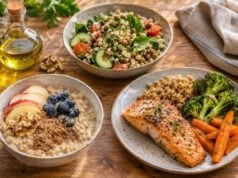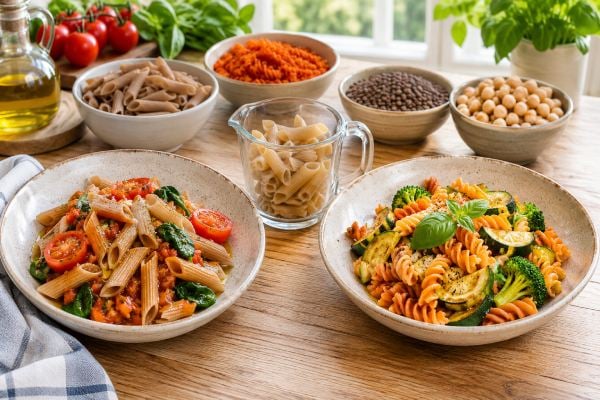
Pasta can fit easily into a cholesterol-lowering diet. The best choices are usually whole-grain pasta and legume-based pasta made from lentils, chickpeas, peas, or beans because they provide more fiber—and often more protein—than standard refined pasta. That matters because soluble and viscous fibers can help lower LDL cholesterol, while higher-fiber foods also improve fullness and can make it easier to build a heart-friendly meal. Regular white pasta is not automatically “bad”; pasta has a relatively compact starch structure and is often eaten with vegetables, olive oil, beans, or fish. The bigger problem is often the full plate: oversized portions, creamy sauces, processed meats, large amounts of cheese, and few vegetables can turn a neutral staple into a high-saturated-fat, high-sodium meal. A practical approach is to use about one-quarter of the plate for pasta, add plenty of vegetables, include a lean or plant protein, and choose a sauce based on tomatoes, vegetables, beans, or unsaturated fats. Pasta quality matters, but the toppings and portion matter just as much.
Table of Contents
- Which pasta is best for cholesterol?
- Whole-grain pasta and LDL cholesterol
- Legume pasta: lentil, chickpea, pea, and bean
- Is regular white pasta bad for cholesterol?
- Portion size and meal balance
- Best sauces and toppings for cholesterol
- How to shop, cook, and choose the right pasta
Which pasta is best for cholesterol?
For most people trying to lower LDL cholesterol, the best pasta is one that increases fiber without adding much saturated fat or sodium. That usually puts 100% whole-grain pasta and legume pasta at the top of the list.
A useful comparison looks like this:
| Pasta type | Main advantage | What to watch |
|---|---|---|
| 100% whole-grain wheat | More fiber and whole-grain nutrients than refined pasta | Texture is firmer; fiber varies by brand |
| Lentil pasta | High protein and fiber; made from a cholesterol-friendly pulse | Can be dense; cooking time is easy to overshoot |
| Chickpea pasta | Good fiber and protein; mild flavor | Usually costs more than wheat pasta |
| Pea or bean pasta | Fiber-rich plant protein | Flavor and texture vary widely |
| Regular semolina pasta | Affordable, familiar, often lower glycemic than many refined starches | Less fiber than whole-grain or legume pasta |
| Gluten-free rice or corn pasta | Useful for celiac disease or gluten avoidance | May be low in fiber and protein unless specially formulated |
The nutrition label is more useful than the front of the box. Look at fiber, protein, sodium, and the ingredient list. A product labeled “multigrain” can still be made mostly from refined flour. If whole grain is your goal, look for whole wheat or another whole grain as the first ingredient.
Pasta itself does not contain dietary cholesterol unless animal-derived ingredients such as eggs are included, and even then the cholesterol content is usually not the main issue. For LDL reduction, saturated fat and the overall dietary pattern matter more. The broader list of foods that help lower cholesterol includes oats, barley, beans, nuts, seeds, vegetables, and unsaturated fats alongside whole grains.
Whole-grain pasta and LDL cholesterol
Whole-grain pasta keeps more of the grain’s bran and germ than refined pasta. That means more fiber, magnesium, and other plant compounds. Higher whole-grain intake is consistently associated with better cardiovascular outcomes, and randomized-trial reviews suggest whole grains can improve several metabolic risk factors.
The LDL-lowering effect of whole grains is not identical across all grain foods. Oats and barley are unusually rich in beta-glucan, a viscous soluble fiber with a well-established cholesterol-lowering effect. Whole-wheat pasta contains less of that specific fiber, so it should not be treated like a bowl of oat bran. Its advantage comes from replacing a lower-fiber refined grain and helping increase total whole-grain and fiber intake.
If you already eat oats, beans, fruit, vegetables, nuts, and seeds, switching white pasta to whole grain is one more useful step rather than the single decisive change. See whole grains for heart health for ways to distribute whole grains across the day.
How much fiber should pasta provide?
There is no magic number for a pasta serving, but comparing brands can be revealing. If one option provides 2 grams of fiber per serving and another provides 6 or 8 grams, the higher-fiber product can make it easier to reach a fiber-rich daily pattern.
Increase fiber gradually if your usual intake is low. A sudden jump from refined pasta to large portions of whole-grain and legume pasta can cause gas or bloating. Drinking adequate fluid, if you do not have a fluid restriction, and increasing fiber over several days or weeks usually improves tolerance.
Legume pasta: lentil, chickpea, pea, and bean
Legume pasta can be an especially useful choice because pulses—beans, lentils, chickpeas, and dried peas—have direct evidence for modest LDL reduction. Recent randomized-trial meta-analyses show that regular pulse intake can lower LDL, non-HDL cholesterol, and other cardiometabolic markers.
A pasta made mostly from lentil or chickpea flour is not nutritionally identical to eating whole beans, but it can retain substantial pulse protein and fiber. Many products provide roughly twice the protein of standard pasta and significantly more fiber.
This makes legume pasta useful in meals that would otherwise be mostly starch. For example, chickpea pasta with tomato sauce, spinach, mushrooms, and olive oil can provide both the starch and much of the protein in one bowl.
Which legume pasta is best?
There is no clear cardiovascular winner among lentil, chickpea, pea, or bean pasta. Choose based on:
- Fiber per serving
- Protein per serving
- Sodium level
- Ingredient simplicity
- Texture you enjoy
- Price and availability
Red lentil pasta often has a slightly earthy flavor and cooks quickly. Chickpea pasta tends to be mild and firm. Black bean pasta can have a stronger flavor and darker color. Pea-based blends vary widely.
If you prefer whole beans to pasta, that is excellent too. A serving of pasta can be mixed with cannellini beans, chickpeas, or lentils rather than replaced entirely. The guide to beans for lowering cholesterol explains pulse portions and easy meal uses.
Legume pasta and digestion
Higher amounts of fermentable carbohydrate and fiber can cause bloating in some people, especially those with irritable bowel syndrome. Start with a smaller portion and see how you respond. Rinsing pasta is generally unnecessary for nutrition, but some people find that thoroughly cooking and draining legume pasta improves texture and tolerance.
Is regular white pasta bad for cholesterol?
No. Refined pasta is not a direct source of saturated fat, and eating it occasionally does not raise LDL in the same way that a diet high in saturated fat can. It simply provides less fiber and fewer whole-grain components than whole-grain pasta.
Pasta also behaves differently from some other refined starches because its dense structure slows digestion. Traditional pasta is often considered a lower-glycemic refined grain compared with white bread or many breakfast cereals. That does not make unlimited portions metabolically neutral, but it explains why pasta should not be judged only by the words “refined carbohydrate.”
The health effect depends strongly on what replaces what. Switching from a large serving of buttery white pasta to whole-grain pasta with vegetables and olive oil improves several parts of the meal at once. Switching from a modest portion of white pasta with beans and vegetables to a huge portion of whole-grain pasta may increase calories without much benefit.
White pasta can fit when:
- You prefer its taste and texture and keep portions reasonable.
- Your overall diet already contains plenty of fiber.
- You pair it with vegetables, beans, fish, or another heart-friendly protein.
- You limit sauces high in butter, cream, fatty processed meat, and excessive cheese.
If high triglycerides are also a concern, total carbohydrate quality and quantity become more important. The guide to diet changes for high triglycerides explains the larger role of refined carbohydrate, added sugar, alcohol, and calorie excess.
Portion size and meal balance
Pasta portions are easy to underestimate because dry pasta expands during cooking and restaurant servings can be several times larger than a standard serving.
Instead of obsessing over an exact number of ounces, use the plate. A practical cholesterol-friendly meal can be:
- About one-quarter of the plate: pasta or another whole-grain/starchy food
- About half of the plate: non-starchy vegetables
- About one-quarter of the plate: beans, tofu, fish, skinless poultry, or another lean protein
- A modest amount of unsaturated fat: olive oil, nuts, seeds, or avocado
If the pasta itself is made from lentils or chickpeas, it contributes to both the starch and protein portions, so you may need less extra protein.
A typical home portion might be around 1 to 1½ cups cooked, but energy needs vary. A smaller person with a sedentary day may want less; an active person may need more. Hunger, body size, glucose goals, and the rest of the meal all matter.
For a visual framework, building a heart-healthy plate can be easier than weighing pasta every time.
Why portion affects cholesterol indirectly
Eating excess calories over time can contribute to weight gain, insulin resistance, and higher triglycerides, which can worsen the overall lipid profile. Portion control is therefore not about pasta being toxic; it is about keeping energy intake aligned with needs while leaving room for vegetables, protein, and fiber-rich foods.
Best sauces and toppings for cholesterol
The sauce can matter more than the pasta.
Tomato and vegetable sauces
Tomato-based sauces are excellent foundations when they are not overloaded with sodium or sugar. Add mushrooms, spinach, eggplant, zucchini, peppers, onions, or broccoli to increase volume and fiber.
Olive-oil-based sauces
Olive oil supplies unsaturated fat and fits well in a Mediterranean-style eating pattern. Use enough for flavor without turning the meal into an oil-heavy calorie load. Garlic, herbs, lemon, capers, and chili flakes can build flavor.
Bean-based additions
White beans, lentils, or chickpeas make pasta more filling while adding soluble fiber and plant protein. A simple sauce of tomatoes, cannellini beans, garlic, spinach, and olive oil is more cholesterol-friendly than a sauce built around cream and sausage.
Fish and seafood
Salmon, sardines, tuna, shrimp, or mussels can provide protein. Oily fish such as salmon and sardines add omega-3 fats. Watch sodium in smoked fish, canned products, and prepared seafood sauces.
Cheese
Cheese can fit in a small amount. Parmesan has a strong flavor, so a tablespoon or two can go a long way. Large amounts of cheese add saturated fat and sodium quickly. Treat it as a garnish rather than the main ingredient when LDL is the priority.
Cream, butter, and processed meat
Alfredo-style sauces, butter-heavy preparations, bacon, pepperoni, and large sausage portions can turn a low-saturated-fat pasta base into a high-saturated-fat meal. You do not have to ban these foods, but they are poor choices for an everyday cholesterol-lowering pattern.
What about high-protein, fiber-enriched, and gluten-free pasta?
Products with “protein” or “fiber” on the front can be useful, but the ingredient list tells you what you are buying. Some high-protein wheat pastas add pea protein, chickpea flour, or lentil flour. Others simply contain durum wheat with a modest protein boost. Compare the nutrition facts rather than assuming the claim means the product is better for cholesterol. A pasta with 7 or 8 grams of fiber per serving may support a higher-fiber diet more effectively than one with 2 grams, even if both advertise extra protein.
Fiber-enriched pasta may contain isolated fibers such as inulin or resistant starch. These can increase the fiber number on the label, but they are not nutritionally identical to intact whole grains or pulses. They can still fit, especially if you like the texture, but it makes sense to get fiber from several sources instead of relying on one fortified product.
Gluten-free pasta deserves the same label check. Pasta made mostly from brown rice, corn, or white rice can be perfectly appropriate for celiac disease or gluten intolerance, yet some versions have little fiber. Chickpea, lentil, bean, quinoa, or higher-fiber gluten-free blends may offer more fiber and protein. If you do not need to avoid gluten, there is no cholesterol advantage to choosing a gluten-free label by itself.
Make the serving satisfying, not just smaller
A tiny bowl of pasta that leaves you hungry can backfire if you end up grazing later. Build volume and staying power into the meal. For two cups of cooked pasta, for example, you might add two or three cups of vegetables plus a can of drained no-salt-added beans for a family meal. Another option is to use one cup of cooked pasta per person with roasted vegetables and a palm-sized serving of fish or tofu.
The point is not to make pasta scarce. It is to prevent pasta from crowding out the foods that deliver the most fiber, unsaturated fat, and micronutrients. This approach also makes a standard portion look and feel like a full meal rather than a diet-sized compromise.
For batch cooking, portion the finished dish after the vegetables and protein have been mixed in rather than dividing plain noodles first. That simple step helps each container keep a similar balance. If you eat pasta at a restaurant, consider ordering a vegetable side, choosing a tomato-based sauce, and stopping when comfortably full; you can take the rest home.
How to shop, cook, and choose the right pasta
Use this quick shopping checklist:
- Check the first ingredient. For whole-grain pasta, look for “whole wheat” or another whole grain first. For legume pasta, look for lentil, chickpea, pea, or bean flour.
- Compare fiber. Higher is generally more useful for cholesterol and fullness.
- Check protein. Legume pasta usually provides more, which can simplify meal planning.
- Scan sodium. Plain dry pasta is usually low in sodium; flavored instant or refrigerated products may not be.
- Ignore vague terms. “Wheat pasta,” “multigrain,” and “made with whole grain” do not necessarily mean 100% whole grain.
- Choose the one you will actually eat. A theoretically perfect pasta that sits in the pantry is not helping your cholesterol.
Cook pasta al dente if you enjoy it. Firmer pasta tends to digest more slowly than overcooked pasta, though the difference is small compared with total portion and meal composition. Do not rely on cooking time as the main cholesterol strategy.
Save some pasta water to loosen tomato or olive-oil sauces instead of adding cream or butter. Mix vegetables directly into the sauce so the volume of the bowl increases without requiring more pasta. Leftover pasta can also be used in a vegetable-heavy salad with beans, olive oil, vinegar, and herbs.
If your goal is specifically LDL reduction, think beyond pasta. The strongest dietary approach combines multiple tools: less saturated fat, more soluble fiber, nuts and seeds, legumes, whole grains, vegetables, and appropriate calorie intake. Soluble fiber is particularly useful because its LDL-lowering effect is more direct than simply choosing a brown-colored pasta.
The best pasta is therefore not a single brand or shape. It is the pasta that helps you build a repeatable meal with more fiber and plant foods and less saturated fat. Whole-grain and legume pastas make that easier, while sensible portions and heart-friendly sauces determine how much benefit reaches the final plate.
References
- Effect of Non-Soy Legumes on Lipid Profile: A Systematic Review and Meta-analysis of Randomized Controlled Trials. 2026 (Systematic Review)
- Effect of Different Types of Whole Dietary Pulses on Established Therapeutic Lipid Targets for Cardiovascular Risk Reduction: An Updated Systematic Review and Dose-Response Meta-Analysis of Randomized Controlled Trials. 2026 (Systematic Review)
- The impact of whole grain consumption on metabolic health: an umbrella review of systematic reviews and meta-analyses of randomized controlled trials 2025 (Systematic Review)
- Legume intakes on cardiometabolic profile and gut microbiome function: systematic review and meta-analyses of randomised controlled trials. 2024 (Systematic Review)
- Consumption of whole grains and refined grains and associated risk of cardiovascular disease events and all-cause mortality: a systematic review and dose-response meta-analysis of prospective cohort studies 2023 (Systematic Review)
- A systematic review on the relations between pasta consumption and cardio-metabolic risk factors 2017 (Systematic Review)
Disclaimer
This article is for general education and is not individualized medical or nutrition advice. People with diabetes, celiac disease, food allergies, kidney disease, or prescribed dietary restrictions may need a more specific pasta and portion plan from their healthcare professional or dietitian.