Italian restaurants can make weight loss feel harder than it really is. You sit down, the bread arrives, olive oil hits the table, and before the entrée shows up you may already have eaten several hundred calories without noticing. Then come oversized bowls of pasta, rich sauces, crispy appetizers, and desserts designed for more than one person but served like a personal challenge. The good news is that Italian food is not the problem. In fact, many Italian menus include ingredients that work very well for fat loss: grilled seafood, chicken, tomato-based sauces, beans, vegetables, salads, broth soups, and simple meat or fish dishes. The real skill is knowing how to build a meal from the menu instead of ordering on autopilot. This guide will show you what to choose, what to limit, how to enjoy pasta or pizza without derailing your plan, and how to leave the restaurant satisfied rather than stuffed.
Table of Contents
- How Italian Restaurant Meals Get Calorie Dense
- Best Appetizers, Soups, and Salads
- What to Order If You Want Pasta
- How to Handle Pizza and Risotto
- Leaner Italian Mains That Keep You Full
- Bread, Drinks, and Dessert Without Blowing the Meal
- Simple Ordering Rules That Work Every Time
How Italian Restaurant Meals Get Calorie Dense
Italian food often gets blamed for weight gain, but the real issue is usually restaurant structure, not the cuisine itself. A typical Italian meal can stack calorie-dense items quickly: bread before the meal, oil for dipping, a starter, a pasta or pizza entrée, wine, and dessert. None of those items is unusual on its own. The problem is how easily they add up in one sitting.
Portion size is a major factor. Restaurant pasta is often two to three servings by home standards, and many dishes combine multiple dense ingredients in the same bowl: refined pasta, cream, cheese, oil, and fatty meat. That is why a dish that sounds simple can end up much heavier than expected. Risotto creates a similar problem because it feels lighter than it is. Its soft texture goes down fast, but the calories can climb quickly once butter, cheese, and generous portions are involved.
The second issue is energy density. Foods high in fat and low in water or fiber pack more calories into fewer bites. Cream sauces, fried appetizers, sausage toppings, and cheese-heavy entrées are classic examples. By contrast, tomato sauce, broth soups, leafy salads, grilled fish, and vegetable sides provide more food volume for fewer calories. That matters because fullness is not only about calories. It is also about the amount of food on the plate, how fast you eat it, and how much protein and fiber the meal contains.
This is the most useful mindset shift: stop asking whether Italian food is “allowed” and start asking what combination of items gives you the best tradeoff between enjoyment and fullness. A calorie deficit still drives fat loss, and restaurant meals only become a problem when they regularly erase it. If you need a refresher on how daily intake adds up over time, these calorie-deficit basics help put restaurant meals in context. Portion awareness matters too, especially when restaurant servings are far larger than what you would plate at home. A practical portion guide can make the menu easier to read before you order.
Once you understand the main traps, the menu gets easier. At Italian restaurants, the smartest strategy is usually to control the extras, choose one indulgent element instead of three, and anchor the meal around protein, vegetables, or tomato-based dishes rather than creamy, fried, or cheese-heavy combinations.
Best Appetizers, Soups, and Salads
The first decision often matters more than the entrée because appetizers can quietly determine how much room you have left for the rest of the meal. If you start with fried calamari, mozzarella sticks, burrata with bread, or garlic bread covered in butter and cheese, you may be halfway to a full meal before your main dish arrives. A smarter opening makes it much easier to stay in control without feeling deprived.
Good appetizer choices at Italian restaurants tend to fall into three groups:
- broth-based or bean-based soups
- salads with light dressing
- vegetable-forward starters with a protein element
Minestrone is one of the best examples. It usually gives you vegetables, beans, broth, and more volume than a dense starter for a fraction of the calories. A simple house salad or arugula salad can also work well, especially if the dressing is on the side and the add-ons are not doing all the nutritional damage. A salad becomes much less helpful when it is buried in cheese, candied nuts, creamy dressing, and fried toppings.
Look for starters such as grilled vegetables, roasted peppers, marinated seafood, shrimp cocktail if offered, or carpaccio when portions are modest. Caprese salad can be a reasonable choice too, but it depends on how much mozzarella and oil the kitchen uses. Some versions are fresh and balanced. Others are effectively a cheese appetizer with tomatoes as decoration.
A few practical ordering moves help here:
- Ask for dressing on the side.
- Split a richer starter with the table instead of claiming it as your own.
- Choose either bread or an appetizer, not both by default.
- If you know the entrée will be heavy, keep the first course light and high in volume.
Salads deserve special attention because they can look leaner than they are. Caesar salads, antipasto salads, and chopped salads with salami, olives, cheese, and creamy dressing can rival a main course. A better pattern is greens, vegetables, beans or grilled protein, and vinaigrette used with restraint. Fiber matters here because it slows the meal down and improves fullness. If that is an area you are trying to improve, these easy fiber upgrades pair well with restaurant eating.
The strongest opening order is usually one that takes the edge off hunger without turning dinner into a two-entrée event. When you arrive hungry, a broth soup or simple salad buys time and creates structure. That makes it less likely that you will inhale bread, over-order, or talk yourself into a heavy starter because you are making decisions from hunger instead of intention.
What to Order If You Want Pasta
You can absolutely eat pasta and still lose weight. The mistake is thinking the only two options are “eat none” or “order the biggest bowl on the menu.” Pasta works much better for weight loss when you change the type of dish, the portion, and what you pair it with.
The best pasta orders usually share three features:
- a lighter sauce
- a visible protein source
- less added fat from cheese, cream, and oil
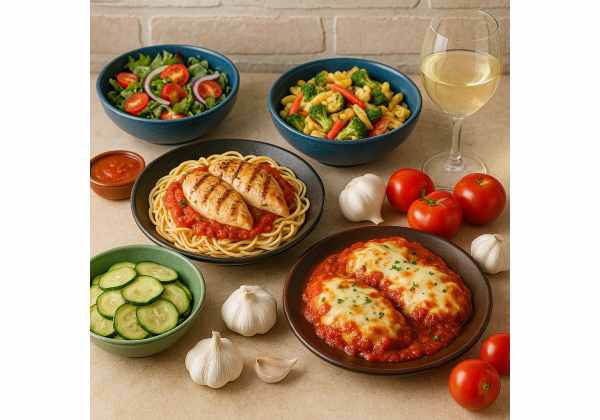
Tomato-based sauces are usually the easiest win. Marinara, pomodoro, or a lighter meat sauce tends to be easier to fit into a weight-loss plan than Alfredo, carbonara, four-cheese sauces, or vodka sauces made with lots of cream. That does not mean red sauce is always low calorie, but it is usually a better starting point. Pasta with grilled chicken, shrimp, clams, mussels, or a moderate amount of lean meat is often far more satisfying than a plain pasta bowl with little protein and a lot of sauce.
If the menu allows substitutions, ask for:
- grilled chicken or shrimp added to a simpler pasta
- extra vegetables
- half the usual amount of sauce if it is a rich preparation
- a half portion, lunch portion, or split plate when available
Dishes like pasta primavera, seafood marinara, pasta with clams in red sauce, or grilled chicken with a small side of pasta are often easier to manage than baked ziti, stuffed shells, or lasagna. Baked pasta dishes combine pasta, cheese, oil, and often fatty meat in a way that drives calories up fast while making portion control harder. The same goes for dishes that sound elegant but are built around cream and cheese.
Another useful tactic is to turn pasta into the side rather than the centerpiece. Ordering a protein-forward entrée with a modest pasta portion can give you the experience of eating pasta without making it the entire meal. This is especially helpful if you know you are someone who does better with more protein at dinner. A broader high-protein food list can help you spot menu choices that are likely to keep you full longer.
Carbs are not the enemy here. The real issue is how much of the plate is refined starch versus protein and vegetables. If you are trying to find a more realistic balance instead of cutting carbs aggressively, this guide to daily carb targets and better sources gives useful context. At Italian restaurants, pasta works best when it is part of a balanced meal rather than a giant bowl with little else going for it nutritionally.
How to Handle Pizza and Risotto
Pizza and risotto are often the dishes people assume they have to avoid completely. In reality, both can fit if you approach them with more structure. The goal is not to pretend they are diet food. It is to make them manageable enough that one restaurant meal does not wipe out the week.
With pizza, the biggest calorie drivers are crust size, cheese load, processed meat, and how many slices turn into “just one more.” Thin crust is usually easier to fit than deep dish or very thick crust, and vegetable toppings are usually a better base than pepperoni, sausage, bacon, or extra cheese. Grilled chicken can be a stronger topping choice when you want more protein without as much added fat.
A helpful pattern is:
- start with a salad or broth soup
- order thin crust
- choose vegetables and one lean protein topping
- keep cheese and fatty meats moderate
- decide your number of slices before the first bite
For many people, two or three slices plus a salad is a far better weight-loss meal than ordering a pasta entrée and grazing on pizza from the table anyway. Pizza gets easier to manage when it is planned rather than eaten reactively.
Risotto is trickier because its creamy texture can mask how rich it is. Restaurant risotto often includes butter, Parmesan, oil, and larger portions than expected. Mushroom or seafood risotto may sound lighter, but the base preparation can still be dense. If you want risotto, ordering it as a starter portion or sharing it works well. Another solid move is pairing a smaller risotto portion with grilled fish or chicken and vegetables instead of treating risotto as the whole meal.
When choosing between pizza and risotto, ask which one will be easier for you to portion. Some people can stop at two slices of pizza with no drama. Others find pizza impossible to moderate but do fine with a pre-portioned risotto. The best choice is the one you can enjoy without turning dinner into an all-night calorie spillover.
It also helps to think in terms of food volume. Meals feel more satisfying when they include vegetables or salads that add bulk without adding many calories. That is one reason these high-volume, low-calorie foods are so helpful when eating out. Pizza or risotto paired with a big salad and a clear stopping point is usually much easier to fit into a deficit than trying to rely on willpower after the fourth slice or the last few spoonfuls straight from habit.
Leaner Italian Mains That Keep You Full
If your main goal is leaving satisfied without overshooting calories, Italian menus often reward you for looking beyond pasta and pizza. Many of the best orders are simple protein-based dishes with vegetables or a modest starch on the side. These meals tend to be easier to portion, slower to eat, and more filling than cheese-heavy or cream-heavy entrées.
Strong choices often include:
- grilled fish with vegetables
- shrimp, mussels, or clams in tomato-based preparations
- chicken or veal cooked with lemon, wine, capers, or tomatoes rather than heavy cream
- steak or grilled salmon with a side of greens or roasted vegetables
- roasted chicken with potatoes and vegetables when portions are reasonable
Words on the menu matter. Dishes described as grilled, roasted, baked, broiled, al limone, piccata, cacciatore, marinara, or puttanesca are often easier to work with than dishes described as fried, breaded, crispy, creamy, stuffed, parmigiana, or smothered in cheese. Chicken Parmesan is a good example of how a protein dish can become much heavier once breading, frying, sauce, pasta, and melted cheese all land on the same plate. Chicken piccata or grilled chicken with vegetables often gives you the same basic satisfaction with far fewer calories.
Seafood can be one of the best categories on the menu, but preparation still matters. Grilled salmon, branzino, shrimp, or mixed seafood in tomato sauce tends to work better than seafood in garlic butter or cream sauce. The same applies to side choices. Spinach, broccoli, mixed vegetables, beans, or a side salad usually outperform fries, buttery potatoes, or an automatic side of pasta if weight loss is the priority.
Protein is especially useful in restaurant meals because it helps protect fullness. A dinner centered on fish, chicken, shellfish, or lean meat usually does more for appetite control than a plate built mostly around starch and fat. If you are unsure how much to aim for across the day, this guide to protein intake for weight loss can help you estimate a target that makes restaurant decisions simpler.
One more point matters here: do not confuse “lighter” with “unsatisfying.” A plate of grilled fish, vegetables, and potatoes can be more satisfying than a smaller bowl of rich pasta because it gives you more chewing, more protein, and clearer stopping points. The best Italian restaurant order for weight loss is often not the lightest-sounding dish. It is the one that combines lean protein, some produce, and enough substance to keep you from hunting for snacks an hour later.
Bread, Drinks, and Dessert Without Blowing the Meal
Most restaurant calories do not come from one dramatic mistake. They come from the extras people stop counting because they feel small: bread before dinner, two glasses of wine, a few bites of dessert, and maybe a sweet coffee at the end. Italian restaurants are especially good at making those extras feel automatic.
Bread is the first test. Warm bread with olive oil can be delicious, but it is easy to eat several pieces before you have even decided what you want for dinner. You do not need to ban it, but it helps to make a deliberate choice. Either have one piece and stop, or skip it and save those calories for the entrée you actually came to enjoy. Mindless bread eating is rarely satisfying enough to be worth the trade.
Drinks matter too. Wine, beer, cocktails, and sugary nonalcoholic drinks can shift a reasonable meal into a calorie-heavy one very quickly. Alcohol also lowers inhibition, which is one reason people order more appetizers, more bread, and dessert they did not even plan on. If you are drinking, consider one drink rather than several, sip water alongside it, and avoid arriving at the table already very hungry. For a broader look at how drinks affect your calorie budget, this guide to alcohol and weight loss is useful.
Better beverage choices include:
- water or sparkling water
- unsweetened iced tea
- black coffee or plain espresso after the meal
- one measured alcoholic drink instead of multiple rounds
Hydration can help more than people expect, especially if thirst is getting mixed up with appetite. These hydration strategies with water, coffee, and tea are simple but effective when you eat out often.
Dessert works best when it is chosen, not drifted into. If you truly want tiramisu, panna cotta, gelato, or cannoli, have it intentionally. Share it, or order one dessert for the table and take a few satisfying bites. What tends to backfire is eating a large entrée, feeling physically full, and still ordering dessert because it seems like part of the social script. The smartest move is often to pick your indulgence before the meal starts. Bread, wine, and dessert all in the same dinner is doable occasionally, but probably not the best default if weight loss is the goal.
Choose the extra that matters most to you, enjoy it fully, and let the other extras go. That approach usually feels more satisfying than trying to “be good” all dinner and then unraveling at the end.
Simple Ordering Rules That Work Every Time
The easiest way to eat well at Italian restaurants is to stop deciding from scratch every time. A short set of rules reduces decision fatigue and makes the menu much less overwhelming, especially when you are hungry, distracted, or eating socially.
Here is a simple framework that works in most Italian restaurants:
- Decide your anchor first.
Choose the part of the meal that matters most to you. Maybe that is pasta, maybe wine, maybe dessert. Build around one highlight instead of stacking several rich choices in the same meal. - Start with volume if you arrive hungry.
A broth soup or simple salad slows the pace and makes better ordering easier. - Look for protein on purpose.
Seafood, grilled chicken, lean meat, or beans make the meal more satisfying and reduce the urge to keep eating after you are full. - Prefer tomato, lemon, wine, and herb-based dishes over cream, butter, and heavy cheese.
This one shift can dramatically improve the calorie profile of the meal without making it feel austere. - Treat restaurant portions as flexible, not mandatory.
Split dishes, order lunch portions, box half early, or leave food on the plate without apologizing to anyone. - Keep the extras intentional.
Bread, alcohol, and dessert are not “free” calories just because they arrive in separate moments. - Have a recovery plan, not a guilt spiral.
One heavier meal does not ruin fat loss. What matters is what you do next, not whether dinner was perfect.
This last point is important. Restaurant meals feel more threatening than they really are when people think in all-or-nothing terms. A rich Italian dinner is not failure. It is one meal. Progress usually slips when one indulgent meal turns into an indulgent weekend, followed by guilt, then restriction, then overeating again. If that cycle sounds familiar, these approaches to tracking without counting every calorie can help you stay grounded. Social meals also go better when you have a plan for weekends rather than relying on willpower in the moment. That is where a weekend strategy that still feels normal can make a real difference.
At Italian restaurants, the winning strategy is not perfection. It is repeatable judgment. Choose one indulgence, keep portions realistic, prioritize protein and vegetables where you can, and let the meal be enjoyable without making it an accident.
References
- Portion Size and Energy Intake: A Systematic Review 2024 (Systematic Review)
- Menu labeling and portion size control to improve the out-of-home food environment: A scoping review 2024 (Scoping Review)
- Impact of energy density on energy intake in children and adults: a systematic review and meta-analysis of randomized controlled trials 2023 (Systematic Review and Meta-Analysis)
- Mediterranean diet in the management and prevention of obesity 2023 (Review)
Disclaimer
This article is for general educational purposes only and is not a substitute for medical advice, diagnosis, or treatment. Calorie needs, weight-loss pace, and the best restaurant strategy can vary based on your health history, medications, and relationship with food, so get personalized guidance from a qualified clinician or registered dietitian if needed.
If you found this helpful, please share it on Facebook, X, or any platform your readers use most.