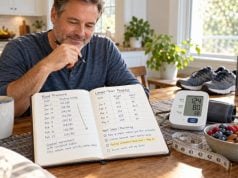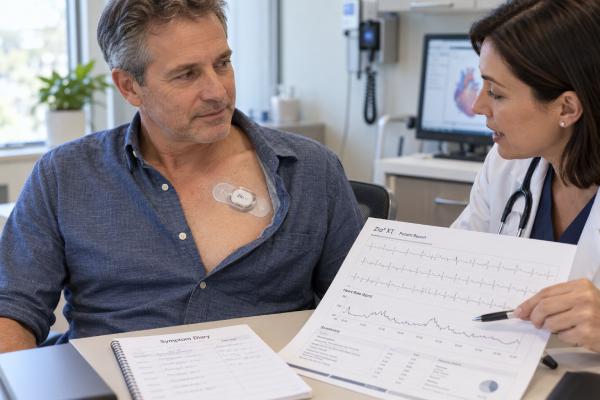
A Zio heart monitor is a small adhesive ECG patch that records the heart’s electrical rhythm continuously for several days, often up to 14 days. It is commonly ordered for intermittent symptoms such as palpitations, dizziness, fainting, or unexplained shortness of breath, and it can also be used to look for silent arrhythmias such as atrial fibrillation. The main advantage over a traditional 24- to 48-hour Holter monitor is time: an irregular rhythm that happens only once every few days is easier to capture during longer monitoring.
While you wear the patch, it records continuously. You may also press the symptom button and log what you felt so the report can compare your symptoms with the rhythm at that moment. After the wear period, the device is returned for analysis and a clinician reviews the report. A Zio monitor does not replace emergency care and, for standard long-term monitoring, it does not act like an emergency response device. Wear instructions matter because loose adhesive, heavy sweating, and water exposure can reduce usable recording time.
Table of Contents
- What a Zio patch monitor does
- Why doctors order Zio monitoring
- How to wear the patch and protect the adhesive
- How to log symptoms correctly
- What common Zio results mean
- What happens after the monitor is returned
- When to seek care while wearing a monitor
What a Zio patch monitor does
The Zio monitor is a prescription ambulatory electrocardiogram, or ECG, device. It is worn on the chest and continuously records the electrical signals produced by each heartbeat. Current U.S. Zio monitor information describes it as a single-use device that can record continuously for up to 14 days in adults, although your clinician may prescribe a shorter wear period.
Unlike a blood-pressure monitor, the patch does not measure blood pressure. Unlike a smartwatch, its primary job is not to estimate pulse from light reflected through the skin. It records a single-lead ECG signal that can be reviewed for rhythm abnormalities such as atrial fibrillation, atrial flutter, pauses, bradycardia, supraventricular tachycardia, ventricular tachycardia, and premature beats.
Longer recording is valuable because arrhythmias are often intermittent. A person can have a normal ECG in the clinic and still have an abnormal rhythm hours or days later. Studies of patch monitoring have repeatedly shown that events can first appear after the first 24 to 48 hours. That is the central reason a patch may be chosen when symptoms are not daily.
Extended monitoring also helps separate frequent harmless findings from rarer clinically important ones. A 10- to 14-day record can show whether premature beats happen occasionally or make up a meaningful share of total beats, whether a fast rhythm lasts seconds or minutes, and whether nighttime slowing is brief or prolonged. That broader context is difficult to obtain from a short office ECG or a one-day recording.
The Zio family includes different products and service models, so exact features can differ. Some systems are intended for continuous recording that is analyzed after return, while other cardiac telemetry products may have different transmission or notification functions. Follow the instructions for the exact device you were given rather than assuming every Zio product works the same way.
A patch also differs from an implantable loop recorder, which is placed under the skin and can monitor for months or years. If symptoms occur only a few times per year, a two-week patch may still miss them. The best monitor depends on how often symptoms occur and what your clinician is trying to detect. A comparison of Holter and event monitoring can help explain why different durations are chosen.
Why doctors order Zio monitoring
Doctors often order ambulatory ECG monitoring when a symptom could be caused by an arrhythmia but a standard ECG has not provided the answer. Common reasons include palpitations, unexplained dizziness, near-fainting, fainting, episodic shortness of breath, or a sensation that the heart suddenly races or skips.
The monitor may also be used after a stroke or transient ischemic attack when clinicians are looking for intermittent atrial fibrillation. Atrial fibrillation can come and go without obvious symptoms, yet detecting it may change decisions about stroke prevention. The diagnostic yield depends strongly on the population being tested; not every person with a patch will have an important arrhythmia.
Another common reason is to measure “burden,” meaning how much time the heart spends in a particular rhythm. For example, a report may estimate the percentage of analyzed time spent in atrial fibrillation. It can also quantify premature atrial or ventricular beats. These numbers help a clinician judge whether a finding is occasional and likely benign or frequent enough to warrant further evaluation.
Symptoms alone cannot reliably identify rhythm type. A pounding sensation can occur during a normal fast sinus rhythm, premature beats, atrial fibrillation, supraventricular tachycardia, or anxiety. If palpitations are the main reason for testing, common causes of palpitations provide useful context, but the ECG recording is what allows rhythm-specific interpretation.
The patch is also useful when symptoms do not correlate with an arrhythmia. If a patient presses the button during dizziness and the ECG shows normal sinus rhythm, that information can steer the workup toward other causes. It does not mean the symptom was imaginary; it means an abnormal rhythm was not present during that captured episode.
How to wear the patch and protect the adhesive
Good skin contact is essential because the device depends on a clear electrical signal. The patch is usually applied to clean, dry skin on the upper chest. Hair may need to be clipped, and lotions or oils should be avoided under and around the adhesive.
For current U.S. Zio monitor instructions, the first 24 hours are especially important. Patients are generally told to avoid showering, bathing, swimming, and activities that cause heavy sweating during that initial period so the adhesive can bond well. After the first 24 hours, brief showers may be allowed, but the monitor should not be submerged. Your supplied instructions take priority because product versions and regional guidance can differ.
Useful wear tips include:
- Keep soap, lotion, oils, and creams away from the patch edges.
- Avoid swimming, hot tubs, and any activity that submerges the device.
- Limit heavy sweating if it makes the adhesive lift.
- After showering, pat or towel around the patch carefully rather than rubbing it.
- Support the monitor with one hand while drying if your instructions recommend it.
- Do not add tape, glue, or another adhesive unless the manufacturer or clinic tells you to.
- Follow the prescribed wear duration even if you have already felt symptoms, unless a clinician tells you to remove it.
Mild itching can occur with adhesives, but worsening redness, blistering, severe itching, swelling, or signs of an allergic reaction should not be ignored. Manufacturer instructions advise contacting support or the clinical team for significant skin irritation. In some cases, the patch should be removed early.
If the patch partly lifts, do not assume it is still recording perfectly. Follow the troubleshooting directions provided with the device. If it falls off completely, contact the clinic or manufacturer support rather than trying to improvise a reapplication.
Daily life is usually possible while wearing the patch. Sleeping, walking, desk work, and many routine activities are compatible with monitoring. Exercise may be allowed after the initial adhesion period, but excessive sweat can loosen the device. If exercise is one of your usual symptom triggers, ask the prescribing team whether they want you to reproduce that activity during monitoring and what intensity is safe.
How to log symptoms correctly
The patch records continuously whether or not you press the button. The symptom marker is useful because it tells the report reviewer when you noticed something. That allows the ECG around that time to be compared with your experience.
When a symptom occurs, press the button as instructed and record the symptom in the diary or app if your device uses one. Be specific. “Fluttering for 20 seconds while sitting” is more useful than “felt bad.” Note what you were doing and whether you had dizziness, chest discomfort, shortness of breath, or near-fainting.
Common entries include:
- Racing or pounding heartbeat.
- Fluttering or irregular beats.
- Skipped-beat sensation.
- Dizziness or lightheadedness.
- Shortness of breath.
- Chest discomfort.
- Near-fainting or fainting.
If you forget to press the button, the ECG is still being recorded. If you press the button but forget to write the symptom down, the marker still provides a timestamp. Do not repeatedly press the button for every normal heartbeat; use it for events that matter clinically.
Symptom-rhythm correlation is often one of the most useful parts of the final report. For example, a sensation of a “skipped beat” may correspond to a premature ventricular contraction, or PVC. If PVCs are found, PVC causes and warning signs can help you understand why frequency and symptoms matter.
A symptom marker is not an emergency alert. Standard Zio monitoring does not summon help when you press the button. If you have severe symptoms, seek medical care rather than waiting for someone to see the recording.
What common Zio results mean
The report can look intimidating because it compresses days of rhythm data into a few pages. The most important findings are usually the predominant rhythm, heart-rate range, arrhythmia episodes, ectopic-beat burden, pauses or blocks, and whether symptoms matched a rhythm change.
Sinus rhythm
Sinus rhythm means the heartbeat is being initiated by the sinus node, the heart’s normal pacemaker. A report may show sinus bradycardia during sleep or sinus tachycardia during exercise. Those findings can be normal depending on the rate, symptoms, medications, and context.
Atrial fibrillation or atrial flutter
Atrial fibrillation is an irregular atrial rhythm that can increase stroke risk in some patients. The report may list the longest episode and an estimated burden. A small burden is not automatically harmless or automatically an indication for medication; treatment depends on age, stroke-risk factors, symptoms, episode duration, and the clinical situation. If AF is newly detected, review atrial fibrillation symptoms and warning signs and discuss the report with the prescriber.
Supraventricular tachycardia
Supraventricular tachycardia, or SVT, is a fast rhythm that begins above the ventricles. Short runs lasting only a few beats are common on long recordings and may not require treatment. Longer episodes, very rapid rates, or symptom correlation may be more important.
Premature atrial and ventricular beats
Premature atrial contractions and PVCs are early beats. Nearly everyone has some. Reports often express them as rare, occasional, frequent, or as a percentage burden. The interpretation depends on the amount, pattern, symptoms, and whether structural heart disease is present.
Pauses, slow rhythms, and conduction block
A pause means there was a longer-than-usual interval between beats. Some pauses occur during sleep and are benign; others can signal sinus-node or conduction disease. Second- or third-degree atrioventricular block can be clinically important. The report must be interpreted in context rather than by one number alone.
Ventricular tachycardia
Nonsustained ventricular tachycardia is a run of fast beats originating in the ventricles that stops on its own. Its significance varies widely. A brief run in a structurally normal heart can have a different meaning from the same finding in someone with cardiomyopathy or prior heart attack. This is one result that often prompts a closer clinical review.
The report may also list a minimum, maximum, and average heart rate. The single highest rate does not automatically represent a dangerous arrhythmia; it may have occurred during exercise and still have been sinus rhythm. Likewise, a very low sleeping rate may be normal in a trained person. Rhythm type matters as much as the number.
What happens after the monitor is returned
At the end of the prescribed wear period, the patch is removed and returned according to the supplied instructions. The recorded ECG is then processed and analyzed, and the findings are assembled into a report for the ordering clinician.
The report is not simply a raw algorithm output. Current iRhythm service information describes automated analysis plus review or curation by qualified ECG specialists before the final report is provided to the clinician. The clinician then interprets the findings in light of symptoms, medical history, medications, previous ECGs, and other tests.
Turnaround time varies by service, shipping, product, and clinic workflow. If your symptoms are ongoing, do not wait for the report if you need medical attention. Monitoring is a diagnostic process, not a treatment.
Possible next steps after the report include no further testing, medication changes, an echocardiogram, a longer event monitor, an implantable loop recorder, referral to a cardiologist or electrophysiologist, or treatment for a documented arrhythmia. A normal patch does not rule out every intermittent rhythm problem if the event never occurred during the wear period.
It is reasonable to ask for the actual report rather than only hearing “normal” or “abnormal.” Useful questions include: What rhythm matched my symptoms? Was atrial fibrillation present? What was the ectopic burden? Were there pauses or conduction problems? Did any finding require follow-up? Understanding the report can prevent unnecessary worry about incidental short runs that are common on long recordings.
Keep in mind that reports are designed for clinicians, so some terms may sound alarming without being dangerous. “Rare ectopy,” a few brief supraventricular runs, or a low sleeping rate can be normal in context. The opposite is also true: a modest-looking number can matter if it matches fainting or occurs in someone with structural heart disease. The report should always be interpreted alongside your symptoms and medical history.
For people who also use consumer ECG devices, remember that a medical patch and a spot-check device answer different questions. A home ECG device records brief samples when you choose, while the patch records continuously during the prescribed period.
When to seek care while wearing a monitor
Do not use the patch as a reason to delay emergency care. The device records rhythm, but standard long-term patch monitoring is not designed to provide immediate treatment or guarantee real-time recognition of a dangerous event.
Call emergency services for severe chest pain or pressure, fainting with ongoing symptoms, severe shortness of breath, new one-sided weakness or trouble speaking, sustained very rapid palpitations with collapse or near-collapse, or any other symptom that feels like a medical emergency. Pressing the monitor button is not a substitute for calling for help.
Contact the prescribing clinic promptly for repeated near-fainting, worsening palpitations, new exercise-related symptoms, or concerning skin reactions even if the symptoms are not severe enough for emergency care. If the device falls off early or cannot be worn because of a rash, the team can decide whether the monitoring period was adequate or whether another device is needed.
Most people complete patch monitoring without major problems, and a little preparation can make the wear period easier, more comfortable, and more successful overall for patients. The best results come from wearing it for the full prescribed period, keeping it attached, logging meaningful symptoms, and then reviewing the findings with the clinician who knows why the test was ordered. A Zio report is most useful when it answers a specific question: what rhythm was happening when you felt symptoms, and did anything clinically important occur when you felt nothing at all?
References
- Zio® monitor Safety Information 2026 (Official Device Information)
- Identifying Demographic Factors Affecting the ECG Duration Collected Using a Single-Lead ECG Patch Device 2025
- Limited Diagnostic Yield of Long-Term Rhythm Monitoring for ED Observation Unit Patients Evaluated for Transient Ischemic Attack 2025
- Comparative effectiveness and healthcare utilization for ambulatory cardiac monitoring strategies in Medicare beneficiaries. 2024
- Continuous cardiac rhythm monitoring post-stroke: A feasibility study in REGARDS 2022
Disclaimer
This article is general information and does not replace the instructions supplied with your specific monitor or advice from the clinician who prescribed it. Device models and wear instructions can differ, so follow your current product materials. Seek emergency care for severe chest pain, fainting, major breathing difficulty, stroke symptoms, or other urgent symptoms rather than waiting for monitor results.