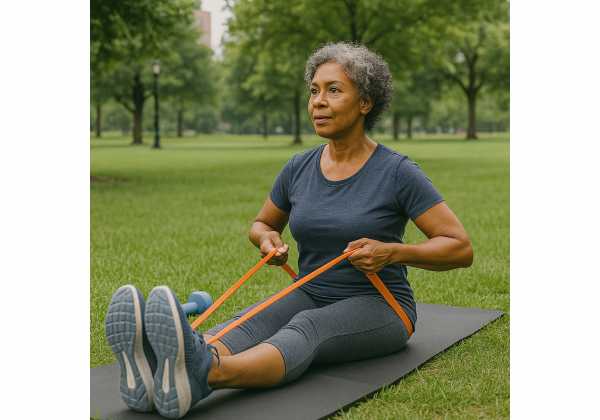
Travel does not have to break the habits that keep your body strong, steady, and fit with age. A small hotel room, a quiet corner of a park, a stairwell, or a flat path gives enough space for useful training when the plan is simple. The best travel workouts protect the basics: leg strength, upper-body pushing and pulling, hip mobility, balance, brisk walking, and short bursts that raise breathing without turning the session into punishment.
A good travel session feels different from a full gym workout. It uses fewer tools, shorter blocks, and more attention to control. You train the patterns that keep daily life easier: getting up from a chair, climbing stairs, carrying bags, catching yourself during a stumble, and walking longer without fatigue. With the right circuit, 20 to 35 minutes keeps momentum alive until your normal routine returns.
Table of Contents
- Why Travel Workouts Work for Healthy Aging
- Rules for Safe Travel Training
- Hotel Room Circuit: Strength in a Small Space
- Park Circuit: Strength, Balance, and Terrain
- Cardio and VO₂max Options Without a Gym
- Mobility, Balance, and Recovery on the Road
- A Simple Weekly Travel Plan
- Common Travel Workout Mistakes
Why Travel Workouts Work for Healthy Aging
Travel workouts work because healthy aging depends more on repeated training signals than perfect conditions. Your muscles, heart, joints, tendons, and nervous system respond to regular movement. A short session that trains the whole body beats a skipped week while waiting for a better gym.
For adults, strong evidence supports at least 150 to 300 minutes of moderate aerobic activity per week, plus muscle-strengthening work on 2 or more days. Older adults also benefit from balance and coordination training because falls often start with a small loss of control, not a dramatic accident. A travel circuit combines these needs in a compact format.
The main challenge is not exercise selection. It is making the workout clear enough to do when sleep, meals, schedule, and location change. Travel often adds long sitting, heavy bags, unfamiliar beds, irregular meals, and more walking than usual. The session should restore energy, not drain it.
A useful travel workout includes four pieces:
- Lower-body strength: squats, split squats, step-ups, bridges, or hinges.
- Upper-body strength: push-ups, rows, carries, presses, or towel-based pulling.
- Cardio: brisk walking, stairs, hill repeats, intervals, or fast circuits.
- Balance and mobility: single-leg work, ankle range, hip control, and trunk stability.
This is why circuit training fits travel so well. A circuit moves through several exercises with short rests. It saves time, keeps the heart rate up, and trains daily movement patterns. For long-term strength progress, a structured plan still matters. A travel circuit simply protects the habit and gives enough stimulus to maintain fitness between normal training weeks. For a broader strength framework, a weekly strength plan for longevity helps organize heavier sessions when you are home.
The best travel workout also respects fatigue. A hard session after a red-eye flight, poor sleep, and dehydration is rarely wise. A moderate circuit, a brisk walk, and 8 minutes of mobility often give a better return. Healthy aging training rewards consistency, not heroic single workouts.
Rules for Safe Travel Training
Safe travel training starts with control. Unfamiliar surfaces, tight rooms, wet grass, steep stairs, and jet lag all change how your body responds. The right session leaves you feeling more capable for the rest of the day.
Use effort before speed. Rate of perceived exertion, or RPE, is a simple 1 to 10 effort scale. An RPE of 5 feels steady and conversational. An RPE of 7 feels challenging but controlled. An RPE of 9 feels near your limit. Most travel strength circuits should stay around RPE 6 to 8. Save all-out work for familiar settings.
A good travel warm-up takes 5 to 8 minutes:
- Walk briskly in place or around the block for 2 minutes.
- Do 8 slow bodyweight squats.
- Do 8 hip hinges with hands on hips.
- Do 6 step-back lunges per side, shallow if needed.
- Do 8 wall push-ups or incline push-ups.
- Stand on one leg for 20 seconds per side near support.
- Take 5 slow breaths, expanding the ribs and belly.
This warm-up checks joints, balance, breathing, and space. It also helps you notice warning signs before the work starts. Stop or scale down if you feel chest pressure, unusual shortness of breath, dizziness, sharp joint pain, sudden weakness, or pain that changes your gait.
Use the “two-rep reserve” rule for strength moves. End each set when you feel you have about two clean reps left. This protects technique and reduces soreness. Travel often involves stairs, walking tours, luggage, and long standing. Sore legs turn a good trip into a chore.
Choose stable surfaces. In a hotel room, move loose rugs, bags, cords, and rolling chairs. In a park, avoid wet leaves, gravel patches, uneven roots, and busy paths. A bench works for step-ups only when it is solid, dry, and low enough for clean control.
Footwear matters. Barefoot hotel workouts are fine for slow mobility and controlled floor work, but use shoes for jumping, stair intervals, park circuits, and lateral drills. If your knees or hips prefer lower-impact training, use the same modification logic described in knee- and hip-friendly training: shorter range, slower tempo, more support, and fewer jumps.
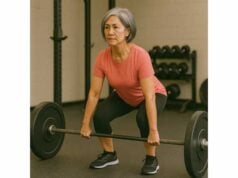
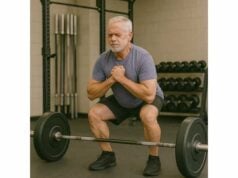
Keep breath steady during strength work. Exhale during the hard part of a push-up, squat, or step-up. Avoid long breath holds unless you already train that skill. Bracing matters, but travel workouts do not need maximal pressure. For heavier lifting days at home, bracing and breathing fundamentals help protect the spine and improve force.
Use a simple stop rule: technique ends the set. If your knee caves inward, your lower back arches during push-ups, your foot slaps the floor on step-downs, or your balance becomes sloppy, pause. Rest 30 to 60 seconds, reduce the range, or choose an easier version.
Hotel Room Circuit: Strength in a Small Space
A hotel room workout should be quiet, low-equipment, and easy to adjust. You need enough room to lie down, step back, and place your hands on a bed, desk, or wall. The bed works for incline push-ups and supported split squats, but avoid standing on it or using unstable furniture.
This circuit takes 24 to 32 minutes including warm-up. It trains legs, hips, chest, shoulders, core, balance, and breathing.
| Exercise | Beginner | Moderate | Harder |
|---|---|---|---|
| Sit-to-stand or squat | 8 reps from chair or bed | 10–15 bodyweight squats | 3-second lowering squats |
| Incline push-up | Wall push-up, 8–12 reps | Hands on desk, 8–12 reps | Hands on floor, 6–10 reps |
| Hip bridge | 10 two-leg bridges | 12–15 bridges with pause | 8 single-leg bridges per side |
| Suitcase row or towel row | Backpack row, 8 per side | Loaded suitcase row, 10 per side | Slow 3-second lowering row |
| Step-back lunge | Supported shallow lunge, 6 per side | 8–10 per side | Rear-foot hover split squat |
| Dead bug or plank | Dead bug, 6 per side | Forearm plank, 20–40 seconds | Shoulder-tap plank, 8 per side |
Do 2 to 4 rounds. Rest 30 to 60 seconds between exercises, or 90 seconds between rounds if breathing climbs too high. Keep the pace smooth. The session should feel like training, not a race.
How to make bodyweight moves strong enough
Without heavy weights, use tempo, range, pauses, and unilateral work. A slow squat with a 3-second lowering phase and a 1-second pause at the bottom feels much harder than a fast squat. A split squat loads one leg more than a regular squat. A push-up with hands lower than a desk demands more strength than a wall push-up.
For healthy aging, these details matter because strength is not only muscle size. It is also coordination, tendon tolerance, joint control, and the ability to produce force from safe positions. A hotel circuit should train control first, then difficulty.
Try these upgrades:
- Add a pause at the hardest position.
- Slow the lowering phase to 3 seconds.
- Use a single-leg version when two-leg work feels easy.
- Hold a backpack or suitcase close to your chest.
- Shorten rest only after technique stays clean.
For pulling, pack a light resistance band when possible. It takes almost no space and makes rows, pull-aparts, face pulls, and anti-rotation presses easier to program. Without a band, a loaded backpack row and a towel isometric row still help. For the towel row, hold a towel with both hands, step on the middle with one foot, hinge slightly, and pull upward while the foot resists. This is an isometric exercise, which means the muscles work without visible movement. Hold 10 to 20 seconds.
Quiet hotel finisher
When you want a little conditioning without disturbing anyone, use this 6-minute finisher:
- 40 seconds brisk marching
- 20 seconds rest
- 40 seconds alternating reverse lunges or sit-to-stands
- 20 seconds rest
- 40 seconds shadow boxing without impact
- 20 seconds rest
Repeat twice. Keep feet soft and breathing rhythmic. This gives a heart-rate lift without jumping, stomping, or using equipment.
Park Circuit: Strength, Balance, and Terrain
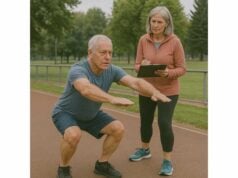
A park gives you more space, fresh air, benches, hills, stairs, rails, and uneven ground. It also adds risk if you move too fast on poor surfaces. Start by scanning the area. Choose a flat patch for strength work, a stable bench, and a walking loop you can see clearly.
The park circuit works best after 5 minutes of brisk walking. Use a bench only if it is solid and dry. Keep valuables secure and avoid isolated areas when training alone.
Do 3 rounds of this circuit:
- Bench sit-to-stand or squat: 10 to 15 reps.
- Incline bench push-up: 8 to 12 reps.
- Step-up: 6 to 10 reps per side.
- Park row alternative: resistance band row around a post, 10 to 15 reps, or backpack row, 10 per side.
- Farmer carry: carry two bags or one suitcase for 30 to 60 seconds.
- Tandem walk: walk heel-to-toe for 10 to 20 steps near support.
- Brisk walk: 2 minutes before the next round.
This format blends strength and aerobic work. The step-up trains stair ability, hip strength, and balance. The carry trains grip, posture, trunk stiffness, and real-life load tolerance. Grip strength also connects closely to daily function, which makes carries especially valuable during travel. For at-home testing and tools, grip strength training gives useful ways to track progress.
Using hills and stairs well
Hills and stairs build leg strength and cardiorespiratory fitness with little equipment. They also load calves, knees, hips, and Achilles tendons more than flat walking. Use them in small doses.
A safe hill block:
- Walk uphill for 30 to 60 seconds at RPE 6 to 7.
- Walk downhill slowly.
- Repeat 4 to 8 times.
- Keep posture tall and steps short.
A safe stair block:
- Climb 1 to 3 flights at a steady pace.
- Walk down slowly, holding the rail if needed.
- Rest until breathing settles.
- Repeat 3 to 6 times.
Do not sprint down stairs. Downhill and downward stair movement adds braking force. That eccentric load often creates soreness, especially when you have not trained it recently. If you want more outdoor conditioning progressions, hills, stairs, and terrain workouts offer a natural next step.
Adding agility without risky speed
Agility supports healthy aging because life demands direction changes: stepping around luggage, avoiding a curb, reacting to a dog, or regaining balance after a bump. Travel is a good time to practice low-risk agility, not maximal cutting.
Try this 4-minute park drill:
- Side-step 10 steps right and 10 steps left.
- Walk backward 10 controlled steps while looking over your shoulder first.
- Step over an imaginary line forward and back 10 times.
- Turn 90 degrees, pause, and walk 5 steps.
- Repeat the sequence 2 to 3 times.
Keep the feet quiet. Look before moving backward. Skip this drill on gravel, wet grass, sand, or crowded paths. For more structured drills, agility and reaction time training pairs well with balance work.
Cardio and VO₂max Options Without a Gym
Travel cardio should match your current fitness and the demands of the trip. A city vacation with 18,000 steps per day does not need extra long cardio. A work trip with 9 hours of sitting does. Use walking as the base, then add short intervals when you feel ready.
VO₂max is the body’s maximum ability to use oxygen during hard exercise. Higher cardiorespiratory fitness is linked with better health outcomes, but you do not need lab testing to train it. Intervals that raise breathing near hard but controlled levels provide a strong signal. During travel, keep intervals simple and safe.
Use this intensity guide:
| Zone | Feel | Best Travel Use |
|---|---|---|
| Easy | You can talk in full sentences | Recovery walks, airport walking, after meals |
| Moderate | You can talk in short sentences | Brisk walking, longer park loops, sightseeing pace |
| Hard | You speak only a few words | Short hill, stair, or fast-walk intervals |
A simple interval session takes 18 to 24 minutes:
- Warm up with 6 minutes of easy walking.
- Walk fast uphill, climb stairs, or march hard for 30 seconds.
- Recover easy for 90 seconds.
- Repeat 6 to 8 times.
- Cool down for 4 minutes.
This is not a sprint workout. The hard part should feel controlled. Breathing rises, but you stay aware of posture, foot placement, and surroundings. If you feel dizzy or unsteady, stop the intervals and walk easy.
Another option is a 10-minute “airport or hallway” interval:
- 1 minute brisk walk
- 1 minute easy walk
- Repeat 5 times
This works well on business trips because it needs no clothing change, no shower, and no equipment. It also breaks up sitting. Short movement breaks improve how the body handles long sedentary periods, and post-meal walking supports glucose control. For a related habit, post-meal walking and NEAT fit naturally into travel days.
Do harder cardio 1 to 3 times per week, based on your training age and recovery. More is not always better. Strength circuits, walking volume, poor sleep, and heat all add stress. When in doubt, use moderate walking and save intervals for days when your legs feel springy. A more complete interval framework is covered in VO₂max interval training.
Mobility, Balance, and Recovery on the Road
Travel stiffens the body in predictable places: ankles, hips, upper back, shoulders, and neck. Long sitting shortens the front of the hips, reduces ankle movement, and leaves the spine craving rotation. A daily 8- to 12-minute mobility routine keeps walking and training smoother.
Use this sequence after waking, after a flight, or before bed:
- Calf raises: 12 slow reps, holding a wall.
- Ankle rocks: 10 per side, knee moving over toes.
- Hip flexor stretch: 30 seconds per side.
- Figure-four stretch: 30 seconds per side.
- Open book rotation: 6 per side.
- Wall slides: 8 slow reps.
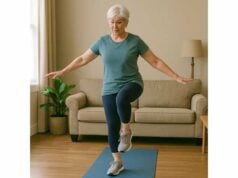
- Single-leg stand: 20 to 40 seconds per side.
- Slow sit-to-stand: 8 reps.
Balance deserves daily attention during travel because fatigue, new terrain, and distraction raise fall risk. Balance work should be safe, not theatrical. Stand near a wall, counter, or bench. Progress from two feet to split stance, then tandem stance, then single-leg stance. Add head turns only when the basic version feels stable.
A useful balance ladder:
- Feet together, 30 seconds.
- Semi-tandem stance, 30 seconds per side.
- Heel-to-toe stance, 20 seconds per side.
- Single-leg stand, 10 to 30 seconds per side.
- Single-leg stand with slow head turn, 5 turns per side.
Train balance when you are fresh. Do not practice challenging balance after alcohol, during dizziness, on slippery floors, or at the end of a hard interval session. Balance should sharpen the nervous system, not test your luck. For a fuller progression, daily balance and fall-prevention drills build from stable to more dynamic work.
Recovery also needs planning. Travel workouts often fail because the rest of the day becomes a hidden workout: hauling luggage, walking through terminals, standing in lines, sleeping poorly, and eating later than usual. Keep the first session after arrival moderate. Drink water, include protein at meals, and use light movement to reset stiffness.
Sleep changes training tolerance. One poor night does not erase fitness, but it reduces coordination and raises perceived effort. After a bad night, choose mobility, easy walking, and light strength. Save fast stairs, hill repeats, and high-rep leg circuits for better-rested days. Sleep wearables and heart-rate data sometimes help, but body signals still matter. For interpreting recovery numbers, resting heart rate and HRV tracking provides a practical guide.
A Simple Weekly Travel Plan
A travel week should preserve your base, not compete with your best home training block. Use three planned sessions and daily walking. Add more only when energy is good.
| Day | Session | Time | Effort |
|---|---|---|---|
| Day 1 | Arrival walk plus mobility | 20–30 minutes | Easy |
| Day 2 | Hotel room strength circuit | 25–35 minutes | Moderate |
| Day 3 | Brisk walk or sightseeing walk | 30–60 minutes | Easy to moderate |
| Day 4 | Park circuit or stair intervals | 25–35 minutes | Moderate to hard |
| Day 5 | Mobility and balance | 10–20 minutes | Easy |
| Day 6 | Full-body circuit or long walk | 25–60 minutes | Moderate |
| Day 7 | Easy walk and stretching | 20–40 minutes | Easy |
Adjust the plan around the trip. On a conference day, use a 12-minute hotel circuit in the morning and a 10-minute walk after dinner. On a hiking day, skip extra leg work. On a family travel day, do mobility and balance before breakfast.
The 12-minute minimum session
Use this when the day feels crowded:
- 2 minutes brisk marching or walking
- 10 squats or sit-to-stands
- 8 incline push-ups
- 10 hip bridges
- 8 backpack rows per side
- 20-second single-leg stand per side
- Repeat the strength sequence twice
This session protects the habit. It also gives joints and muscles a clear signal: training continues. When motivation is low, start with the warm-up only. Most people finish the short circuit once they begin.
The 35-minute full session
Use this when you have more time:
- 6-minute warm-up
- 3 rounds of the hotel or park circuit
- 6 rounds of 30-second brisk intervals with 60-second easy recovery
- 5-minute cool-down and mobility
Do this no more than 2 or 3 times in a travel week unless you already tolerate higher training loads. If your legs feel heavy on stairs the next day, reduce lower-body volume and walk easy.
Progress does not require constant novelty. Repeat the same circuit across the trip and improve one small variable: one extra rep, smoother balance, shorter rest, deeper control, or slightly better breathing. Simple repetition builds skill.
Common Travel Workout Mistakes
The biggest mistake is treating travel training as either all or nothing. Some people abandon training entirely. Others try to punish themselves with brutal hotel workouts after sitting all day. Neither approach serves healthy aging.
Mistake 1: Doing too many jumping moves. Jump squats, burpees, and high knees raise heart rate fast, but they also add noise, impact, and sloppy landings when space is tight. Use step-ups, fast walking, incline push-ups, carries, and controlled lunges first. Add jumps only when your joints tolerate them and the surface is safe. Low-impact power work is better developed with planned progressions like low-impact plyometrics.
Mistake 2: Ignoring pulling exercises. Push-ups are easy to do anywhere, but pulling is harder without equipment. Pack a band or use backpack rows. Balanced upper-body training supports posture, shoulders, and carrying ability.
Mistake 3: Turning every circuit into cardio. Fast circuits feel productive, but rushed reps reduce strength benefits. Keep strength sets controlled. Add a separate finisher when you want conditioning.
Mistake 4: Training hard after poor sleep. Travel already stresses recovery. A tired brain has slower reaction time and weaker balance. Choose easy walking, mobility, and light strength after rough sleep.
Mistake 5: Skipping warm-ups in unfamiliar places. Warm-ups reveal problems. A stiff ankle, sore knee, or unstable surface becomes obvious before you load it.
Mistake 6: Forgetting the return home. The first gym session after travel should feel like a ramp, not a test. Use slightly fewer sets or lighter loads for one session, especially after long flights or high walking volume. A planned ramp-up after disruptions follows the same logic as returning to training after illness or injury: rebuild rhythm before intensity.
A good travel workout leaves you capable for the trip itself. You should climb stairs, carry bags, sleep well, and enjoy the day. The session supports life outside the workout.
References
- WHO guidelines on physical activity and sedentary behaviour: at a glance 2021 (Guideline)
- Older Adult Activity: An Overview 2025 (Official Page)
- Physical Activity Benefits for Adults 65 or Older 2025 (Official Page)
- Midcourse Report: Implementation Strategies for Older Adults 2026 (Official Report)
- Home-based high-intensity interval training improves cardiorespiratory fitness: a systematic review and meta-analysis 2023 (Systematic Review)
- Effects of resistance training in healthy older people with sarcopenia: a systematic review and meta-analysis of randomized controlled trials 2021 (Systematic Review)
Disclaimer
This article is educational and does not replace personal guidance from a qualified health, medical, or fitness professional. Ask a clinician or physical therapist before starting new exercise if you have chest pain, unexplained dizziness, recent surgery, uncontrolled blood pressure, major balance problems, or a condition that changes safe exercise choices. Stop any workout that causes sharp pain, faintness, chest pressure, or unusual shortness of breath.