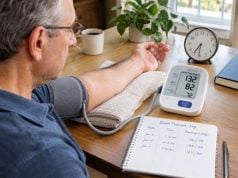

For cholesterol and blood pressure, the best answer is usually not cardio or weights—it is both. Aerobic exercise has the strongest track record for improving cardiorespiratory fitness, lowering blood pressure, reducing triglycerides, and helping with body fat. Resistance training can also lower resting blood pressure and modestly improve cholesterol while preserving or building muscle, which supports long-term metabolic health. Studies comparing exercise types suggest that combined aerobic and resistance training often gives the broadest cardiovascular benefit. The effects on LDL cholesterol are real but usually modest, so exercise should be paired with diet, weight management when appropriate, and medication when risk is high enough to require it. For blood pressure, regular training can lower systolic pressure by several mm Hg on average, with larger changes often seen in people who start with hypertension. A practical weekly plan is 150 minutes of moderate aerobic activity plus strength training on at least 2 days, adjusted for your fitness, medical conditions, and current blood pressure.
Table of Contents
- Cardio versus weights: the short answer
- Which is better for blood pressure?
- Which is better for cholesterol?
- Why combining cardio and strength works so well
- How to build a weekly heart-health workout plan
- How to exercise safely with high blood pressure
- How to track whether your plan is working
Cardio versus weights: the short answer
Aerobic exercise and resistance training improve cardiovascular risk through overlapping but different pathways. Cardio challenges the heart and lungs continuously, improves cardiorespiratory fitness, increases energy use, and can reduce visceral fat. Strength training challenges skeletal muscle, improves strength and insulin sensitivity, preserves lean mass, and can reduce blood pressure even if the scale barely moves.
If you can do only one type right now, choose the one you can perform consistently and safely. Walking, cycling, swimming, jogging, dancing, or another aerobic activity is often the simplest starting point for someone focused on blood pressure. Strength training may be easier for someone who dislikes sustained cardio or needs to protect muscle while losing weight. Either is far better than remaining inactive.
For most adults, however, there is no need to choose. Current cardiovascular guidance supports a combination of aerobic and muscle-strengthening activity. The two modes are complementary, not competitors.
The benefits also extend beyond cholesterol and blood pressure. Cardio improves exercise capacity, while resistance training helps maintain muscle, bone strength, physical function, and glucose control. Together they make it easier to stay active as you age.
If your main concern is figuring out which type of aerobic work to do, Zone 2 cardio is one useful steady-intensity option, but brisk walking and other moderate activities work too. The “best” format is the one that lets you accumulate enough weekly activity without excessive soreness, injury, or burnout.
Which is better for blood pressure?
Both can lower resting blood pressure. A large 2023 network meta-analysis of randomized trials found average reductions in systolic and diastolic blood pressure with aerobic training, dynamic resistance training, combined training, high-intensity interval training, and isometric training. The exact ranking varied by method and study population, so it is more useful to focus on the consistent message: several forms of regular exercise lower blood pressure.
Aerobic exercise has especially strong evidence and is easy to dose. A brisk 30-minute walk on most days can be enough to make a measurable difference. Dynamic resistance training—such as squats, rows, presses, and other movements against resistance—also lowers resting pressure over time, particularly in people whose blood pressure starts high.
The average change is often in the range of a few mm Hg, but averages hide individual variation. Someone with hypertension may see a larger decrease than someone whose pressure is already normal. Weight loss, reduced sodium intake, better sleep, and medication can add to the effect.
Importantly, blood pressure behaves differently during a workout than at rest. During aerobic exercise, systolic pressure normally rises as the heart pumps more blood. During heavy lifting, especially when you strain or hold your breath, pressure can rise sharply for a short period. That temporary rise does not mean strength training is bad for hypertension, but it does make technique and load selection important.
A 2025 U.S. blood pressure guideline continues to include physical activity as a core lifestyle treatment. Exercise is not a substitute for medication when medication is indicated, but it can reduce blood pressure and improve other risk factors at the same time. If you need a broader routine, safe exercise choices for high blood pressure can help you match activity to your starting level.
Which is better for cholesterol?
Exercise improves the lipid profile, but the changes are generally smaller than the changes many people expect. A 2025 systematic review and meta-analysis of randomized trials found that exercise training lowered total cholesterol, LDL cholesterol, and triglycerides while raising HDL cholesterol on average. The LDL reduction was modest—roughly 7 mg/dL across studies—while triglycerides and HDL also improved.
Aerobic exercise tends to have the clearest effect on triglycerides and HDL, especially when the volume is high enough to improve fitness and reduce body fat. Resistance training can also improve lipids, but LDL results are somewhat less consistent. The American Heart Association’s scientific statement on resistance exercise describes favorable but generally modest effects on total cholesterol, triglycerides, and HDL, with variable LDL responses.
Combined training often performs well because it adds the metabolic effects of both modes. If you have 4 or 5 days available, there is little reason to make every session the same.
Exercise also changes lipoprotein characteristics that are not captured by a standard lipid panel. Aerobic training may improve some atherogenic lipid ratios and apolipoprotein measures. Still, exercise cannot be assumed to “cancel out” a high LDL caused by genetics or a diet high in saturated fat.
If your LDL is significantly elevated, diet usually provides a larger direct lever than exercise alone. Replacing saturated fat with unsaturated fat and increasing soluble fiber can produce additional reductions. See foods that lower cholesterol through fiber and healthier fats for the dietary side of the plan.
For someone with severe hypercholesterolemia or high cardiovascular risk, medication may be needed even with excellent fitness. A healthy lifestyle lowers risk in many ways, but it does not make LDL irrelevant.
Why combining cardio and strength works so well
Cardio and resistance training solve different problems. Aerobic work is efficient for improving VO2 max, endothelial function, and stamina. Strength work improves muscle quality, insulin sensitivity, function, and the ability to handle daily physical demands. Combining them creates a more complete cardiovascular program.
Muscle is metabolically active tissue. Preserving it becomes especially important during weight loss and with aging. If you lose weight through diet and cardio alone, some of the lost mass can be muscle. Resistance training helps preserve lean mass, which supports strength and long-term weight maintenance.
Cardio, meanwhile, usually burns more energy during the session and is particularly effective for improving cardiorespiratory fitness. Higher fitness is strongly associated with lower cardiovascular and all-cause mortality. That is one reason a weekly program should not consist only of lifting, even if lifting is your favorite activity.
Combined training can also make adherence easier. You do not need to run every day or spend every session in a weight room. Variety reduces repetitive stress and gives sore muscle groups time to recover.
A simple division of labor works well:
- Use aerobic sessions to build endurance and accumulate moderate-intensity minutes.
- Use strength sessions to train major muscle groups through a comfortable range of motion.
- Use easy walking on rest days to reduce sedentary time and aid recovery.
- Progress one variable at a time—duration, frequency, resistance, or intensity—rather than increasing everything at once.
For people specifically interested in lifting, strength training has independent benefits for blood pressure and heart health. The goal is not to make strength training imitate cardio; it is to let each mode do what it does best.
How to build a weekly heart-health workout plan
A useful starting target for many adults is at least 150 minutes per week of moderate-intensity aerobic activity, or about 75 minutes of vigorous activity, plus muscle-strengthening exercise on at least 2 days. More activity can provide additional benefit, but the first goal is consistency.
Moderate intensity means your breathing is clearly faster, yet you can still speak in short sentences. For many people, brisk walking fits this definition. Vigorous exercise makes conversation difficult and is not required to improve heart health.
A balanced beginner week might look like this:
| Day | Workout | Primary goal |
|---|---|---|
| Monday | 30-minute brisk walk | Aerobic fitness and blood pressure |
| Tuesday | Full-body strength, 30–40 minutes | Muscle and metabolic health |
| Wednesday | 30-minute walk or cycle | Aerobic volume |
| Thursday | Easy activity or rest | Recovery |
| Friday | Full-body strength, 30–40 minutes | Muscle and metabolic health |
| Saturday | 45–60 minutes moderate cardio | Endurance and weekly volume |
| Sunday | Easy walk, mobility, or rest | Recovery and less sitting |
Strength sessions do not need dozens of exercises. A squat or sit-to-stand, hip hinge, push, pull, calf raise, and core movement can cover most major muscle groups. Begin with 1 to 3 sets of roughly 8 to 15 controlled repetitions at a resistance that leaves a few repetitions in reserve. Increase load gradually as technique improves.
If 150 minutes feels unrealistic, start much smaller. Three 10-minute walks per day can be easier to fit than one 30-minute session. Even a 5- or 10-minute walk after meals is useful. Building from zero to 60 or 90 minutes per week is a meaningful improvement, not a failure to hit the final target.
People who enjoy structured programming can learn how to combine Zone 2 and strength training across the week without making every day hard.
How hard do the workouts need to be?
You do not need maximal effort to improve cholesterol or blood pressure. For aerobic exercise, most weekly minutes can be comfortable to moderately challenging. A simple talk test is often enough: at moderate intensity you can speak, but you would not want to sing. Short intervals at a harder pace can improve fitness efficiently, but they are optional rather than mandatory.
For strength training, the set should feel purposeful without requiring grinding repetitions. Stopping with roughly 2 or 3 good repetitions still possible is a practical starting point for beginners and for people managing blood pressure. As you become stronger, gradually add resistance, repetitions, or sets. Cardiovascular benefit comes from repeated training over months and years, not from proving how hard you can work on one day.
The weekly dose also matters more than any single exercise. One hard weekend workout cannot fully compensate for sitting the rest of the week. Frequent walking, short movement breaks, and two manageable strength sessions can create a larger total activity dose with less fatigue. If you already exercise regularly, adding 10 to 20 minutes to two cardio sessions or adding a second strength day may be enough to move your program forward.
How to exercise safely with high blood pressure
Most people with controlled hypertension can and should exercise, but very high or poorly controlled blood pressure deserves medical guidance before hard training. If your resting readings are repeatedly high, confirm your measurement technique and discuss them with a clinician rather than trying to “sweat the pressure down” through an intense workout.
During strength training, breathe continuously. Exhale through the hardest part of the movement and avoid prolonged breath-holding or straining. The Valsalva maneuver can produce very large temporary blood pressure increases, especially with near-maximal lifts.
Use submaximal loads at first. You do not need one-repetition-maximum attempts to improve cardiovascular health. Moderate resistance performed with good form can build strength while keeping effort more controlled. Machines, resistance bands, dumbbells, and body-weight exercises can all work.
Warm up for 5 to 10 minutes, especially before vigorous cardio or lifting. Cool down rather than stopping suddenly after hard aerobic work. Stay hydrated, but follow any fluid restrictions if you have heart failure or kidney disease.
Stop exercise and seek medical evaluation if you develop chest pressure, fainting, severe unusual shortness of breath, new neurologic symptoms, or a rapid or irregular heartbeat that does not settle. Mild breathlessness and muscle fatigue are normal; alarming symptoms are not.
If you monitor blood pressure at home, use a validated upper-arm cuff and measure at rest, not immediately after a workout. Post-exercise blood pressure can be temporarily lower, which is a real physiological effect but not the best number for judging your usual resting control. For context, normal blood pressure ranges and thresholds explain how readings are classified.
How to track whether your plan is working
Judge an exercise program by more than body weight. Heart-health improvements can occur even when the scale changes slowly or not at all.
For blood pressure, use a consistent home-measurement routine. Sit quietly for about 5 minutes, support your back and arm, keep your feet flat, and avoid exercise, caffeine, and smoking for at least 30 minutes before measuring. Track several readings over days rather than reacting to one number. Your clinician may want morning and evening averages.
For cholesterol, repeat testing after enough time has passed for your new routine to become consistent. Depending on your situation, a clinician may recheck lipids after roughly 6 to 12 weeks or at a later follow-up. Look at LDL, non-HDL cholesterol, triglycerides, and HDL rather than focusing only on one marker.
Also track functional signs of progress. A brisk walk that once felt hard may become comfortable. You may recover faster after climbing stairs, lift the same weight with less effort, or need less rest between sets. These are real adaptations even if LDL changes only a few points.
If your blood pressure and lipids do not improve as much as hoped, do not respond by making every workout harder. Review the other major levers: sodium intake, saturated fat, soluble fiber, body weight if applicable, alcohol, sleep, smoking, medication adherence, and stress. Exercise is one component of cardiovascular risk reduction, not a stand-alone treatment.
Medication can also change how exercise feels. Beta blockers, for example, may keep heart rate lower during activity, so a standard target-heart-rate formula can be misleading. In that situation, perceived exertion and the talk test are often more useful, and your clinician can provide a personalized range if needed over several weeks.
The most effective plan is therefore a combined one: regular aerobic activity for fitness and endurance, resistance training for muscle and metabolic health, and enough recovery to keep both sustainable. Cardio may have a slight edge for triglycerides, fitness, and energy expenditure, while lifting has unique advantages for muscle and function. For cholesterol and blood pressure together, doing both is usually the stronger choice.
References
– Exercise training and resting blood pressure: a large-scale pairwise and network meta-analysis of randomised controlled trials 2023. Systematic review and network meta-analysis. – The Effect of Exercise Training on Blood Lipids: A Systematic Review and Meta-analysis 2025. Systematic review and meta-analysis. – Resistance Exercise Training in Individuals With and Without Cardiovascular Disease: 2023 Update: A Scientific Statement From the American Heart Association 2024. Scientific statement. – Estimating the Effect of Aerobic Exercise Training on Novel Lipid Biomarkers: A Systematic Review and Multivariate Meta-Analysis of Randomized Controlled Trials 2023. Systematic review and meta-analysis. – 2025 AHA/ACC/AANP/AAPA/ABC/ACCP/ACPM/AGS/AMA/ASPC/NMA/PCNA/SGIM Guideline for the Prevention, Detection, Evaluation and Management of High Blood Pressure in Adults: A Report of the American College of Cardiology/American Heart Association Joint Committee on Clinical Practice Guidelines 2025. Clinical practice guideline.
Disclaimer
This article provides general exercise education and does not replace individualized medical advice. People with uncontrolled hypertension, known cardiovascular disease, concerning exercise symptoms, or major medication changes should ask a qualified healthcare professional what intensity and resistance are appropriate. Do not stop blood pressure or cholesterol medication because you start exercising unless your clinician specifically changes your treatment plan.