A DHEA blood test measures dehydroepiandrosterone, a steroid hormone made mainly by the adrenal glands. DHEA is a building block that the body can convert into androgens and estrogens, but a single result does not directly measure testosterone, estrogen, fertility, or overall “hormone balance.” Doctors may order the test when evaluating unusual hair growth, acne, early puberty, possible adrenal disease, or an unexpected result on a related androgen test. DHEA changes through the day and clears from the blood relatively quickly, so it is more variable than DHEA sulfate, or DHEA-S. Age, sex, menstrual status, medicines, supplements, illness, and the laboratory method all affect interpretation. A high or low value therefore needs to be compared with the correct reference interval and with symptoms, examination findings, and other laboratory results. The result is usually most informative as one part of a focused adrenal or androgen evaluation.
- A DHEA test measures the unsulfated hormone, which fluctuates more than DHEA-S and may vary with collection time.
- High DHEA can reflect supplements, adrenal androgen excess, congenital adrenal hyperplasia, or rarely an adrenal tumor.
- Low DHEA may occur with aging, reduced ACTH drive, adrenal insufficiency, glucocorticoid use, or chronic illness.
- Normal ranges are strongly age- and method-dependent, so the range printed on the laboratory report should guide interpretation.
- Stop no prescribed medicine on your own, but tell the ordering clinician about DHEA products, steroids, hormonal therapy, and biotin.
Table of Contents
- What the DHEA Test Measures
- Why a DHEA Blood Test Is Ordered
- Preparation, Timing, and Sample Collection
- DHEA Normal Range and Age-Related Patterns
- Causes of a High DHEA Result
- Causes of a Low DHEA Result
- How DHEA Fits With Other Hormone Tests
- Follow-Up, Treatment, and DHEA Supplements
What the DHEA Test Measures
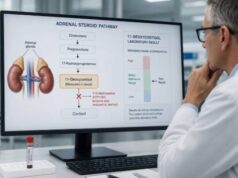
DHEA is an adrenal androgen precursor. “Precursor” means that enzymes in tissues can convert it into other steroid hormones, including androstenedione, testosterone, and estrogens. The adrenal cortex, especially its zona reticularis layer, produces most circulating DHEA under stimulation from adrenocorticotropic hormone, or ACTH. The ovaries and testes contribute smaller amounts, and tissues can also make local conversions that are not fully reflected by a blood level.
The test usually reports total DHEA in serum. It does not measure only the biologically active fraction, and it does not show how much DHEA is being converted inside skin, hair follicles, bone, brain, or reproductive tissues. For that reason, two people with similar DHEA values may have different symptoms or different levels of downstream hormones.
DHEA and DHEA-S are related but are not interchangeable. The adrenal glands attach a sulfate group to DHEA to form DHEA-S. This sulfated form circulates at much higher concentrations, has a longer half-life, and changes less during the day. DHEA itself has a shorter half-life, follows ACTH-related daily variation more closely, and may rise and fall in pulses. A clinician who wants a stable marker of adrenal androgen production often starts with a DHEA-S blood test. Direct DHEA measurement can still add information in selected cases, especially when a broader steroid profile is being reviewed.
A result should not be used as a stand-alone measure of adrenal “strength,” stress resilience, energy, libido, or biological age. DHEA declines with age, but that expected pattern does not prove a deficiency disease. Commercial wellness panels sometimes label a value “optimal” using a narrower range than a clinical laboratory. Those labels are not equivalent to a diagnosis and may encourage unnecessary supplementation.
Laboratories may measure DHEA with immunoassay or liquid chromatography–tandem mass spectrometry, often abbreviated LC-MS/MS. LC-MS/MS can better separate structurally similar steroids, particularly when concentrations are low. Results from different methods may not match exactly, so trends are most useful when the same laboratory and method are used.
Why a DHEA Blood Test Is Ordered
A DHEA blood test is usually ordered to answer a specific question about androgen production. It may be part of an evaluation for new or progressive signs of androgen excess, such as coarse facial or body hair, severe acne, scalp hair thinning, a deeper voice, increased muscle mass, or irregular menstrual periods. These features can arise from common conditions, including polycystic ovary syndrome, as well as from less common adrenal or ovarian disorders.
Clinicians may also use DHEA in children with early pubic or underarm hair, rapid growth, advanced bone age, acne, or other signs of premature androgen exposure. The result must be interpreted by age, sex, and pubertal stage. A value that is expected in a teenager may be distinctly abnormal in a young child. Pediatric evaluation often includes DHEA-S, androstenedione, testosterone, and 17-hydroxyprogesterone rather than DHEA alone.
Other reasons for testing include:
- Clarifying an abnormal DHEA-S, testosterone, or androstenedione result.
- Looking for an adrenal source of androgen excess when symptoms are rapid or severe.
- Assessing suspected nonclassic or classic congenital adrenal hyperplasia.
- Reviewing adrenal steroid production when an adrenal mass has been found on imaging.
- Supporting an evaluation for pituitary or adrenal failure when other findings point in that direction.
- Monitoring a known adrenal disorder or treatment under specialist care.
The test is not a general screening test for people without relevant symptoms. Fatigue, low mood, reduced libido, weight changes, and poor sleep are common and have many possible causes. A low-normal DHEA result does not establish “adrenal fatigue,” a term that is not recognized as a medical diagnosis. When true adrenal insufficiency is possible, evaluation centers on morning cortisol, ACTH, electrolytes, and often an ACTH stimulation test, not DHEA alone.
Urgent assessment is warranted when androgen-related changes develop quickly over months, especially voice deepening, clitoral enlargement, marked muscle changes, or rapidly worsening hirsutism. In a child, rapid virilization or accelerated growth also deserves prompt evaluation. These findings do not prove a tumor, but they increase the need for a structured workup.
Preparation, Timing, and Sample Collection
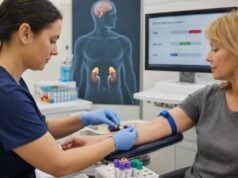
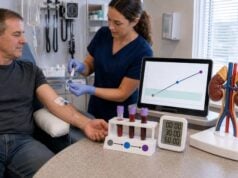
DHEA is measured from a standard blood sample, usually drawn from a vein in the arm. Fasting is not always required, but the ordering laboratory may combine DHEA with tests that do require fasting. Follow the instructions on the test order rather than assuming that food is irrelevant.
Because DHEA can show daily variation, many clinicians prefer a morning sample. Morning collection also makes it easier to compare results over time. If repeat testing is needed, using a similar collection time, laboratory, and method reduces avoidable variation. Acute stress, strenuous exercise, sleep disruption, and illness may affect adrenal hormone output, so a nonurgent test may be postponed until a person has recovered from a major temporary illness.
Provide a complete list of medicines and supplements. The most important disclosures include:
- DHEA, “adrenal support,” bodybuilding, anti-aging, or fertility supplements.
- Prescription glucocorticoids such as prednisone, dexamethasone, hydrocortisone, or methylprednisolone.
- Inhaled, injected, topical, or joint-injected steroids, which can also suppress the hypothalamic-pituitary-adrenal system.
- Oral contraceptives, estrogen therapy, testosterone, antiandrogens, and fertility medicines.
- Antiseizure drugs and other medicines that alter steroid metabolism.
- High-dose biotin, because it can interfere with some immunoassays.
Do not stop a prescribed steroid abruptly. Sudden withdrawal after sustained use can cause dangerous adrenal insufficiency. The clinician or laboratory can advise whether a medicine should be taken before the draw, temporarily held, or simply documented for interpretation.
Menstrual-cycle timing is less standardized for DHEA than for several ovarian hormones, because the adrenal glands provide most circulating DHEA. Even so, a clinician may coordinate multiple androgen and reproductive tests on a particular cycle day. Pregnancy also changes the steroid environment and requires pregnancy-specific interpretation.
The blood draw itself usually takes a few minutes. Mild bruising, brief soreness, or lightheadedness can occur. No radioactive substance or hormone challenge is involved. Results may return within a few days, although LC-MS/MS steroid panels can take longer when they are sent to a specialty laboratory.
A specimen collected under ordinary outpatient conditions is usually adequate. Precise preparation becomes more important when a prior result was only mildly abnormal, when clinical findings do not match the number, or when treatment decisions depend on a small change. In those situations, repeating the test under standardized conditions often provides more useful information than reacting to one isolated value.
DHEA Normal Range and Age-Related Patterns
There is no single normal DHEA range for every person. Concentrations change markedly across life, and laboratories use different units, methods, and reference populations. The correct comparison is the age-appropriate interval printed beside the result. Some laboratories also separate ranges by sex or pubertal stage.
DHEA is low during much of childhood, rises during adrenarche before or around puberty, reaches its highest average levels in young adulthood, and then gradually declines. By later adulthood, a healthy person may have a result that would have been considered low at age 20. This normal age-related fall is one reason that an adult value should never be judged against a young-adult target without clinical context.
One specialty laboratory using LC-MS/MS reports adult upper limits that decrease with age, such as values below roughly 8.0 ng/mL for ages 41–50, below 6.0 ng/mL for ages 51–60, and below 5.0 ng/mL after age 60. These examples illustrate the age trend; they are not universal cutoffs. Other laboratories provide two-sided intervals or report DHEA in different units.
Unit conversion can create confusion. DHEA may be reported in ng/mL, ng/dL, nmol/L, or other units. DHEA-S is often reported in mcg/dL or micromol/L and circulates at much higher numeric concentrations. A DHEA value should never be compared directly with a DHEA-S range.
| Result pattern | General interpretation | Usual next consideration |
|---|---|---|
| Within the age-specific interval | No biochemical DHEA excess or reduction detected by that method | Interpret symptoms with other androgen and adrenal tests |
| Mildly above range | May reflect timing, supplements, common androgen disorders, or assay variation | Review exposures and repeat or add DHEA-S if needed |
| Markedly above range | Raises concern for substantial adrenal androgen production | Prompt endocrine evaluation and targeted testing |
| Below range | Can occur with age, reduced ACTH drive, glucocorticoids, or adrenal dysfunction | Assess clinical context; do not diagnose adrenal insufficiency from DHEA alone |
A result near a boundary is not automatically abnormal in a biological sense. Reference intervals usually include about 95% of a selected healthy population, which means some healthy people fall outside them. Conversely, a value inside the range does not rule out every condition. The size of the abnormality, trend over time, symptoms, and results of more specific tests matter more than a colored “high” or “low” flag by itself.
Causes of a High DHEA Result
The first step after a high DHEA result is to check for DHEA exposure. Over-the-counter DHEA is available in many countries and may appear in products marketed for energy, menopause, sexual function, muscle gain, or “adrenal support.” Some combination supplements do not make the amount obvious on the front label. Taking DHEA can raise both DHEA and downstream sex hormones, so supplement use can mimic endogenous adrenal overproduction.
Common and important medical possibilities include adrenal androgen excess associated with polycystic ovary syndrome, congenital adrenal hyperplasia, and adrenal tumors. Polycystic ovary syndrome is primarily a clinical and biochemical syndrome of ovarian and sometimes adrenal androgen excess. DHEA or DHEA-S can be elevated, but the diagnosis also considers menstrual or ovulatory dysfunction and ovarian appearance after excluding other causes. A mildly high DHEA result alone does not establish PCOS.
Congenital adrenal hyperplasia refers to inherited enzyme defects in cortisol synthesis. In the common 21-hydroxylase form, steroid precursors are diverted toward androgen production. Nonclassic disease may present later with acne, hirsutism, irregular periods, or reduced fertility. Screening usually relies on 17-hydroxyprogesterone, with stimulation testing or genetic evaluation in selected cases. A congenital adrenal hyperplasia test panel provides more useful context than DHEA alone.
An androgen-producing adrenal adenoma or adrenocortical carcinoma is much less common but more urgent to exclude when androgen levels are markedly elevated or symptoms progress rapidly. DHEA-S is usually more useful than DHEA for identifying an adrenal source because it is produced predominantly by the adrenals. Imaging is not automatically the first step after a small elevation; clinicians generally confirm the biochemical pattern, review medicines, and measure complementary hormones before ordering a scan.
Other explanations include normal pubertal development, premature adrenarche, major physiologic stress, and analytical interference. Rare steroidogenic disorders can also alter DHEA in unexpected ways. The clinical pattern helps prioritize the possibilities:
- Gradual acne or mild hirsutism with irregular periods often suggests a common androgen disorder.
- Rapid virilization suggests a stronger androgen source and requires faster evaluation.
- Early pubic hair in a child may represent benign premature adrenarche, but rapid growth or advanced bone age changes the concern.
- A high result without symptoms may reflect a supplement, timing issue, or laboratory variation and is often confirmed before extensive testing.
Markedly high DHEA should be interpreted with DHEA-S, testosterone, androstenedione, and 17-hydroxyprogesterone. Cortisol testing may be added if an adrenal mass or features of cortisol excess are present. No single DHEA threshold diagnoses cancer; the magnitude, other steroids, symptom speed, and imaging findings must align.
Causes of a Low DHEA Result
Low DHEA becomes increasingly common with age. This age-related decline is physiologic and often requires no treatment. A value below a laboratory interval may also occur during acute or chronic illness, with poor nutrition, or in people taking medicines that suppress ACTH or adrenal steroid production.
Glucocorticoids are a frequent cause. Prednisone, dexamethasone, hydrocortisone, and related drugs reduce pituitary ACTH signaling, which can lower DHEA and DHEA-S before cortisol reserve is fully evaluated. The effect depends on dose, duration, route, timing, and individual sensitivity. A low result in someone using steroids therefore cannot be interpreted like the same result in an untreated person.
Primary adrenal insufficiency can reduce DHEA because damaged adrenal tissue cannot produce normal amounts of cortisol and adrenal androgens. Secondary or tertiary adrenal insufficiency can also lower DHEA by reducing ACTH stimulation from the pituitary or hypothalamus. However, DHEA is not sufficiently specific to diagnose these conditions. Many healthy older adults have low levels, while some people with adrenal insufficiency may still have a result near the lower reference limit.
Symptoms that raise concern for true adrenal insufficiency include persistent weakness, weight loss, nausea, abdominal pain, low blood pressure, salt craving, low sodium, or high potassium. Darkening of the skin can occur in primary adrenal insufficiency because ACTH is elevated. Evaluation usually begins with an 8–9 a.m. cortisol test and ACTH, followed by dynamic testing when needed.
Low DHEA can also accompany hypopituitarism, in which the pituitary does not produce enough ACTH and sometimes other hormones. Clues may include low thyroid or reproductive hormones, menstrual changes, low testosterone, headaches, visual symptoms, or a history of pituitary surgery, radiation, head trauma, or postpartum hemorrhage.
A low number does not explain nonspecific symptoms by itself. Fatigue, reduced libido, low mood, and difficulty building muscle can arise from sleep disorders, anemia, thyroid disease, depression, medication effects, menopause, low testosterone, chronic disease, or many other causes. Treating only the DHEA number may delay a more accurate diagnosis.
For this reason, clinicians usually ask three questions: Is the value truly low for the person’s age and method? Is there a symptom pattern that points to adrenal or pituitary disease? Do cortisol, ACTH, electrolytes, and other pituitary hormones support the same conclusion? When the answers do not align, repeat or alternative testing is often more appropriate than immediate hormone replacement.
How DHEA Fits With Other Hormone Tests
DHEA is most informative when interpreted as part of a hormone pattern. The specific companion tests depend on why testing was ordered. For androgen excess, DHEA-S, total testosterone, free testosterone or a calculated free androgen measure, androstenedione, and 17-hydroxyprogesterone are common. Menstrual history, pregnancy status, and signs of virilization help determine whether additional ovarian or adrenal testing is needed.
DHEA-S helps answer whether adrenal androgen output is increased in a sustained way. Testosterone is more strongly influenced by ovarian or testicular production, although adrenal precursors can contribute. Androstenedione comes from both adrenal and gonadal sources. A high 17-hydroxyprogesterone can point toward 21-hydroxylase deficiency and may lead to ACTH stimulation testing.
For possible adrenal insufficiency, the central tests are morning cortisol and ACTH. Renin, aldosterone, sodium, and potassium help distinguish primary adrenal failure from central causes. DHEA or DHEA-S may support the overall picture but should not overrule a normal dynamic assessment. An adrenal insufficiency test panel reflects the multiple hormone systems that can be affected.
When an adrenal mass is present, the workup is tailored to the lesion and symptoms. It may include cortisol suppression testing, plasma or urine metanephrines, aldosterone and renin in people with hypertension or low potassium, and adrenal androgens when carcinoma is a concern. A normal DHEA does not prove that an adrenal mass is harmless, and a high DHEA does not by itself prove that the mass is secreting it.
| Test | Main information | How it complements DHEA |
|---|---|---|
| DHEA-S | Stable adrenal androgen marker | Helps confirm sustained adrenal production |
| Total and free testosterone | Biologically important androgen exposure | Clarifies severity and possible gonadal contribution |
| Androstenedione | Adrenal and gonadal precursor | Shows a broader steroidogenic pattern |
| 17-hydroxyprogesterone | Screen for common congenital adrenal hyperplasia | Identifies an enzyme-block pattern |
| Cortisol and ACTH | Adrenal stress-axis function | Evaluates suspected adrenal or pituitary failure |
Patterns should be interpreted before labels are assigned. For example, a mildly high DHEA with normal DHEA-S and testosterone may be less concerning than simultaneous marked elevations with rapid virilization. A low DHEA with normal morning cortisol and no suggestive symptoms is different from low DHEA accompanied by low cortisol, high ACTH, low sodium, and high potassium.
Follow-Up, Treatment, and DHEA Supplements
Follow-up depends on the degree of abnormality and the reason for testing. A small unexpected change is often repeated after checking collection timing, illness, medicines, and supplements. A marked elevation, a progressive symptom pattern, or an abnormal result in a young child usually prompts more rapid endocrine evaluation.
Common follow-up steps include confirming DHEA or measuring DHEA-S by a reliable method, checking testosterone and androstenedione, screening for congenital adrenal hyperplasia, and assessing cortisol or other adrenal hormones when clinically indicated. Pelvic or adrenal imaging is ordered when the biochemical and clinical pattern supports it rather than as a reflex to every out-of-range result.
Treatment targets the cause. PCOS care may include cycle management, metabolic risk reduction, and treatment for acne or hirsutism. Congenital adrenal hyperplasia requires specialist-directed therapy based on the enzyme defect and symptoms. A hormone-secreting tumor may need surgery and oncologic evaluation. Adrenal or pituitary insufficiency requires carefully dosed glucocorticoid replacement, not simply DHEA correction.
DHEA supplements deserve caution. They are hormones, even when sold without a prescription. Products may raise testosterone and estrogen and can cause acne, oily skin, unwanted hair growth, scalp hair loss, sleep or mood changes, and changes in lipids. They may be inappropriate for people with hormone-sensitive cancers, pregnancy, breastfeeding, severe liver disease, or certain psychiatric conditions. Product purity and actual dose may also vary.
Some specialists consider DHEA replacement in selected women with confirmed primary adrenal insufficiency who continue to have impaired well-being despite optimized glucocorticoid and mineralocorticoid treatment. This is a monitored therapeutic trial, not routine treatment for a low laboratory number. Benefits are inconsistent, and treatment should be stopped if it does not produce a meaningful improvement or causes androgenic effects.
A sensible discussion after receiving results includes these questions:
- Was the result compared with the correct age- and method-specific range?
- Could a supplement or medicine explain it?
- Does the result fit the symptoms and physical findings?
- Which companion tests would distinguish adrenal, ovarian, testicular, pituitary, or medication-related causes?
- Should the result be repeated before imaging or treatment?
Seek urgent medical care for symptoms of adrenal crisis, including severe weakness, repeated vomiting, confusion, fainting, severe abdominal pain, or very low blood pressure, especially in someone with known adrenal disease or recent steroid withdrawal. A DHEA result cannot rule out that emergency.
References
- Society for Endocrinology Clinical Practice Guideline for the Evaluation of Androgen Excess in Women 2025 (Guideline)
- Evaluating the diagnostic accuracy of androgen measurement in polycystic ovary syndrome: a systematic review and diagnostic meta-analysis to inform evidence-based guidelines 2025 (Systematic Review)
- Age- and sex-adjusted reference intervals for steroid hormones measured by LC-MS/MS using a widely available kit 2023
- Adrenal Androgens and Aging 2023 (Review)
- Dehydroepiandrosterone (DHEA), Serum 2026
Disclaimer
This information is educational and cannot diagnose the cause of a high or low DHEA result. Reference intervals and test methods vary, so results should be reviewed with a qualified clinician who knows your age, symptoms, medicines, supplements, and related hormone findings. Do not start DHEA or stop prescribed steroid treatment based on one result.