Mobility keeps everyday movement smooth, strong, and safe. The hips help you stand from a chair, climb stairs, walk with a longer stride, and pick things up from the floor. The shoulders let you reach overhead, carry groceries, push, pull, and maintain confident posture. The ankles help you balance, change direction, squat, walk uphill, and recover when the ground is uneven. When these joints lose usable range, the body often borrows motion from the knees, lower back, neck, or feet.
A good mobility routine does more than stretch tight muscles. It uses controlled movement, light strength, balance, breathing, and positions that match real life. The routine below focuses on the hips, shoulders, and ankles because those three areas shape how adults move through training, housework, walking, travel, and recreation. It fits into warm-ups, recovery days, and short daily movement breaks.
Table of Contents
- Why Mobility Matters for Healthy Aging
- Mobility vs Flexibility: The Difference That Changes Your Routine
- Quick Self-Checks for Hips, Shoulders, and Ankles
- The 12-Minute Daily Mobility Routine
- How to Train Each Joint Without Irritation
- How to Fit Mobility Into a Weekly Longevity Plan
- Common Mobility Mistakes and Safer Fixes
- How to Progress Without Chasing Extreme Range
Why Mobility Matters for Healthy Aging
Mobility protects independence because daily life requires joints to move under control, not just rest in comfortable positions. A chair stand, step-up, suitcase carry, garden squat, overhead reach, and brisk walk all demand enough range of motion plus enough strength to own that range.
The hips, shoulders, and ankles deserve extra attention because stiffness there often changes the way the whole body moves. Limited hip extension shortens stride and makes the lower back work harder during walking. Limited shoulder motion turns overhead reaching into neck shrugging or rib flaring. Limited ankle dorsiflexion, the motion that lets the knee travel forward over the toes, affects squats, stairs, balance, and gait.
Mobility training also supports better strength training. A person does not need gymnast-level range to lift well, but they do need enough motion to use safe positions. Better ankles make squats and step-downs smoother. Better hips improve hinges, lunges, and walking mechanics. Better shoulders support presses, rows, carries, and floor work. For a broader training base, pair this routine with sound squat, hinge, push, and pull technique so mobility turns into usable movement.
Healthy aging also requires power, balance, muscle, and aerobic capacity. Mobility does not replace those qualities. It supports them. The adult who moves easily through the ankles, hips, and shoulders usually has more exercise options, fewer awkward compensations, and more confidence on uneven ground.
A practical routine should meet four standards:
- It improves the positions you actually use.
- It includes active control, not only passive stretching.
- It feels better after the session than before it.
- It is short enough to repeat consistently.
The best mobility work feels simple while you do it, then shows up later as easier walking, deeper breathing, cleaner lifting positions, and less stiffness after sitting.
Mobility vs Flexibility: The Difference That Changes Your Routine
Flexibility is the available range of motion around a joint or muscle group. Mobility is the ability to move through that range with control. A passive hamstring stretch tests flexibility. A slow hip hinge with a neutral spine uses mobility. Both matter, but they are not the same skill.
Static stretching improves range of motion when used consistently. It works best when held long enough to create a clear stretch without pain. Dynamic mobility adds movement, balance, coordination, and strength. For healthy aging, the strongest routine uses both: dynamic mobility before activity, static stretching after training or during a separate calm session.
This difference matters because adults often stretch the area that feels tight without training the movement pattern that feels restricted. A person with stiff-feeling hips might stretch the glutes every day, yet still struggle to step up stairs because the hip flexors are weak, the ankles lack dorsiflexion, or the trunk rotates poorly. A person with tight shoulders might pull the arm across the chest, yet still lack the upper-back and shoulder blade control needed for overhead reach.
Think of mobility as three layers:
- Joint access: The joint has enough range for the task.
- Tissue tolerance: Muscles, tendons, and connective tissues tolerate that range without guarding.
- Motor control: The nervous system coordinates the motion smoothly.
A complete routine touches all three. It opens the range, lightly loads the range, and then uses the range in a simple pattern.
When to use dynamic and static work
Use dynamic mobility before walking, lifting, sport, or yard work. These drills raise temperature, rehearse positions, and prepare the nervous system. Examples include ankle rocks, hip circles, shoulder wall slides, and controlled lunges.
Use static stretching after training, before bed, or during a separate recovery block. Hold a gentle to moderate stretch while breathing slowly. A useful range is 30 to 60 seconds per position, repeated 1 to 3 times when that joint needs focused attention. Longer holds are not automatically better. The body responds best to repeatable, tolerable practice.
For a deeper look at stretch methods, timing, and when to avoid aggressive holds, use dynamic, static, and PNF stretching principles alongside the routine here.
Quick Self-Checks for Hips, Shoulders, and Ankles
Simple self-checks help you choose the right emphasis. They are not medical tests, and they do not diagnose joint problems. They give you a starting point and show whether your routine improves the movements you care about.
Do these checks slowly. Stop if you feel sharp pain, numbness, strong pinching, dizziness, or a sense that the joint is unstable.
| Area | Check | What to Notice | Useful Target |
|---|---|---|---|
| Hips | Half-kneeling hip flexor position | Can you tuck the pelvis slightly and feel the front of the back hip without arching your lower back? | 30 seconds of steady breathing per side |
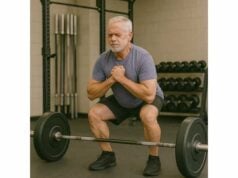
| Hips | Bodyweight squat to a comfortable depth | Do the heels stay down, knees track over toes, and spine stay controlled? | Smooth descent and return without knee cave or back rounding |
| Shoulders | Back-to-wall overhead reach | Can the arms move overhead without ribs flaring or neck tension? | Arms near ears with calm breathing |
| Shoulders | Hand-behind-back reach | Does one side feel much tighter or painful compared with the other? | Similar comfort and control side to side |
| Ankles | Knee-to-wall test | Can the knee touch the wall while the heel stays down? | Roughly 8 to 12 cm from big toe to wall for many adults |
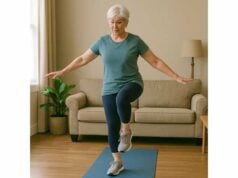
| Ankles | Single-leg balance | Does the foot grip hard, wobble, or collapse inward? | 20 to 30 seconds per side near support |
The point is not to pass every check immediately. The point is to notice patterns. A stiff right ankle, tight left hip flexor, or shoulder that shrugs during overhead reach gives you useful information.
Write down one or two findings, then repeat the same checks every 2 to 4 weeks. For a wider movement snapshot, combine these checks with grip, gait speed, and sit-to-stand testing. Those simple measures show whether mobility work is supporting real function.
The 12-Minute Daily Mobility Routine
This routine fits into a morning reset, a pre-walk warm-up, a lifting warm-up, or an evening movement break. Move slowly enough to feel the joint position. Breathe through the nose when comfortable. Keep effort around 3 to 5 out of 10. Mobility work should feel focused, not exhausting.
Do the full routine 4 to 6 days per week, or use the shorter version on busy days.
1. Breathing reset with rib expansion — 60 seconds
Lie on your back with knees bent, or sit tall on a chair. Place one hand on the lower ribs and one hand on the belly. Inhale through the nose and feel the ribs expand outward. Exhale slowly and let the ribs soften down.
This drill reduces unnecessary tension before you move. It also helps shoulder motion because the rib cage and shoulder blades work together. If the ribs stay flared, overhead reaching often turns into lower-back arching.
2. Ankle rocks — 90 seconds
Stand facing a wall or hold a stable support. Place one foot forward. Keep the heel down and drive the knee forward over the middle toes. Move in and out of the position for 8 to 12 slow reps, then switch sides.
Keep the arch gently lifted. Do not let the knee collapse inward. The motion should come from the ankle, not from rolling the foot.
To make it stronger, pause for 2 seconds at the end range. To make it easier, shorten the distance between the foot and wall.
3. Calf raise with slow lower — 60 seconds
Hold a wall or chair. Rise onto the balls of both feet, pause briefly, then lower for a slow count of 3. Do 8 to 12 reps.
This adds strength to the range you just opened. Ankles need mobility and calf strength for walking, stairs, balance, and push-off. Keep the big toe grounded and avoid rolling toward the outer foot.
4. Hip flexor rock-back to half-kneeling stretch — 2 minutes
Start on hands and knees. Rock the hips back toward the heels, then return forward. Do 6 slow reps. Then step one foot forward into a half-kneeling position. Tuck the pelvis slightly, squeeze the back-side glute, and breathe for 20 to 30 seconds. Switch sides.
The rock-back opens the back of the hips. The half-kneeling position opens the front of the hip. Together, they prepare both squatting and stride length.
Use padding under the knee if needed. If kneeling bothers you, do the hip flexor stretch standing with one foot behind you.
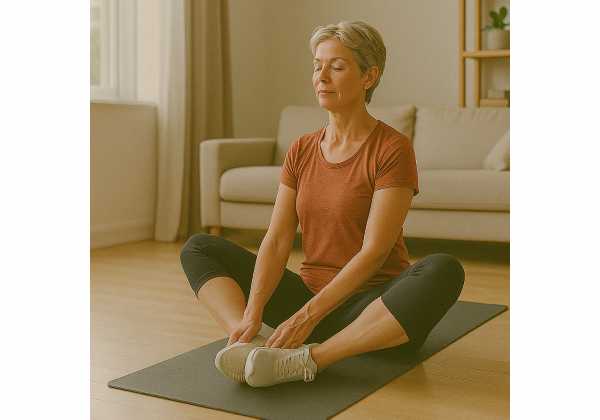
5. 90/90 hip switches — 90 seconds
Sit on the floor with both knees bent, one leg in front and one to the side. Rotate the knees from one side to the other. Use hands behind you if needed. Do 6 to 10 controlled switches.
This drill trains hip rotation, which supports walking, turning, squatting, and getting down to the floor. Keep the motion smooth. Avoid forcing the knees down. If the floor position feels too intense, sit on a folded blanket or do seated hip rotations on a chair.
6. Thoracic rotation with reach — 90 seconds
Start on hands and knees or sit tall on a chair. Place one hand behind the head. Rotate the upper back open, then return. Do 6 to 8 reps per side.
The upper back, or thoracic spine, influences shoulder comfort. When the upper back is stiff, the shoulder often works harder during reaching. Rotate through the rib cage, not the lower back.
7. Shoulder wall slides — 90 seconds
Stand with your back near a wall, knees slightly bent. Keep ribs down. Slide the arms upward as far as you can without pain, neck tension, or lower-back arching. Do 6 to 10 slow reps.
This trains shoulder flexion, shoulder blade upward rotation, and rib control. If the wall version feels too hard, do the same motion lying on your back or seated.
For more shoulder-specific progressions, use scapular control and overhead training options to match your current range.
8. Supported squat pry or sit-to-stand — 90 seconds
Hold a door frame, countertop, or sturdy post. Sit into a comfortable squat, shift gently side to side, then stand tall. Repeat for 5 to 8 reps.
If squatting is uncomfortable, use a chair sit-to-stand instead. Sit down with control, stand up without using the hands when possible, and keep the knees tracking over the toes.
This final drill integrates ankles, hips, trunk, and balance into one real-life pattern.
Short version for busy days
When time is limited, do this 4-minute version:
- Ankle rocks: 45 seconds per side.
- Half-kneeling or standing hip flexor stretch: 45 seconds per side.
- Shoulder wall slides: 60 seconds.
- Chair sit-to-stand: 60 seconds.
A short routine done often beats a perfect routine done twice a month.
How to Train Each Joint Without Irritation
Each joint has different needs. The hips usually need a mix of extension, rotation, and strength. The shoulders need overhead range, rotation, and shoulder blade control. The ankles need dorsiflexion, calf strength, foot control, and balance practice.
Hips: restore stride, squat comfort, and floor confidence
Hip mobility affects walking, stairs, lifting, and getting down to the floor. The most common restrictions show up in three ways: limited hip extension, limited rotation, and limited flexion.
Hip extension is the motion that moves the thigh behind the body. Sitting for long periods often makes this position feel restricted. A half-kneeling hip flexor stretch helps, but it works better when paired with glute strength. After stretching the front of the hip, do 8 to 12 glute bridges or a short walking drill that encourages a longer stride.
Hip rotation matters for turning, lunging, squatting, and sitting cross-legged. 90/90 switches, seated hip rotations, and controlled step-behinds all help. Move gently. Hip pinching at the front of the joint means you should reduce range, change the angle, or choose a different drill.
Hip flexion matters for squatting, tying shoes, and lifting objects. Rock-backs, supported squats, and step-ups help you train hip flexion while keeping the spine organized. If knees or hips feel sensitive, use knee- and hip-friendly exercise modifications instead of forcing deep positions.
Shoulders: reach better without neck and back compensation
Shoulder mobility depends on the shoulder joint, shoulder blade, rib cage, and upper back. A stiff upper back or flared rib cage often makes the shoulder seem tighter than it truly is.
Start shoulder work with breathing and upper-back motion. Then add wall slides, band pull-aparts, light rows, or floor angels. Keep the neck quiet. If every overhead drill turns into shrugging, work below shoulder height for a few weeks.
Many adults also need more pulling strength. Rows, carries, and controlled shoulder blade movement build the support system for reaching. Mobility without strength often fades quickly. Strength without mobility often becomes stiff and narrow. The best shoulder plan uses both.
Avoid aggressive behind-the-neck stretches, heavy overhead loading before you own the position, and forcing the arm through painful arcs. Mild muscular stretch is fine. Joint pain is not the target.
Ankles: improve balance, stairs, and walking mechanics
Ankle mobility links directly to gait, squatting, and balance. Dorsiflexion helps the knee travel forward while the heel stays down. Plantarflexion, the motion used in calf raises, helps push the body forward during walking.
Train ankles with three categories:
- Dorsiflexion drills: knee-to-wall rocks, split-stance ankle glides, and bent-knee calf stretches.
- Strength drills: calf raises, slow lowers, toe raises, and loaded carries.
- Balance drills: single-leg stands, tandem stance, and slow step-downs.
Foot strength matters too. Try short-foot practice: stand tall, keep toes relaxed, and gently lift the arch without curling the toes. Hold for 5 seconds, then relax. Repeat 5 to 8 times per side.
Balance work should happen near support. A countertop, wall, or sturdy chair lets you challenge the ankle safely. To connect ankle mobility with fall prevention, add daily balance practice from fall-prevention drills that train real-world stability.
How to Fit Mobility Into a Weekly Longevity Plan
Mobility works best as a small daily habit and a short add-on to other training. It does not need to become a separate hour-long workout. Most adults get better results from 8 to 15 minutes done often.
Use three layers during the week:
| Placement | Best Use | Time | Example |
|---|---|---|---|
| Before training | Prepare joints for the session | 5 to 10 minutes | Ankle rocks, hip switches, wall slides, light squats |
| Daily reset | Reduce stiffness from sitting | 4 to 12 minutes | Short routine after waking or mid-afternoon |
| Recovery block | Improve range calmly | 10 to 20 minutes | Static hip, calf, chest, and lat stretches with slow breathing |
Before strength training, mobility should feel active. Use drills that resemble the session ahead. Before squats or step-ups, emphasize ankles and hips. Before presses or rows, emphasize shoulders, upper back, and rib control. A full joint-prep and activation warm-up helps you choose the right drills without wasting time.
On walking or rucking days, use ankle rocks, calf raises, hip flexor mobilization, and a few bodyweight hinges. Walking itself also reinforces mobility when stride is relaxed and posture stays tall. Longer walks on varied terrain challenge ankles and hips in a useful way. For progression ideas, connect this routine with walking, gait, and rucking practices that build capacity gradually.
On strength days, place mobility before the main lifts, then use strength exercises that train the same range. For example:
- Ankle rocks before split squats.
- Hip flexor stretch before step-ups.
- 90/90 switches before lateral lunges.
- Wall slides before landmine presses.
- Thoracic rotations before rows.
- Supported squat pries before goblet squats.
This pairing teaches the body that new range has a purpose. It also saves time because the workout becomes part of the mobility plan.
A sample week
A balanced week might look like this:
- Monday: Strength training plus 8-minute hip and ankle warm-up.
- Tuesday: Zone 2 walk plus 4-minute ankle and hip reset.
- Wednesday: Strength training plus shoulder and upper-back warm-up.
- Thursday: Recovery mobility for 12 to 20 minutes.
- Friday: Strength or power training plus full 12-minute routine.
- Saturday: Longer walk, hike, or recreational activity.
- Sunday: Gentle mobility, balance practice, or rest.
Mobility should support your main training, not compete with it. When soreness, poor sleep, or joint irritation rises, reduce intensity and choose easier versions.
Common Mobility Mistakes and Safer Fixes
Mobility training looks simple, which makes it easy to overdo or misdirect. The most common mistakes come from forcing range, stretching the wrong area, ignoring strength, and expecting instant change.
Mistake 1: forcing painful range
Pain changes movement quality. If a stretch creates sharp pain, joint pinching, tingling, numbness, or lingering soreness, it is too aggressive or poorly matched. Reduce the range, change the angle, or switch drills.
A better rule: use mild to moderate tension and calm breathing. The body should feel safer by the end of the session, not threatened.
Mistake 2: stretching when control is the real limit
Some people have enough passive range but lack control. They can pull a joint into position with a strap or wall, but they cannot move there actively. In that case, more passive stretching gives limited return.
Add active end-range work. Examples include slow leg lifts, controlled shoulder raises, calf raises after ankle rocks, and sit-to-stands after hip drills. Strength makes range usable.
Mistake 3: treating mobility as separate from strength
Mobility lasts longer when strength training uses the new range. A supported squat pry helps open the ankles and hips. A goblet squat then teaches the body to control that range under load. A wall slide helps shoulder motion. A light overhead carry or incline press teaches control.
For adults building a complete plan, mobility pairs well with progressive strength training for longevity. Muscle protects joints, supports balance, and keeps daily tasks easier.
Mistake 4: chasing symmetrical range at all costs
The body is not perfectly symmetrical. Dominant-side differences, old injuries, sports history, work habits, and anatomy all affect motion. Mild side-to-side differences are normal. Large differences that affect walking, lifting, reaching, or balance deserve attention.
Use symmetry as information, not as a rigid demand. Aim for enough range on both sides to move comfortably and safely.
Mistake 5: doing too much before intense training
Long, relaxed static stretching immediately before heavy lifting, sprinting, or power work is not ideal for many people. It can make the body feel loose but less ready to produce force. Before hard sessions, choose dynamic drills, light activation, and movement rehearsal. Save longer static holds for later.
How to Progress Without Chasing Extreme Range
Progress means better movement in life and training. It does not mean deeper stretches forever. For healthy aging, the target is usable range, joint comfort, control, balance, and confidence.
Use a simple 4-week progression.
Week 1: learn the positions
Keep every drill easy. Use support. Shorten ranges. Notice which side feels tighter, weaker, or less coordinated. Your main task is clean technique.
Choose 5 or 6 drills from the routine and repeat them often. Avoid adding too many variations. Repetition teaches the nervous system.
Week 2: add pauses
Pause for 2 to 3 seconds in useful positions: the end of an ankle rock, the top of a wall slide, the bottom of a supported squat, or the stretched position of a hip flexor drill. Pauses build awareness and control.
Keep breathing steady. If you hold your breath, reduce effort.
Week 3: add light load or balance
Load makes mobility more durable when used carefully. Hold a light dumbbell during a supported squat. Add slow calf raises. Use a light band for rows or pull-aparts after shoulder drills. Practice single-leg balance near a wall.
The load should make the movement clearer, not messier.
Week 4: connect mobility to real tasks
Use the new range in daily patterns. Walk with a relaxed stride. Practice getting down to the floor and back up. Reach overhead without shrugging. Carry groceries evenly. Step down from a curb with control. Hinge from the hips while picking up a bag.
This step turns mobility into function. It also shows what still needs work.
Signs the routine is working
Good progress often shows up as small daily wins:
- Stairs feel smoother.
- Walking stride feels longer.
- Squats feel less blocked.
- Shoulders reach overhead with less neck tension.
- Balance improves during single-leg stance.
- Morning stiffness fades faster.
- Warm-ups take less time.
- Strength exercises feel more controlled.
Retest your quick checks every 2 to 4 weeks. Keep the drills that improve your movement. Replace drills that do not fit your body.
When to get professional guidance
Work with a qualified clinician, physical therapist, or experienced exercise professional if you have recent injury, joint replacement, unexplained swelling, repeated falls, nerve symptoms, severe osteoporosis, uncontrolled dizziness, or pain that worsens with simple movement. Mobility training should be adapted around medical history, not forced through it.
Adults with arthritis, tendon pain, prior surgery, or balance concerns often do well with modified mobility work. The right version matters. Chair-based drills, wall support, smaller ranges, slower tempo, and more rest turn the same principles into a safer routine.
References
- WHO guidelines on physical activity and sedentary behaviour 2020 (Guideline)
- Optimising the Dose of Static Stretching to Improve Flexibility: A Systematic Review, Meta-analysis and Multivariate Meta-regression 2025 (Systematic Review)
- Effects of stretching exercise on walking performance and balance in older adults: A systematic review and meta-analysis 2025 (Systematic Review)
- The Effects of Ankle and Foot Exercises on Ankle Strength, Balance, and Falls in Older People: A Systematic Review and Meta-Analysis 2025 (Systematic Review)
- Is functional training functional? a systematic review of its effects in community-dwelling older adults 2024 (Systematic Review)
- Practical recommendations on stretching exercise: A Delphi consensus statement of international research experts 2025 (Position Statement)
Disclaimer
This article is educational and does not replace care from a qualified health professional. Stop any drill that causes sharp pain, numbness, dizziness, joint instability, or symptoms that linger after the session. People with recent injury, surgery, repeated falls, severe osteoporosis, or major balance problems should get individualized guidance before starting a new mobility routine.