• Home
  • Health Topics
  • Human Body
  • Diagnostics
  • Conditions
  • Treatments
  • Foods
  • Herbs
  • Supplements
  • Weight Loss
  • Longevity
Search
VitaLibrary
  • Home
  • Health Topics
  • Human Body
  • Diagnostics
  • Conditions
  • Treatments
  • Foods
  • Herbs
  • Supplements
  • Weight Loss
  • Longevity
  • Blood Tests and Blood Biomarkers
  • Brain, Cognitive, and Mental Health Tests and Diagnostics
  • Genetic and Molecular Biomarkers
  • Hormone Tests
  • Inflammation and Immune Markers
  • Tumor Markers
  • Urine Tests and Kidney Markers
    Latest
    • Latest
    • Featured posts
    • Most popular
    • 7 days popular
    • By review score
    • Random
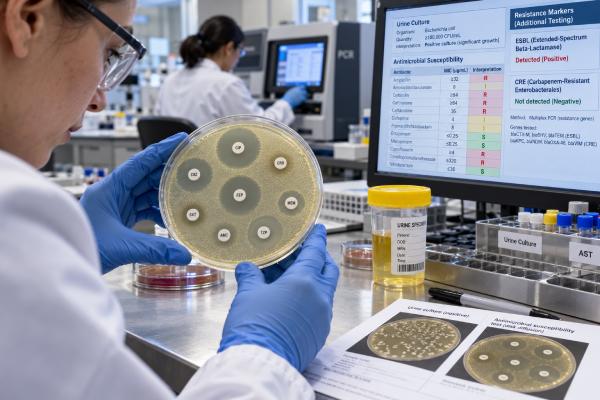
    Learn how antibiotic-resistant UTI testing identifies ESBL, CRE, resistance genes, and antibiotic susceptibility, and how culture results guide treatment and follow-up.

    Antibiotic-Resistant UTI Test: ESBL, CRE, Resistance Markers, and Culture Meaning

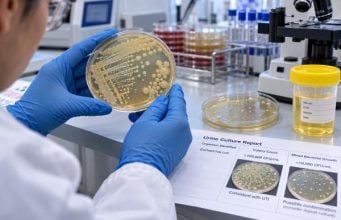
    Learn what asymptomatic bacteriuria means, how a positive urine culture without UTI symptoms is interpreted, and when screening, treatment, or follow-up matters.

    Asymptomatic Bacteriuria Test: Positive Culture Without Symptoms and When It Matters

    Learn how bacteria in urine are interpreted using urinalysis, culture, colony count, symptoms, and sample quality, including when contamination or follow-up testing matters.

    Bacteria in Urine Test: UTI, Contamination, Colony Count, and Culture Follow-Up

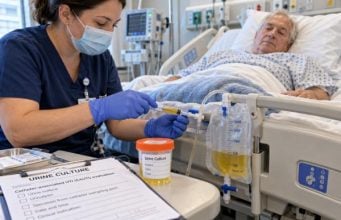
    Learn how a catheter urine culture helps diagnose catheter-associated UTI, how samples are collected, and what colony counts, pyuria, resistance, and positive results mean.

    Catheter Urine Culture Test: Catheter-Associated UTI and Culture Meaning

    Learn how a chlamydia and gonorrhea urine NAAT works, how to collect first-catch urine, what positive or negative results mean, and when follow-up testing is needed.

    Chlamydia and Gonorrhea Urine NAAT Test: STI Screening, Positive Result, and Meaning

    Learn how to collect a clean-catch urine culture, reduce contamination, handle the sample correctly, and understand mixed flora, colony counts, repeat testing, and accurate results.

    Clean-Catch Urine Culture Test: Sample Collection, Contamination, and Accurate Results

    Diagnostics

    Home Diagnostics Page 4
    Learn how a urine microscopy test identifies cells, casts, crystals, bacteria, yeast, and sediment, what common findings mean, and when follow-up is important.

    Urine Microscopy Test: Cells, Casts, Crystals, Bacteria, and Sediment Findings

    Learn what a urine sediment test shows, including cells, casts, crystals, bacteria, and yeast, and how microscopic findings can point to kidney disease or infection.

    Urine Sediment Test: Microscopic Findings, Kidney Disease, Infection, and Meaning

    Learn what waxy casts in urine mean, why they are linked with chronic kidney disease and advanced renal damage, and what tests and symptoms guide follow-up.

    Waxy Casts in Urine: Chronic Kidney Disease and Advanced Kidney Damage

    Learn what white blood cell casts in urine mean, why they occur in pyelonephritis and interstitial nephritis, and which tests help identify the cause.

    White Blood Cell Casts in Urine: Pyelonephritis, Interstitial Nephritis, and Kidney...

    Learn what white blood cells in urine mean, common pyuria thresholds, how UTI differs from sterile pyuria, and when culture, repeat testing, or urgent care is needed.

    White Blood Cells in Urine Test: Pyuria, Infection, Inflammation, and Meaning

    Learn what yeast in urine microscopy means, how Candida contamination differs from candiduria and infection, which risk factors matter, and when treatment is needed.

    Yeast in Urine Microscopy: Candida, Infection, Contamination, and Meaning

    Understand how urine osmolality, sodium, and creatinine work together to assess hydration, kidney concentration, hyponatremia, polyuria, and fluid balance.

    Fluid Balance Urine Test Panel: Osmolality, Sodium, Creatinine, and Hydration Status

    Learn how fractional excretion of potassium (FEK) is calculated and interpreted for kidney potassium loss, hypokalemia, hyperkalemia, and aldosterone-related disorders.

    Fractional Excretion of Potassium (FEK) Test: Potassium Balance and Kidney Loss

    Learn how FENa is calculated, what values below 1% or above 2% can mean, when diuretics and CKD make it unreliable, and how it fits into acute kidney injury evaluation.

    Fractional Excretion of Sodium (FENa) Test: Acute Kidney Injury and Volume...

    Understand how FEUrea is calculated, what the 35% cutoff means, why diuretics complicate AKI testing, and how FEUrea compares with FENa for prerenal and intrinsic kidney injury.

    Fractional Excretion of Urea (FEUrea) Test: Kidney Injury, Diuretics, and Prerenal...

    Learn how FEUA measures kidney uric acid handling, what high and low values can mean in gout, hypouricemia and SIAD, and which medications and kidney conditions affect the result.

    Fractional Excretion of Uric Acid (FEUA) Test: Gout, Kidney Handling, and...

    Learn how TTKG is calculated, what low and high values traditionally mean in potassium disorders, why aldosterone affects the result, and why modern clinicians interpret TTKG cautiously.

    Transtubular Potassium Gradient (TTKG) Test: Potassium Disorders and Aldosterone Effect

    Learn how urine ammonium measures kidney acid excretion, why low levels matter in renal tubular acidosis and CKD, and how direct NH₄⁺ testing compares with the urine anion and osmolal gaps.

    Urine Ammonium Test: Kidney Acid Excretion and Metabolic Acidosis Evaluation

    Learn how to calculate the urine anion gap, what negative and positive values can mean in normal-anion-gap metabolic acidosis, and why direct urine ammonium is often preferred.

    Urine Anion Gap Test: Metabolic Acidosis, Kidney Acid Excretion, and Meaning

    Urine calcium testing helps evaluate hypercalciuria, low urine calcium, kidney stone risk, and parathyroid disorders. Learn 24-hour ranges, causes, and next steps.

    Urine Calcium Test: High, Low, Kidney Stones, Parathyroid Causes, and Meaning

    Understand urine chloride test results, including low and high values, metabolic alkalosis, vomiting, diuretics, volume status, and 24-hour testing.

    Urine Chloride Test: High, Low, Acid-Base Balance, and Volume Status

    1...345...137Page 4 of 137
    • Disclaimer
    • Privacy Policy
    • About Us
    © 2026 Vita Library. All rights reserved.
    Contact us: contact@vitalibrary.com