• Home
  • Health Topics
  • Human Body
  • Diagnostics
  • Conditions
  • Treatments
  • Foods
  • Herbs
  • Supplements
  • Weight Loss
  • Longevity
Search
VitaLibrary
  • Home
  • Health Topics
  • Human Body
  • Diagnostics
  • Conditions
  • Treatments
  • Foods
  • Herbs
  • Supplements
  • Weight Loss
  • Longevity
  • Blood Tests and Blood Biomarkers
  • Brain, Cognitive, and Mental Health Tests and Diagnostics
  • Genetic and Molecular Biomarkers
  • Hormone Tests
  • Inflammation and Immune Markers
  • Tumor Markers
  • Urine Tests and Kidney Markers
    Latest
    • Latest
    • Featured posts
    • Most popular
    • 7 days popular
    • By review score
    • Random
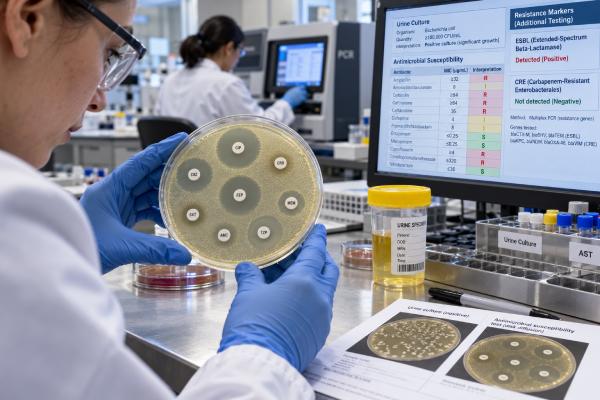
    Learn how antibiotic-resistant UTI testing identifies ESBL, CRE, resistance genes, and antibiotic susceptibility, and how culture results guide treatment and follow-up.

    Antibiotic-Resistant UTI Test: ESBL, CRE, Resistance Markers, and Culture Meaning

    Learn what asymptomatic bacteriuria means, how a positive urine culture without UTI symptoms is interpreted, and when screening, treatment, or follow-up matters.

    Asymptomatic Bacteriuria Test: Positive Culture Without Symptoms and When It Matters

    Learn how bacteria in urine are interpreted using urinalysis, culture, colony count, symptoms, and sample quality, including when contamination or follow-up testing matters.

    Bacteria in Urine Test: UTI, Contamination, Colony Count, and Culture Follow-Up

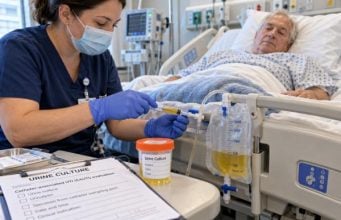
    Learn how a catheter urine culture helps diagnose catheter-associated UTI, how samples are collected, and what colony counts, pyuria, resistance, and positive results mean.

    Catheter Urine Culture Test: Catheter-Associated UTI and Culture Meaning

    Learn how a chlamydia and gonorrhea urine NAAT works, how to collect first-catch urine, what positive or negative results mean, and when follow-up testing is needed.

    Chlamydia and Gonorrhea Urine NAAT Test: STI Screening, Positive Result, and Meaning

    Learn how to collect a clean-catch urine culture, reduce contamination, handle the sample correctly, and understand mixed flora, colony counts, repeat testing, and accurate results.

    Clean-Catch Urine Culture Test: Sample Collection, Contamination, and Accurate Results

    Diagnostics

    Home Diagnostics Page 38
    Learn how the inhibin B tumor marker test is used for granulosa cell tumors, what high levels mean, and how serial results can help detect recurrence and monitor disease.

    Inhibin B Tumor Marker Test: Granulosa Cell Tumors, High Levels, Recurrence,...

    Learn what a high LDH blood test means, how cancer burden and cell damage can raise LDH, common non-cancer causes, normal ranges, and how LDH affects prognosis.

    Lactate Dehydrogenase (LDH) Tumor Marker Test: High Levels, Cancer Burden, Cell...

    Learn what an M protein blood test shows, how SPEP measures a monoclonal protein, what an M-spike can mean, and how results are used in multiple myeloma and MGUS.

    M Protein Blood Test: Multiple Myeloma, Monoclonal Protein, SPEP, and Result...

    Learn what the NSE blood test measures, why neuron-specific enolase rises in small cell lung cancer and neuroendocrine tumors, and how results are monitored.

    Neuron-Specific Enolase (NSE) Blood Test: Neuroendocrine Tumors, Small Cell Lung Cancer,...

    Learn how the OVA1 test combines five biomarkers into an ovarian malignancy risk score, what the 5.0 and 4.4 cutoffs mean, and when the test is used.

    OVA1 Test: Ovarian Cancer Risk Assessment, Biomarker Score, and Result Meaning

    Learn what a pancreatic polypeptide test measures, why fasting matters, what high PP levels can mean, and how the test fits into pancreatic neuroendocrine tumor evaluation.

    Pancreatic Polypeptide Test: Pancreatic Neuroendocrine Tumors, High Levels, and Meaning

    Learn how to interpret a PTH blood test with calcium, what high PTH can mean, how benign parathyroid adenomas differ from carcinoma, and what tests usually come next.

    Parathyroid Hormone (PTH) Tumor Marker Test: Parathyroid Tumors, High Calcium, and...

    Learn what the PIVKA-II/DCP liver cancer marker measures, what high levels can mean, how vitamin K and warfarin affect results, and how the test helps monitor HCC.

    PIVKA-II Test: Liver Cancer Marker, High Levels, Vitamin K Status, and...

    Pro-Gastrin-Releasing Peptide (ProGRP) Test: Small Cell Lung Cancer Marker, High Levels,...

    Understand what the Prostate Health Index (PHI) measures, how PSA, free PSA, and p2PSA create the score, what high PHI may mean, and how it guides biopsy decisions.

    Prostate Health Index (PHI) Test: PSA, Free PSA, p2PSA, and Prostate...

    Learn how to interpret a PSA blood test, why there is no single normal cutoff, what benign conditions can raise PSA, how results relate to prostate cancer risk, and what follow-up may involve.

    Prostate-Specific Antigen (PSA) Test: Normal Range, High Levels, Prostate Cancer Risk,...

    Understand why PTHrP is tested in high calcium, what elevated PTHrP can mean, how humoral hypercalcemia of malignancy is identified, and why kidney function and assay type matter.

    PTH-Related Peptide (PTHrP) Test: Cancer-Related High Calcium, Humoral Hypercalcemia, and Meaning

    Learn what the ROMA ovarian cancer risk test measures, how CA-125, HE4, and menopause status affect the score, what high risk means, and why ROMA is not a screening test.

    ROMA Test: Ovarian Cancer Risk Score, CA-125, HE4, and Menopause Status

    Learn what a serotonin blood test can show in carcinoid syndrome and neuroendocrine tumors, what high levels mean, why 5-HIAA is often preferred, and how results are monitored.

    Serotonin Blood Test: Carcinoid Syndrome, Neuroendocrine Tumors, High Levels, and Monitoring

    Learn what a somatostatin blood test measures, what high levels can mean in somatostatinoma, how fasting and specimen handling affect results, and how neuroendocrine tumors are confirmed.

    Somatostatin Blood Test: Somatostatinoma, Neuroendocrine Tumor, High Levels, and Meaning

    Learn what an SCC antigen blood test measures, which squamous cancers can raise it, common benign causes of high levels, and how serial SCC antigen may be used during cervical cancer follow-up.

    Squamous Cell Carcinoma Antigen (SCC Antigen) Blood Test: High Levels, Squamous...

    1...373839...137Page 38 of 137
    • Disclaimer
    • Privacy Policy
    • About Us
    © 2026 Vita Library. All rights reserved.
    Contact us: contact@vitalibrary.com