• Home
  • Health Topics
  • Human Body
  • Diagnostics
  • Conditions
  • Treatments
  • Foods
  • Herbs
  • Supplements
  • Weight Loss
  • Longevity
Search
VitaLibrary
  • Home
  • Health Topics
  • Human Body
  • Diagnostics
  • Conditions
  • Treatments
  • Foods
  • Herbs
  • Supplements
  • Weight Loss
  • Longevity
  • Blood Tests and Blood Biomarkers
  • Brain, Cognitive, and Mental Health Tests and Diagnostics
  • Genetic and Molecular Biomarkers
  • Hormone Tests
  • Inflammation and Immune Markers
  • Tumor Markers
  • Urine Tests and Kidney Markers
    Latest
    • Latest
    • Featured posts
    • Most popular
    • 7 days popular
    • By review score
    • Random
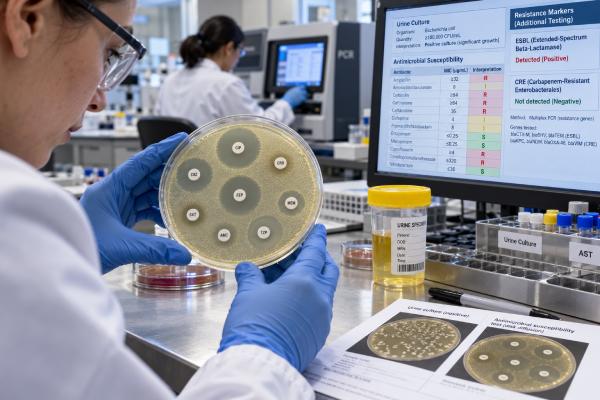
    Learn how antibiotic-resistant UTI testing identifies ESBL, CRE, resistance genes, and antibiotic susceptibility, and how culture results guide treatment and follow-up.

    Antibiotic-Resistant UTI Test: ESBL, CRE, Resistance Markers, and Culture Meaning

    Learn what asymptomatic bacteriuria means, how a positive urine culture without UTI symptoms is interpreted, and when screening, treatment, or follow-up matters.

    Asymptomatic Bacteriuria Test: Positive Culture Without Symptoms and When It Matters

    Learn how bacteria in urine are interpreted using urinalysis, culture, colony count, symptoms, and sample quality, including when contamination or follow-up testing matters.

    Bacteria in Urine Test: UTI, Contamination, Colony Count, and Culture Follow-Up

    Learn how a catheter urine culture helps diagnose catheter-associated UTI, how samples are collected, and what colony counts, pyuria, resistance, and positive results mean.

    Catheter Urine Culture Test: Catheter-Associated UTI and Culture Meaning

    Learn how a chlamydia and gonorrhea urine NAAT works, how to collect first-catch urine, what positive or negative results mean, and when follow-up testing is needed.

    Chlamydia and Gonorrhea Urine NAAT Test: STI Screening, Positive Result, and Meaning

    Learn how to collect a clean-catch urine culture, reduce contamination, handle the sample correctly, and understand mixed flora, colony counts, repeat testing, and accurate results.

    Clean-Catch Urine Culture Test: Sample Collection, Contamination, and Accurate Results

    Diagnostics

    Home Diagnostics Page 6
    Learn how a 24-hour urine protein test is collected, what proteinuria ranges mean, common causes of high protein, and what follow-up tests may show.

    24-Hour Urine Protein Test: Proteinuria, Kidney Damage, Collection, and Results

    Understand albuminuria A1, A2, and A3 ranges, why repeat uACR testing matters, and how albumin levels combine with eGFR to show kidney and heart risk.

    Albuminuria Test: Normal, Moderately Increased, Severely Increased, and Kidney Risk

    Learn what urine alpha-1 microglobulin shows, how it detects proximal tubule dysfunction, what high levels may mean, and how results are interpreted.

    Alpha-1 Microglobulin Urine Test: Tubular Proteinuria and Kidney Tubule Injury

    Learn what a Bence Jones protein urine test detects, how light chains relate to multiple myeloma and kidney injury, and what positive results may mean.

    Bence Jones Protein Urine Test: Light Chains, Multiple Myeloma, and Kidney...

    Learn what urine beta-2 microglobulin measures, why high levels can signal proximal tubule injury, how urine pH affects results, and what follow-up may involve.

    Beta-2 Microglobulin Urine Test: Kidney Tubule Damage and Tubular Proteinuria

    Learn how uACR, urine protein, creatinine, urinalysis, and eGFR are used to screen for and monitor diabetic kidney disease and albuminuria.

    Diabetic Kidney Disease Urine Test Panel: uACR, Protein, Creatinine, and Albuminuria

    Learn what a microalbumin-creatinine ratio (uACR) test shows, the A1–A3 ranges, and how diabetes and high blood pressure affect kidney risk.

    Microalbumin-Creatinine Ratio Test: Early Kidney Disease, Diabetes, and High Blood Pressure

    Learn how urine protein, albumin, UPCR, dipstick results, and casts help identify nephrotic-range proteinuria and guide evaluation of nephrotic syndrome.

    Nephrotic Syndrome Urine Test Panel: Protein, Albumin, Casts, and Kidney Findings

    Learn what nephrotic-range proteinuria means, how very high urine protein is measured, causes of nephrotic syndrome, key complications, and follow-up testing.

    Nephrotic-Range Proteinuria Test: Very High Urine Protein and Nephrotic Syndrome

    Learn how orthostatic proteinuria is diagnosed, why urine protein rises while standing, how first-morning UPCR helps confirm a benign pattern, and when follow-up is needed.

    Orthostatic Proteinuria Test: Standing Protein Levels, Benign Proteinuria, and Diagnosis

    Understand proteinuria test results, normal urine protein ranges, common kidney and non-kidney causes, follow-up testing, and signs that protein in urine needs prompt evaluation.

    Proteinuria Test: Causes, Kidney Disease, Normal Range, and When to Worry

    Learn what a urinary retinol-binding protein test shows, why RBP rises with proximal tubule injury, causes of low-molecular-weight proteinuria, and how abnormal results are evaluated.

    Retinol-Binding Protein Urine Test: Kidney Tubule Injury and Low-Molecular-Weight Proteinuria

    Learn how a spot urine albumin test and uACR detect early kidney damage, what high albumin levels mean, common causes, preparation tips, CKD ranges, and follow-up steps.

    Spot Urine Albumin Test: High Albumin, Kidney Damage, and Early CKD

    Learn how a spot urine protein test and UPCR screen for proteinuria, what high protein levels mean, normal ranges, common causes, collection tips, and when follow-up is needed.

    Spot Urine Protein Test: High Protein, Proteinuria Screening, and Kidney Disease

    Learn how tubular proteinuria tests detect low-molecular-weight proteins, what high RBP or microglobulins mean, causes of proximal tubule damage, and how results differ from albuminuria.

    Tubular Proteinuria Test: Low-Molecular-Weight Proteins and Kidney Tubule Damage

    Learn how urine albumin testing and uACR detect kidney damage, what A1–A3 ranges mean, common causes of albuminuria, temporary elevations, CKD risk, and follow-up steps.

    Urine Albumin Test: Albuminuria, Kidney Disease, Normal Range, and Meaning

    1...567...137Page 6 of 137
    • Disclaimer
    • Privacy Policy
    • About Us
    © 2026 Vita Library. All rights reserved.
    Contact us: contact@vitalibrary.com